

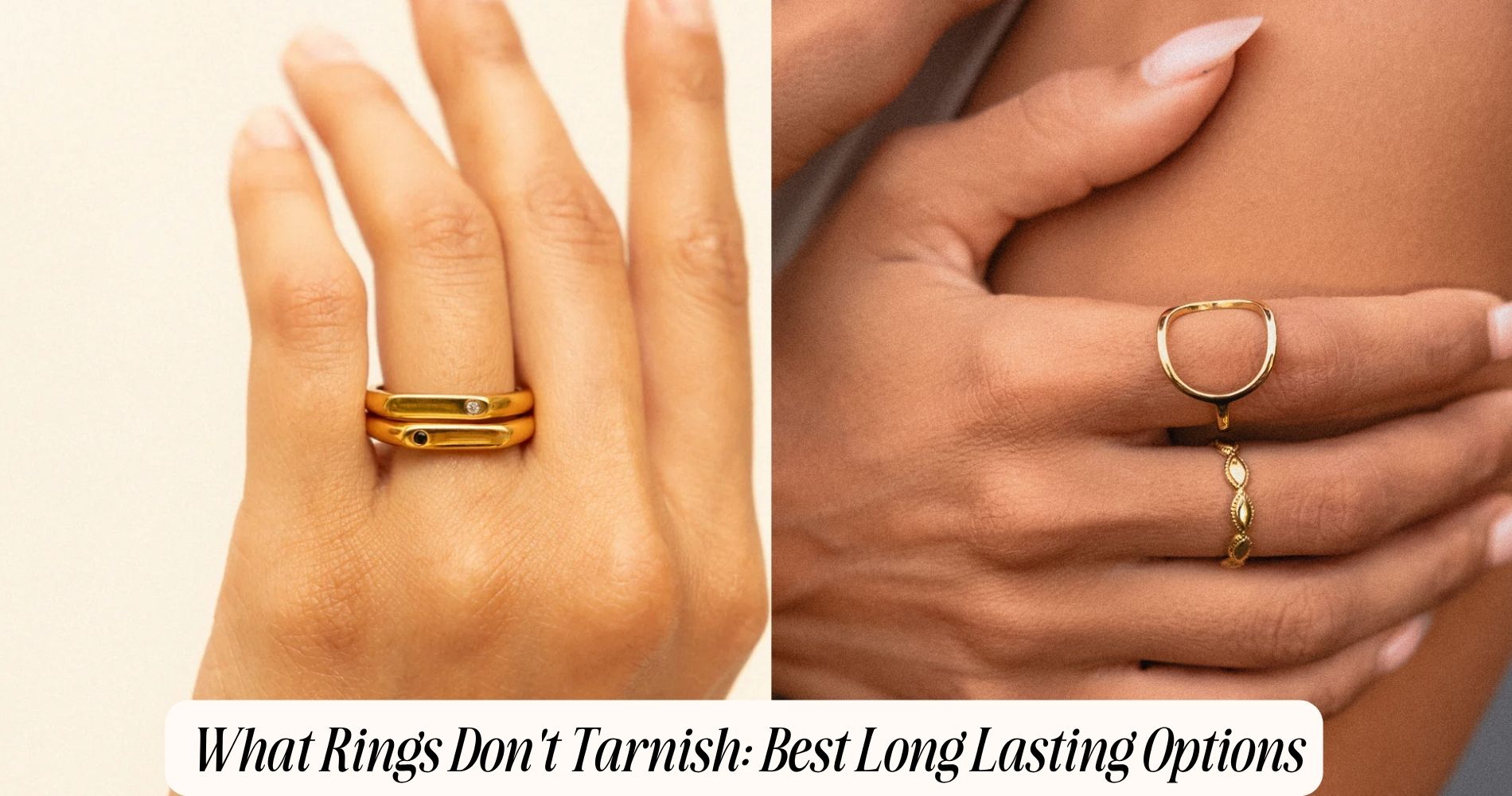
What Rings Don't Tarnish: Best Long Lasting Options
Rings take more wear than almost any other piece of jewelry. They stay on through handwashing, gym sessions, cooking, swimming, and everything in between, which means the material they are made from faces more sustained contact with water, soap, sweat, and friction than a necklace or earring ever would. If you are asking what rings don't tarnish, the answer comes down to which materials can withstand that daily exposure without discoloring, fading, or leaving marks on your skin. Waterproof Rings built on the right materials handle that exposure without compromise. This guide covers which ring materials genuinely resist tarnishing, which ones to avoid, and what to look for when choosing a ring you plan to wear every day.
Why Rings Tarnish Faster Than Other Jewelry
Rings sit at the point of highest wear on the body. They are in constant contact with skin, which means they absorb sweat, natural skin oils, and the acids that skin produces continuously. They go through hand washing multiple times a day, which exposes them repeatedly to soap, water, and heat. They contact surfaces constantly through grip and touch, which creates friction that wears down any surface coating faster than on a bracelet or necklace.
The underside of a ring shank, the part that sits against the inner finger, is the most vulnerable area on any ring. It experiences the most friction, the most moisture, and the most pressure of any surface on the piece. On gold-plated rings, the plating on the shank underside typically wears through within weeks to months of daily wear, even when the top of the ring still looks intact. Once that base metal is exposed, tarnishing and skin discoloration follow quickly.

Sweat chemistry adds another layer. The combination of salt, lactic acid, and trace compounds in perspiration reacts with copper and brass alloys to produce green discoloration on the skin underneath a ring, a reaction most people associate with low-quality jewelry. This is not a skin reaction but a chemical reaction between the skin environment and the metal, and it happens regardless of how careful you are if the base metal is reactive.
Understanding these conditions makes it clear that rings need a more durable material specification than other jewelry types to genuinely resist tarnishing through daily wear.
What Rings Don't Tarnish: The Materials That Qualify
Four material categories produce rings that hold up through the conditions daily wear imposes.
PVD-coated stainless steel
PVD (Physical Vapor Deposition) coating over a 316L surgical steel base is the most practical tarnish-free ring material at an accessible price point. The PVD process deposits the finish layer in a vacuum environment at the molecular level, creating a bond approximately 10 times thicker than standard electroplating. That bonding method eliminates the adhesion vulnerability that causes standard plated rings to wear through at the shank underside.
The 316L stainless steel base independently resists corrosion through a stable chromium oxide surface layer that prevents reactive compounds from reaching the alloy's iron content. The result is a ring that holds its color and finish through handwashing, pool sessions, gym workouts, and ocean swimming without the plating lifting or the base metal discoloring. PVD-coated rings are also nickel-free, which removes the risk of skin reactions from prolonged finger contact.
Solid gold at 14k and above
Gold does not react with water, sweat, soap, or the acids present in skin contact. At 14k, the alloy is 58.5% gold by weight, high enough that the non-reactive character of gold carries through to the piece's behavior under daily wear conditions. A solid gold ring worn continuously through showers, swimming, and physical activity holds its appearance over years without requiring removal or maintenance.
The practical limitation of solid gold is price. Solid gold rings sit at a cost level that places them in the fine jewelry category, which is outside the everyday accessible range for many buyers, particularly for rings worn through active daily use where loss or damage is possible.

Titanium
Titanium forms a stable, self-renewing oxide layer on its surface that passivates it completely against tarnishing, corrosion, and skin reactions. It does not react with water, salt, chlorine, or sweat. It is lighter than stainless steel at equivalent volume, which makes it comfortable for rings worn continuously. It is also completely nickel-free, making it one of the most reliably hypoallergenic ring materials available.
Titanium's limitation in rings is design versatility. It is harder to resize than gold or stainless steel and more difficult to work with at fine detail scales, which limits the style variety available particularly at lower price points.
Platinum
Platinum is chemically inert under all normal wearing conditions. It does not tarnish, does not corrode, and does not react with any compound typically encountered in daily life. Its density and durability make it genuinely one of the most long-lasting ring materials available. The limitation, like solid gold, is price. Platinum rings sit firmly in fine jewelry pricing territory.
Ring Materials That Do Tarnish: A Direct Comparison
| Ring Material | Tarnish Risk | Skin Discoloration Risk | Shank Durability | Suitable for Daily Wear |
|---|---|---|---|---|
| PVD-coated stainless steel | None | None | Very high | Yes |
| Solid gold (14k+) | None | None | Very high | Yes |
| Titanium | None | None | High | Yes |
| Platinum | None | None | Very high | Yes |
| Sterling silver (uncoated) | Very high | Low | Low | With maintenance only |
| Gold-plated brass | High | High | Very low | No |
| Rhodium-plated silver | Moderate | Low | Moderate | Short to medium term |
| Brass or copper | Very high | Very high | Very low | No |
| Gold-filled | Moderate | Low | Moderate | Medium term only |

What to Look for When Choosing a Tarnish-Free Ring
Three specific factors determine whether a ring will hold up to daily wear without tarnishing.
Base metal specification. The base metal is the material that determines long-term behavior. For a ring to genuinely resist tarnishing through daily wear, the base metal needs to be 316L stainless steel, titanium, solid gold at 14k or above, or platinum. If the base metal is brass, copper, or unspecified, the ring will tarnish regardless of how the finish is described.
Coating method and thickness. For rings that are not solid precious metals, the coating method is as important as the base metal. Electroplated finishes are thin and applied with surface adhesion rather than molecular bonding. PVD coating bonds at the molecular level in a vacuum environment, producing a finish significantly thicker and more durable than electroplating. For a ring worn through daily handwashing and physical contact, that difference in thickness and bonding determines whether the finish survives months or years.

Fit and comfort for continuous wear. A ring that fits correctly causes less friction at the shank than one that spins or sits loosely. Proper fit means the ring slides over the knuckle with light resistance and sits without moving significantly during normal hand use. Rings that spin or shift constantly create more mechanical wear on the finish at the contact points, which accelerates degradation even on durable coatings.
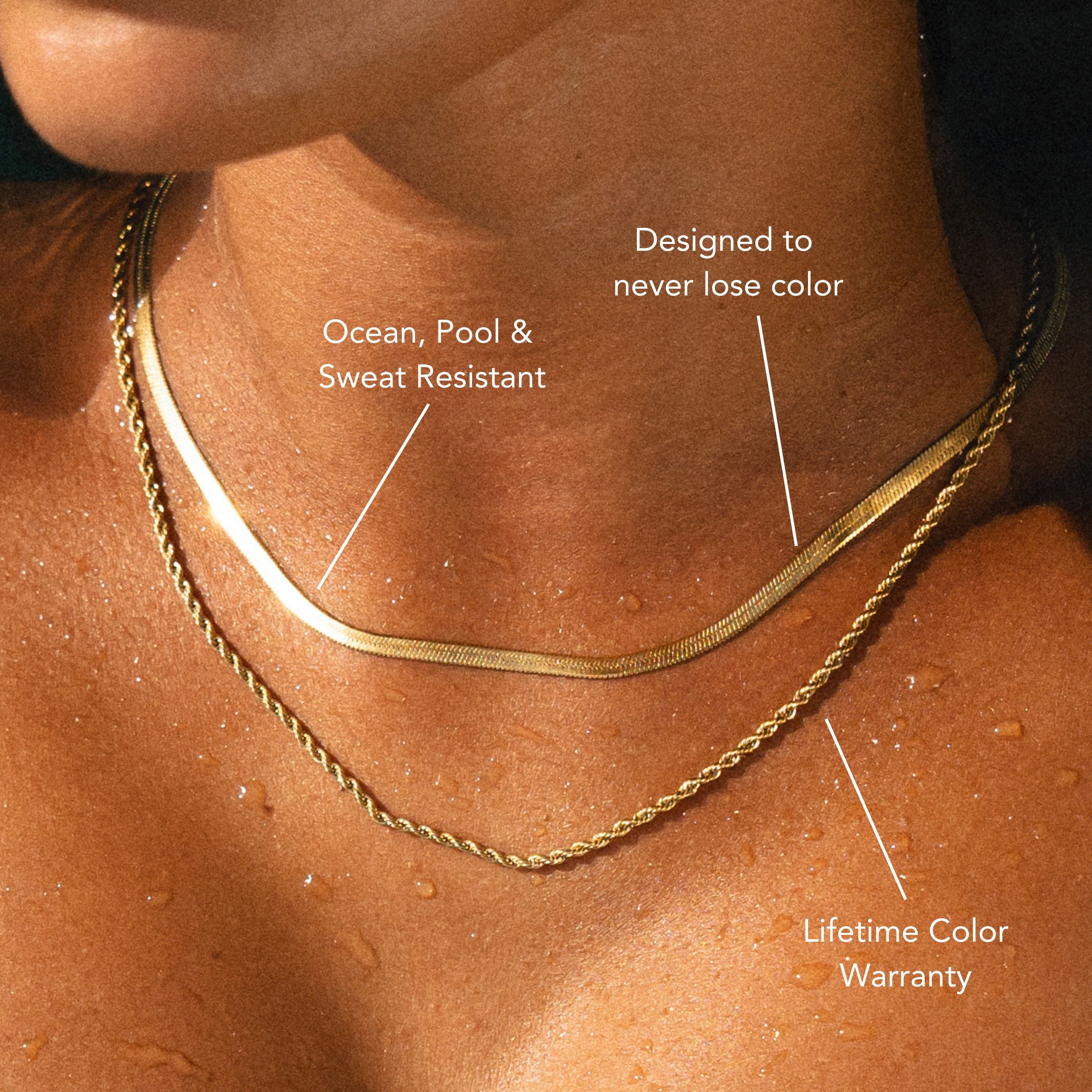
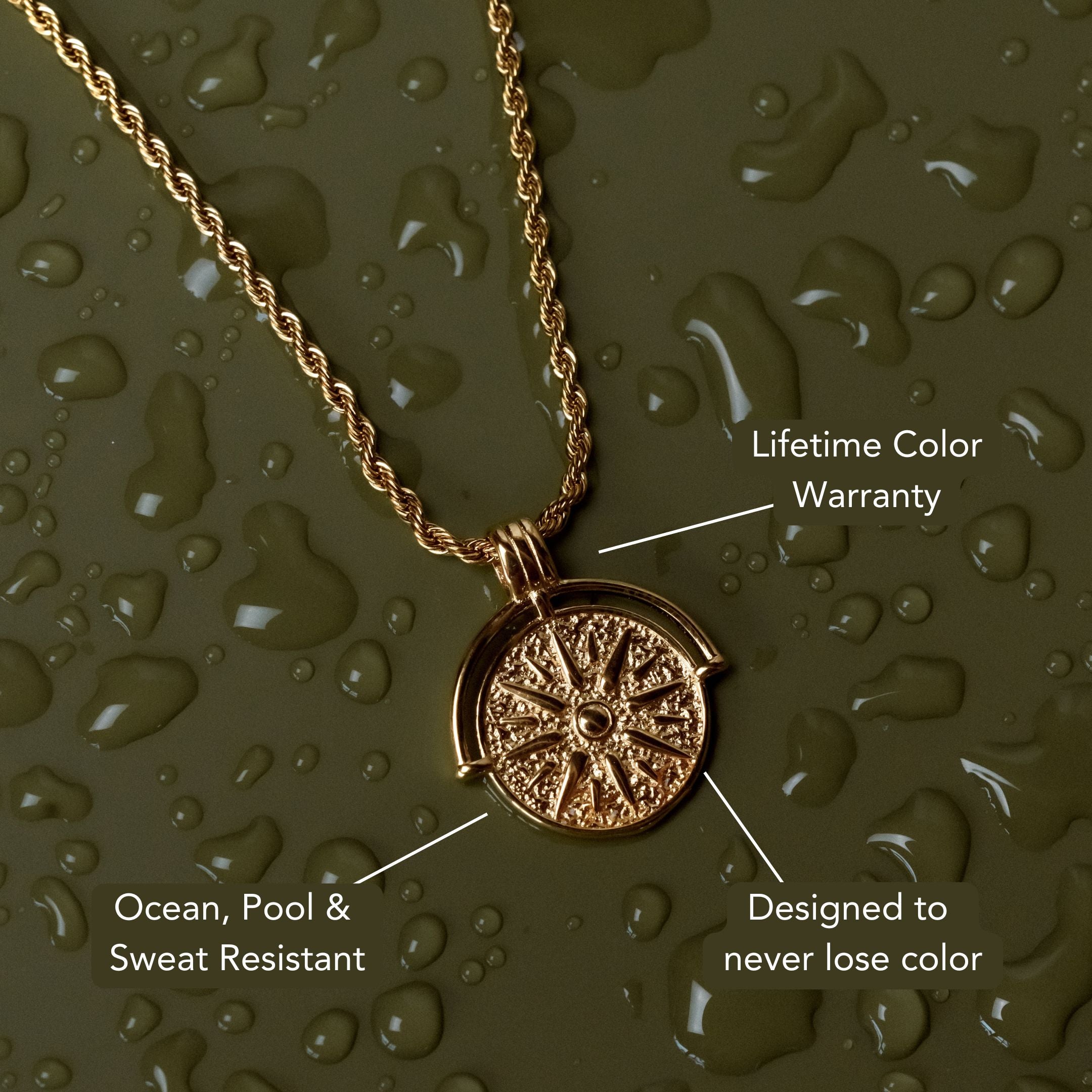
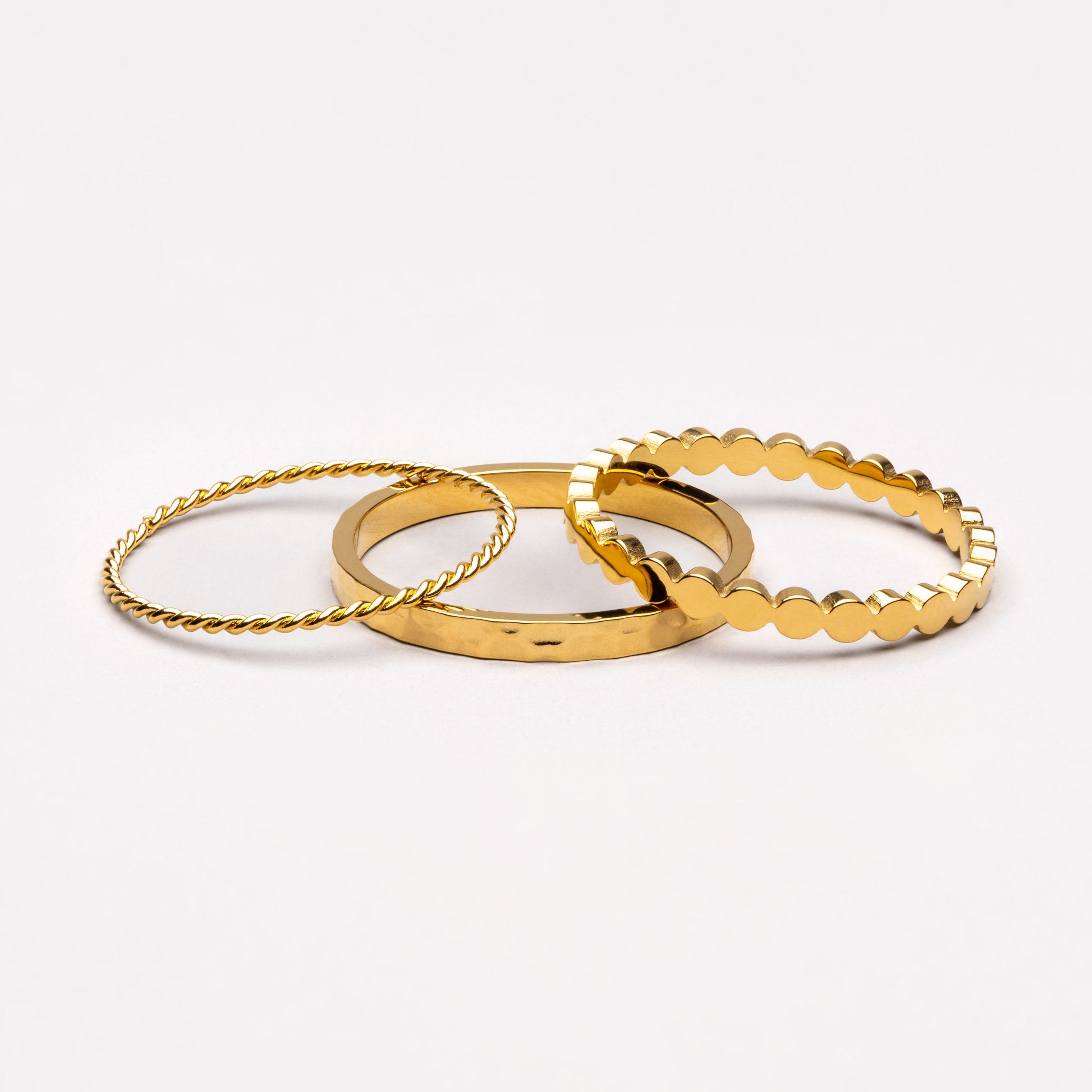
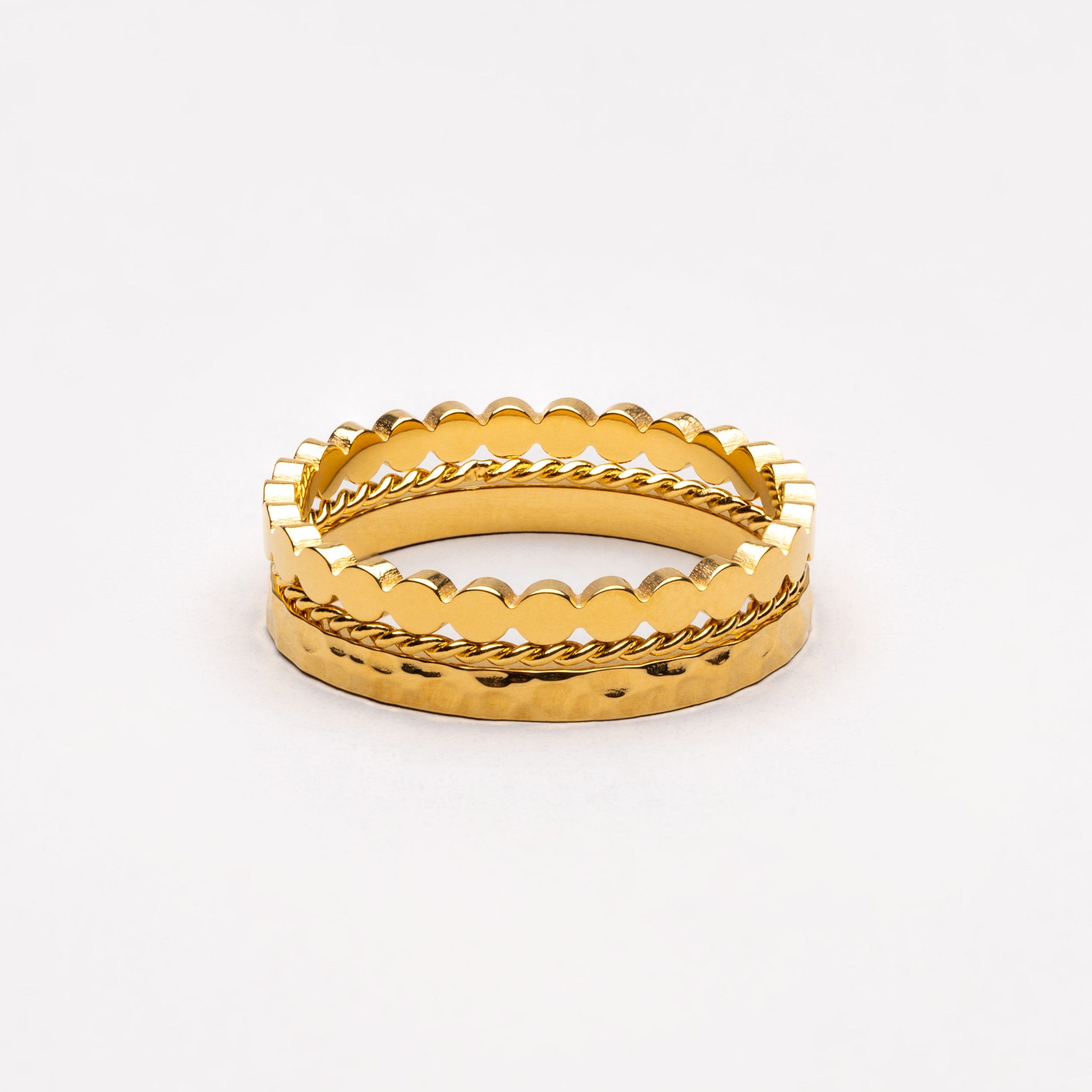
ATOLEA's ring range is built on PVD-coated stainless steel throughout, including the shank underside where most plated rings fail first. Every ring carries a lifetime color warranty, with replacement guaranteed if the finish changes regardless of how actively the ring is worn.
Frequently Asked Questions
What rings don't tarnish or turn your finger green?
Rings made from PVD-coated stainless steel, solid gold at 14k and above, titanium, and platinum do not tarnish or cause green discoloration. The green color comes from copper in reactive base metals reacting with skin acids. None of those four materials contain exposed reactive copper at the skin contact surface, which eliminates both tarnishing and discoloration.
Do stainless steel rings tarnish?
316L surgical-grade stainless steel rings do not tarnish under normal daily wearing conditions. The chromium content in the alloy forms a stable surface layer that resists oxidation and corrosion from water, sweat, and soap. Stainless steel rings with PVD coating maintain both the structural corrosion resistance of the steel and the color durability of the finish through sustained daily wear.
Can I shower with a tarnish-free ring?
Yes, if the ring is made from PVD-coated stainless steel, solid gold, titanium, or platinum. These materials are not affected by water, soap, or steam. Showering daily in a ring made from these materials does not accelerate tarnishing or compromise the finish. Sterling silver and gold-plated rings should not be worn through daily showers as water exposure accelerates their degradation.
Conclusion
What rings don't tarnish comes down to four material categories: PVD-coated stainless steel, solid gold at 14k and above, titanium, and platinum. Each resists the tarnishing reactions that daily handwashing, sweat, water, and friction impose on a ring worn continuously. Of those, PVD-coated stainless steel sits at the intersection of genuine tarnish resistance and everyday accessible pricing, making it the practical answer for rings worn through gym sessions, beach days, pool swims, and daily life without conditions on when they come off.









Leave a comment
This site is protected by hCaptcha and the hCaptcha Privacy Policy and Terms of Service apply.