

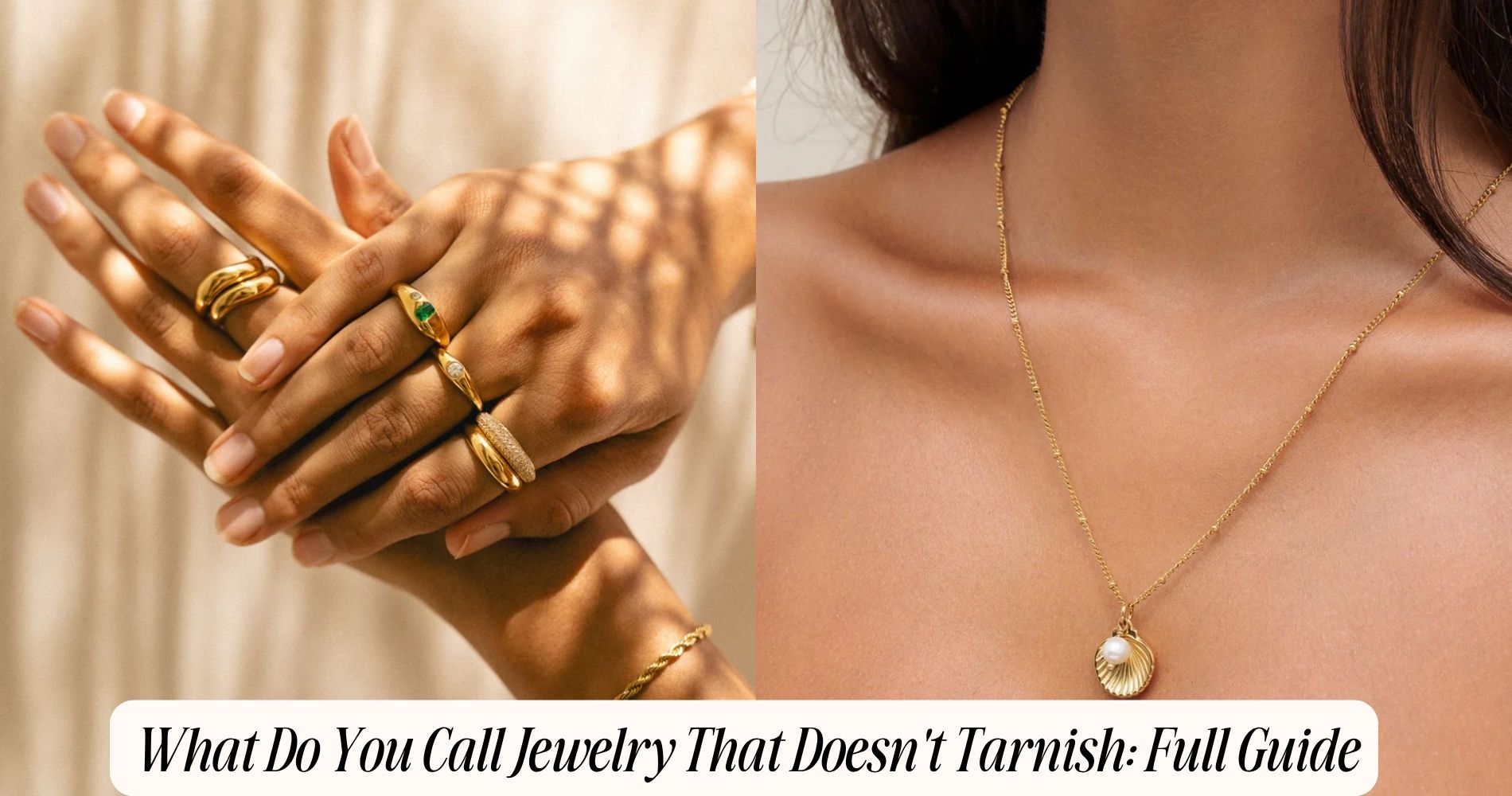
What Do You Call Jewelry That Doesn't Tarnish: Full Guide
The terms used to describe long-lasting jewelry vary across brands, and that inconsistency makes it difficult to know what you are actually buying. If you have been asking what do you call jewelry that doesn't tarnish, there are several terms in use, some precise and verifiable, others vague enough to mean almost nothing. Tarnish-Free Jewelry is one of the cleaner descriptors, but knowing what sits behind each label helps you evaluate any piece before purchase. This guide covers the correct terminology, the materials those terms refer to, and what each one actually delivers in daily wear.
The Terms Used for Jewelry That Doesn't Tarnish
Several terms appear consistently in jewelry marketing to describe pieces that resist tarnishing. Each has a specific meaning, though some are used more precisely than others across the industry.
Tarnish-free refers to jewelry that does not undergo the surface oxidation and sulfide reactions that produce visible discoloration over time. The term is most accurate when applied to pieces made from materials that are chemically resistant to those reactions by nature, such as solid gold, titanium, and surgical-grade stainless steel, or pieces protected by a coating method thick and stable enough to prevent those reactions from reaching the base metal.
Tarnish-resistant is a softer claim than tarnish-free. It describes jewelry that slows tarnishing rather than preventing it entirely. Sterling silver with a rhodium plating falls into this category: the rhodium layer delays tarnishing but eventually wears through, at which point the silver beneath tarnishes normally. The word resistant signals a spectrum rather than an absolute.
Waterproof jewelry is used specifically for pieces designed to maintain their appearance through water exposure, including showers, pools, and ocean swimming. Since water and humidity accelerate tarnishing, genuinely waterproof jewelry is, by definition, also tarnish-resistant under the conditions most people encounter in daily life.

PVD jewelry refers to pieces coated through the Physical Vapor Deposition process. This is a specific manufacturing term that tells you something precise about how the finish was applied and, by extension, how durable it is. PVD is one of the most reliable indicators of genuine tarnish resistance because the process produces a finish bonded at the molecular level rather than applied as a thin surface layer.
Demi-fine jewelry describes a category positioned between costume and fine jewelry, typically using sterling silver or gold vermeil with higher-quality stones. Demi-fine does not inherently mean tarnish-free. Sterling silver tarnishes and gold vermeil wears through over time. The term refers to price positioning and material quality, not necessarily to tarnish resistance.
Fine jewelry refers to pieces made from solid precious metals: gold at 10k and above, platinum, and solid silver. Solid gold and platinum genuinely do not tarnish. Solid sterling silver does. So fine jewelry is not synonymous with tarnish-free, even though solid gold and platinum pieces within that category qualify.
What Do You Call Jewelry That Doesn't Tarnish: By Material
The clearest way to understand tarnish-free jewelry is through the materials that earn the description rather than the marketing terms applied to them.
| Material | Correct Term | Tarnish-Free | Waterproof | Accessible Price |
|---|---|---|---|---|
| Solid gold (14k+) | Fine jewelry | Yes | Yes | No |
| Platinum | Fine jewelry | Yes | Yes | No |
| Titanium | Tarnish-free, hypoallergenic | Yes | Yes | Moderate |
| 316L surgical steel | Tarnish-resistant, waterproof | Yes | Yes | Yes |
| PVD-coated stainless steel | Tarnish-free, waterproof, PVD jewelry | Yes | Yes | Yes |
| Sterling silver (uncoated) | Fine or demi-fine jewelry | No | No | Moderate |
| Gold vermeil | Demi-fine jewelry | No | No | Moderate |
| Gold-plated brass | Fashion jewelry | No | No | Yes |

Why the Terminology Matters When Buying
The gap between what terms imply and what they deliver is where most jewelry disappointments happen. A few specific patterns are worth knowing.
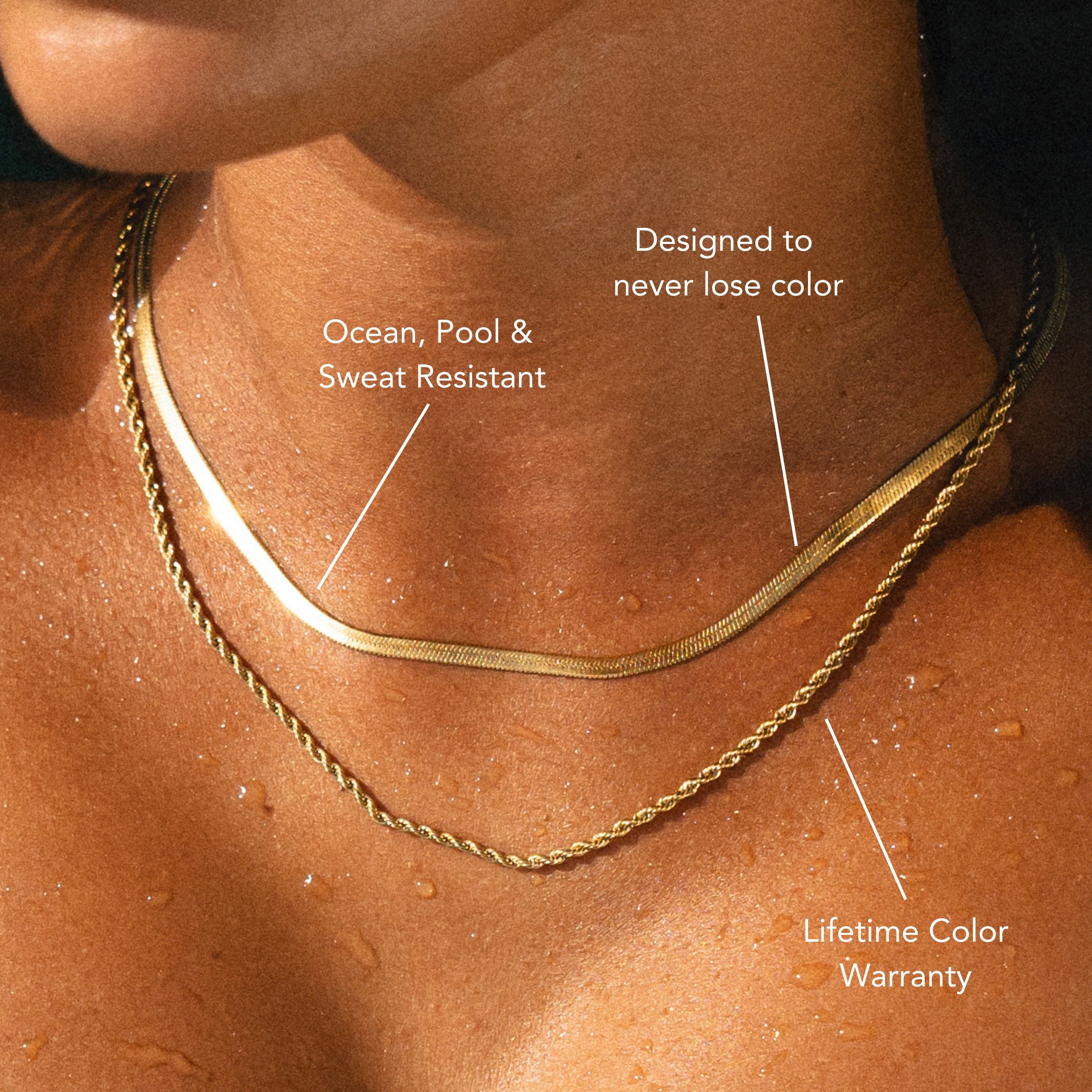
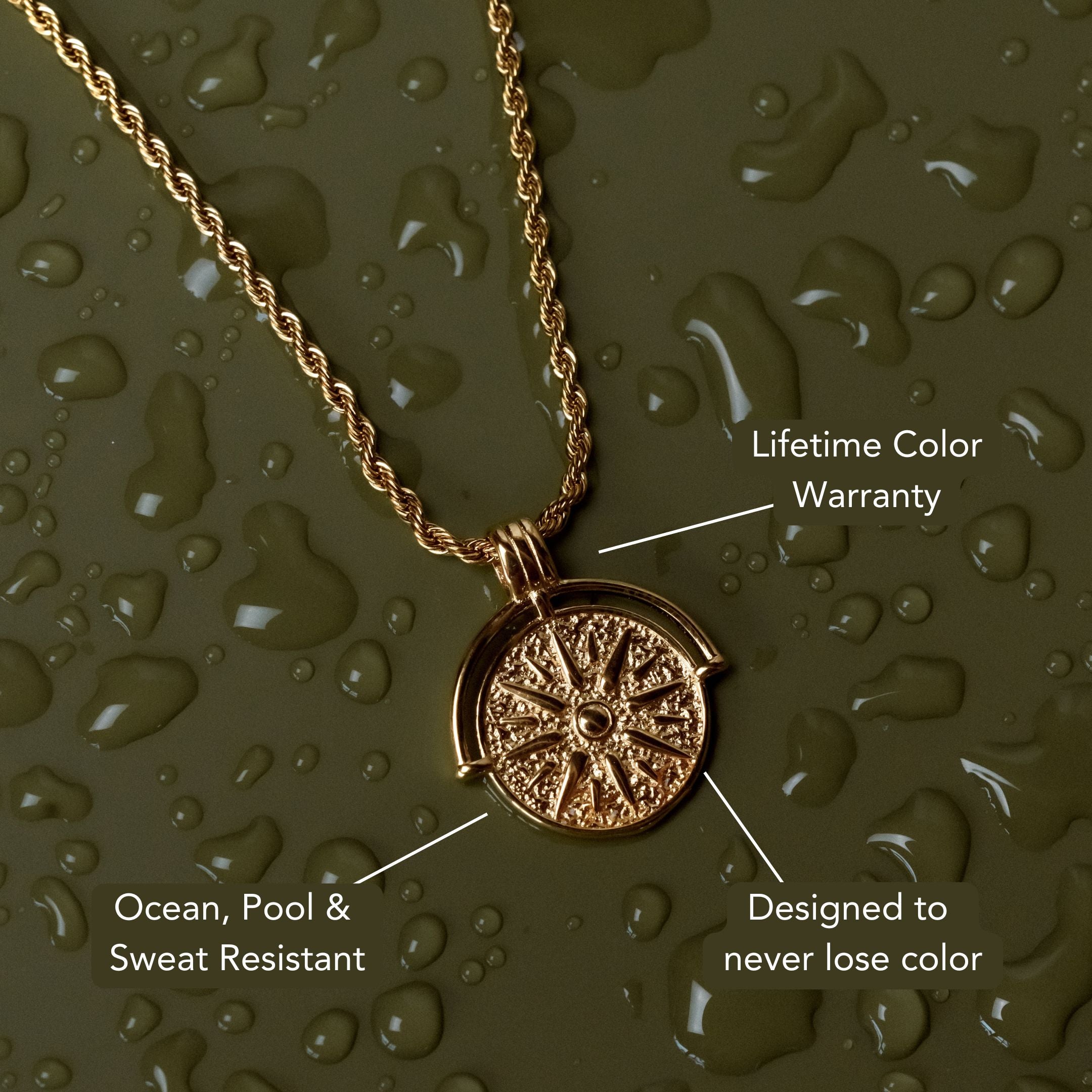
Water-resistant is not the same as waterproof. Water-resistant implies the piece handles light splash exposure. Waterproof implies it maintains its appearance through sustained immersion including chlorinated pool water and salt water. When a brand uses water-resistant without specifying materials, the claim is difficult to evaluate. When a brand specifies PVD-coated 316L stainless steel with a lifetime color warranty, the claim is verifiable.
Hypoallergenic and tarnish-free are related but not identical. Hypoallergenic means the piece is unlikely to cause allergic reactions, typically because it is nickel-free. Tarnish-free means the piece does not discolor with wear. Many tarnish-free materials are also hypoallergenic (titanium, PVD-coated surgical steel), but not all hypoallergenic jewelry is tarnish-free. Checking for both properties separately protects against reactions and discoloration.

Vermeil is a specific legal term in the United States requiring at least 10k gold plating over sterling silver at a minimum thickness of 2.5 microns. It is a higher standard than basic gold plating, but it still wears through over time with daily wear and is not designed for water exposure. Vermeil is demi-fine jewelry, not tarnish-free jewelry.
Gold-filled is sometimes confused with solid gold because the term implies substantial gold content. Gold-filled construction bonds a thicker gold layer to a brass core than electroplating, and it outperforms standard plating significantly in longevity. However, it remains a coated product with a reactive base metal core, and the gold layer wears through at high-friction areas over years of daily wear and water exposure.
How to Verify a Tarnish-Free Claim Before Buying
Three checks identify whether a piece genuinely qualifies as tarnish-free before you commit to purchasing it.
First, find the base metal specification. The base metal is the material the piece is fundamentally made from, underneath any coating. For tarnish-free jewelry, the base metal should be stainless steel (316L), titanium, solid gold, or platinum. If the base metal is brass, copper, or unspecified, the piece is not genuinely tarnish-free regardless of the finish description.
Second, identify the coating method if the piece is not a solid precious metal. PVD coating is the standard that delivers genuine tarnish resistance at accessible price points. Electroplating is the standard that does not. The difference is in the bonding process: PVD bonds at the molecular level, electroplating applies a surface layer with adhesion vulnerabilities.
Third, look at the warranty. ATOLEA backs its tarnish-free range with a lifetime color warranty on every piece, with replacement guaranteed if any piece loses its color regardless of how actively it has been worn. That kind of commitment is only sustainable if the material genuinely performs as described. A brand confident in its tarnish-free claim backs it with terms that reflect that confidence.

Frequently Asked Questions
What do you call jewelry that doesn't tarnish or rust?
The most common terms are tarnish-free jewelry, waterproof jewelry, and PVD jewelry. Each refers to pieces made from or coated with materials that resist the chemical reactions that cause tarnishing and corrosion. Solid gold, platinum, titanium, and PVD-coated stainless steel all qualify. The term used varies by brand, but the material specification is what verifies the claim.
Is stainless steel jewelry tarnish-free?
316L surgical-grade stainless steel does not tarnish under normal wearing conditions including water, sweat, and daily skincare product contact. Its chromium content forms a stable surface layer that prevents corrosion. Stainless steel with a PVD finish extends this resistance to the color layer as well, producing a gold or silver-toned piece that holds its appearance as reliably as the uncoated steel holds its structure.
What is the difference between tarnish-free and tarnish-resistant jewelry?
Tarnish-free jewelry does not tarnish through normal wearing conditions. The materials it is made from do not participate in the chemical reactions that cause tarnishing. Tarnish-resistant jewelry slows tarnishing relative to standard unprotected silver or plated pieces, but is not immune to it. Rhodium-plated silver and gold-filled jewelry fall into the tarnish-resistant category. PVD-coated stainless steel and solid gold fall into the tarnish-free category.
How long does tarnish-free jewelry actually last?
Genuinely tarnish-free jewelry built from solid gold, platinum, titanium, or PVD-coated stainless steel does not have a tarnish lifespan because the material does not tarnish. Solid gold and platinum pieces last indefinitely. PVD-coated pieces carry a finish durability measured in years of daily wear rather than months, with brands like ATOLEA backing that durability with a lifetime color warranty.
Conclusion
What do you call jewelry that doesn't tarnish has several correct answers depending on the material and the manufacturing method behind it: tarnish-free, PVD jewelry, and waterproof jewelry are the most precise. Fine jewelry terms like solid gold and platinum also qualify, at a different price point. The term matters less than the material specification behind it. A piece described as PVD-coated 316L stainless steel with a lifetime color guarantee tells you everything the label alone does not, and that information is what protects you from the replacement cycle that standard plated and sterling silver pieces produce through beach days, workouts, and daily wear.









Leave a comment
This site is protected by hCaptcha and the hCaptcha Privacy Policy and Terms of Service apply.