

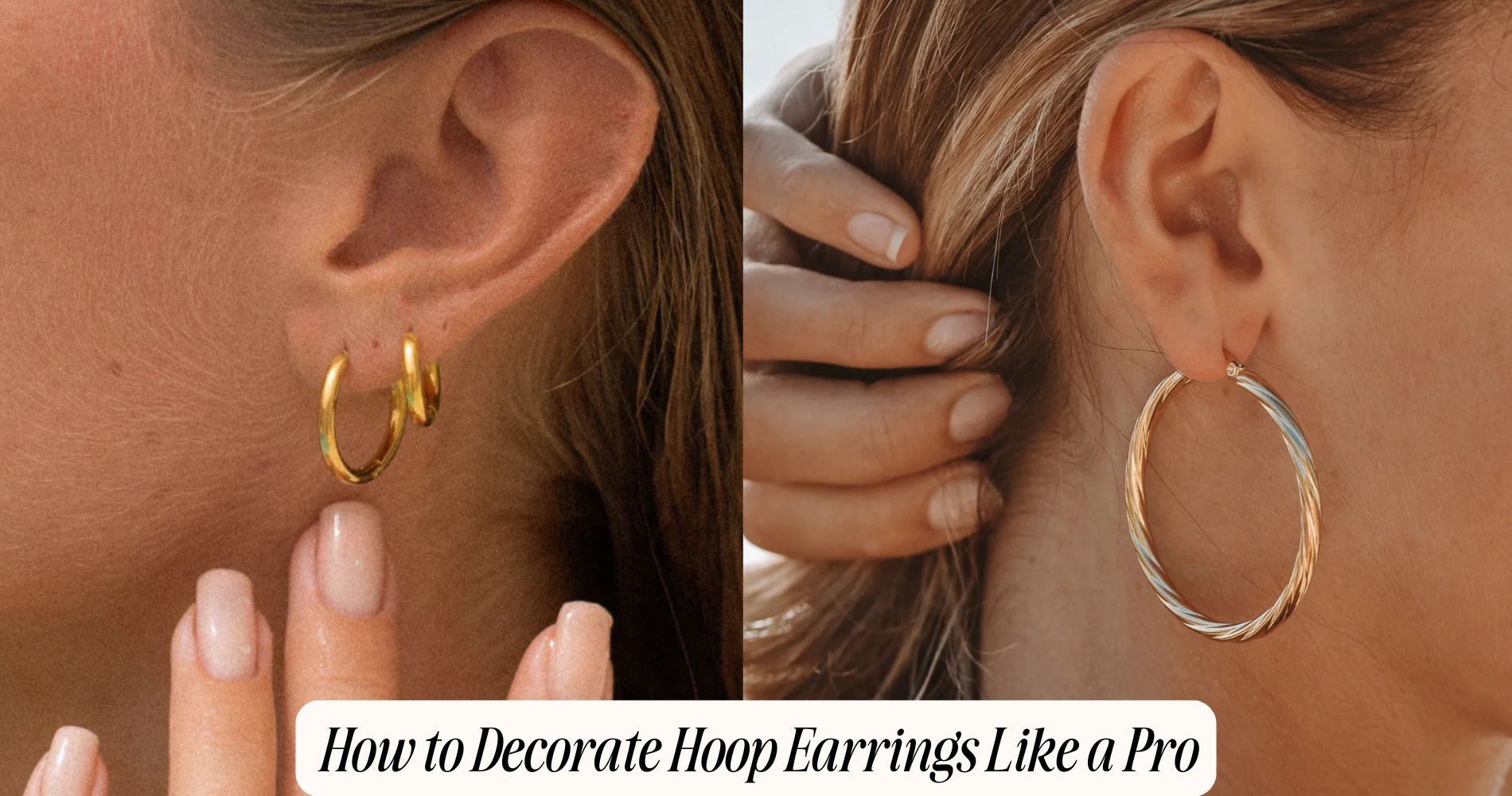
How to Decorate Hoop Earrings Like a Pro
If you’re learning how to decorate hoop earrings, start by choosing high-quality bases—think surgical steel, titanium, or 14k+ gold—in a size that complements your face and piercing gauge. For inspiration, browse Atolea’s Hypoallergenic Hoop Earrings collection, where you’ll find skin-friendly hoops perfect for everyday styling. Once you have the right pair, add structure with neat 24–26 gauge wire-wrapping, balanced bead runs, or a single anchor charm paired with lighter satellites. You can also mix metals or textures—matte seed beads, satin ribbon, crystals, or pearls—just repeat each color or finish at least twice to keep the look cohesive. Ahead, you’ll see how pros turn these simple choices into polished, standout designs.
Choosing the Right Hoops and Materials
Before you start embellishing, you need hoops and materials that match both your design vision and your ears’ tolerance.
First, decide on hoop sizes: small (10–20 mm) for subtle bead accents, medium (25–40 mm) for balanced charms, and oversized (50 mm+) for statement fringe or clustered drops. Larger diameters give you more surface and negative space to design with, but also add visual and physical weight.
Then evaluate material types. Choose surgical steel, titanium, or 14k+ gold if you’re sensitive; use gold-filled or sterling silver for everyday wear with good longevity.
Opt for seamless, wire, or tube hoops depending on how much structure your design needs. Make sure the hoop gauge fits your piercings comfortably before loading any decorative elements.
Essential Tools and Basic Jewelry Techniques
Once you’ve chosen hoops and metals that suit your ears and design, you need a small kit of tools and a few core techniques to actually build the look.
Smart tool selection starts with chain-nose pliers for gripping, round-nose pliers for forming loops, and flush cutters for crisp, modern wire ends. Add a steel ruler, fine file, and bead mat so tiny findings don’t vanish.

Focus on beginner techniques that deliver a polished, fashion-forward finish.
Practice opening and closing jump rings with a precise twist, not a pull, so circles stay perfectly round. Master forming consistent wire loops that sit flush against the hoop.
Finally, learn how to gently straighten or harden wire so your designs look sleek, symmetrical, and runway-ready.
Simple Beaded Accents for Everyday Style
Even with minimal tools, you can turn plain hoops into polished, on-trend pieces just by sliding on a few well-chosen beads.
Use slim metal, glass, or gemstone beads with holes slightly larger than your hoop wire, so they glide smoothly but don’t spin wildly.
Start your design by planning bead color selection: pick a base metal (gold, silver, or rose gold), then echo it with coordinating bead finishes.
For office‑ready everyday combinations, pair matte neutral seed beads with one contrasting focal bead per hoop.
For casual wear, alternate two bead sizes—2 mm and 4 mm—across the bottom third of the hoop to maintain balance and comfort.
Always secure the beads with a small crimp or stopper before closing the clasp.
Layered Charms for Personalized Hoops
Although hoops look minimal from a distance, layered charms let you build a precise, custom story in a very small space.
Start with intentional charm selection: mix one “anchor” piece (a coin, crystal, or carved shell) with smaller satellites like stars, initials, or tiny talismans. Keep metals consistent—all gold-tone or all silver—to avoid visual noise.
Apply layering techniques that control proportion and movement. Place the largest charm closest to the lobe, then stagger shorter drops outward so they cascade rather than tangle.
Alternate flat charms with dimensional ones to prevent bulk. For a trend-forward look, pair one bold motif (like an eye or zodiac sign) with ultra-fine chains or micro-pavé accents, balancing statement and delicacy.
Wire-Wrapping Techniques for a Luxe Look
Wire-wrapping transforms simple hoops into fine-jewelry statements by adding controlled structure, texture, and shimmer. Start by choosing your wire types: 24–26 gauge for delicate micro-wraps, 20–22 gauge for architectural lines. Use half-hard wire so it holds crisp angles without kinking.
Anchor the wire with three tight coils, then build design patterns: uniform spiral wraps for a sleek, runway look; spaced “bar” segments for a minimalist grid effect; or clustered wraps framing focal beads at the base of the hoop.
Keep tension consistent and wraps parallel for a high-end finish. For an on-trend mixed-metal vibe, alternate short sections of gold- and silver-tone wire, aligning shifts at symmetrical points to create intentional, graphic contrast.
Using Ribbon, Thread, and Fabric for Soft Texture
While metalwork defines the hoop’s structure, soft materials like ribbon, thread, and fabric let you add color, movement, and tactility with minimal bulk.
Start by planning ribbon techniques: spiral-wrap narrow satin for a sleek, lacquered look, or ruche chiffon ribbon along the hoop for airy volume. Lock ends with a tiny dab of clear-drying adhesive near the clasp.
For thread, use fine embroidery floss or nylon beading thread, tensioned evenly in close wraps or geometric banding. Alternate matte and metallic strands to echo current mixed-texture trends.
Evaluate fabric choices by weight and drape: lightweight silk strips knot elegantly, raw-edge linen reads artisanal, and velvet delivers rich depth.

Cut on the bias to reduce fraying and hug curves cleanly.
Adding Crystals, Pearls, and Gemstone Details
Once you move beyond soft fibers, crystals, pearls, and gemstones let you build dimensional focal points that catch and sculpt light around the hoop.
Map crystal placements first: cluster tiny rounds near the lobe for intensity, then graduate sizes along the curve to maintain design balance and comfortable earring weight.
Explore pearl colorways—classic ivory, blush, and gray—to echo skin tone or contrast your crystals.
Choose gemstone shapes that suit your silhouette goals: baguettes create sleek lines, briolettes add movement, and navettes emphasize length.
Test adhesive options—jewelry epoxy for permanence, UV resin for precision—before committing.
Use layering techniques, stacking flat-backed stones over wire-wrapped bases, to amplify visual impact while keeping the hoop’s profile streamlined and wearable.
Mixing Metals and Finishes for Modern Designs
Crystals and gemstones give your hoops dimension, but metal pairings set the overall mood and silhouette. When you mix metals, think in deliberate metal color combinations: cool-toned sterling with icy rhodium, or warm 14k gold with blush-toned rose gold.
Keep color temperatures either tightly matched or intentionally opposite for tension.
Use finish contrasts to sharpen the design. Pair high-polish hoops with brushed or satin charms so light hits different planes. Layer a hammered inner hoop inside a mirror-finish outer hoop to create crisp texture breaks.
Oxidized silver against bright gold outlines negative space and enhances pattern work. Always repeat each metal or finish at least twice on the hoop so the visual rhythm looks intentional, not accidental.
Care, Storage, and Styling Tips for Your Custom Hoops
Even the most inventive hoop designs lose impact if you scratch the metal, cloud the stones, or bend the structure through careless wear.
For professional-level hoop care, wipe each pair with a non-abrasive polishing cloth after wear, especially along hinge mechanisms and stone settings. Avoid hairspray, perfume, and SPF contact; apply those first, then put hoops on.
Use vertical storage solutions: lined earring stands, compartmentalized trays, or acid-free cards to suspend each hoop so charms don’t tangle or abrade plating.
Store sterling with anti-tarnish strips; keep gold-plated pieces in individual soft pouches.

When styling, treat hoops as a focal axis: balance oversized custom hoops with sleek hair, clean necklines, and minimal necklaces so your detailing reads crisp, not cluttered.
Frequently Asked Questions
Can I Resell Custom-Decorated Hoop Earrings I Make at Home?
Yes, you can resell them. You’ll photograph each custom design with macro clarity, specify materials and nickel-free specs, then list on selling platforms like Etsy or Depop, optimizing tags, pricing tiers, and trend-forward visuals for maximum conversion.
How Do I Price My Decorated Hoops for Craft Fairs or Online Shops?
You start with cost analysis: materials, labor minutes, overhead. Then apply pricing strategies: 2.5–4x costs, adjust for on-trend beadwork, metallic finishes, packaging aesthetics, and marketplace norms, leaving room for discounts, wholesale, and seasonal capsule collections.
Are There Allergy-Safe Decorating Options for Extremely Sensitive Ears?
You’ll prioritize hypoallergenic materials like titanium, niobium, or surgical steel, then attach glass, enamel, or polymer-clay charms. Avoid nickel, raw brass, and cheap plating—they’ll irritate sensitive skin and compromise long-term comfort, even on short wear tests.
Can Children Safely Help Decorate Hoop Earrings, and What Ages Are Appropriate?
Yes, children can help from about ages 6–8 using child friendly materials and age appropriate techniques. You’ll guide them with blunt tools, non‑toxic glues, large beads, and supervised wire wrapping to maintain precision and safety.
What Are Some Eco-Friendly or Recycled Materials to Decorate Hoop Earrings With?
You’ll elevate hoops sustainably using natural fibers (waxed cotton, raffia), repurposed plastics from bottles or acetate offcuts, reclaimed wood veneers, vintage beads, and scrap metals, ensuring low-VOC sealants and nickel-free findings to maintain both durability and skin safety.
Conclusion
Now you’ve got the skills to turn plain hoops into custom pieces that look studio-made. Choose balanced proportions, mix metals intentionally, and layer beads, charms, and wire-wrapped details with a light hand. Play with texture—matte against high-shine, silk ribbon beside faceted crystals—for a rich, editorial finish. Store each pair separately, wipe them clean after wear, and you’ll reach for your bespoke hoops as often as your favorite everyday basics.









Leave a comment
This site is protected by hCaptcha and the hCaptcha Privacy Policy and Terms of Service apply.