


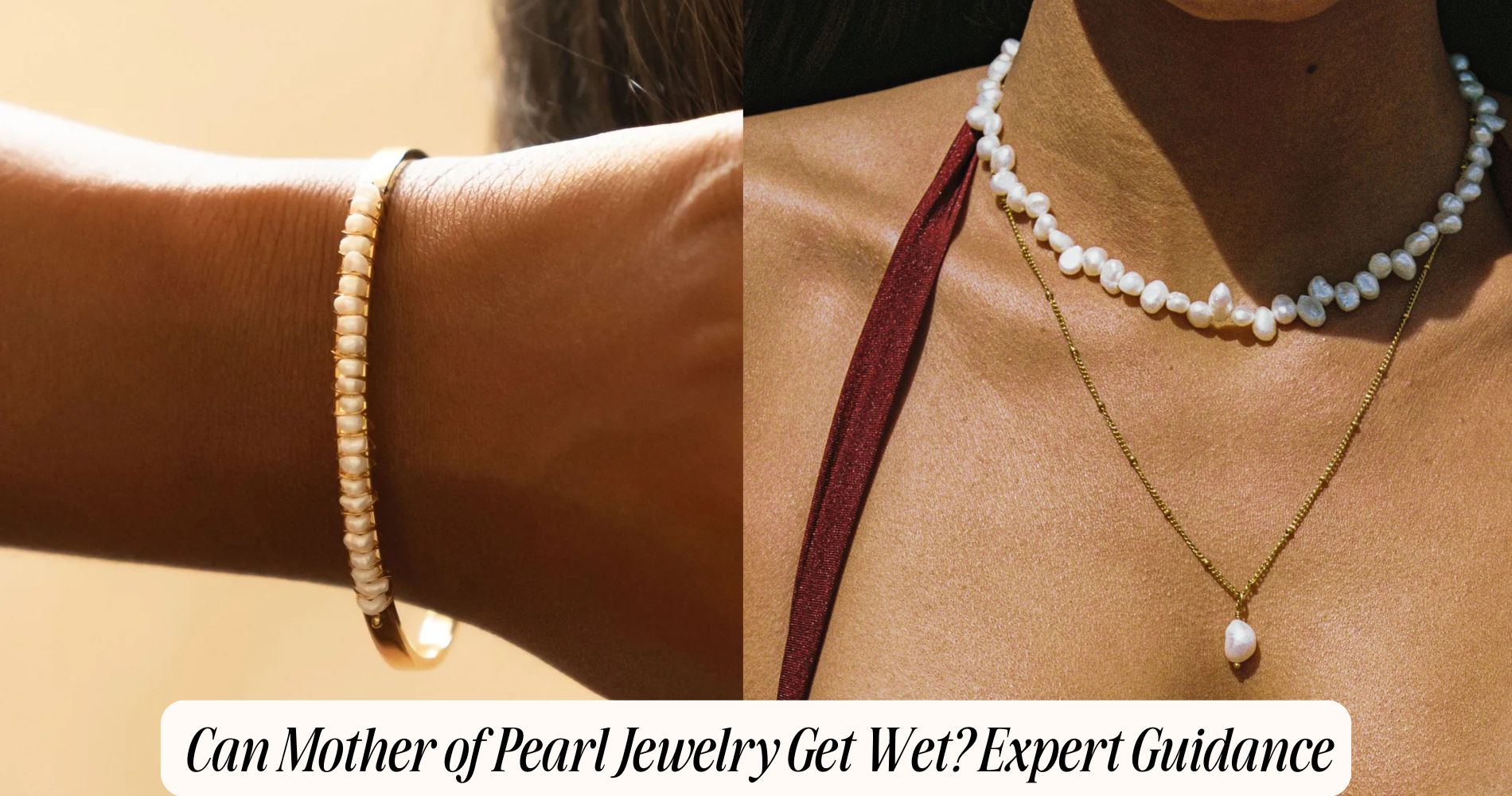
Can Mother of Pearl Jewelry Get Wet? Expert Guidance
Can mother of pearl jewelry get wet? The short answer is yes—but only briefly. While occasional contact with water is usually harmless, prolonged or repeated exposure can damage the delicate nacre structure. Made from a calcium carbonate–protein composite, nacre reacts slowly to water, dissolved minerals, and chlorine, leading to dullness, micro-pitting, and a higher risk of flaking or cracks, especially in pools or saltwater. To keep mother of pearl jewelry looking luminous, it’s important to know which everyday activities are safe and which ones put it at risk.
What Mother of Pearl Really Is and Why It’s Sensitive to Water
Mother of pearl, or nacre, is a biomineral composite that lines the inner shell of many mollusks, and its structure explains why it’s vulnerable to water exposure.
You’re dealing with a layered material: aragonite (a crystalline form of calcium carbonate) platelets stacked like bricks, bonded by elastic biopolymers such as conchiolin.

Mother of pearl origins lie in the mollusk’s mantle tissue, which secretes these minerals and proteins in ultra-thin, alternating layers.
Key Mother of pearl characteristics include anisotropic optical behavior (iridescence), moderate hardness, and pronounced porosity at microscopic interfaces.
Those organic “mortar” layers and tiny inter-crystalline gaps can interact with water, dissolved ions, and surfactants, so you must treat nacre as a hybrid mineral–organic system, not an inert gemstone-like solid.
How Water Exposure Affects Mother of Pearl Over Time
Even brief contact with clean water won’t dissolve nacre, but repeated or prolonged exposure drives subtle chemical and structural changes that accumulate over time.
Each wetting-and-drying cycle lets water penetrate microscopic pores, where it gradually dissolves trace ions from the aragonite platelets and degrades the organic matrix binding them.
As this interlayer “glue” weakens, you’ll see loss of gloss, fine surface pitting, and a chalkier, more brittle feel—classic early water damage.
Slight shifts in the crystal lattice also alter how light interferes within the layers, so iridescence looks dull or patchy.
Over years, these incremental changes create serious longevity concerns: edges can flake, engraved details blur, and thin inlays may fracture under minor mechanical stress.
Everyday Situations: When It’s Safe and When to Take It Off
Because water slowly alters nacre at the microstructural level, it helps to know which real-world exposures are acceptable and which accelerate damage.
For casual wear, brief, low-volume water exposure is generally tolerable: light handwashing while wearing a ring, a few raindrops on earrings, or a quick wipe with a barely damp cloth won’t instantly destabilize the aragonite–protein layers.
You should remove mother of pearl before longer or repeated contact with tap water, which carries dissolved ions, chlorine, and variable pH.
These factors diffuse into microscopic pores, gradually roughening the surface and dulling luster.
Take jewelry off when washing dishes, cleaning, or doing any task where water can pool around settings, seep into drill holes, or trap moisture against the nacre.
Swimming, Showering, and Exercise: High-Risk Water Activities
When you move from incidental splashes to full immersion—swimming, showering, or intense workouts—water exposure becomes considerably more destructive to mother of pearl.
Prolonged contact allows water, heat, and chemicals to penetrate micro-fissures in the nacre, weakening its crystalline aragonite structure and dissolving trace binding minerals.

When you consider swimming precautions, you must account for chlorinated pools, saltwater, and temperature shifts.
Chlorine and dissolved salts accelerate surface etching, while rapid heating and cooling expand and contract the organic matrix, promoting cracking and delamination.
For shower safety, shampoos, soaps, and body washes introduce surfactants and alkalinity that strip natural luster and roughen the surface.
During exercise, sweat’s salt content and lactic acid create a corrosive film, especially under tight straps or metal settings.
Best Practices for Cleaning and Drying Mother of Pearl Jewelry
Although mother of pearl is sensitive to moisture and chemicals, you can safely clean it by using methods that respect its composite structure of aragonite platelets and organic proteins.
Use conservative cleaning techniques: prepare lukewarm distilled water with a drop of pH‑neutral, non-detergent soap. Lightly moisten a soft microfiber cloth; don’t soak the jewelry. Gently wipe the nacre surface, avoiding vigorous rubbing that could abrade the platelet layers or stress organic binders.
Immediately apply controlled drying methods. Pat the piece with a dry microfiber cloth to remove surface water, then lay it flat on an absorbent towel at room temperature. Confirm metal components are fully dried to prevent corrosion products from contacting the nacre.
Avoid heat, hair dryers, ultrasonic cleaners, and steam.
Long-Term Care Tips to Preserve Luster and Prevent Damage
Proper cleaning and drying protect mother of pearl in the moment, but its long-term stability depends on how you store, wear, and handle it between cleanings. You’re dealing with nacre, a biomineral of aragonite platelets and organic matrix, so it’s both hard and chemically sensitive.
Use storage solutions that minimize mechanical abrasion and rapid humidity shifts: separate soft pouches, lined compartments, and no contact with harder gemstones or metals.
Keep pieces away from heat sources, direct sun, and household chemicals that can dehydrate or etch the surface.

Limit jewelry polishing to non-abrasive cloths; never use metal polishes or ultrasonic cleaners.
Put mother of pearl on last, after cosmetics and hairspray, and remove it before swimming, showering, or exercising.
Frequently Asked Questions
Can I Wear Mother of Pearl Jewelry With Perfumes, Lotions, or Hairsprays?
You shouldn’t expose mother of pearl to perfumes, lotions, or hairsprays. Their solvents and alcohols cause detrimental fragrance interaction, while emulsifiers and acids accelerate surface etching, dehydration, and cumulative skincare impact—apply products first, let dry, then put jewelry on.
How Does Mother of Pearl Compare to Pearls in Durability and Care?
You’ll find similar Mother of Pearl characteristics and structure to pearls, but it’s usually thinner and more layered, so it scratches and dehydrates faster; in a Pearl durability comparison, you’ll baby both: avoid acids, abrasives, and heat.
Is Vintage or Antique Mother of Pearl More Vulnerable to Damage Than New Pieces?
Yes, older pieces are usually more vulnerable because microcracks, dehydration, and prior cleaning weaken nacre. You’ll use stricter vintage care—avoid water, acids, and abrasives—to preserve surface integrity and protect long‑term antique value.
Can Jewelers Professionally Restore Dull or Slightly Damaged Mother of Pearl?
Yes, jewelers can restore dull or slightly damaged mother of pearl using meticulous restoration techniques: low‑abrasion micropolishing, hydration with controlled oils, and ultrasonic‑free professional cleaning, followed by protective coatings, provided the nacre layer isn’t severely thinned or cracked.
Are Certain Metal Settings Safer for Protecting Mother of Pearl From Moisture?
Yes, closed-back gold or platinum bezel settings generally protect mother of pearl better, since their metal composition resists corrosion and offers higher moisture resistance than porous, reactive alloys like low‑karat brass, bronze, or unsealed sterling silver.
Conclusion
You’ve seen that mother of pearl’s calcium carbonate platelets and organic matrix make it beautiful but vulnerable to water, heat, and chemicals. You can let it encounter brief, clean water contact, but you shouldn’t wear it for swimming, showering, or sweaty workouts. If it does get wet, you’ll gently dry it and avoid harsh cleaners. By storing it properly and minimizing moisture and chemical exposure, you’ll preserve its nacreous luster and structural integrity for decades.











Leave a comment
This site is protected by hCaptcha and the hCaptcha Privacy Policy and Terms of Service apply.