

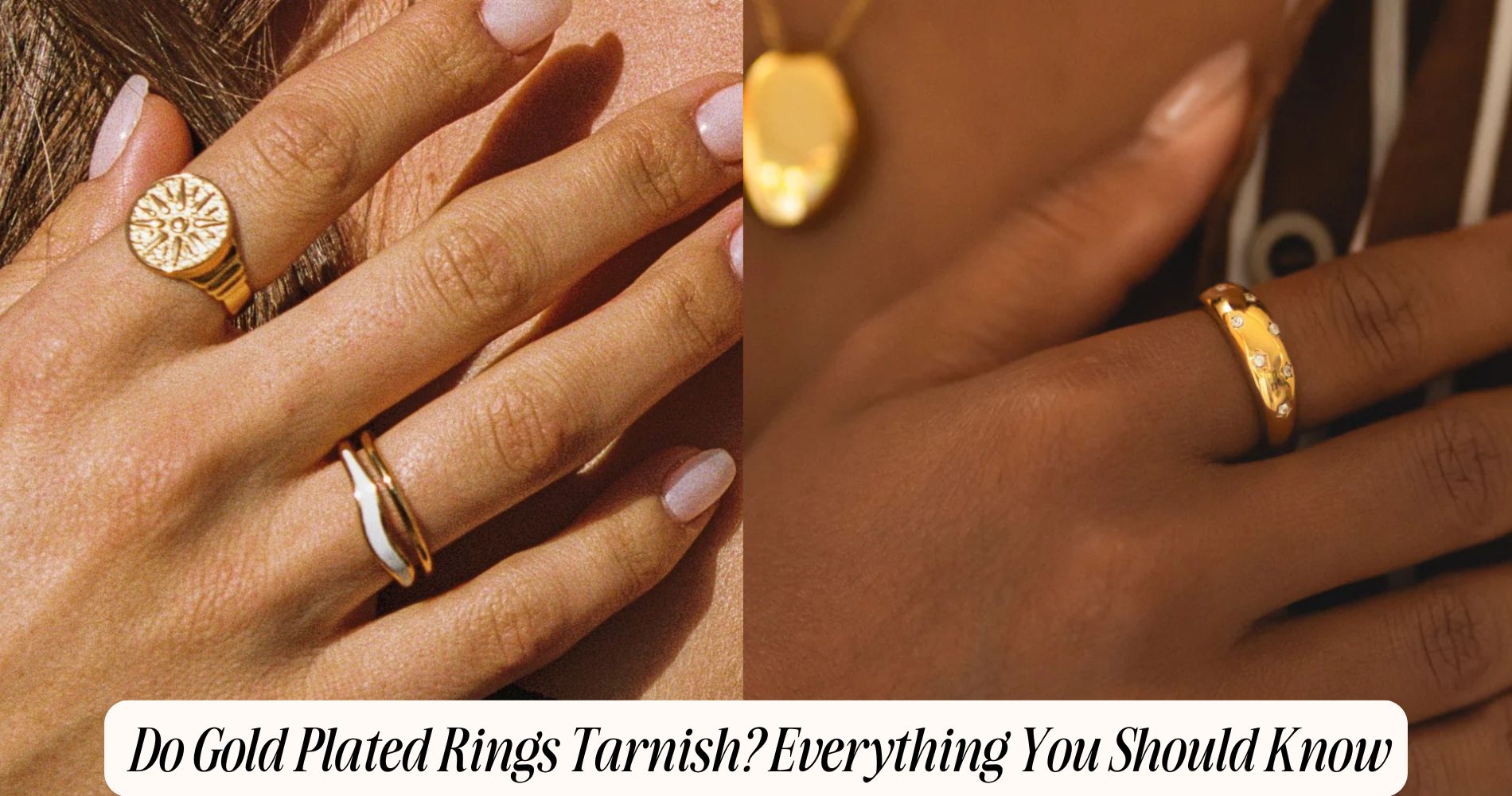
Do Gold Plated Rings Tarnish? Everything You Should Know
Do gold plated rings tarnish? Yes—gold plated rings can tarnish over time as the thin gold layer gradually wears away, exposing the more reactive base metal underneath to air, moisture, sweat, and skin acids. Factors like microscopic pores, friction, and everyday chemicals (such as chlorine, perfumes, and cleaners) speed up this process. Opting for well-made designs—like Atolea’s Sun rings with thicker plating—can help slow visible wear. With proper care, smart cleaning habits, and occasional re-plating, gold plated rings can maintain a solid-gold look for much longer.
What Gold Plating Is and How It Works
Although a gold plated ring looks like solid gold at first glance, it’s actually a base metal—often brass, copper, or sterling silver—coated with a microscopically thin layer of real gold applied through an electroplating process.
In the gold plating process, you start by degreasing and ultrasonic-cleaning the metal, then stripping oxides with an acid bath so atoms can bond correctly.
Next, you suspend the ring in a gold-containing electrolyte solution and run an electric current through it. Positively charged gold ions migrate and deposit onto the negatively charged ring, forming a continuous metallic film.

Different layering techniques may add barrier metals, like nickel or palladium, between the base and gold, improving adhesion, color control, and overall structural stability.
Why Gold Plated Rings Tarnish Over Time
Even with a properly applied gold layer, gold plated rings inevitably tarnish because the ultra-thin coating can’t fully isolate the reactive base metal from air, moisture, and skin chemistry.
Over time, microscopic pores, pinholes, and wear paths in the plating allow oxygen, water, and chloride ions (from sweat) to reach the underlying alloy. That base metal corrodes, and its oxides and sulfides migrate upward, visually dulling or discoloring the gold surface.
The main causes of tarnishing include galvanic interaction between dissimilar metals, acidic skin pH, sulfur compounds from the environment, and cosmetic or cleaning chemicals that attack exposed interfaces.
Effective prevention tips: limit contact with sweat, perfumes, and detergents, remove rings for water-intensive tasks, and clean gently with mild soap, water, and a soft cloth.
Factors That Affect How Quickly Gold Plating Wears Off
Understanding why gold plated rings tarnish naturally leads to a more practical question: how fast will the gold layer actually wear away in real-world use?
The main variables are plating thickness, gold karat, and base metal. Thicker deposits (e.g., 2.5 microns vs. “flash” plating) resist wear and tear longer. Higher karat gold is softer, so it can abrade faster than 10K–14K alloys, even though it’s more chemically stable.
Your daily habits matter. Constant friction from stacking rings, gripping weights, or typing accelerates mechanical loss.
Environmental exposure also plays a major role: sweat, chlorinated pools, cosmetics, perfumes, and cleaning agents chemically attack the interface between gold and base metal, undermining adhesion and speeding up the breakdown of the plated layer.
Common Signs Your Gold Plated Ring Is Starting to Tarnish
When gold plating starts to fail, it telegraphs distinct visual and tactile changes you can spot long before the ring looks “ruined.”
You’ll typically see a dulling of the surface as the high-polish gold luster gives way to a flatter, slightly gray or brassy sheen.
Next, you may notice micro-abrasion lines that don’t buff out, revealing cooler, darker tones from the base metal at high-friction points—edges, prongs, and the underside of the band.

Greenish or black halos on your skin indicate exposed copper or nickel in the substrate alloy.
Rough, draggy texture instead of a smooth slip is another red flag.
How to Properly Care for Gold Plated Rings
Catching those early signs of wear matters because gold plating isn’t a solid layer of gold; it’s a microns-thin coating over a more reactive base metal that you have to protect.
To slow diffusion and abrasion, you should minimize mechanical friction: remove your ring before lifting weights, handling tools, or typing extensively on abrasive keyboards. Limit exposure to chlorinated water, sweat, perfumes, and household cleaners, since chemicals accelerate breakdown at micro-scratches and pinholes.
During daily wear, apply lotions and cosmetics first, let them absorb, then put on your ring last.
For proper storage, keep it in an individual soft pouch or lined box compartment to prevent contact rubbing with harder metals or gemstones, which can rapidly erode the thin plated layer.
Cleaning Methods to Restore Shine Safely
Although it’s tempting to scrub a dull ring aggressively, safe cleaning of gold plated pieces relies on low-abrasion methods and chemically gentle solutions that don’t etch or thin the microscopic gold layer.
Always start with lukewarm water, a drop of pH-neutral dish soap, and a soft microfiber cloth. Avoid paper towels; their cellulose fibers can introduce micro-scratches.
Use controlled, linear motions rather than circular rubbing to reduce localized wear. For crevices, employ a very soft, baby-grade toothbrush, applying minimal pressure.
Effective polishing techniques for restoring luster rely on safe materials only—non-abrasive jewelry cloths specifically rated for plated finishes, never generic metal polishes or baking soda pastes.
Rinse thoroughly, then pat dry, ensuring no detergent residues remain to dull the surface.
When to Re-Plate, Repair, or Replace Your Ring
Once routine cleaning no longer restores a uniform, mirror-like finish, you’re likely at a decision point: re-plate, repair, or replace the ring.
If the base metal is showing through uniformly, re-plating is usually enough. Typical re-plating frequency ranges from every 6–24 months, depending on wear, gold thickness (micron rating), and your skin’s pH.
Choose repair when the ring shows structural issues: bent shank, loose or worn prongs, stone movement, or deep gouges in the base metal. A jeweler can reinforce weak areas before re-plating.

Consider ring replacement when the base metal is heavily pitted, thinning, or causing persistent skin reactions, or when repeated re-plating and repairs exceed the ring’s original or sentimental value.
Frequently Asked Questions
Can Gold Plated Rings Cause Skin Irritation or Allergic Reactions?
Yes, you can experience skin irritation or allergic reactions from gold plated rings, especially with nickel, copper, or brass base metals. If you’ve got skin sensitivity, choose hypoallergenic alloys, thicker gold plating, and rhodium barriers.
Are Gold Plated Rings Safe to Wear While Swimming or Showering?
They’re technically safe, but you shouldn’t wear gold plated rings in pools or showers. For swimming safety, avoid chlorinated and saltwater exposure; for showering precautions, prevent contact with soaps, shampoos, and hot water to minimize accelerated plating degradation.
How Does Gold Plating Compare to Gold Vermeil and Gold-Filled Jewelry?
You’ll find standard gold plating thinnest and least durable, while gold vermeil advantages include a thicker gold layer over sterling silver. Gold filled durability surpasses both, using mechanically bonded solid-gold layers that resist wear, abrasion, and moisture.
Can I Resize a Gold Plated Ring Without Damaging the Plating?
You usually can’t resize a gold plated ring without harming the plating; ring resizing techniques stretch or cut metal, breaking the thin surface. To preserve gold plating durability, re-plate after resizing or remake the ring in solid metal.
Do Different Gold Colors (Yellow, Rose, White) Tarnish Differently When Plated?
Yes, different gold colors tarnish slightly differently when plated. Yellow gold color shows best inherent tarnish resistance, white often depends on rhodium’s barrier properties, while rose’s higher copper content increases susceptibility to discoloration if the plating’s thin or porous.
Conclusion
Gold plated rings do tarnish, because the ultra-thin gold layer eventually wears and exposes base metals to air, moisture, skin oils, and chemicals. When you understand microns, base alloys, and wear patterns, you can predict and slow that process. If you clean gently, store correctly, avoid abrasives and acids, and re-plate when needed, you’ll extend your ring’s lifespan dramatically and keep it looking visually “solid gold” for years instead of months.









Leave a comment
This site is protected by hCaptcha and the hCaptcha Privacy Policy and Terms of Service apply.