

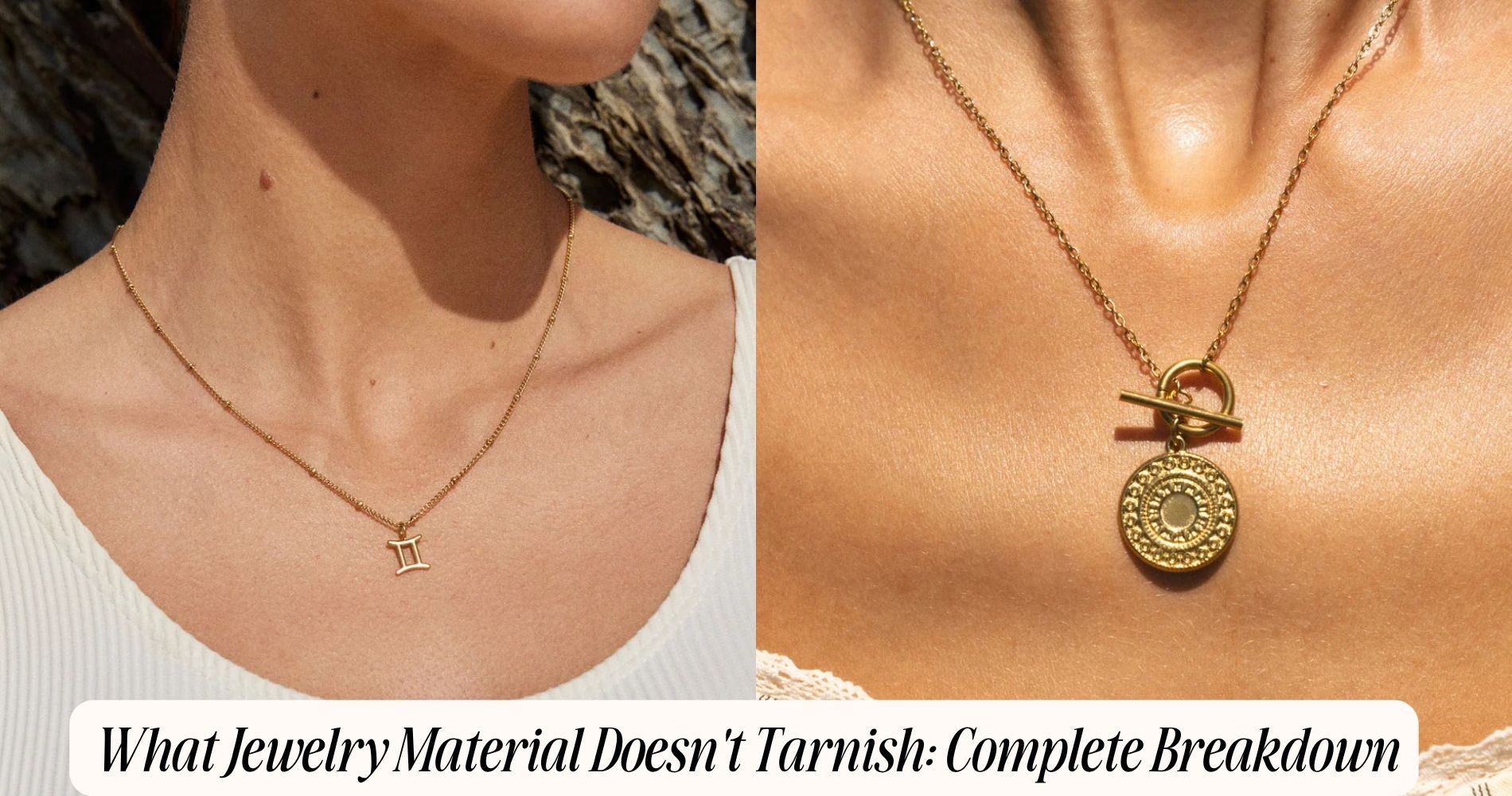
What Jewelry Material Doesn't Tarnish: Complete Breakdown
Choosing jewelry that holds its appearance over time starts with understanding the material it is made from, not the finish it carries when new. Every metal behaves differently at the chemical level, and those differences determine whether a piece looks the same after two years of daily wear or two months. If you are asking what jewelry material doesn't tarnish, the answer requires looking at each material individually: its hardness, its reactivity, how it is finished, and what that means in practice. Tarnish-free Jewelry built on the right materials solves the problem at the source. This guide breaks down every major jewelry material with the technical properties that determine its tarnish resistance in real daily use.
What Tarnishing Is at the Material Level
Tarnishing is a surface chemical reaction, not physical wear. It occurs when a metal reacts with compounds in its environment to form a new surface compound that has different optical properties than the original metal, typically appearing darker, duller, or discolored.
The most common reactions are sulfidation (metal reacting with hydrogen sulfide to form metal sulfides), oxidation (metal reacting with oxygen to form metal oxides), and chloride attack (metal reacting with chlorine or salt compounds). Different metals participate in these reactions at different rates depending on their position in the electrochemical series, which ranks metals by their tendency to lose electrons and react.
Metals high on the reactivity series, like copper and iron, react readily with environmental compounds and tarnish quickly without protection. Metals low on the reactivity series, like gold and platinum, are chemically stable and do not participate in those reactions under normal conditions. Metals in the middle, like silver and zinc, tarnish at moderate rates. Protective coatings work by creating a barrier between the reactive base metal and the environment, with their effectiveness determined by how thick they are and how strongly they bond to the base.

Material-by-Material Technical Breakdown
Solid Gold (14k and Above)
Gold sits near the bottom of the electrochemical reactivity series, meaning it resists oxidation, sulfidation, and chloride attack under all normal wearing conditions. At 14k, the alloy is 58.5% gold with the remainder typically silver, copper, and zinc. The gold content at this level is high enough that the alloy retains gold's chemical stability for practical jewelry purposes.
The copper content in 14k gold alloys does introduce a minor oxidation pathway, but it is not sufficient to cause visible tarnishing under daily wearing conditions including water, sweat, and skincare product contact. At 18k (75% gold) and above, the alloy is even more stable.
Hardness: 3 to 4 on the Mohs scale. Softer than stainless steel, scratches more readily.
Reactivity: Very low. Does not tarnish under standard conditions.
Coating method: None required. Solid metal throughout.
Cost tier: High to very high. Fine jewelry pricing.
Platinum
Platinum is one of the most chemically inert metals available for jewelry use. It does not oxidize, does not react with sulfur compounds, and is unaffected by chlorine, salt water, or acids encountered in daily wear. Its density (approximately 21.4 g/cm³) makes it heavier than gold and significantly heavier than stainless steel.
Unlike white gold, which requires rhodium plating to achieve a bright white finish and loses that plating over time, platinum is naturally white and maintains that appearance without any coating. It does develop a surface patina with wear over time, a slight dulling from micro-scratches, but this is considered desirable by many wearers and does not constitute tarnishing.
Hardness: 4 to 4.5 on the Mohs scale. Comparable to gold, scratches over time.
Reactivity: Negligible. The most tarnish-resistant precious metal.
Coating method: None required. Solid metal throughout.
Cost tier: Very high. The most expensive standard jewelry metal.

Titanium
Titanium resists tarnishing through a passive oxide layer that forms spontaneously on its surface when exposed to oxygen. This layer, titanium dioxide, is chemically stable, self-renewing if disrupted, and prevents further oxidation or sulfidation reactions from reaching the metal beneath. It is the same mechanism that makes titanium suitable for surgical implants and aerospace components.
Titanium is completely nickel-free in its pure form, making it one of the safest options for sensitive skin. It is lighter than stainless steel at comparable volumes, which benefits comfort in larger pieces. Its limitation for fine jewelry work is machinability: it requires specialized tools and is difficult to resize, limiting design options at accessible price points.
Hardness: 6 on the Mohs scale. More scratch-resistant than gold and platinum.
Reactivity: Very low. Passive oxide layer prevents tarnishing completely.
Coating method: Anodization for color; no protective coating required for silver tone.
Cost tier: Moderate. More accessible than precious metals, less so than stainless steel.
316L Surgical-Grade Stainless Steel
316L stainless steel achieves tarnish resistance through a chromium oxide passive layer analogous to titanium's mechanism. The 16 to 18 percent chromium content in the alloy reacts preferentially with oxygen to form a stable, transparent surface layer that prevents the iron content from oxidizing. The 316L designation indicates a low-carbon variant with added molybdenum (2 to 3 percent), which significantly improves chloride resistance compared to standard 304 stainless steel.
This is the same grade used in medical implants, marine hardware, and surgical instruments because its passivation layer holds through sustained exposure to the fluids and environments those applications involve. For jewelry, it means a material that does not tarnish, corrode, or discolor through daily wear including pool and ocean swimming, gym sessions, and continuous skin contact.
Hardness: 5.5 to 6.3 on the Mohs scale. More scratch-resistant than gold, silver, or brass.
Reactivity: Low. Chromium oxide layer prevents tarnishing under all standard conditions.
Coating method: PVD coating applied for gold or colored finishes.
Cost tier: Low to moderate. The most accessible tarnish-resistant base metal.
PVD Coating Over Stainless Steel
PVD (Physical Vapor Deposition) is not a base metal but a coating process that deserves its own entry because it fundamentally changes the performance of the stainless steel it is applied to. In the PVD process, the coating material (typically titanium nitride, zirconium nitride, or chromium nitride) is vaporized in a vacuum chamber and deposited onto the stainless steel surface at the atomic level.
This atomic-level deposition creates a bond that is categorically different from electroplating, which applies a surface layer through chemical deposition with relatively weak mechanical adhesion. PVD coatings are typically 2 to 5 microns thick, compared to 0.5 microns or less for standard electroplating. That thickness, combined with the quality of the bond, means PVD finishes do not lift, peel, or wear through at the friction points where standard plating fails.
The result is a gold or colored-tone finish over a non-reactive stainless steel base that holds through the conditions that expose every other plated finish: daily handwashing, gym sessions, beach days, pool and ocean swimming, and continuous skin contact.
Hardness of coating: 8 to 9 on the Mohs scale. Harder than the steel beneath it.
Reactivity: Negligible. Coating compounds are chemically inert.
Coating method: Vacuum deposition at atomic level. 10 times thicker than electroplating.
Cost tier: Low to moderate. Accessible everyday pricing with fine-metal durability behavior.

Sterling Silver (925)
Sterling silver tarnishes because it participates actively in two chemical reactions. Silver reacts with hydrogen sulfide in the air to form silver sulfide (Ag₂S), the dark gray compound visible as tarnish. The 7.5 percent copper content in sterling silver adds a second pathway through copper oxidation and reaction with skin acids. Both reactions are accelerated by humidity, sweat, and product contact.
Sterling silver is a genuine precious metal alloy with recognized value and a long history in jewelry. Its limitation is maintenance: it requires regular cleaning, careful storage in low-humidity conditions, and removal before water exposure to maintain its appearance through daily wear.
Hardness: 2.5 to 3 on the Mohs scale. The softest standard jewelry metal. Scratches easily. Reactivity: High. Participates in sulfidation and copper oxidation simultaneously. Coating method: Rhodium plating applied to slow tarnishing. Wears through over time. Cost tier: Low to moderate. Accessible precious metal pricing.
Brass and Copper-Based Alloys
Brass (copper and zinc) and bronze (copper and tin) are the base metals most commonly used beneath standard gold plating in fashion jewelry. Both metals are highly reactive: copper oxidizes readily, reacts with chlorine aggressively, and produces the green skin discoloration (copper carbonate) most people associate with low-quality jewelry. Zinc adds some corrosion resistance to brass but does not make it suitable for water exposure or sustained skin contact.
Hardness: 3 to 4 on the Mohs scale. Reactivity: Very high. Reacts with oxygen, sulfur, chlorine, and skin acids. Coating method: Electroplating required. Plating wears through to reactive base. Cost tier: Very low. Standard fashion jewelry pricing.
What the Technical Properties Mean for Daily Wear
Hardness determines how quickly a surface accumulates micro-scratches that dull its appearance over time. Silver and brass scratch readily. Stainless steel and titanium resist scratching significantly better. PVD coating is harder than the steel beneath it, which means the color finish on a PVD piece actually outperforms the base metal on scratch resistance.
Reactivity determines whether the material tarnishes at all under normal conditions. Gold, platinum, titanium, and stainless steel all sit below the threshold where environmental compounds cause visible surface reactions. Silver and copper-based metals sit above it and require either maintenance or protective coatings.

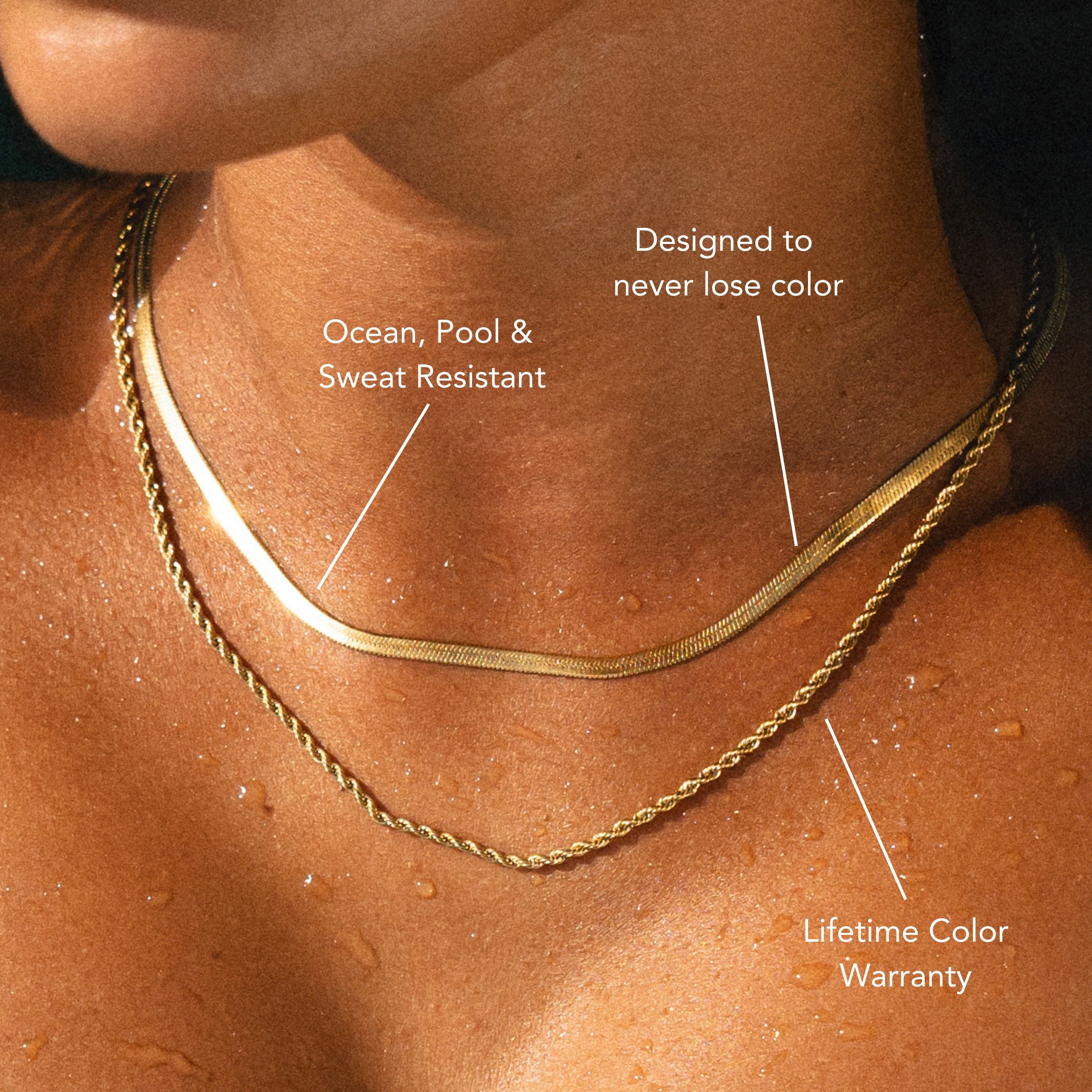
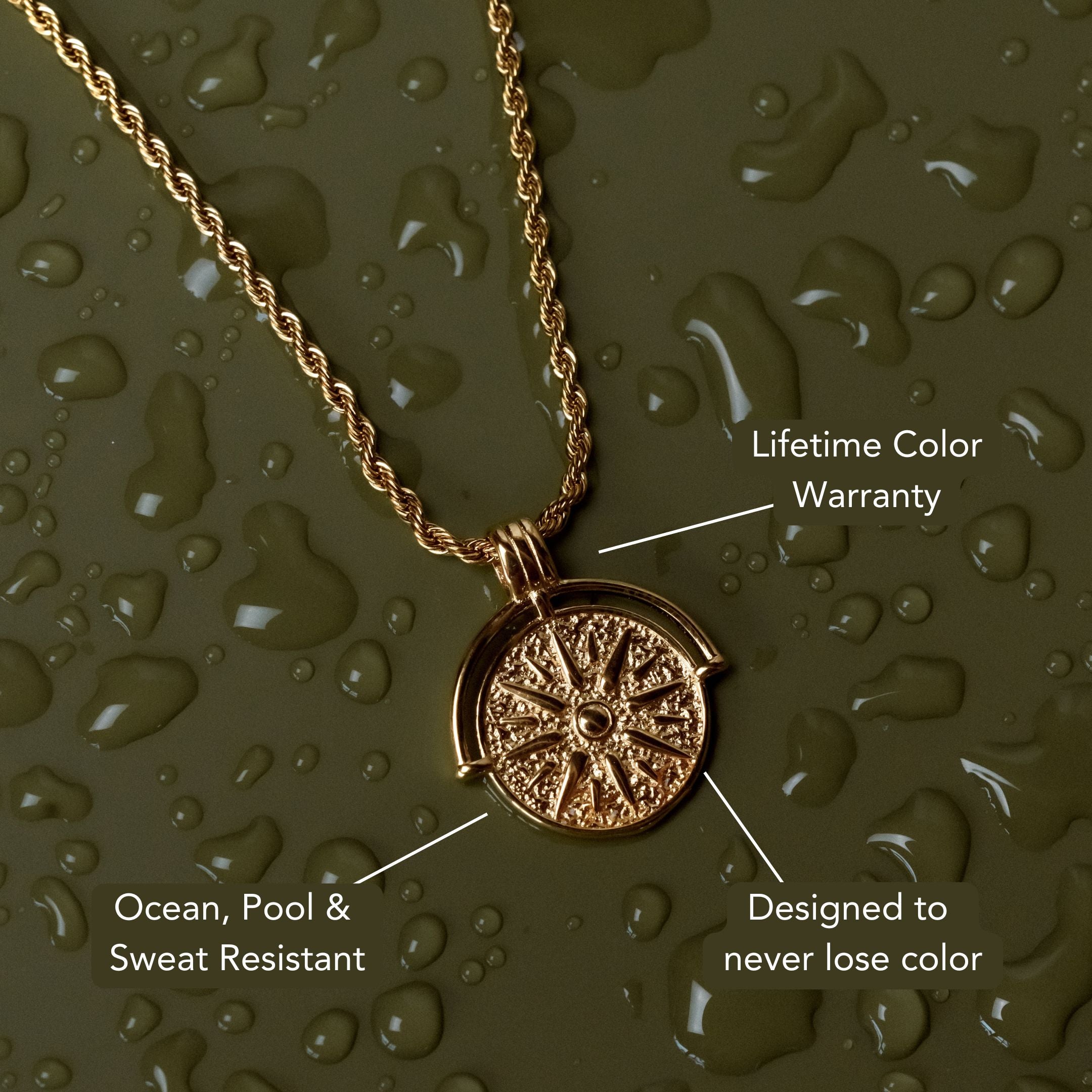
Coating method determines how long a finish lasts when the base metal is reactive. Electroplated finishes over brass fail within months of daily wear at friction points. PVD finishes over stainless steel hold through years because both the coating thickness and the bond strength are categorically different. ATOLEA applies PVD coating over 316L stainless steel across its tarnish-free range, backing every piece with a lifetime color warranty that reflects the actual durability behavior of the material rather than a marketing claim.
Frequently Asked Questions
What jewelry material doesn't tarnish in water?
PVD-coated stainless steel, solid gold at 14k and above, titanium, and platinum all resist tarnishing through water exposure including showers, pools, and ocean swimming. These materials either do not participate in water-accelerated oxidation reactions (gold, platinum, titanium) or carry a passive layer and PVD coating that prevents those reactions from reaching the base metal (stainless steel).
Why does some gold jewelry tarnish?
Gold jewelry tarnishes when it is gold-plated rather than solid gold. The plating is a thin layer over a reactive base metal, typically brass or copper. When the plating wears through, the reactive metal underneath tarnishes rapidly. Solid gold at 14k and above does not tarnish because the gold content itself is chemically stable.
Is titanium or stainless steel better for tarnish-free jewelry?
Both are excellent for tarnish resistance through identical passive oxide mechanisms. Titanium is lighter and fully nickel-free, making it marginally better for extreme nickel sensitivity. Stainless steel (316L) is more widely available, easier to work at fine design scales, and more accessible in price. With PVD coating, stainless steel also offers a wider range of color finishes than uncoated titanium.
How thick is PVD coating compared to standard gold plating?
Standard electroplating applies gold at approximately 0.5 microns or less. PVD coating applies its finish layer at 2 to 5 microns through atomic-level vacuum deposition. The difference in thickness is approximately tenfold, and the bonding method produces adhesion strength that electroplating cannot match, which is why PVD finishes hold through daily active wear where standard plating fails.
Does sterling silver tarnish faster than brass jewelry?
Sterling silver tarnishes through a sulfidation reaction with air that brass does not share in the same way. However, brass corrodes faster than silver through chlorine and salt water exposure because of its high copper content. In typical indoor daily wear conditions, sterling silver tarnishes more visibly and more rapidly than brass. In ocean or pool conditions, brass degrades faster.
Conclusion
What jewelry material doesn't tarnish has a technically verifiable answer: solid gold, platinum, titanium, 316L stainless steel, and PVD coating over stainless steel all resist the chemical reactions that produce tarnishing under daily wearing conditions. The properties table above shows how those materials compare across hardness, reactivity, coating method, and cost, which gives you a framework for evaluating any piece before purchase. The finish a piece carries when new matters far less than the material specification behind it, and that specification is always the right starting point for a buying decision.











Leave a comment
This site is protected by hCaptcha and the hCaptcha Privacy Policy and Terms of Service apply.