

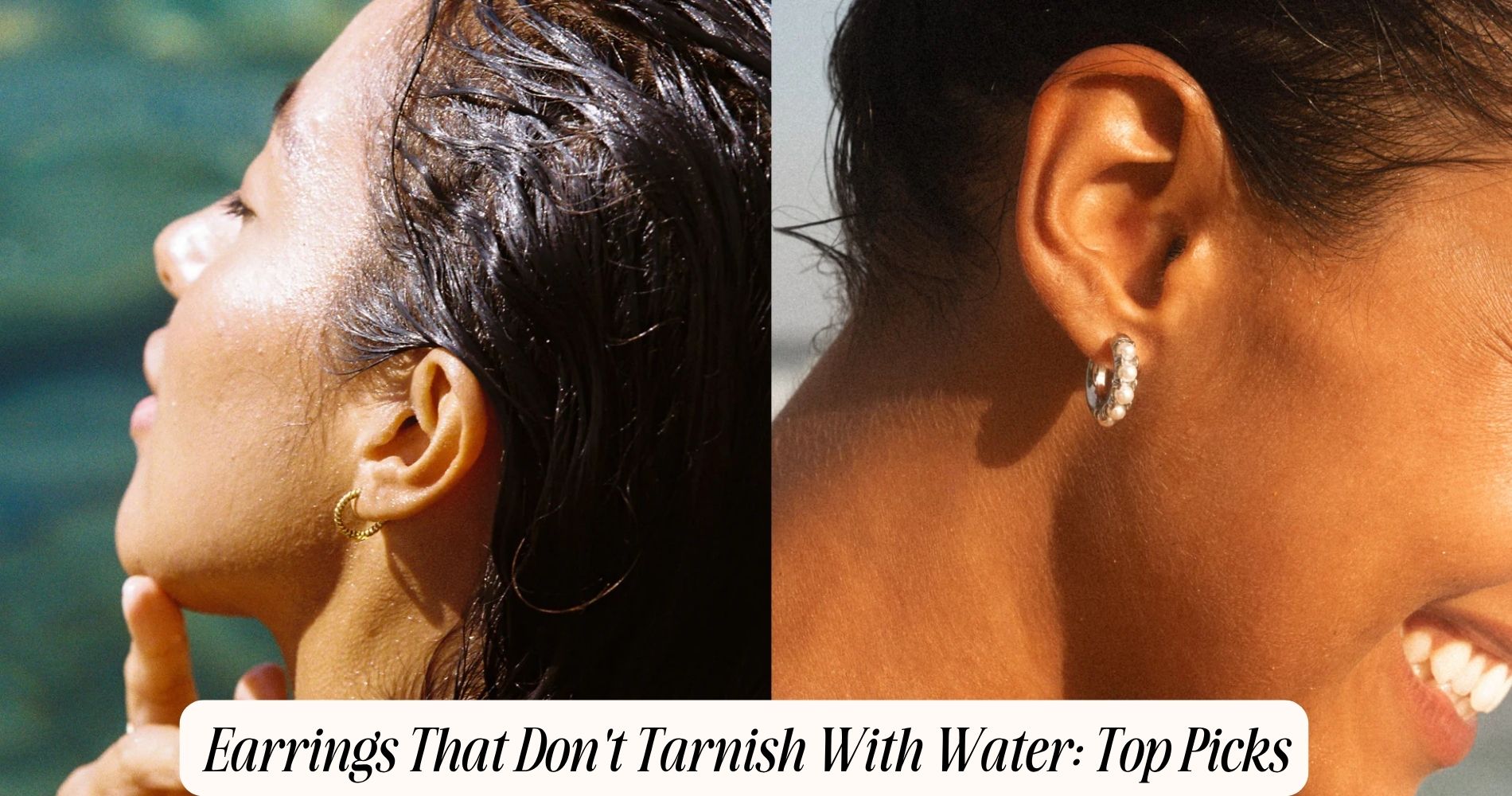
Earrings That Don't Tarnish With Water: Top Picks
Most earring tarnish problems start at the post. The part of an earring that sits inside a piercing is the first point of contact with water, sweat, and skin chemistry, and it is typically the least visible, which means tarnishing and irritation develop there before you notice anything on the outer face of the piece. Finding earrings that don't tarnish with water requires looking at the full construction of the earring, not just the finish that faces outward. Tarnish-free Jewelry built on verified materials solves this at the base metal level. This guide covers which materials genuinely hold up through water exposure, which earring styles work best for active daily wear, and what to look for in the construction before you buy.
Why Earrings Are Particularly Vulnerable to Water Damage
Earrings face a specific set of conditions that make water resistance more critical for them than for most other jewelry types.
The post passes through piercing tissue, which means it is in sustained contact with a warm, moist environment that includes trace biological compounds, skin oils, and lymphatic fluid. That environment is chemically active in ways that accelerate tarnishing and metal reactivity significantly compared to external skin contact. A post that begins to corrode or tarnish inside a piercing causes irritation, discoloration of the surrounding skin, and in some cases infection, before any external sign of tarnishing appears on the earring face.

Earrings worn through showers encounter soap, shampoo, and conditioner at their highest concentration because the head and ears are where most of those products are applied. The surfactant compounds in shampoo and conditioner are more reactive with metal surfaces than the diluted rinse-off water that reaches a bracelet or anklet.
Earrings worn through gym sessions accumulate sweat at the earlobe, which is a warm, enclosed area that traps moisture. The combination of salt, lactic acid, and trace compounds in sweat interacts with reactive base metals to produce both tarnishing and skin discoloration faster at the piercing site than on open skin.
Understanding these specific conditions makes it clear why earring material selection matters more than the finish alone.
Earrings That Don't Tarnish With Water: Materials That Qualify
PVD-coated stainless steel
PVD-coated 316L stainless steel is the most practical water-resistant earring material at an accessible price point. The 316L base resists corrosion through a chromium oxide passive layer that holds through sustained moisture, soap, and sweat exposure. The PVD finish deposited over it at the molecular level produces a color coating approximately 10 times thicker than standard electroplating, with a bond that does not lift or peel through water exposure.
Critically, quality PVD earrings carry the PVD coating on the post as well as the outer face. This is the detail that separates genuinely water-resistant earrings from pieces that are water-resistant on the visible surface only. A PVD-coated post inside a piercing does not corrode or cause the irritation that a plated post with a reactive core produces once the plating degrades.
Solid gold at 14k and above
Gold does not react with water, soap, chlorine, or sweat chemistry. A solid gold earring post and construction handles daily shower wear and pool sessions without tarnishing or corroding at the piercing site. At 14k, the alloy retains gold's fundamental chemical stability through daily wear conditions.
The limitation is price. Solid gold earrings sit at a fine jewelry cost level that places them outside the everyday accessible range for many buyers, particularly for styles worn continuously through active conditions where loss is possible.

Titanium
Titanium forms a self-renewing oxide layer that passivates it completely against water, salt, chlorine, and skin chemistry. It is fully nickel-free, making it the most reliably hypoallergenic earring post material available. Titanium is commonly recommended specifically for sensitive or newly pierced ears because its biocompatibility is clinically verified through its use in surgical implants.
Its limitation for earrings is the range of styles available at accessible price points. Fine titanium earring designs require specialized manufacturing and tend to be found in narrower style ranges compared to stainless steel.
Surgical-grade stainless steel (316L, uncoated)
Uncoated 316L surgical steel is the standard for body jewelry worn continuously in piercings. Its passivation layer handles the piercing environment without corroding, which is why it is the default recommendation from professional piercers for healing and healed piercings alike. For earrings worn through water, the post material is the most critical element, and 316L surgical steel on the post alone substantially reduces tarnishing and irritation risk compared to plated alternatives.
Earring Styles and How They Handle Water Exposure
Different earring constructions interact with water differently. The style choice affects not just aesthetics but how much water and product the earring retains and how it behaves through active wear.
| Earring Style | Water Retention | Active Wear Suitability | Post Vulnerability | Best For |
|---|---|---|---|---|
| Stud (flat back) | Very low | Excellent | Low with flat back post | Daily wear, gym, swimming |
| Stud (butterfly back) | Low | Good | Moderate (back loosens) | Daily wear, light activity |
| Small hoop (hinged) | Low | Very good | Low | Daily wear, casual swimming |
| Large hoop | Moderate | Moderate | Low | Casual wear, light activity |
| Huggie hoop | Very low | Excellent | Very low | Daily wear, gym, swimming |
| Drop or dangle | Moderate to high | Poor | Low | Dressed-up occasions |
| Threader | Low | Poor | Low | Occasional wear |

What to Look for in the Construction
Three construction details determine whether an earring genuinely holds up through water exposure or just appears to from the outside.
Post material specification. The post is the most critical element for water resistance because it sits inside the piercing continuously. Look for a specific base metal designation on the post: 316L stainless steel, titanium, or solid gold at 14k and above. Earrings described as gold-tone or silver-tone without a base metal specification typically use a brass or alloy post with a plated finish that degrades at the piercing site.
Back type and security. Butterfly backs are the most common closure for fashion earrings but the least secure through active use. They can work loose in water and are prone to slipping off during swimming. Screw backs, flat backs, and hinged closures all provide more reliable security through water contact and physical activity.
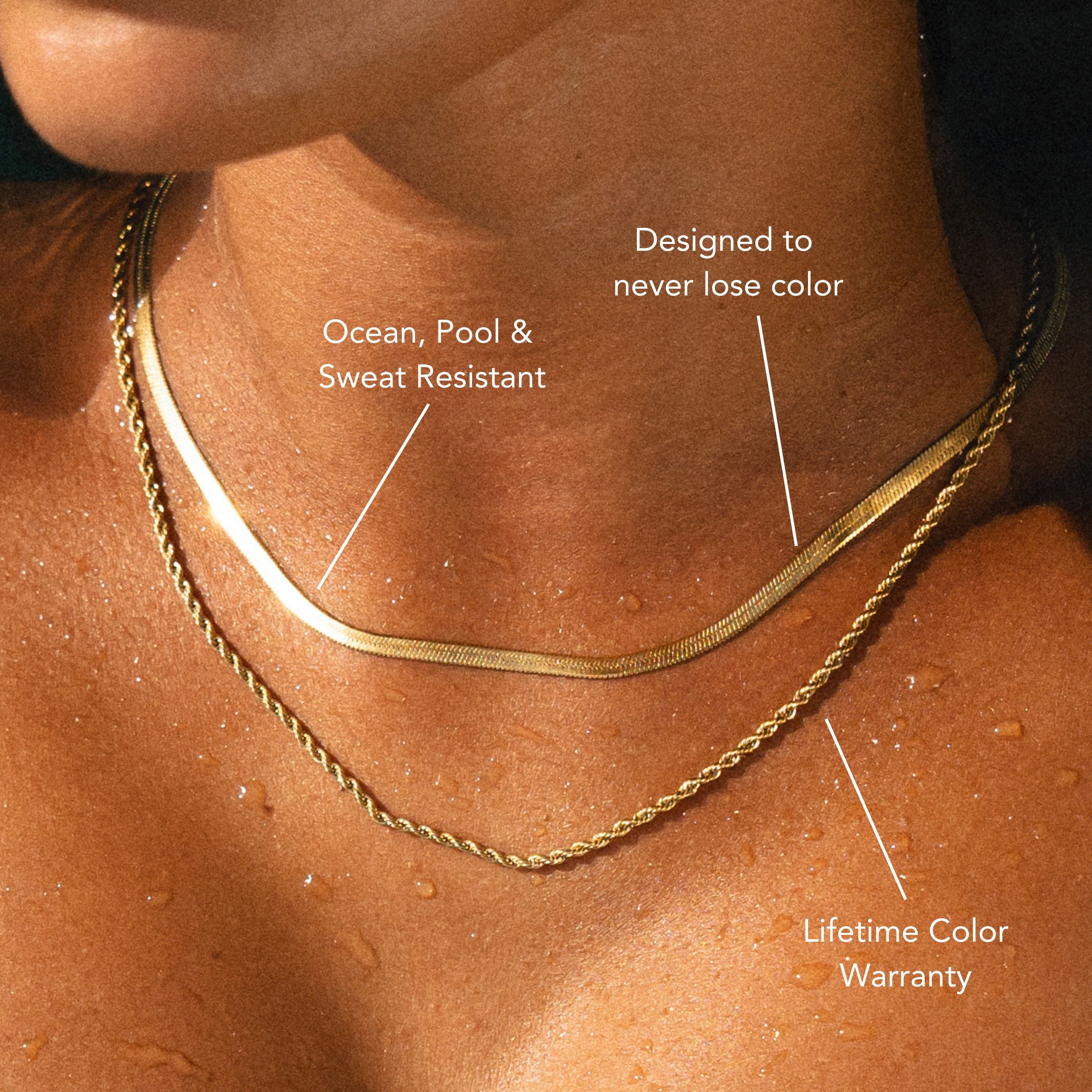
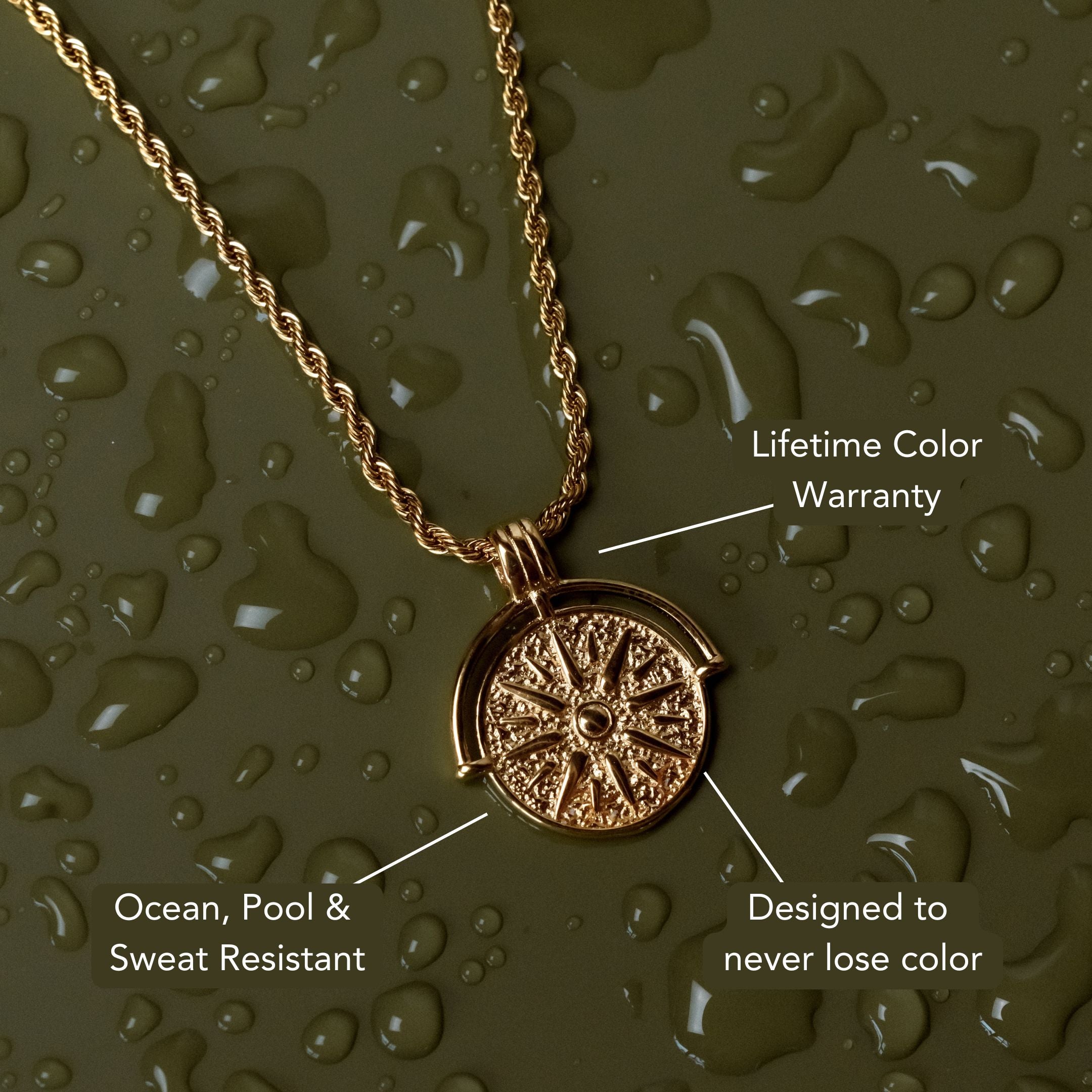
Coating coverage. For PVD-coated earrings, the coating should cover the post and back as well as the outer face of the piece. Some lower-quality PVD earrings coat only the visible surface and leave the post in a less durable finish. ATOLEA's tarnish-free earring range uses PVD-coated 316L stainless steel construction throughout the piece including post and back, with a lifetime color warranty that covers the finish regardless of how the earrings are worn. The warranty applies through shower wear, pool and ocean swimming, and gym use without conditions on frequency or environment.

Frequently Asked Questions
What earrings can you wear in the shower every day?
Studs and huggie hoops made from PVD-coated stainless steel, solid gold at 14k and above, or titanium handle daily shower exposure without tarnishing or causing piercing irritation. These materials do not react with water, soap, or shampoo. Standard plated earrings with brass or copper cores degrade at the post inside the piercing with repeated shower exposure, causing both tarnishing and skin reactions.
Can you swim with earrings in?
Yes, with the right material and style. PVD-coated stainless steel, solid gold, and titanium earrings handle pool chlorine and ocean salt water without tarnishing. Studs with flat or screw backs and huggies with hinged closures stay most securely in place through swimming. Large drops and dangles are not practical for swimming because their open construction retains water and their closures are less secure under water pressure.
Why do my earrings tarnish inside the piercing?
The piercing environment is warm, moist, and chemically active, which accelerates tarnishing on reactive base metals faster than external skin contact does. Earrings with brass or copper cores, even when plated, tarnish at the post as the plating degrades through sustained moisture contact. Switching to earrings with a 316L stainless steel or titanium post eliminates this because those base metals do not participate in the reactions that cause tarnishing.
Are gold-plated earrings waterproof?
No. Gold-plated earrings have a reactive base metal core, typically brass, with a thin gold layer applied over it. That layer degrades with water exposure, particularly at the post inside a piercing where moisture contact is continuous. Once the plating wears through, the brass core tarnishes and can cause skin reactions. PVD-coated stainless steel or solid gold are the reliable alternatives for earrings worn through water.
How do I stop earrings from irritating my ears in water?
The irritation usually comes from the post material reacting with the piercing environment, not from the water itself. Switching to posts made from 316L surgical steel, titanium, or solid gold at 14k and above eliminates the reactive metal that causes the reaction. Keeping the earring and the surrounding skin dry and clean after water exposure, and avoiding very tight-fitting backs that trap moisture against the lobe, also reduces irritation.
Conclusion
Earrings that don't tarnish with water are defined first by their post material and second by their closure security. PVD-coated 316L stainless steel, solid gold, and titanium are the materials that handle the piercing environment, daily shower contact, pool sessions, and gym sweat without the tarnishing and irritation that reactive base metals produce. Within those materials, studs with flat backs and huggie hoops provide the most practical combination of water security and comfort for continuous active wear through whatever the day involves.









Leave a comment
This site is protected by hCaptcha and the hCaptcha Privacy Policy and Terms of Service apply.