

What Is Waterproof Jewelry: Complete Guide
The term waterproof jewelry appears on product pages across the internet, but it is not a regulated or standardized claim. Two pieces can both be described as waterproof and perform entirely differently through a month of daily showers. Understanding what is waterproof jewelry in practical terms, what materials and construction methods actually deliver on the claim, and how to verify it before buying, saves you from the cycle of purchasing pieces that degrade within weeks of regular water contact. Waterproof Jewelry built to a genuine standard means something specific. This guide covers what that standard is, which materials meet it, how water affects different jewelry types, and what to look for before making a purchase.
What Waterproof Jewelry Actually Means
Waterproof is not a certification in the jewelry industry the way it is for watches or electronic devices. There is no standardized test, no regulatory body, and no enforced definition. A brand can describe a piece as waterproof whether it handles a ten-second splash or five years of ocean swimming, which means the term alone tells you almost nothing without material context.
In practical terms, waterproof jewelry refers to pieces that maintain their appearance and structural integrity through sustained water exposure including showers, swimming, and ocean contact without tarnishing, corroding, or losing their finish. The operative word is sustained. A piece that survives an occasional splash but degrades through daily showers does not genuinely meet a practical waterproof standard, even if no rule prevents calling it that.

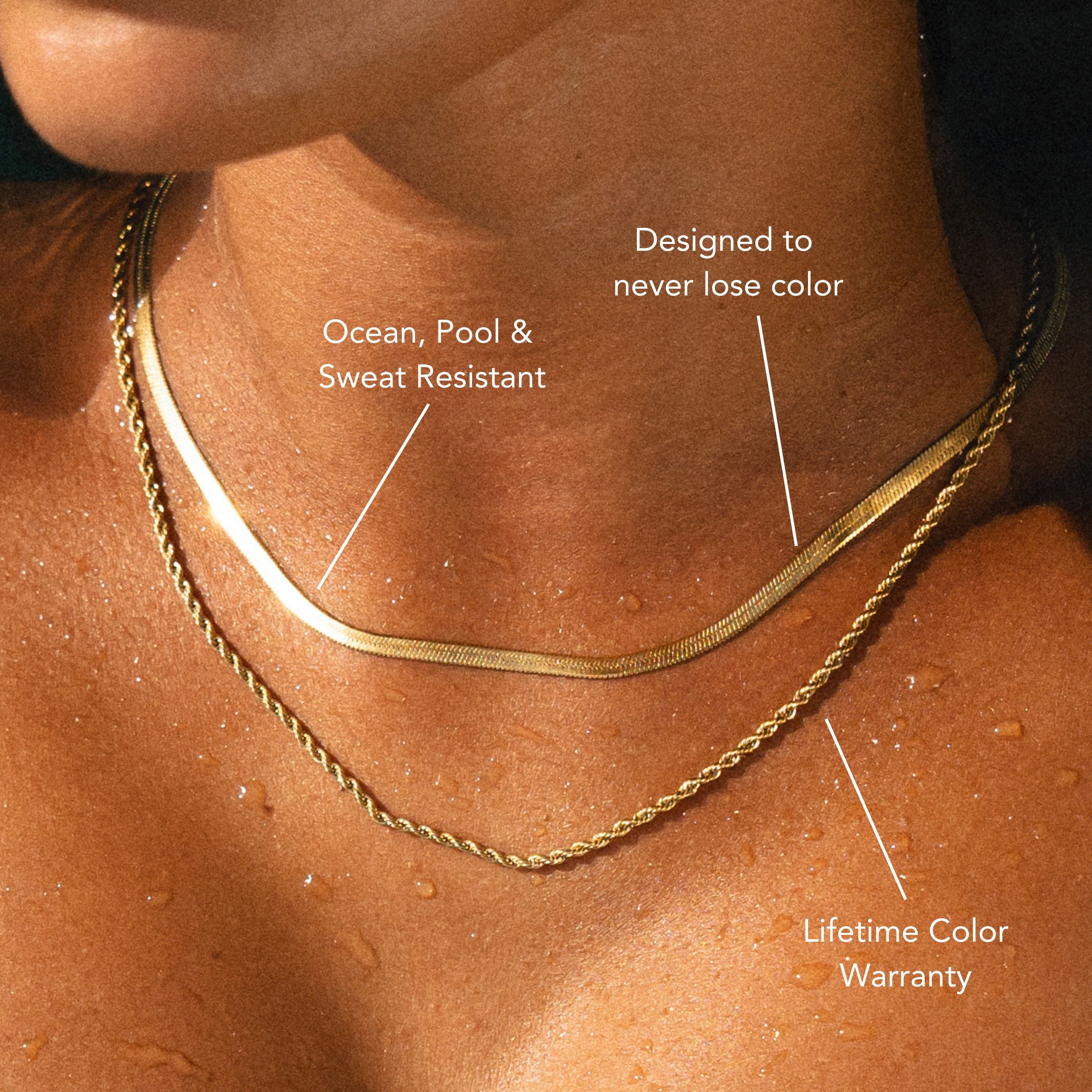
The distinction that matters is between water-resistant and genuinely waterproof. Water-resistant suggests a piece tolerates incidental water contact: rain, hand washing, a quick rinse. Waterproof suggests it holds up through the full range of water exposure an active lifestyle involves: daily showers, gym sweat, pool sessions, beach days, and ocean swimming.
What makes jewelry genuinely waterproof is not a coating applied to a reactive base. It is the combination of a non-reactive base metal and a finish method that does not have adhesion vulnerabilities under sustained moisture contact. Both elements need to qualify together for the waterproof claim to hold through real daily use.
What Is Waterproof Jewelry Made From
The base metal and the finish method together determine whether a piece is genuinely waterproof. Four material categories consistently meet the practical standard.
PVD-coated stainless steel
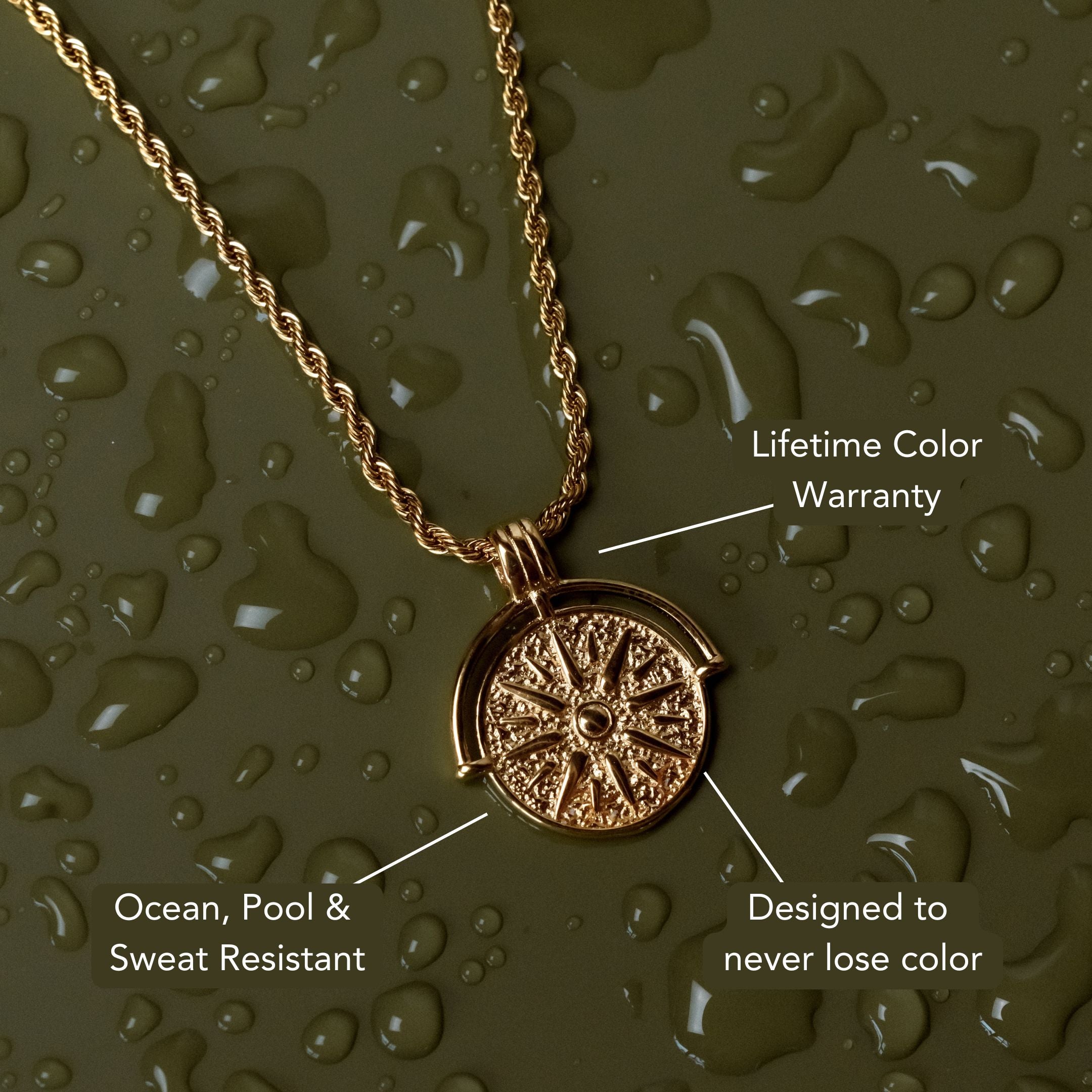
PVD (Physical Vapor Deposition) coating over 316L surgical-grade stainless steel is the construction most consistently behind genuine waterproof jewelry at accessible price points. The 316L base resists corrosion through a self-renewing chromium oxide passive layer that holds through chlorinated pool water, ocean salt water, soap, steam, and sweat without reacting. The PVD finish deposited at the molecular level in a vacuum environment produces a color layer approximately 10 times thicker than standard electroplating, bonded at the atomic level rather than applied as a surface deposit.
That bonding method is what separates PVD from standard plating on waterproof performance. Standard plating applies a gold or silver layer through an electrochemical process that creates a surface adhesion between the coating and the base metal. That surface adhesion weakens with thermal cycling, moisture penetration, and physical friction over time, causing the plating to lift at the edges and friction points. PVD's atomic-level bond does not have those vulnerabilities. The finish does not lift through sustained water exposure because the bond is fundamentally different from the one that fails in standard plating.

Solid gold at 14k and above
Gold is chemically inert under all standard wearing conditions. It does not react with water, chlorine, salt, soap, or the compounds in sunscreen and skincare products. At 14k, the alloy contains sufficient gold to retain this non-reactive character through daily water contact. Solid gold is waterproof by nature rather than by coating: there is no finish layer to degrade and no reactive base metal to expose.
Titanium
Titanium forms a stable, self-renewing oxide layer on its surface that passivates it completely against water, salt, and chlorine. It does not tarnish through any normal wearing condition and is used in marine and aerospace applications specifically because of its sustained corrosion resistance. Titanium jewelry handles ocean swimming, pool sessions, and daily showers without any surface degradation.
Surgical-grade stainless steel (316L, uncoated)
Uncoated 316L stainless steel is waterproof in its natural silver-gray finish. Its chromium oxide passive layer holds through chlorinated and salt water without corroding or tarnishing. For pieces in natural steel tone, no additional finish is needed for waterproof performance.
What Is Not Waterproof Jewelry: Materials That Fail With Water
Understanding what waterproof jewelry is requires equal clarity on what it is not.
| Material | Water Resistance | Primary Failure Mechanism | Typical Failure Timeline |
|---|---|---|---|
| Gold-plated brass | Poor | Plating lifts at edges, brass corrodes | Weeks to months |
| Sterling silver | Poor | Sulfur and copper oxidation, accelerated by moisture | Days to weeks |
| Gold-filled | Moderate | Brass core exposed at friction points over time | 6 months to 2 years |
| Rhodium-plated silver | Poor | Rhodium wears through, silver tarnishes beneath | Weeks to months |
| Brass or copper | Very poor | Direct corrosion from water contact | Days |
| Gold vermeil | Poor | Plating degrades, sterling silver tarnishes beneath | Weeks to months |
Gold-plated jewelry deserves specific attention because it is the most commonly misrepresented category in waterproof marketing. The gold layer on a plated piece does not react with water, which allows brands to suggest the piece is water-safe. The reactive base metal beneath it does react with water, and once the plating wears away, that base metal is exposed. The failure is not immediate, which makes the claim seem credible initially. But through daily shower wear, the plating at clasp edges, link joins, and the inner shank of rings wears through within weeks to months, at which point the piece is no longer waterproof regardless of how it was described.

How to Verify a Waterproof Claim Before Buying
Three checks at the point of purchase reveal whether a waterproof claim is backed by a genuine material specification.
Check the base metal name. Any product listing that describes finish quality (gold plated, gold tone, PVD coated) without naming the base metal is incomplete for waterproof evaluation. The base metal name is the variable that determines long-term water resistance. A listing that names 316L stainless steel, solid gold at a specific karat, or titanium as the base metal gives you verifiable information. A listing that describes only the finish without the base is a gap worth questioning before purchase.
Identify the coating method. For pieces that are not solid precious metals, the coating method determines finish durability through water. Standard electroplating produces a thin surface layer with adhesion that degrades through repeated thermal cycling and moisture exposure. PVD coating produces a finish bonded at the atomic level that does not have those adhesion vulnerabilities. The coating method name in the product description, specifically the presence or absence of PVD, is the relevant detail for assessing waterproof durability of colored finishes.
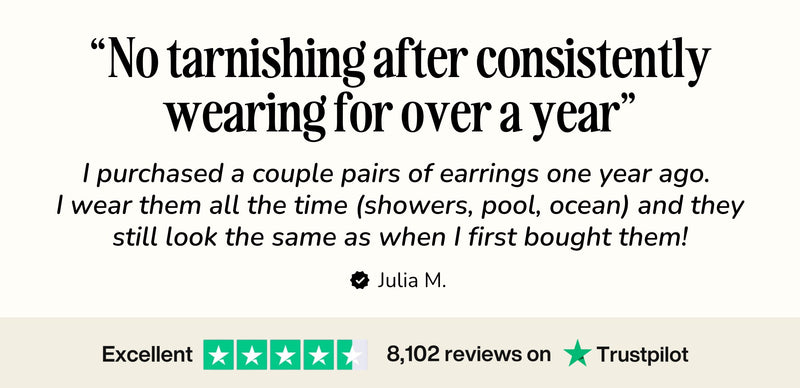
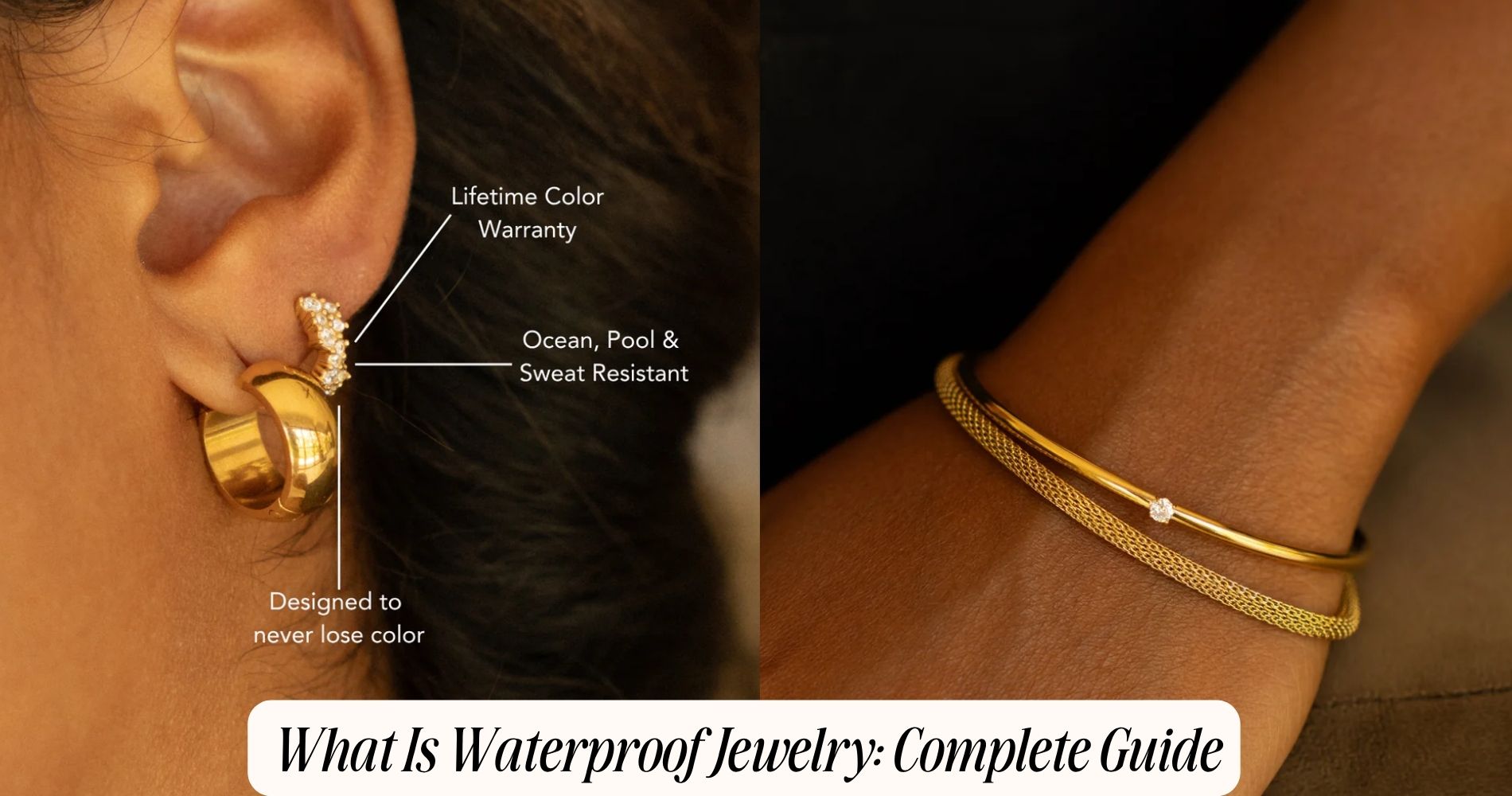
Evaluate the warranty terms. A brand that offers a lifetime color warranty on waterproof jewelry is making a financially meaningful commitment that only works if the material genuinely performs. ATOLEA backs every piece in its waterproof range with a lifetime color warranty: if any piece loses its color, it gets replaced with no conditions attached. That commitment is only sustainable if the base metal and coating method genuinely hold through daily water exposure, which makes the warranty itself a proxy for verifying the waterproof claim.

What to Expect From Genuine Waterproof Jewelry in Daily Use
A piece built to a genuine waterproof standard behaves consistently across all the water contact conditions daily life involves.
Through daily showers, a genuinely waterproof piece does not dull, tarnish, or develop the chalky mineral deposit buildup that accumulates on reactive metals. Soap, shampoo, and conditioner flow over and rinse off the surface without leaving reactive residue that drives tarnishing between wash cycles.
Through pool sessions and ocean swimming, chlorine and salt water do not affect the finish or the base metal. The piece looks the same after a beach day as before it. After salt water contact, a brief fresh water rinse removes surface salt before it dries and concentrates, which is good practice even for waterproof pieces on the same principle that rinsing salt off any equipment after ocean exposure is standard maintenance.
Through gym sessions, sweat does not cause the green skin discoloration or surface dulling that copper-based metals produce. The piece stays close to skin through a workout and the skin contact surface remains clean and non-reactive.
The practical experience of wearing genuinely waterproof jewelry is the absence of a maintenance decision. You do not take it off before the shower. You do not remove it at the gym. You do not check it after the beach. You put it on and get on with your day.

Frequently Asked Questions
What does waterproof mean for jewelry?
In practical terms, waterproof jewelry maintains its appearance and structural integrity through sustained water exposure including daily showers, swimming, and ocean contact without tarnishing or losing its finish. The term is not regulated, so its meaning depends on the materials behind it. Genuinely waterproof jewelry uses a non-reactive base metal such as 316L stainless steel, solid gold, or titanium, with a finish method such as PVD coating that does not degrade under sustained moisture contact.
Is waterproof jewelry real or just a marketing term?
Both, depending on the product. Jewelry built from PVD-coated stainless steel, solid gold, or titanium is genuinely waterproof in practical use. Jewelry described as waterproof without those material specifications behind it may handle occasional moisture but typically fails through daily shower and swim contact within weeks to months. The base metal name and coating method in the product description tell you which category a specific piece falls into.
Can waterproof jewelry be worn in the ocean?
Genuinely waterproof jewelry built from PVD-coated stainless steel, solid gold, or titanium handles ocean swimming without the finish degrading or the base metal corroding. A brief fresh water rinse after ocean contact removes surface salt before it dries and concentrates, which extends the long-term appearance even for pieces that do not need it for corrosion protection. Standard gold-plated and sterling silver jewelry should not be worn in the ocean.
How long does waterproof jewelry last?
Genuinely waterproof jewelry built from solid gold or titanium lasts indefinitely because those materials do not degrade under normal wearing conditions. PVD-coated stainless steel pieces last for years of daily wear, with brands like ATOLEA backing that durability with a lifetime color warranty. Standard gold-plated jewelry described as waterproof typically lasts weeks to months before the plating fails at high-friction points through regular water exposure.
What is the difference between water-resistant and waterproof jewelry?
Water-resistant jewelry tolerates incidental water contact such as rain, hand washing, and brief splashes without immediate damage. Waterproof jewelry maintains its appearance through sustained immersion including daily showers, pool sessions, and ocean swimming. The distinction is in the duration and intensity of water exposure the piece handles without degrading. Both terms are unregulated, so the material specification behind each claim is the only reliable way to evaluate which category a specific piece genuinely falls into.
Understanding What Waterproof Jewelry Really Is
What is waterproof jewelry has a precise answer once you look past the label to the material: PVD-coated stainless steel, solid gold at 14k and above, titanium, and uncoated 316L surgical steel all meet a genuine waterproof standard through the combination of a non-reactive base metal and a finish method that holds through sustained water contact. The term on its own tells you nothing. The base metal name and coating method in the product description tell you everything. A lifetime color warranty from the brand confirms the material performs as described, which makes it the most practical single check for verifying any waterproof claim before buying.









Leave a comment
This site is protected by hCaptcha and the hCaptcha Privacy Policy and Terms of Service apply.