

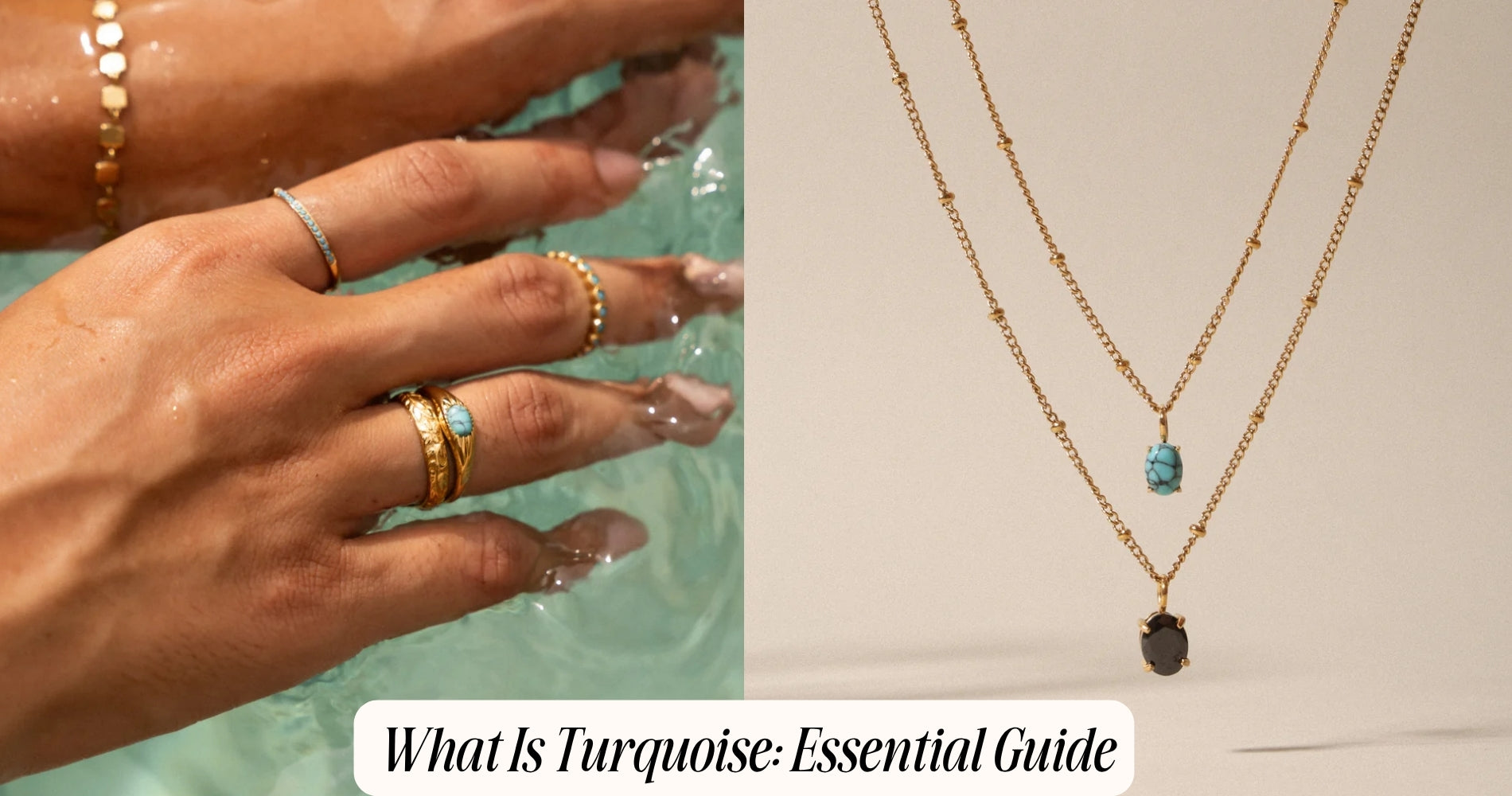
What Is Turquoise: Essential Guide
Turquoise is one of the oldest gemstones used by humans, mined and worn continuously for thousands of years across multiple civilizations that had no contact with one another. What is turquoise in mineralogical terms is a copper aluminum phosphate mineral, but that clinical description barely captures why the stone has held such consistent appeal across so much of human history. Stone Collection includes turquoise among its most requested pieces. This guide covers what turquoise actually is at the mineral level, how it forms, what causes its distinctive color and matrix patterning, how to identify genuine turquoise, and how to care for it properly.
The Mineralogy of Turquoise
Turquoise is a hydrated phosphate mineral with the chemical formula CuAl6(PO4)4(OH)8 4H2O, meaning it contains copper, aluminum, phosphate, and water bound together in a specific crystal structure. It forms as a secondary mineral, meaning it develops through the alteration of existing rock rather than crystallizing directly from molten material.
Turquoise forms in arid and semi-arid environments where acidic, copper-rich groundwater percolates through aluminum-rich rock, typically weathered volcanic or sedimentary formations. Over long geological periods, this water deposits turquoise in veins, nodules, and crusts within cracks and cavities in the host rock. This is why turquoise deposits are concentrated in specific dry regions: the American Southwest, Iran, parts of China, and areas of the Middle East and Central Asia, all regions with the arid climate and copper-aluminum-rich geology that turquoise formation requires.
Turquoise rates 5 to 6 on the Mohs hardness scale, making it a relatively soft gemstone compared to quartz-family stones or corundum varieties like sapphire and ruby. This softness is a defining practical characteristic: turquoise scratches more readily than harder stones and requires more careful handling and setting to protect it through daily wear.

What Causes Turquoise's Color
The color of turquoise comes directly from its chemical composition, and the specific hue varies based on the exact ratio of elements present in a given specimen.
Copper is the primary color-causing element in turquoise, producing the blue color most associated with the stone. Higher copper content relative to other trace elements tends to produce a purer, more saturated blue. Iron substituting for aluminum in the crystal structure shifts the color toward green, which is why greenish turquoise typically indicates higher iron content relative to copper. Zinc can also be present as a trace element and contributes to certain color variations in specific deposits.
The full color range of turquoise spans from a pure sky blue, sometimes called robin's egg blue, through blue-green, to a more yellowish green. Persian turquoise, historically considered the finest quality, is prized specifically for its pure, saturated blue with minimal green undertone. American Southwest turquoise, particularly from deposits in Arizona, Nevada, and New Mexico, often shows more green influence and more visible matrix patterning than classic Persian material.

Understanding Turquoise Matrix
One of turquoise's most distinctive visual characteristics is matrix: the web-like or spotted pattern of darker material, typically brown, black, or golden, running through the blue or green stone.
Matrix forms because turquoise develops within cracks and cavities in host rock, and remnants of that host rock, along with iron oxide staining and other mineral inclusions, become incorporated into the turquoise as it forms. The specific pattern of matrix depends entirely on the geological conditions of the specific deposit and even the specific location within that deposit.
Matrix is not considered a flaw in most turquoise from American Southwest sources, where spiderweb matrix patterns are often specifically prized and command premium prices for their visual distinctiveness. Persian turquoise, by contrast, was traditionally valued for having little to no visible matrix, presenting instead as a clean, uniform blue. This reflects different regional aesthetic traditions rather than one standard being universally correct: the value of matrix versus clean color depends on the specific market and buyer preference.
Where Turquoise Is Mined
Turquoise deposits exist in several specific regions worldwide, each producing material with distinct characteristics.
American Southwest deposits, particularly in Arizona (including the historically significant Sleeping Beauty and Bisbee mines), Nevada, and New Mexico, have produced turquoise for thousands of years, first mined by Indigenous peoples of the region long before European contact and continuing as a significant production area today. American turquoise commonly shows a range from blue to green with varied matrix patterning depending on the specific mine.
Iran (historically Persia) has produced what is generally considered the world's finest classical turquoise, mined from deposits near Nishapur for over a thousand years. Persian turquoise set the historical standard for the pure, saturated, low-matrix blue color that remains the benchmark against which other turquoise is often compared.
China has significant turquoise deposits, particularly in Hubei province, and has both a long history of turquoise use in Chinese decorative and ceremonial objects and a substantial contemporary mining industry.
Egypt has one of the oldest documented turquoise mining histories, with evidence of turquoise mining in the Sinai Peninsula dating back over 5,000 years, used extensively in ancient Egyptian jewelry and funerary objects, including pieces found in Tutankhamun's tomb.

How to Identify Genuine Turquoise
A few practical checks help distinguish genuine turquoise from imitation material, though laboratory testing provides the only fully conclusive answer for valuable pieces.
Genuine turquoise feels cool to the touch initially, similar to most natural stones, and warms gradually with body heat. Dyed howlite and magnesite can feel similar since they are also natural minerals, so this test alone is not conclusive.
A hot pin or needle test, performed carefully and typically by someone experienced with the technique, can reveal plastic or resin-based imitations through a distinctive smell or slight surface reaction that genuine mineral turquoise will not produce. This test carries some risk of damaging the piece and should be approached cautiously.
Color consistency and matrix pattern authenticity are best judged by an experienced dealer or gemologist. Reconstituted and dyed material sometimes shows unnaturally uniform color or matrix patterns that look too regular compared to the organic, irregular patterns natural formation produces.
For any significant purchase, a certificate from a gemological laboratory or purchase from a dealer who provides clear treatment disclosure is the most reliable path to confidence in what you are buying.

Caring for Turquoise Jewelry
Turquoise's relative softness and porosity make it more sensitive to everyday conditions than many other gemstones.
Avoid prolonged water exposure, particularly for untreated or lightly stabilized turquoise, since porous stone can absorb water and other liquids, potentially altering color or weakening the material over time. Remove turquoise jewelry before swimming, showering for extended periods, and heavy exercise involving significant sweat contact.
Avoid contact with perfumes, lotions, oils, and cosmetic products, which can be absorbed into the stone's porous structure and cause discoloration over time. Apply such products before putting turquoise jewelry on rather than after.
Store turquoise separately from harder gemstones and metals that could scratch its relatively soft surface. A soft cloth pouch or a dedicated compartment in a jewelry box protects the stone between wearings.
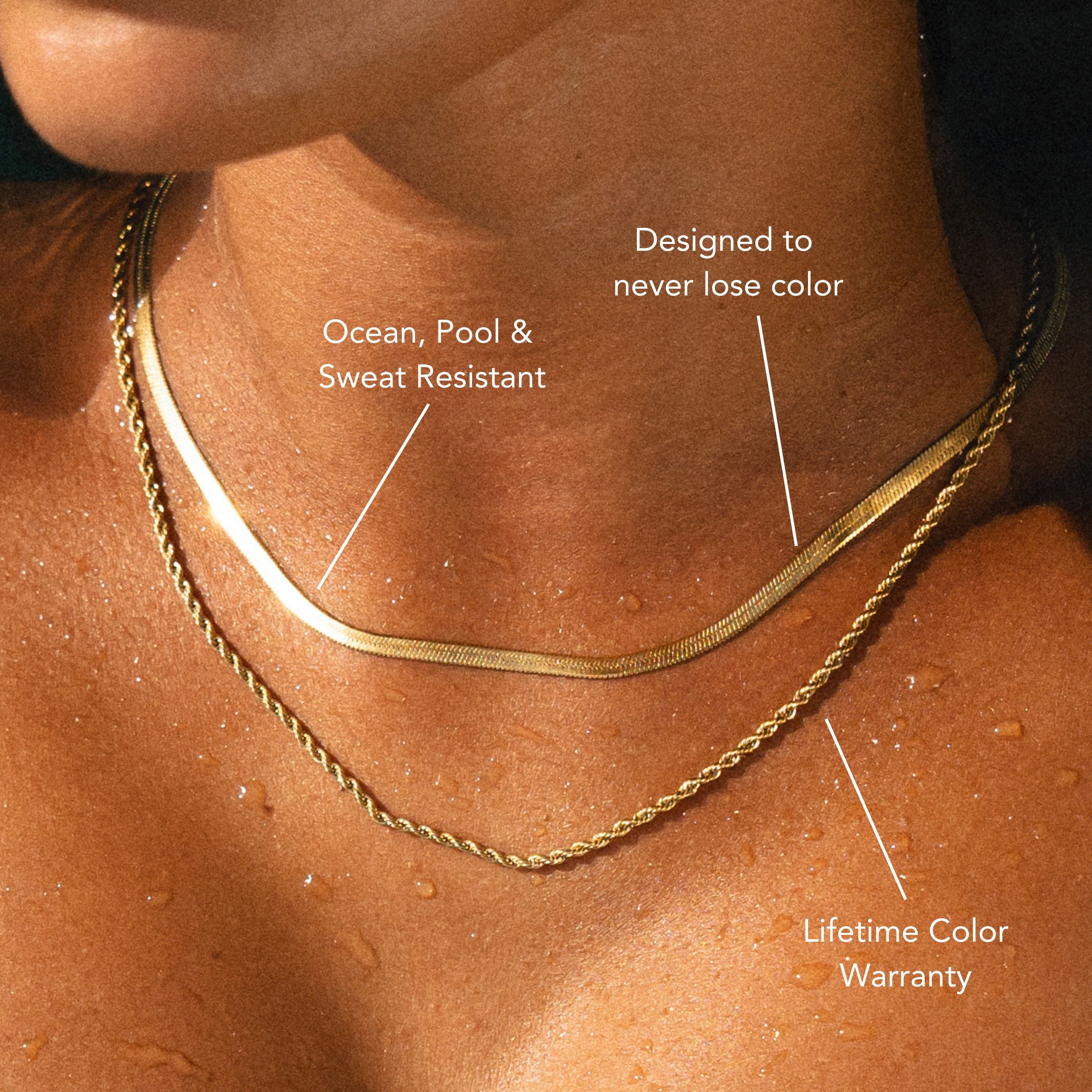
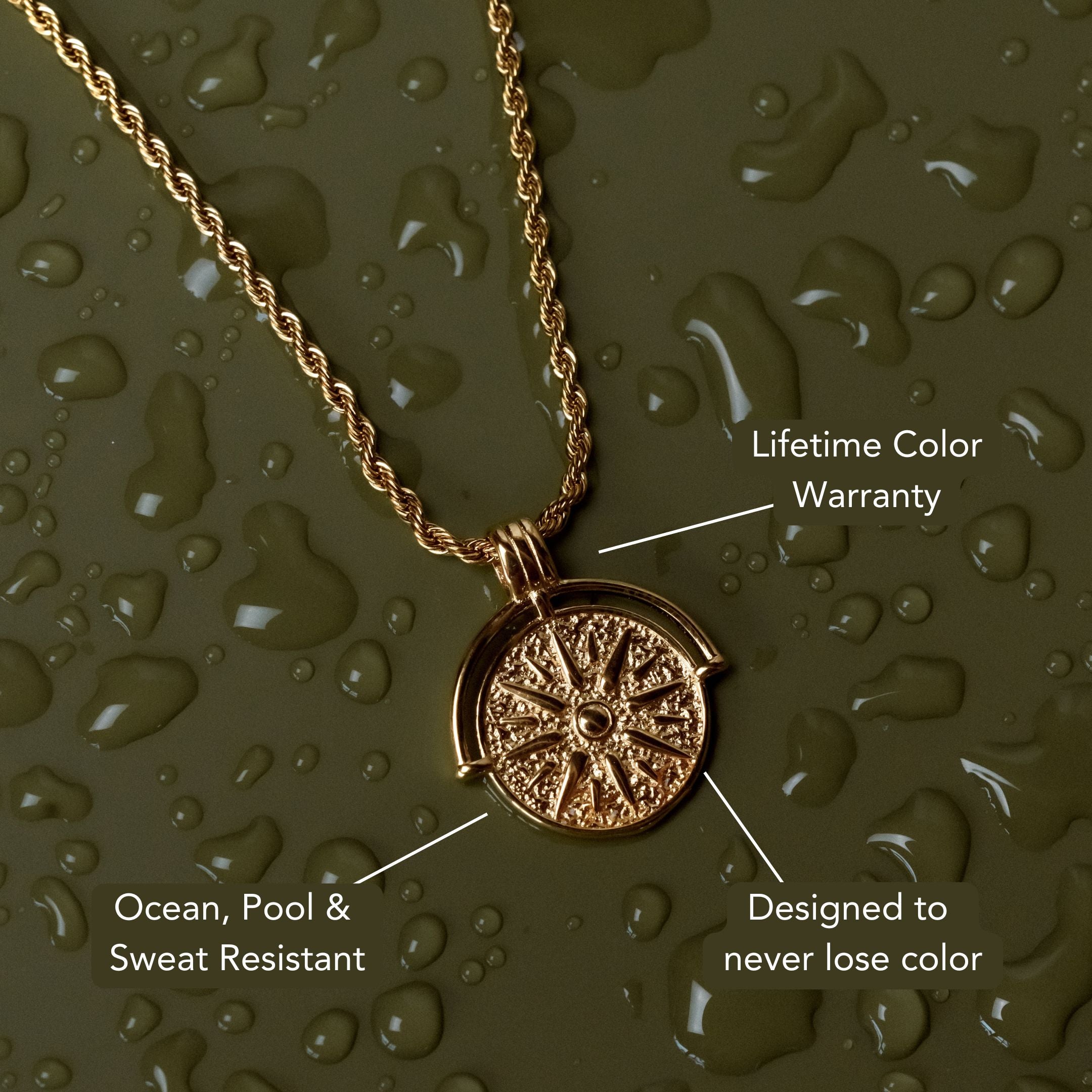
For jewelry settings that hold turquoise for regular wear, the surrounding metal matters as much as the stone's own care requirements. PVD-coated stainless steel settings resist tarnishing around the turquoise, which keeps the metal framing the stone looking as clean as the stone itself over time, without introducing metal corrosion products that could affect a porous stone in close contact. ATOLEA's stone collection includes turquoise pieces in that waterproof construction, backed by a lifetime color warranty on the metal elements of every piece.

Frequently Asked Questions
What is turquoise made of?
Turquoise is a hydrated copper aluminum phosphate mineral, chemically CuAl6(PO4)4(OH)8 4H2O. It forms when copper-rich acidic groundwater interacts with aluminum-rich host rock in arid environments, depositing the mineral in veins, nodules, and crusts over long geological periods.
Is turquoise a rare stone?
High-quality natural turquoise, particularly stones with strong, even color that require no treatment, has become increasingly rare and expensive as historic deposits, including many classical Persian mines, have been largely depleted. Lower-grade turquoise that requires stabilization treatment remains more widely available.
What is the difference between natural and stabilized turquoise?
Natural turquoise is used as mined, with only cutting and polishing applied. Stabilized turquoise has been treated with a clear resin that fills the stone's natural porosity, improving its durability and color consistency. Stabilization is a widely accepted, disclosed treatment that makes softer turquoise suitable for jewelry use, not a deceptive practice when properly disclosed.
Why does turquoise have brown or black lines in it?
Those lines are called matrix, remnants of the host rock and mineral inclusions incorporated into the turquoise as it formed within cracks and cavities. Matrix is a natural characteristic rather than a flaw, and in American Southwest turquoise particularly, distinctive spiderweb matrix patterns are often prized and increase a stone's value.
How can you tell if turquoise is real?
Genuine turquoise shows organic, irregular color and matrix variation rather than the unnaturally uniform patterns sometimes seen in dyed or reconstituted material. A cool initial touch that warms gradually is consistent with natural stone, though this test alone does not distinguish turquoise from other natural minerals used as imitations, such as dyed howlite. For valuable pieces, a gemological laboratory certificate provides definitive verification.
Understanding Turquoise Fully
What is turquoise is best understood as a hydrated copper aluminum phosphate mineral formed through a specific geological process in arid, copper-rich environments, with its blue to green color range determined by the exact balance of copper and iron in each specimen. Its history spans over 5,000 years across Egyptian, Persian, Chinese, and Indigenous American cultures, each developing distinct mining traditions and aesthetic preferences around color and matrix. Understanding the difference between natural, stabilized, dyed, and imitation material is the practical knowledge that protects any turquoise purchase, and knowing the stone's relative softness informs the care it needs to remain beautiful for decades of wear.









Leave a comment
This site is protected by hCaptcha and the hCaptcha Privacy Policy and Terms of Service apply.