

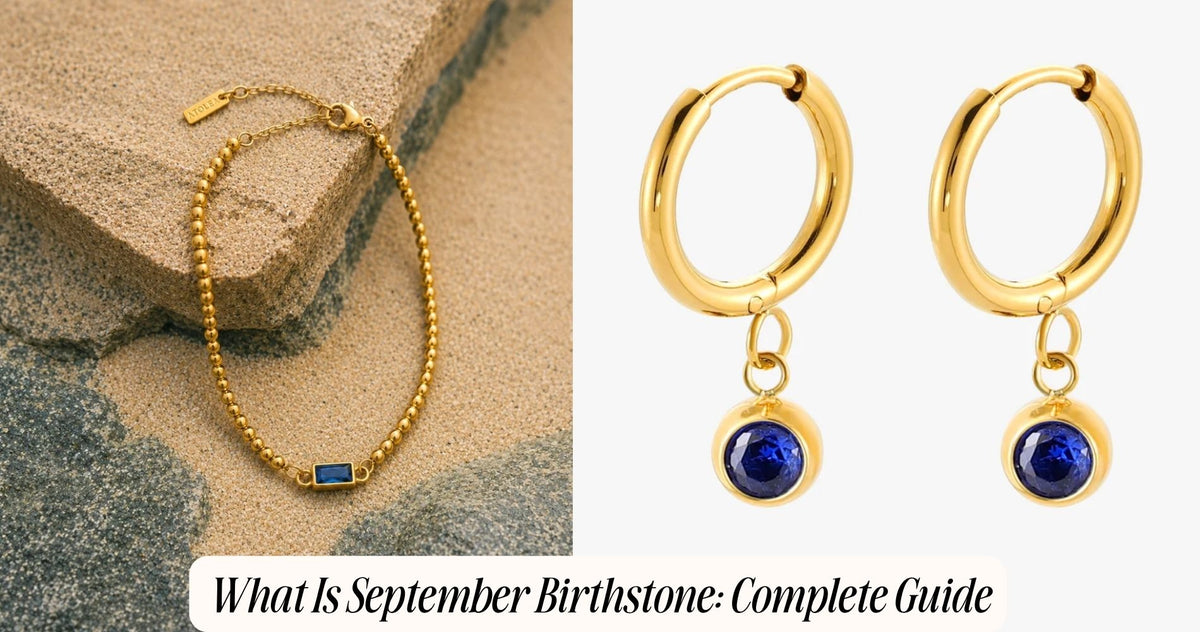
What Is September Birthstone: Complete Guide
If you were born in the ninth month of the year, you may be wondering what is September birthstone and what makes it special. The answer is sapphire, a brilliant gemstone that has been treasured by royalty, clergy and jewelry lovers for thousands of years. Best known for its deep blue color, it also comes in a surprising rainbow of shades. You can also browse our Stone Collection to see how gemstones look when they are set into wearable jewelry. In this guide, we explore the meaning, history, colors, value and care of sapphire so you can choose a piece with confidence.
Sapphire: The Official September Birthstone and What Makes It Special
Sapphire is the modern and traditional birthstone for September. It belongs to the corundum mineral family, which it shares with ruby, and it is one of the hardest natural gemstones after diamond. With a hardness of 9 on the Mohs scale, sapphire resists scratches and daily wear, which makes it an excellent choice for rings, bracelets, earrings and pendants.
The stone is also linked with the zodiac signs Virgo and Libra, and it is the traditional gem for the 5th and 45th wedding anniversaries. That mix of birthday, zodiac and anniversary meaning is one reason sapphire jewelry is such a popular gift.

The Meaning and Symbolism Behind Sapphire
Across centuries and cultures, sapphire has stood for qualities that people admire most. It is often associated with wisdom, loyalty, sincerity and nobility. Many believed that the stone protected its wearer from harm and brought clarity of thought, and it was often given as a symbol of faithful friendship and commitment.
For modern wearers, sapphire represents calm confidence and inner truth. A September birthday gift set with this gem carries a quiet message of trust and devotion, which is why it is such a meaningful present for loved ones.
A Brief History of Sapphire in Royalty, Religion and Legend
The name sapphire comes from the Latin word sapphirus and the Greek word sappheiros, both of which were used for blue stones. In ancient Persia, people believed the earth rested on a giant sapphire and that its reflection gave the sky its blue color. Greek and Roman rulers wore sapphires as protection, and medieval clergy wore them to symbolize heaven and purity.
Sapphire later became a favorite of European royalty. Famous sapphire jewelry, including a celebrated engagement ring worn by Diana, Princess of Wales, and later by Catherine, Princess of Wales, has helped bring the stone to a new generation of admirers. Its long history makes it one of the most storied gemstones in the world.
Sapphire Colors Beyond Classic Blue
Many people think sapphire is always blue, but the gem occurs in nearly every color except red, since red corundum is called ruby.
- Blue sapphire. The classic and most popular choice. Shades range from pale sky blue to deep royal and velvety cornflower blue.
- Pink sapphire. A soft, romantic color that ranges from pale blush to hot pink. It is a lovely alternative to a traditional blue stone.
- Yellow sapphire. A sunny, golden stone that feels warm and cheerful.
- Green sapphire. A subtle shade that often appears with teal or olive undertones.
- White or colorless sapphire. A clear stone with a bright, clean sparkle, sometimes chosen as an affordable alternative to diamond.
- Padparadscha sapphire. A rare pinkish orange stone with a glow like a tropical sunset. It is among the most valuable of all sapphires.
- Star sapphire. A stone with a six rayed star that moves across the surface when the light changes, an effect known as asterism.

What Determines the Value of a Sapphire
Sapphire prices vary widely, and several factors shape the cost of a stone.
- Color. Vivid, evenly saturated blue is the most prized. Stones that are too dark or too pale are usually priced lower.
- Clarity. Fewer visible inclusions mean a cleaner, more valuable stone, although some natural features are expected.
- Cut. A well proportioned cut maximizes brilliance and shows the color at its best.
- Carat weight. Large, high quality stones are rare, so the price per carat rises as size increases.
- Origin. Kashmir, Burmese and Sri Lankan sapphires can command a premium for their reputation and color.
- Treatment. Most sapphires are heated to improve color and clarity, which is widely accepted and stable. Untreated stones are rarer and worth more.
Natural, Lab Created and Treated Sapphires Explained
When shopping, you will see several terms, and understanding them helps you compare fairly.
- Natural sapphire. Formed in the earth over millions of years and mined from the ground. It may be heated or left untreated.
- Lab created sapphire. Grown in a laboratory, with the same chemical makeup and hardness as natural stone. It is much more affordable, and it is a great option for beautiful jewelry on a budget.
- Simulants. Imitations such as blue glass or cubic zirconia that only look like sapphire. They do not share its durability or chemistry.
A trustworthy seller will tell you clearly whether a stone is natural, lab created or treated. For a significant purchase, ask for a report from a respected gemological laboratory.
Alternative September Birthstones
Although sapphire is the main September gem, some traditions list other stones. Lapis lazuli, a deep blue stone flecked with gold, is a popular alternative and was highly valued in ancient Egypt. Some older lists include chrysolite, a name once used for a green stone that is similar to peridot. Choosing one of these gives you a different look while still honoring a September birthday.
How to Choose the Right Sapphire Jewelry
Start by deciding how you plan to wear the piece. Because sapphire is so durable, it works well in everyday rings and bracelets. A classic blue stone in gold or white metal looks elegant, while a pink or yellow sapphire can feel more playful.
Look at the color in natural light, since it can change under different lighting. Check the setting for secure prongs or a protective bezel, and pay attention to the metal. Yellow gold gives blue stones a warm contrast, while white gold and platinum make the blue appear cooler and brighter.

How to Care for Sapphire Jewelry
Sapphire is tough, but it still deserves good care. Clean it with warm water, mild soap and a soft brush, then rinse and dry with a lint free cloth. Ultrasonic cleaners are usually safe for untreated or heated stones, though you should avoid them for stones with fractures or heavy inclusions.
Store sapphire jewelry separately so it does not scratch softer pieces, and remember that diamond can scratch sapphire. Have a jeweler check your settings once a year, especially if you wear your jewelry daily.
Conclusion
So, what is September birthstone? It is sapphire, a durable, colorful and richly symbolic gem that stands for wisdom, loyalty and nobility. Whether you love classic blue or prefer pink, yellow or green, there is a sapphire to suit your style and your budget. With a little knowledge about color, treatment and care, you can choose a piece that will stay beautiful for years. Visit Atolea to find sapphire jewelry that feels right for you or someone you love.
FAQs
1. What is September birthstone?
The September birthstone is sapphire. It is the modern and traditional birthstone for the month, and lapis lazuli is sometimes listed as an alternative.
2. What color is the September birthstone?
Sapphire is best known for blue, but it also comes in pink, yellow, green, orange and colorless varieties. Red corundum is called ruby instead.
3. What zodiac signs are linked to sapphire?
Sapphire is commonly associated with Virgo and Libra, the two zodiac signs that fall in September.
4. Is sapphire a good stone for everyday wear?
Yes. With a hardness of 9 on the Mohs scale, sapphire is very durable and resists scratches, which makes it ideal for rings and other jewelry worn daily.
5. What is the difference between a natural and a lab created sapphire?
Both have the same chemical makeup and appearance, but natural sapphires form in the earth, while lab created ones are grown in a controlled setting. Lab created stones cost much less.
6. How can I tell if a sapphire is real?
It is difficult to tell by eye alone. A gemologist or a reputable laboratory report can confirm whether a stone is natural, lab created or an imitation.









Leave a comment
This site is protected by hCaptcha and the hCaptcha Privacy Policy and Terms of Service apply.