

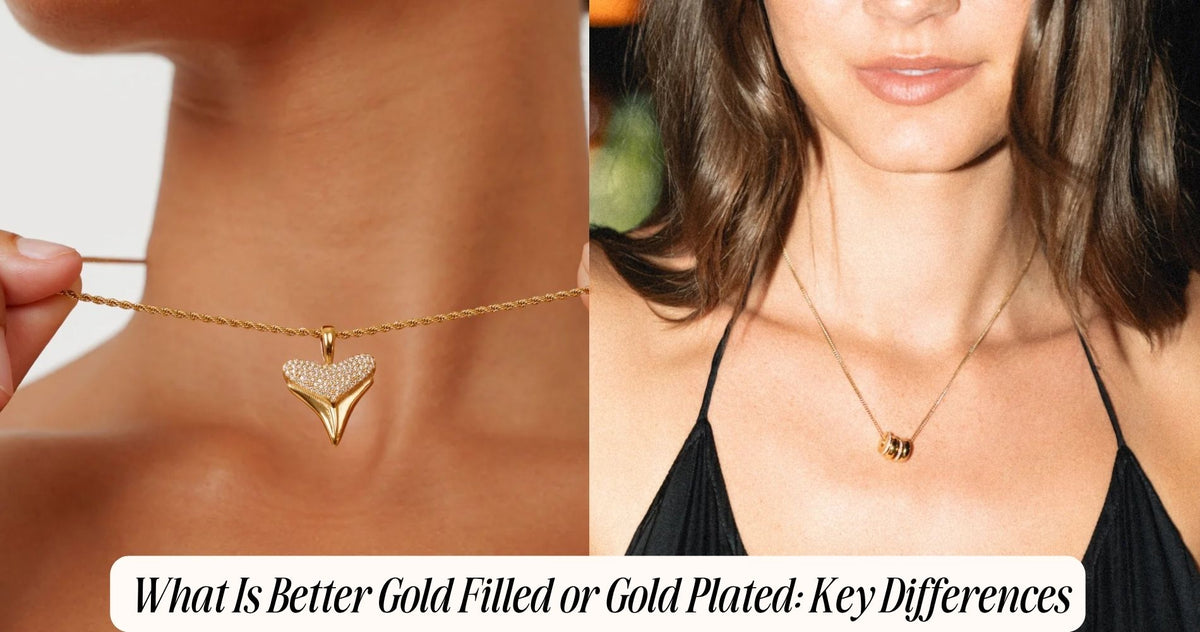
What Is Better Gold Filled or Gold Plated: Key Differences
Gold filled and gold plated jewelry look nearly identical on a shelf or a product page, and the names sound similar enough that many shoppers assume they mean roughly the same thing. They do not. The two are built in fundamentally different ways, regulated by very different standards, and wear very differently over time. If you are trying to decide what is better gold filled or gold plated, understanding exactly how each one is made makes the answer much clearer than any marketing description can.
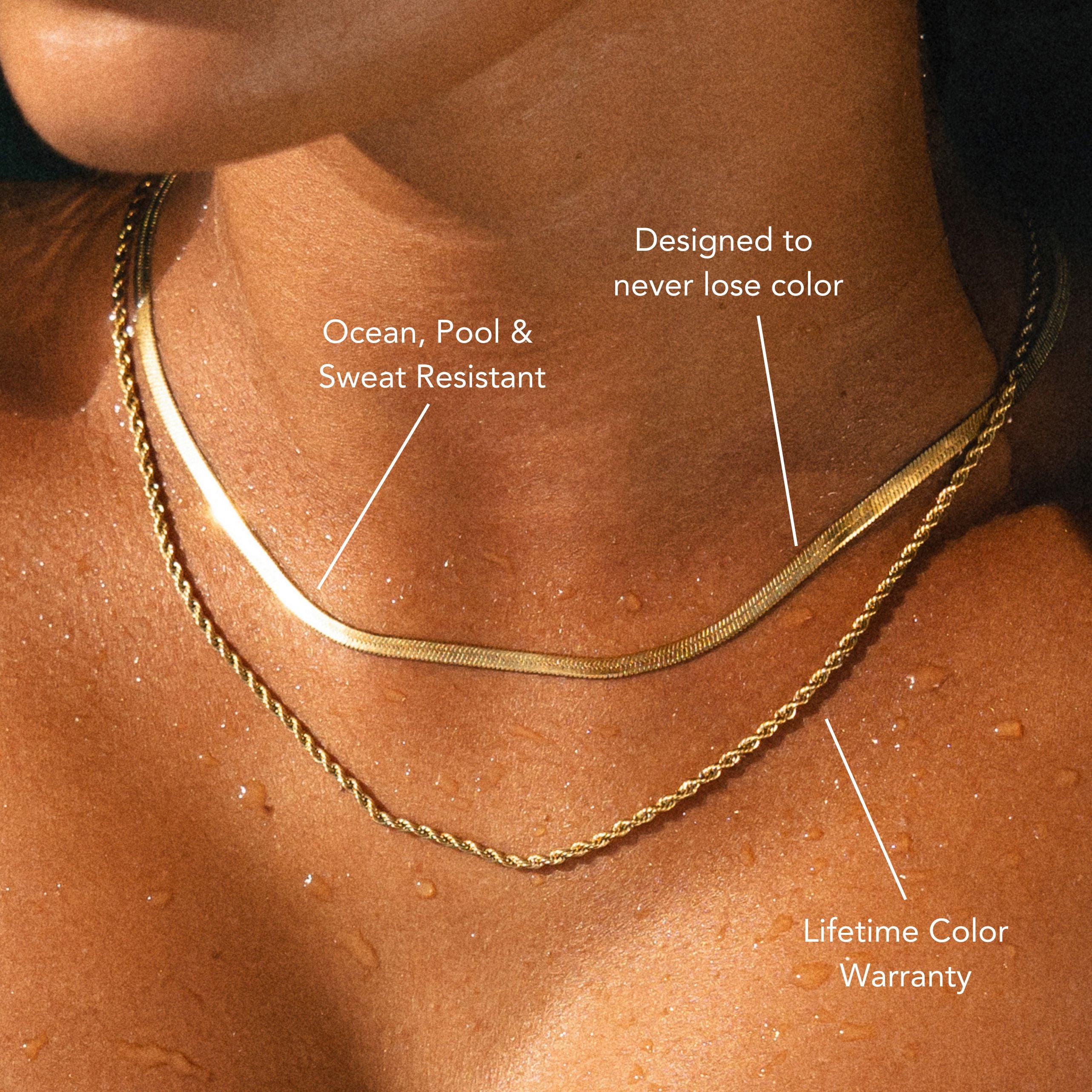
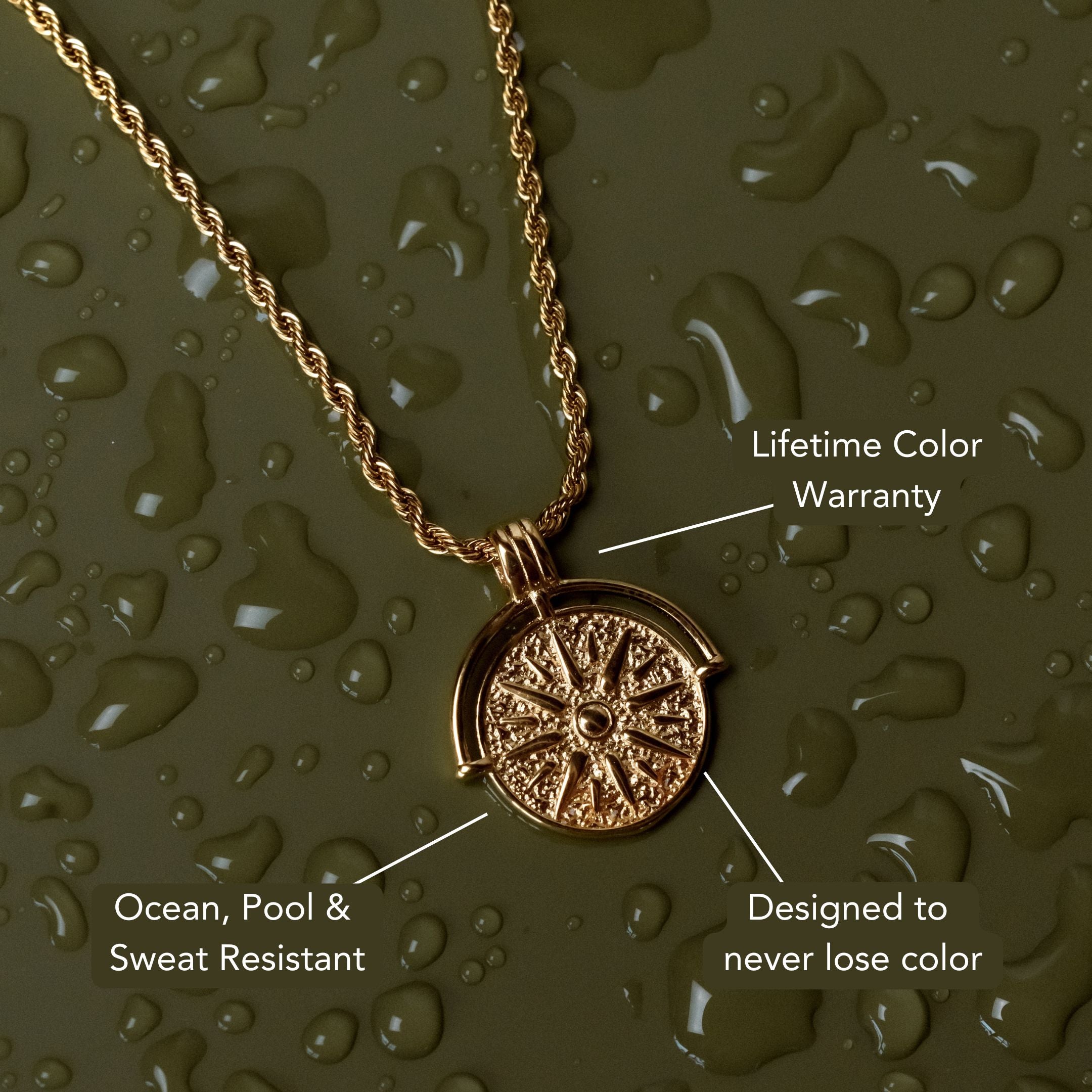
In this guide, we will walk through how each type is constructed, what the legal standards actually require, and how they compare on durability, price, and skin comfort, so you can choose the right one for how you plan to wear it. If you are shopping for a piece you can wear daily, our Everyday Gold Necklaces collection is a good place to see what well made gold jewelry looks like.
What Is Gold Plated Jewelry
Gold plated jewelry is made by applying a very thin layer of gold over a base metal, typically brass or copper, through electroplating. In this process, an electric current causes gold particles from a solution to bond to the surface of the piece, leaving a gold colored coating on the outside.
The defining characteristic of gold plating is just how thin that layer is. The legal minimum for an item to be described as gold electroplate is only 0.175 microns, and typical fashion jewelry often carries a layer well under half a micron. For perspective, a micron is one thousandth of a millimeter, so this coating is a microscopic skin of gold rather than a meaningful amount of the metal.

What Is Gold Filled Jewelry
Gold filled jewelry is built using a completely different method. Rather than electroplating, a thick layer of solid gold is mechanically bonded to a base metal core, usually brass, using intense heat and pressure. The result is a gold layer that is physically fused to the core rather than chemically deposited onto its surface.
In the United States, the term gold filled is regulated by the Federal Trade Commission. To carry that label, the gold layer must make up at least one twentieth, or 5 percent, of the item's total weight, and the gold itself must be at least 10 karat. Pieces are commonly stamped with markings like 1/20 14K GF, which tells you the gold layer is 14 karat gold and accounts for 1/20 of the piece's weight.
The Core Difference in Gold Content
The simplest way to understand the gap between the two is by gold content. A gold filled piece contains a legally guaranteed minimum of 5 percent gold by weight, which is commonly described as roughly 100 times more gold than a typical gold plated item. A standard gold plated piece, by contrast, may contain only a tiny fraction of one percent gold by weight.
This is not a small technical detail. It determines almost everything else about how the two types behave in real life, from how long they last to what they are worth.
Durability: Which Lasts Longer
This is where the difference becomes most visible. Because gold plating is so thin, it can begin to wear away in as little as a few months of regular wear, particularly on pieces that experience friction, like rings and bracelets, or frequent contact with water, sweat, and skin products. Once the plating wears through, the base metal underneath becomes visible, often showing a different color.
Gold filled jewelry, with its much thicker, mechanically bonded layer, typically holds up for many years, often decades, with reasonable care. The gold layer is thick enough that everyday friction wears it down extremely slowly, so a well cared for gold filled piece can remain bright and gold colored long after a plated equivalent would have faded.
For anyone planning to wear a piece daily, this durability gap is usually the single most important factor in the decision.

Water, Sweat, and Everyday Wear
Gold filled jewelry generally handles everyday moisture far better than gold plated. Because the gold layer is substantial, exposure to water and sweat does not strip it away the way it can thin out a delicate plated layer. Many people wear gold filled pieces through showers and regular activity with little concern, though avoiding harsh chemicals like chlorine remains sensible.
Gold plated pieces are far more sensitive. Regular exposure to water, sweat, lotions, and perfumes can accelerate wear considerably, which is why plated jewelry is usually best reserved for occasional wear or for people who are diligent about removing it before water and exercise.
Price: What to Expect
Gold plated jewelry is the more affordable option, which is a large part of its appeal. Because it uses so little actual gold, it can be produced cheaply and sold at low prices, making it popular for trend driven pieces and for anyone who wants the look of gold on a tight budget.
Gold filled jewelry costs more upfront, since it contains a meaningful amount of real gold, but it is still considerably less expensive than solid gold. It sits in a useful middle ground, offering much of gold's longevity and real gold content at a fraction of the price. For pieces worn often, many people find the higher initial cost balances out because a gold filled item needs replacing far less frequently than a plated one.
Skin Sensitivity and Comfort
Because gold filled jewelry is built around a thick gold layer that fully encases the base metal, the core rarely touches skin, which makes it a better choice for many people with metal sensitivities. Gold plated jewelry carries more risk, since once the thin plating wears away, the base metal underneath, which may contain copper or nickel, can come into direct contact with skin. This is also a common reason plated jewelry can leave green marks on skin over time as the underlying metal is exposed.
That said, gold filled is not automatically hypoallergenic for everyone, since the brass core still contains copper and other metals. Anyone with a significant nickel allergy should confirm the specific composition of a piece rather than assuming the label alone guarantees safety.

Intrinsic Value and Resale
Gold filled jewelry holds genuine intrinsic value, because it contains a federally mandated minimum amount of real gold. While it will not command the same price as solid gold, the gold content means it retains more worth over time than plated pieces, which contain so little gold that their material value is essentially negligible.
Gold plated jewelry, by contrast, has almost no resale or scrap value. Its worth lies almost entirely in its appearance and design rather than its materials, so it is best thought of as a fashion purchase rather than something that holds value.
A Note on Gold Vermeil
Shoppers comparing these two options will often run into a third term, gold vermeil. Vermeil sits between plating and filled in a different way: it is a thicker layer of gold, at least 2.5 microns and at least 10 karat, applied over a sterling silver base rather than brass or copper. It is a step above standard plating in durability, though its gold layer is still far thinner than gold filled in terms of total gold content.
How to Tell Which You Are Buying
Reading the labeling carefully makes it much easier to know what you are getting. Gold filled pieces are typically stamped with markings such as GF or a fraction like 1/20 followed by the karat, for example 1/20 14K GF. Gold plated pieces are often marked GP, GEP, or HGE for heavy gold electroplate, and some are left unmarked entirely.
Be cautious of vague terms like gold dipped, gold washed, or gold tone, which usually signal an extremely thin coating. Reputable sellers will disclose the plating thickness in microns and the base metal, so a lack of that information is worth treating as a warning sign.

Which One Should You Choose
The best choice depends on how you plan to wear the piece. Gold filled is the stronger option for anything you want to wear often, particularly rings, bracelets, and necklaces worn daily, since it offers far better durability and holds up to moisture and friction. Gold plated makes more sense for occasional wear, trend pieces you expect to rotate out quickly, or situations where budget matters more than longevity.
Final Thoughts
So, what is better gold filled or gold plated? For durability, value, and everyday wear, gold filled is clearly the better choice, thanks to its thick, mechanically bonded layer containing at least 5 percent real gold by weight. Gold plated remains a perfectly reasonable option for affordable, occasional, or trend focused jewelry, as long as you understand its thin coating will wear more quickly. Knowing the difference lets you buy with realistic expectations and put your money where it will actually last.
Frequently Asked Questions
-
Is gold filled real gold? Yes, gold filled jewelry contains a legally required minimum of 5 percent real gold by weight, bonded to a base metal core, which is far more than a typical gold plated piece.
-
How long does gold filled jewelry last compared to gold plated? Gold filled commonly lasts many years or even decades with reasonable care, while gold plated may begin showing wear in a matter of months with regular use.
-
Can I wear gold filled jewelry in the shower? Gold filled generally handles water and sweat much better than gold plated, though avoiding harsh chemicals like chlorine is still a good idea.
-
Is gold filled jewelry safe for sensitive skin? It is often better tolerated than gold plated because the thick gold layer keeps the core away from skin, but the brass core still contains other metals, so those with significant allergies should check the specific composition.









Leave a comment
This site is protected by hCaptcha and the hCaptcha Privacy Policy and Terms of Service apply.