

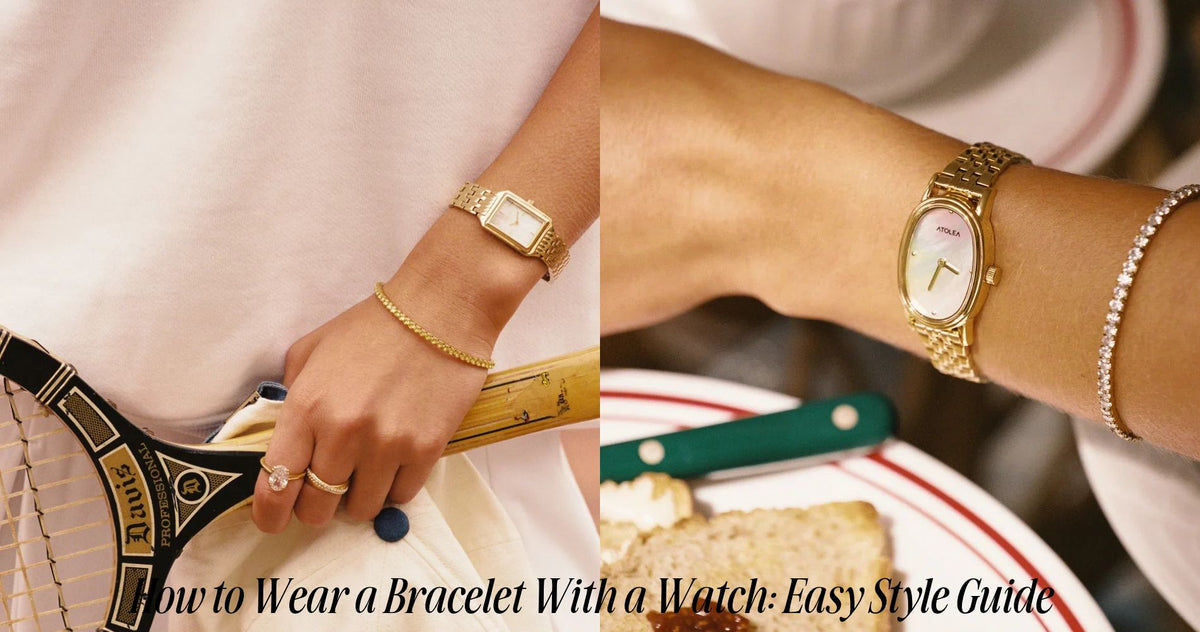
How to Wear a Bracelet With a Watch: Easy Style Guide
A watch and a bracelet can look composed together or crowded on the same wrist, and the difference comes down to a few specific choices. Knowing how to wear a bracelet with a watch means deciding which wrist carries which piece, how much space sits between them, and how their sizes and tones relate. Everyday Bracelets in fine, lightweight styles pair easily with most watches. This guide covers the wrist placement options, the spacing and proportion rules that keep the look balanced, how to match metal tones, how to stack around a watch, and the practical habits that protect both pieces through daily wear.
Choose Your Wrist Placement
The first decision is whether the watch and bracelet share a wrist or sit on opposite wrists. Each option produces a different result.
- Opposite wrists. The watch on one wrist and the bracelet on the other is the simplest arrangement. Each piece has room, nothing rubs together, and the look stays clean. This works well for larger watches and for bracelets you want to stand on their own.
- Same wrist. Wearing both on one wrist creates a layered, deliberate look. It takes more attention to spacing and proportion, but it suits smaller watches and fine bracelets particularly well. Most people place the watch closest to the hand and the bracelet above it, or the reverse for a more relaxed effect.
- Choosing between them. Wear them on opposite wrists when the watch is large, the bracelet is substantial, or you type for long periods. Combine them on one wrist when both are slim and you like a collected look.

Mind the Spacing
Space between the two pieces does more to prevent a cluttered look than any other factor. Pieces pressed tightly together read as a single heavy mass, while a small gap lets each one register.
Leave roughly a finger-width of space between the watch and the nearest bracelet when they share a wrist. This gap also stops the watch case from knocking against the bracelet during movement, which protects both finishes.
Keep the watch in its natural position just above the wrist bone. Place the bracelet higher on the forearm if you want more separation, or lower toward the hand for a tighter, stacked effect. A bracelet that slides under the watch face tends to scratch it and tilts the watch out of position.
Match Proportion to Your Wrist
Proportion keeps the two pieces from competing. The goal is a clear hierarchy, with one piece leading and the other supporting.
| Wrist Size | Watch Face | Bracelet Style |
|---|---|---|
| Small (under 6 inches) | 26 to 34mm | Very fine chain or thin bangle |
| Medium (6 to 7 inches) | 34 to 40mm | Fine to medium chain, one or two layers |
| Large (over 7 inches) | 40mm and above | Medium chain or slim cuff |
A large watch face calls for a slim bracelet so the watch remains the focal point. A delicate watch with a thin strap supports a slightly more present bracelet, since the watch will not overpower it.
Avoid pairing a heavy watch with a wide, chunky bracelet on the same wrist. Two statement pieces compete, and the wrist looks overloaded.

Match or Complement Metal Tones
Metal tone is where cohesion usually succeeds or fails, and you have three workable approaches.
- Match the tones. A gold-tone watch with a gold-tone bracelet, or a steel watch with a silver-tone bracelet, produces the cleanest result with the least effort.
- Mix with a clear lead. A steel or silver-tone watch with a gold-tone bracelet works well when the watch face or hands include a touch of gold. Choose one tone as the dominant one and let the other appear as an accent, repeated in at least one more piece such as a ring or earrings.
- Use a neutral strap. A leather or fabric strap on the watch lets any bracelet tone work, since the strap does not compete with metal.
Pay attention to the watch hardware as well. The case, crown, and buckle count as visible metal, so check that your bracelet relates to them.
Stacking a Bracelet Around a Watch
Stacking adds interest, and the same principles apply with a watch in the mix.
Keep the total number of pieces to three or fewer on a wrist that carries a watch. The watch already counts as a substantial element, so more than two bracelets begins to crowd the wrist.
Vary the widths. A fine chain alongside a thin bangle reads as intentional, whereas two bracelets of identical width blur together.
Place the heaviest piece closest to the watch or the farthest from it, and keep the lightest between or above. This keeps the weight distribution even across the arm.
Consider texture. A smooth watch case pairs nicely with a textured chain, while a heavily textured watch bracelet calls for a smooth, simple companion.

Occasion Guidance
- Office and professional settings. A single fine chain beside a classic watch reads polished. Keep tones matched and the bracelet slim.
- Casual daily wear. A relaxed stack of two fine pieces with a sporty or minimalist watch works for weekends, errands, and travel days.
- Evening occasions. A dressier watch can stand alone, or sit beside a single delicate bracelet on the opposite wrist.
- Active days. Wear the watch and a slim bracelet that can handle the gym, a swim, or a beach afternoon, and avoid anything with dangling charms that snag on equipment.
Practical Tips for Comfort and Protection
A few habits protect both pieces and keep the wrist comfortable.
Test the fit before leaving the house. Raise your arm, type, and wave to confirm nothing slides over the watch face or catches the crown.
Choose a bracelet with a smooth clasp. A rough or protruding clasp scratches the watch case and the underside of a leather strap.
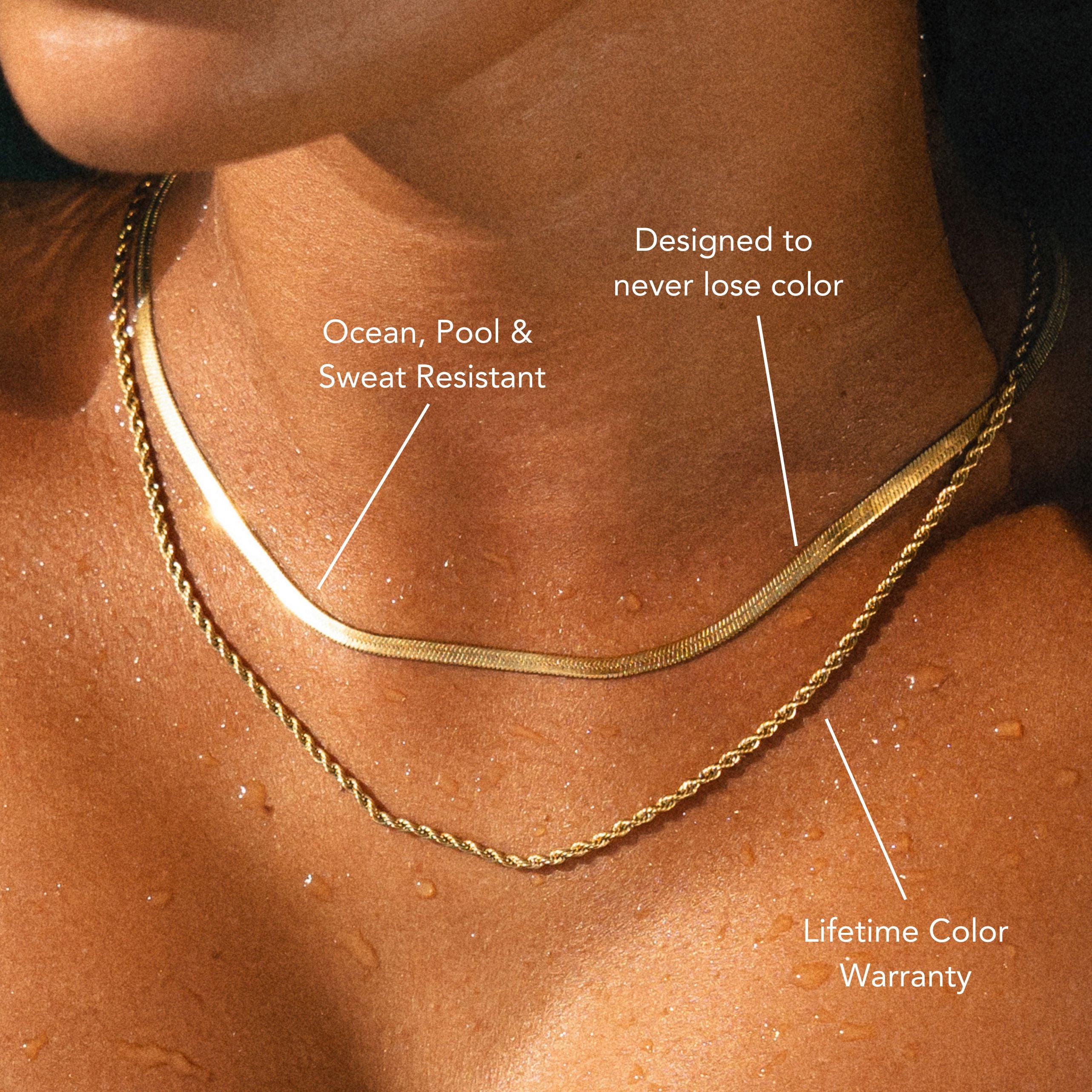
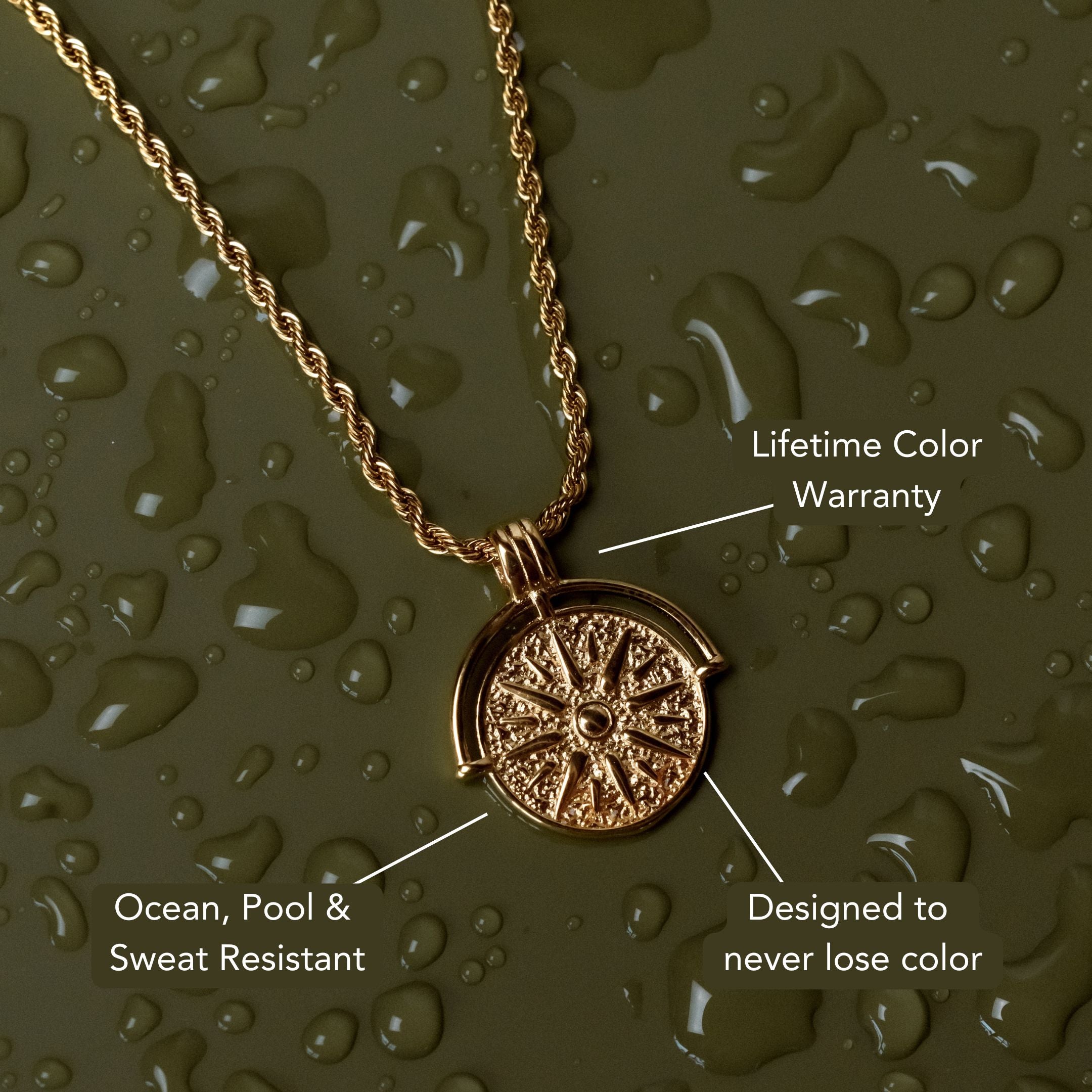
Pick materials that tolerate sweat, water, and friction, since the wrist is where moisture collects. PVD-coated stainless steel holds its finish through showers, workouts, and salt water without tarnishing or dulling, which matters when a bracelet shares a wrist with a watch and rubs against it. ATOLEA's everyday bracelets are built this way, with a lifetime color warranty on every piece.

Frequently Asked Questions
Can you wear a bracelet and a watch on the same wrist?
Yes. Leave about a finger-width of space between them, keep the bracelet slim relative to the watch, and match or deliberately complement the metal tones. Keep the total to three pieces or fewer so the wrist stays balanced.
Which wrist should the watch go on?
Most people wear the watch on the non-dominant wrist, though either works. Place the bracelet on the opposite wrist if you prefer separation or type heavily, and on the same wrist if both pieces are slim.
Should the bracelet match the watch?
It can, but it does not have to. Matching metal tones gives the cleanest look, while a bracelet in a different tone works when one tone clearly leads. A leather or fabric strap lets any bracelet tone work.
Will a bracelet scratch my watch?
It can if the pieces rub against each other. Leaving a gap, choosing a smooth clasp, and avoiding bracelets with sharp edges or charms near the watch case all reduce the risk. A slim, smooth bracelet is the safest companion.
How many bracelets can I wear with a watch?
One to two is the practical range on the same wrist, three at most with a slim watch. Beyond that, the wrist looks crowded, and moving pieces tend to catch on the watch and on clothing.
Putting the Pieces Together
How to wear a bracelet with a watch comes down to a short set of decisions: choose the wrist placement, leave a finger-width of space, size the bracelet so the watch or the bracelet leads rather than competing, and match or deliberately complement the metal tones. Keep the stack to three pieces or fewer, pick a smooth clasp and durable materials, and test the fit before you head out. With those habits in place, the watch and the bracelet look like one considered choice that holds up through the whole day.










Leave a comment
This site is protected by hCaptcha and the hCaptcha Privacy Policy and Terms of Service apply.