

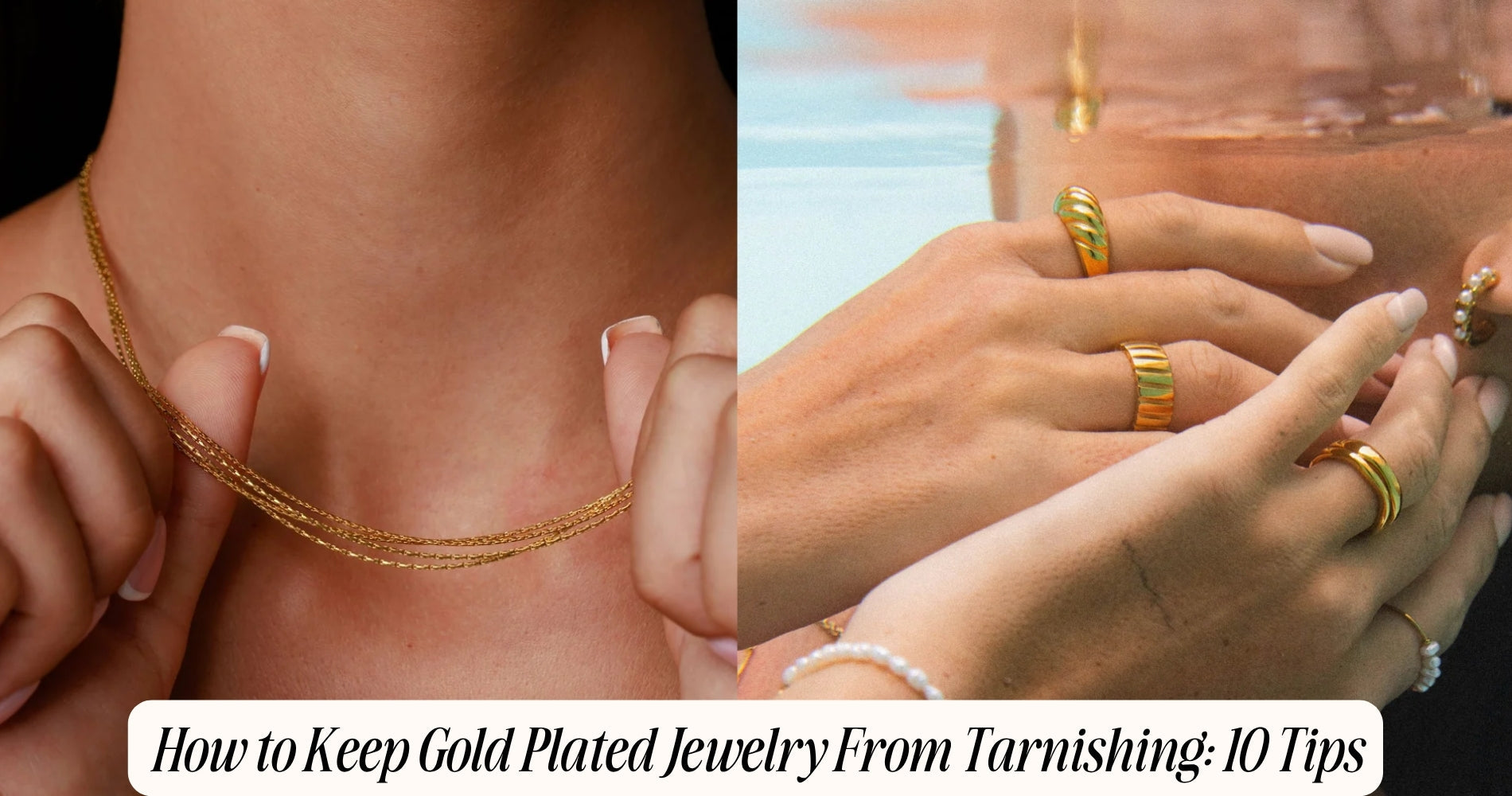
How to Keep Gold Plated Jewelry From Tarnishing: 10 Tips
Gold plated jewelry offers an affordable, stylish way to enjoy the warm look of gold, but its thin outer layer means it requires a bit more care than solid gold to keep looking its best. If you have noticed your favorite gold plated pieces starting to lose their shine or develop discoloration, you are likely wondering how to keep gold plated jewelry from tarnishing before it becomes a bigger issue.
The good news is that with a few consistent habits, you can significantly slow this process and enjoy your gold plated jewelry for much longer. In this guide, we will walk through ten practical tips to help protect your pieces from tarnish and everyday wear. If you are ready to add a few reliable, well made pieces to your collection, our Everyday Gold Jewelry collection is designed with daily durability in mind.
Why Gold Plated Jewelry Tarnishes
Before diving into specific tips, it helps to understand why gold plated jewelry is more prone to tarnishing compared to solid gold. Gold plated pieces consist of a base metal, such as brass, copper, or nickel, coated with a thin layer of real gold through an electroplating process.
Because this outer gold layer is so thin, it can wear away over time, particularly with friction and exposure to moisture or chemicals. Once the plating begins to thin, the base metal underneath becomes more exposed, and many of these base metals are naturally prone to oxidation and discoloration when exposed to air, moisture, and everyday elements, resulting in the tarnished appearance many people notice over time.

1. Remove Jewelry Before Showering or Bathing
One of the most effective ways to protect gold plated jewelry is to simply remove it before showering or bathing. Hot water, combined with soap and shampoo, can be particularly harsh on the thin gold layer, accelerating wear and increasing the likelihood of the base metal becoming exposed sooner than expected.
Making it a habit to take off your jewelry before stepping into the shower, even when it feels like an extra step, can meaningfully extend the lifespan of your gold plated pieces over time.
2. Avoid Swimming While Wearing Gold Plated Jewelry
Chlorinated pool water and saltwater are both significantly more damaging to gold plating than regular tap water, due to their higher chemical content. Chlorine in particular can react with the metals used in gold plated jewelry, potentially accelerating discoloration and plating breakdown.
Removing gold plated jewelry before swimming, whether in a pool or the ocean, is one of the simplest and most effective ways to prevent unnecessary tarnish and damage.

3. Apply Beauty Products Before Putting On Jewelry
Perfume, lotion, hairspray, and other personal care products contain chemicals that can affect the surface of gold plated jewelry, gradually dulling its shine or contributing to tarnish over time. To minimize this exposure, always apply these products first and allow them to fully absorb or dry before putting on your jewelry.
This simple adjustment to your daily routine can significantly reduce the amount of direct chemical contact your gold plated pieces experience throughout the day.
4. Remove Jewelry During Exercise
Sweat contains salts and acids that can gradually affect gold plating over time, particularly with frequent exposure during regular physical activity. Removing gold plated jewelry before exercising, whether at the gym, running, or engaging in other strenuous activities, helps protect the plating from this cumulative exposure.
This habit is particularly important for rings and bracelets, which tend to experience more direct skin contact and friction compared to necklaces or earrings during physical movement.
5. Store Jewelry in an Airtight Container
When not being worn, gold plated jewelry should be stored in a way that minimizes exposure to air and humidity, both of which can contribute to tarnishing over time, particularly for the base metal beneath the gold layer.
Using a small airtight bag or a lined jewelry box with a secure closure helps limit this exposure, keeping your pieces protected between wears. Adding a small anti tarnish strip or silica gel packet to your storage container can provide an additional layer of protection against moisture and tarnish causing elements in the air.

6. Keep Jewelry Away From Direct Sunlight
Extended exposure to direct sunlight and heat can accelerate the breakdown of gold plating over time, potentially affecting both its color and overall finish. Storing gold plated jewelry away from windows or other direct heat sources, such as in a drawer or closet, helps protect it from this unnecessary environmental stress.
This is particularly important for jewelry that is not worn frequently, since pieces left out in direct sunlight for extended periods are more likely to show premature signs of wear.
7. Clean Jewelry Gently and Regularly
Regular, gentle cleaning helps remove the everyday buildup of oils, lotion, and product residue that can otherwise contribute to a duller appearance over time. Using a soft, dry cloth to wipe down your gold plated jewelry after each wear is a simple, effective habit that requires very little time.
For a slightly deeper clean, a very gentle wipe with a barely damp cloth can help, but avoid soaking gold plated pieces in water or using abrasive cleaning products, both of which can accelerate plating wear rather than protect it.
8. Avoid Wearing Multiple Pieces That Rub Together
When gold plated jewelry rubs against other jewelry, whether through stacking bracelets, layering necklaces, or wearing multiple rings on the same hand, this friction can gradually wear down the thin gold layer more quickly than normal, everyday wear alone.
If you love layering jewelry, consider reserving your most delicate gold plated pieces for solo wear, or pairing them with softer materials rather than harder metals or gemstones that could accelerate surface wear through repeated contact.

9. Handle Jewelry With Clean, Dry Hands
Oils, lotions, and residue on your hands can transfer directly onto gold plated jewelry every time you put it on or take it off, gradually contributing to a duller appearance over time. Making a habit of handling your jewelry with clean, dry hands, particularly when putting pieces on or taking them off, can help minimize this unnecessary transfer of oils and residue.
This small habit, while easy to overlook, can make a meaningful difference over months and years of regular wear.
10. Choose Higher Quality Gold Plated Pieces From the Start
Not all gold plated jewelry is created equal, and the thickness of the gold layer used during the plating process significantly affects how well a piece resists tarnish and wear over time. Higher quality gold plated jewelry typically uses a thicker gold layer, offering improved durability and tarnish resistance compared to lower quality, mass produced pieces with minimal plating.
When shopping for gold plated jewelry, look for pieces from reputable brands that are transparent about their plating thickness and overall construction, since investing in higher quality pieces from the start can significantly reduce how quickly tarnish and wear become noticeable.
What to Do If Tarnish Already Appears
If you notice early signs of tarnish on your gold plated jewelry despite following these preventative tips, a few gentle steps can help address the issue before it worsens.
Wipe the affected area gently with a soft, dry cloth to remove any surface residue that may be contributing to the dullness. If tarnish persists, consult a professional jeweler about replating options, which can restore the original gold layer and significantly extend the piece's usable lifespan. Avoid attempting aggressive at home cleaning methods, such as abrasive polishing compounds, since these can potentially worsen existing plating wear rather than improve it.
When Replating Makes Sense
For sentimental or higher quality gold plated pieces that have experienced noticeable tarnish or wear, replating is often a worthwhile investment, allowing you to restore the piece's original appearance rather than replacing it entirely. This service is typically offered by professional jewelers and involves removing the existing worn plating before reapplying a fresh layer of gold through the same electroplating process used originally.
For more affordable, trend focused pieces, particularly those that have experienced significant wear across multiple areas, it may be more practical to simply replace the item rather than invest in replating.

Final Thoughts
Learning how to keep gold plated jewelry from tarnishing comes down to a combination of thoughtful daily habits and proper storage practices. By removing jewelry before water related activities, applying beauty products beforehand, and storing pieces properly when not in use, you can significantly extend the life and shine of your gold plated collection.
With just a little consistent care, your gold plated jewelry can continue looking beautiful for a much longer period, allowing you to enjoy its warm, elegant look without constantly worrying about premature tarnish or wear.
Frequently Asked Questions
-
How long does it take for gold plated jewelry to tarnish? This varies depending on care and wear frequency, but gold plated jewelry can begin showing signs of tarnish anywhere from a few months to a couple of years with regular use.
-
Can tarnished gold plated jewelry be restored? Yes, in most cases tarnished gold plated jewelry can be professionally replated, restoring its original appearance and extending its usable lifespan.
-
Is it normal for gold plated jewelry to eventually tarnish even with good care? Yes, because the gold layer is thin, some degree of eventual wear is normal, though proper care can significantly slow this process.
-
Does more expensive gold plated jewelry tarnish less? Generally yes, since higher quality pieces typically use a thicker gold layer, which tends to be more resistant to tarnish and wear compared to lower quality, thinly plated jewelry.









Leave a comment
This site is protected by hCaptcha and the hCaptcha Privacy Policy and Terms of Service apply.