


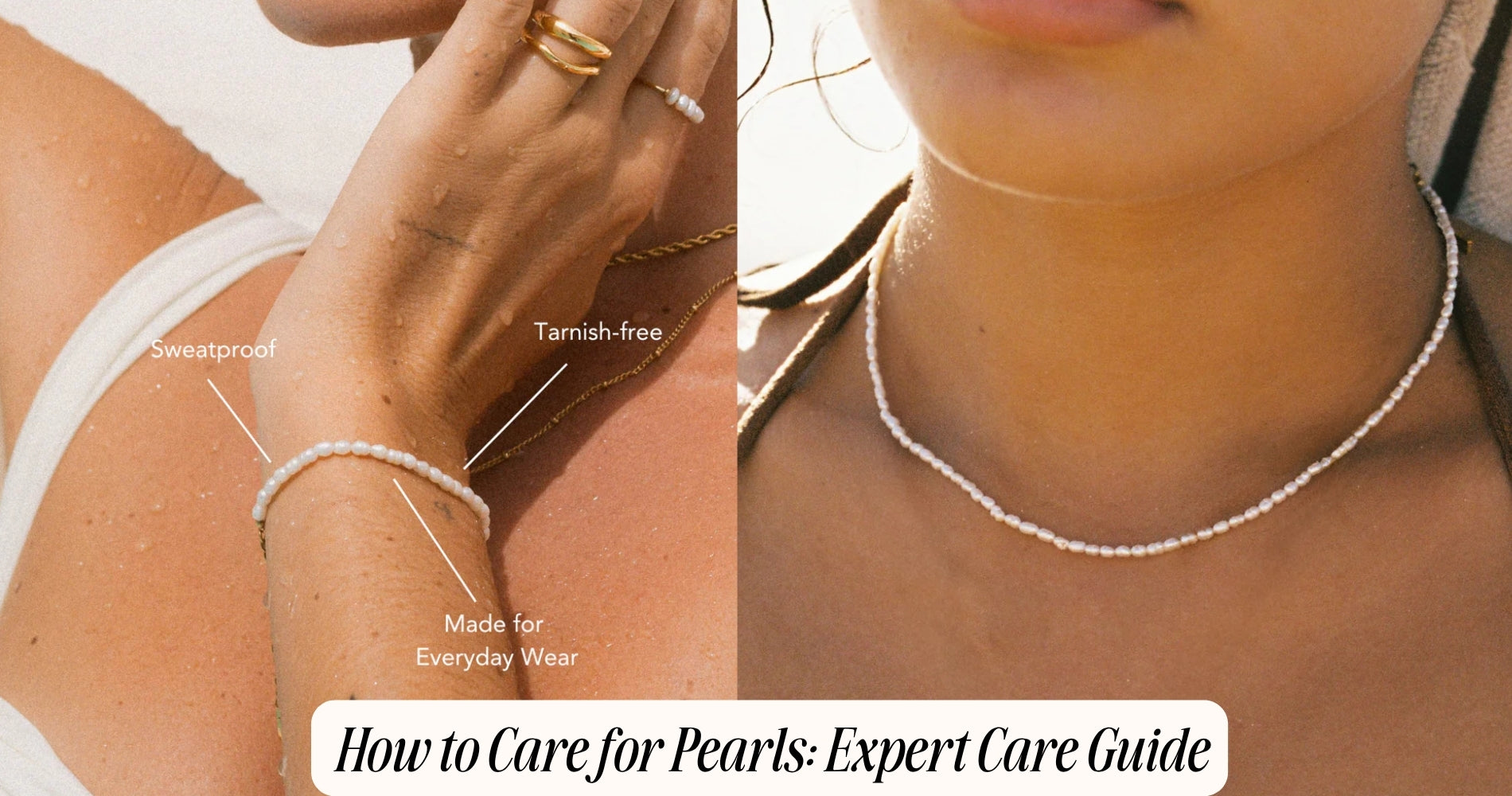
How to Care for Pearls: Expert Care Guide
Pearls are among the most delicate gemstones you can own, and unlike harder stones such as diamond or sapphire, they require a distinctly gentler approach to care. Because pearls are organic, formed by living mollusks rather than through geological mineral formation, they are more sensitive to chemicals, moisture, and everyday wear than most other jewelry materials. If you want your pearls to maintain their signature luster for years to come, learning how to care for pearls properly is essential.
In this guide, we will walk through everything you need to know about wearing, cleaning, and storing pearls, along with common mistakes to avoid. If you are building or expanding your pearl collection, our Freshwater Pearls Jewelry collection offers beautiful, genuine pieces worth exploring.
Why Pearls Require Special Care
Unlike most gemstones, which are made from durable mineral compounds, pearls are composed of nacre, a substance produced by mollusks as they respond to a small irritant inside their shell. This organic composition makes pearls significantly softer and more porous than typical gemstones, ranking only around 2.5 to 4.5 on the Mohs hardness scale, compared to a diamond's 10.
Because of this relative softness and porosity, pearls are far more vulnerable to scratching, chemical exposure, and moisture related damage than harder stones. Understanding this fundamental difference is the foundation for nearly every care recommendation that follows.

Wearing Pearls the Right Way
How you wear your pearls plays a significant role in how well they hold up over time. A few simple habits can help protect them from unnecessary damage during everyday use.
Put pearls on last. When getting ready, apply makeup, perfume, hairspray, and lotion before putting on your pearls, rather than after. These products contain chemicals that can dull a pearl's natural luster or, in some cases, cause more significant surface damage with repeated exposure.
Avoid wearing pearls during physical activity. Sweat contains acids and salts that can gradually affect the surface of a pearl over time, so it is best to remove pearl jewelry before exercising or engaging in strenuous physical activity.
Remove pearls before swimming or showering. Chlorinated pool water, saltwater, and even regular tap water can affect pearls over time, particularly with repeated exposure, so it is best to take them off before any water related activities.
Wipe pearls after each wear. A quick wipe with a soft, dry cloth after taking off your pearls helps remove any oils, sweat, or product residue that accumulated during the day, preventing this buildup from settling into the pearl's surface over time.
Cleaning Pearls Properly
Because pearls are so much more delicate than typical gemstones or metal jewelry, their cleaning process differs significantly from standard jewelry cleaning methods.
Never soak pearls in water or cleaning solution, since the string used to hold pearls together, often silk thread, can weaken and stretch when wet, potentially leading to breakage over time. Similarly, avoid ultrasonic cleaners, steam cleaners, and any harsh chemical jewelry cleaning solutions, all of which can damage a pearl's delicate nacre surface.
Instead, gently wipe pearls with a soft, slightly damp cloth after each wear to remove surface oils and residue. For a slightly deeper clean, you can use a small amount of mild soap diluted in water on the cloth, but avoid applying this directly to the pearls or submerging them entirely. After wiping, allow the pearls to air dry completely before storing them away.
If your pearls have significant buildup or discoloration that a simple wipe down cannot address, it is best to consult a professional jeweler who specializes in pearl care rather than attempting a more aggressive at home cleaning method.
Storing Pearls Correctly
Proper storage is just as important as careful wearing and cleaning when it comes to maintaining a pearl's natural beauty over the long term.
Store pearls separately from other jewelry. Because pearls are so much softer than most other gemstones and metals, storing them alongside harder jewelry increases the risk of scratching. A dedicated soft pouch or a separate compartment in your jewelry box helps protect pearls from contact with more abrasive materials.
Avoid airtight containers. Unlike silver, which benefits from airtight storage to prevent tarnish, pearls actually need a small amount of air exposure to maintain their natural moisture balance. Storing pearls in a completely sealed, airtight container for extended periods can cause them to dry out and potentially crack over time.
Choose a stable environment. Extreme temperature changes and very low humidity can also affect pearls over time, so storing them in a relatively stable, moderate environment, away from direct heat sources or excessive dryness, helps maintain their condition.
Lay pearl necklaces flat when possible. For longer term storage, laying a pearl necklace flat, rather than hanging it, can help reduce stress on the stringing material, particularly for pieces not worn frequently.
Restringing Pearl Necklaces
Because pearl necklaces are traditionally strung on silk thread, which can weaken and stretch over time with regular wear, periodic restringing is an important part of long term pearl care, particularly for necklaces worn frequently.
Most jewelers recommend having pearl necklaces restrung approximately once a year for pieces worn regularly, or every few years for those worn more occasionally. Signs that a pearl necklace may need restringing include visible stretching between knots, a noticeably loose or saggy feel, or any visible fraying of the thread itself.
Investing in periodic restringing helps prevent the more significant issue of a necklace breaking entirely, which can result in lost or damaged pearls that are more difficult and costly to address after the fact.

Common Mistakes to Avoid When Caring for Pearls
A few common mistakes can lead to unnecessary damage or a shortened lifespan for your pearl jewelry.
Avoid using jewelry cleaning solutions designed for metals or harder gemstones, since these products are often too harsh for pearls' delicate, porous surface. Avoid storing pearls in direct sunlight for extended periods, since prolonged exposure can potentially cause discoloration over time. Avoid spraying perfume or hairspray directly onto pearls, even accidentally, since these products can dull their natural shine surprisingly quickly. Avoid wearing pearls in direct contact with rougher fabrics or materials for extended periods, since this can contribute to surface scratching over time.
How to Tell If Your Pearls Need Extra Care
Over time, even well maintained pearls may show signs that they need a bit of extra attention. A loss of natural luster, a noticeably dull or chalky appearance, or visible surface scratches can all indicate it may be time for a gentle cleaning or professional evaluation.
If you notice significant discoloration, unusual odor, or a change in the pearl's surface texture, these signs may indicate more significant issues that warrant a visit to a professional jeweler experienced in pearl care, rather than attempting to address the problem through at home methods alone.

Caring for Different Types of Pearls
While the general care principles outlined above apply broadly across most pearl types, it is worth noting that freshwater pearls, the most commonly used type in modern jewelry, are generally slightly more durable than saltwater varieties like Akoya or South Sea pearls, due to differences in nacre thickness. Even so, all pearl types benefit from the same gentle, careful approach to wearing, cleaning, and storage described throughout this guide.
Why Proper Pearl Care Matters
Taking the time to care for pearls properly is about more than simply maintaining their appearance, it directly affects how long these delicate, organic gemstones will last. Unlike more durable stones that can withstand years of neglect without significant damage, pearls require consistent, thoughtful care to preserve their natural luster and structural integrity over time.
With proper attention, pearls can remain a beautiful, treasured part of your jewelry collection for decades, often becoming even more meaningful as cherished, well maintained heirloom pieces passed down through generations.
Final Thoughts
Learning how to care for pearls properly comes down to a few consistent habits: wearing them thoughtfully, cleaning them gently, and storing them correctly. Because pearls are naturally softer and more sensitive than most other gemstones, this extra care is essential for preserving their signature luster and beauty over the long term.
With just a little consistent attention, your pearls can remain a stunning, treasured part of your jewelry collection for many years to come.
Frequently Asked Questions
1. Can I clean my pearls with jewelry cleaner?
No, standard jewelry cleaners are often too harsh for pearls. Stick to a soft, slightly damp cloth for gentle, regular cleaning instead.
2. How often should pearl necklaces be restrung?
Necklaces worn regularly should generally be restrung about once a year, while those worn less frequently can typically go two to three years between restringing.
3. Is it okay to store pearls in an airtight bag?
It is best to avoid airtight storage for extended periods, since pearls benefit from a small amount of air exposure to maintain their natural moisture balance.
4. Why do my pearls look dull even though I clean them?
Dullness can result from product buildup, improper cleaning methods, or natural wear over time, and persistent dullness may benefit from a professional evaluation.









Leave a comment
This site is protected by hCaptcha and the hCaptcha Privacy Policy and Terms of Service apply.