

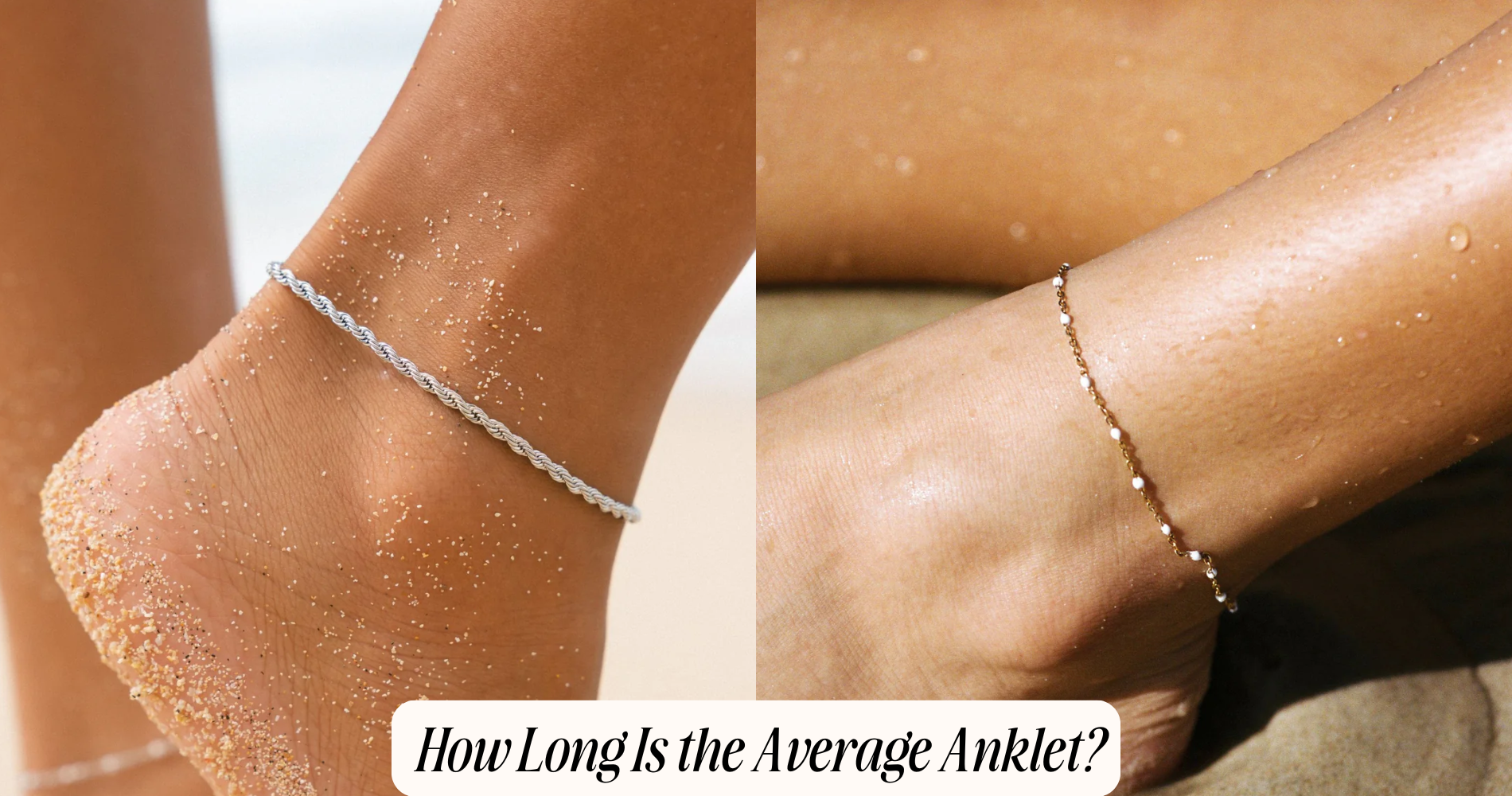
How Long Is the Average Anklet?
How long is the average anklet? Most anklets measure around 9–10 inches, but the “right” length really depends on your ankle size, where you want the anklet to sit, and how the material drapes. Slim chain styles tend to fit shorter, while beaded, chunky, or charm-heavy designs—like many styles in Atolea’s Beach Anklets collection—often need extra length for comfortable movement. In North America and Europe, 8.5–10 inches with a small extender is standard, though fuller ankles may prefer 10–11 inches. From measuring techniques to body-type tips, there’s even more you can use to fine-tune the perfect fit.
Understanding Standard Anklet Lengths
When you talk about average anklet length, you’re usually dealing with a standard range of about 8 to 11 inches, with 9 to 10 inches being the most common for women’s styles.
You treat that range as a baseline, then adjust for fit, anklet materials, and how you want it to sit on the ankle bone.
You’ll size slightly shorter for slim, chain-only designs and longer for charm-heavy or beaded styles that need extra drape.
Sterling silver and gold chains hang more fluidly, while cord, leather, and shells sit more fixed and may require an extra quarter to half inch.
You also consider cultural significance: in some traditions, a snug, skin-hugging fit signals modesty; in others, a looser, layered look expresses status or style.

Common Anklet Size Ranges by Region
Across different regions, anklet sizing shifts with body proportions, cultural dress, and styling trends, so the “average” you use in North America won’t always apply elsewhere.
In North America and much of Europe, you’ll typically see 8.5–10 inches (21.5–25.5 cm), often with a 0.5–1 inch extender to accommodate boots and sneakers.
In South and Southeast Asia, where anklets may carry strong cultural significance, sizes skew smaller, around 8–9.5 inches (20–24 cm), and you’ll encounter heavier anklet materials like sterling silver or brass, engineered for durability and sound.
In the Middle East, ranges often run 9–11 inches (23–28 cm), allowing looser drape over sandals.
Latin American markets frequently mirror U.S. sizing but prioritize lightweight chains for warm climates.
How Style and Design Influence Anklet Length
Regional averages only tell part of the story, because anklet style and construction strongly dictate how long a piece should be. When you choose a slim cable chain in gold or sterling silver, you typically wear it shorter so it skims the ankle bone.
Chunkier links, gemstone stations, or heavy charms demand extra length for fluid movement and to prevent digging. You’ll also adjust length based on design elements like fixed pendants, multi-strand layers, or asymmetric chains that need specific drape to sit correctly.

Beaded and braided textile anklets often run longer because they flex less and rely on knots instead of clasps. Additionally, cultural significance matters: traditional Indian payals, Mediterranean protection anklets, or festival-inspired pieces are usually designed looser to emphasize sound, sway, and visibility.
Step-by-Step Guide to Measuring Your Ankle
Before you buy or custom-order an anklet, measure your ankle carefully so the fit matches both your size and the design’s intended drape.
Sit with your foot flat and locate the narrowest point above your ankle bone or the exact spot you want the anklet to rest.
Wrap a flexible tape measure around that line; if you lack standard measuring tools, use non-stretch string, mark the overlap, then measure it against a ruler.
Note the circumference in millimeters for precision, especially with delicate anklet materials like fine chain or seed beads.
Add 0.5–1 inch (about 1.3–2.5 cm) for standard ease, depending on whether you prefer a close, streamlined profile or a looser, fashion-forward slouch.
Choosing the Right Fit for Different Body Types
Once you’ve measured your ankle and added your preferred ease, you can refine the fit by considering how your body type and proportions interact with different anklet styles.
If you have slimmer ankles, a minimal chain in 9–10 inches often reads elegant, while heavier gauges or charms can overwhelm the line. Fuller ankles may look more balanced with slightly longer lengths—10–11 inches—and medium-weight links that don’t dig into the skin.
If you’re petite, keep proportions tight to the ankle so the leg doesn’t appear visually shortened. Taller body types can support looser drape and bolder textures, like Figaro or paperclip chains.
High-polish metals highlight bone structure; matte, hammered, or beaded finishes diffuse attention and subtly streamline the ankle.
Adjustable Chains, Extenders, and Custom Sizing
Although a single fixed length can work, adjustable chains, extenders, and custom sizing give you far more control over how an anklet sits and moves on your leg.
With adjustable options, you typically get a 1–2 inch tail chain, allowing you to fine‑tune drape over the ankle bone and accommodate slight swelling or seasonal size changes.
Extenders clip onto an existing clasp, ideal if you’re between standard sizes or layering multiple anklets.
Choose extenders in the same metal and finish to avoid galvanic reactions and premature tarnish.
If you have very slim or fuller ankles, or you’re particular about symmetry, custom designs let you specify exact millimeter measurements, chain thickness, and clasp type so the anklet maintains proportion, comfort, and modern profile.

Anklet Length Recommendations by Occasion and Outfit
Three key variables dictate the best anklet length for any look: how high your footwear sits, where your hemlines hit, and whether you want the chain to skim or float above the ankle bone.
For low-cut sneakers or sandals, an average 9–9.5 inch anklet usually sits cleanly at the narrowest part of the ankle. With boots or high-top sneakers, go slightly longer so the chain clears the collar and doesn’t pinch.
For office-ready anklet styling with midi skirts or tailored shorts, choose a closer fit that tracks the leg line, avoiding excessive drape.
Resortwear and festival looks suit looser 9.5–10 inch lengths that create visible sway.
Watch seasonal trends: in summer, lighter chains run shorter; in cooler months, longer fits layer over tights.
Sizing Tips for Gifting Anklets
After you know how anklet length interacts with shoes and hemlines, you can choose sizes that still work when you’re buying for someone else and can’t measure directly. For most women, select 9–10 inch anklets with a 1–2 inch extender; for men, 10–11 inches. Extenders are your safest gifting tips tool because they accommodate swelling, movement, and style shifts.
When you don’t know their exact size, study their anklet styles and general build. Petite frames usually suit finer chains at the lower end of the range; athletic or curvier ankles benefit from slightly longer lengths and more robust hardware.
If they stack jewelry, size up so layered chains don’t bind. When in doubt, prioritize adjustable closures over fixed, clasp-only designs.
Care and Wear Considerations for Long-Lasting Fit
Because anklets sit at a flex point that swells, rubs against shoes, and brushes flooring, the way you care for them directly affects how comfortably they fit over time.
Prioritize materials: solid gold and surgical steel tolerate daily wear, while plated alloys and seed beads need gentler handling.
Use focused anklet maintenance tips: rinse off sweat or sand, dry thoroughly, and store flat to prevent stretching or kinking.
Check clasps and jump rings regularly so a loosening link doesn’t change the effective length. Adjust extenders as your ankle size fluctuates with heat, travel, or training.
When you follow seasonal anklet trends—like layered chains in summer or sock-grazing styles in fall—evaluate shoe friction and hosiery to prevent chafing and fit distortion.
Frequently Asked Questions
Can Anklet Length Affect Circulation or Cause Long-Term Health Issues?
Yes, anklet tightness can impair blood circulation and, if worn chronically, potentially cause numbness, swelling, or skin damage. You should choose adjustable designs, smooth hypoallergenic metals, and guarantee you can slide a finger comfortably beneath the chain.
What Anklet Lengths Are Best for Men’s Fashion?
You’ll look best in 9–10 inch anklets for a snug, masculine fit; go 10–11 inches for looser, stacked anklet styles. Prioritize stainless steel or leather, matching current fashion trends with boots, loafers, or tailored shorts.
Are There Cultural or Religious Restrictions on Anklet Length?
Yes, some cultures link anklet length to modesty, marital status, or ritual purity. You should research local cultural significance and religious symbolism, then choose discreet, above-bone lengths and minimal charms to avoid misinterpretation or offense.
How Does Anklet Length Impact Movement During Sports or Dance?
Anklet length directly affects your stride; too loose snags, too tight restricts flexion. You’ll optimize anklet flexibility and athletic performance with low‑profile, close‑fitting chains or cords that clear the malleolus and won’t migrate during lateral or rotational moves.
Can Anklet Length Influence How Quickly It Tarnishes or Wears Out?
Yes, length indirectly affects tarnishing factors and material durability. Longer, looser anklets swing more, causing friction, micro-scratches, and exposure to sweat. You’ll see faster wear on plated metals; solid gold, stainless, and titanium resist better.
Conclusion
You now know average anklet lengths, how regional standards differ, and how design details change the way they sit on your ankle. Use a soft tape to measure, factor in drape and chain thickness, and match fit to your body type and outfit. Lean on extenders or custom sizing for precision, especially when gifting. With smart care and storage, your anklets will keep their shape, shine, and on-trend look season after season.









Leave a comment
This site is protected by hCaptcha and the hCaptcha Privacy Policy and Terms of Service apply.