

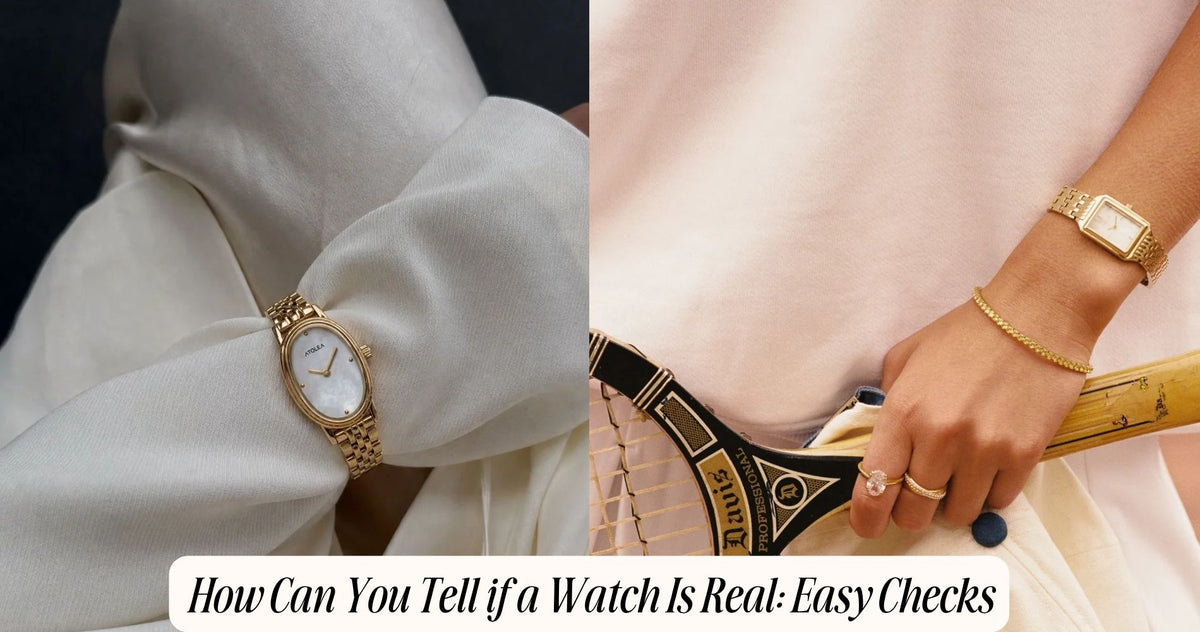
How Can You Tell if a Watch Is Real: Easy Checks
Counterfeit watches have become more convincing than ever, which makes buying a pre owned or online watch a little nerve racking. A fake can copy the look of a famous model so closely that a quick glance tells you very little. So how can you tell if a watch is real? The answer is to combine several small checks, from the feel of the watch to the quality of its details and the trustworthiness of the seller. If you are also looking for everyday accessories that stand up to daily wear, our Waterproof Jewelry collection is worth browsing alongside your watch search.
In this guide, we will walk through practical checks you can do at home, explain what they can and cannot prove, and show you when it is time to call in a professional.
No Single Test Is Enough, So Use Several Together
There is no single trick that proves a watch is genuine. Some genuine watches have quirks that look suspicious, and some high quality fakes pass casual tests. The most reliable approach is to look at the whole picture: how the watch feels, how it is made, what the paperwork says, and who is selling it.
Treat each check below as one piece of evidence. When several raise doubts, stop and get an expert opinion before spending money.

Check the Weight and Overall Feel of the Watch
Genuine luxury watches are usually made from solid metals such as stainless steel, gold, or platinum, and they often feel dense and well balanced. Fakes frequently use cheaper alloys or hollow components, so they can feel noticeably lighter or flimsy.
Hold the watch and move it around. The bracelet links should feel solid and fit together smoothly without rattling. The clasp should close with a firm, confident click. If you can compare it with a known genuine example of the same model, the difference in heft can be easy to notice.
Look Closely at the Movement and the Second Hand
How the second hand moves can offer a clue, but it needs to be interpreted carefully. Many mechanical watches have a second hand that sweeps smoothly around the dial, while quartz watches tick once per second. A brand known for mechanical movements that ticks like a cheap quartz watch is a red flag.
Keep in mind that some genuine watches are quartz and do tick, and some fakes imitate a sweeping motion. So use this as a hint rather than proof. If the watch has a transparent case back, look at the movement itself. A genuine movement usually shows clean, neatly finished parts, while a fake may look rough, plain, or stamped.
Inspect the Case Back, Engravings, and Serial Numbers
Flip the watch over and study the case back. Authentic watches typically have crisp, precise engravings, with clean edges and consistent depth. Fakes can look shallow, uneven, or slightly blurry.
Many brands engrave a serial number and model reference on the case, often between the lugs or on the case back. These should be sharp and consistent. You can compare them with information from the manufacturer or a trusted reference source. Be aware that counterfeiters sometimes copy real serial numbers, so a matching number alone does not guarantee authenticity.

Examine the Dial, Text, and Logo for Sloppy Details
The dial is one of the best places to spot problems. Genuine watches have sharp printing, evenly spaced hour markers, and perfectly aligned text and logos. Look closely, ideally with a magnifier, for fuzzy letters, uneven spacing, misspellings, or markers that are slightly crooked.
Check the hands too. They should be well finished and aligned, and the minute hand should point precisely at the markers. Small flaws like these are hard for counterfeiters to avoid, especially when they are working at low cost.
Test the Date Window, Magnifier, and Other Complications
If the watch has a date window, check how the date displays. On some genuine models, a magnifying lens enlarges the date significantly, and the date is clearly centered and crisp. On a fake, the magnification may be weak, the numbers may sit off center, or the window may look rough around the edges.
If the watch has extra features such as a chronograph or a moon phase, test that they work smoothly and make sense. Pushers should feel firm and responsive, and sub dials should move as expected. Features that are simply painted on the dial are a clear warning sign.
Evaluate the Crown, Bezel, and Bracelet Quality
The crown, the bezel, and the bracelet reveal a lot about craftsmanship. A genuine crown usually has a crisp logo and turns smoothly, with a secure feel if it is a screw down type. The bezel on a dive style watch should rotate with precise, even clicks.
The bracelet should have uniform links, smooth edges, and a clasp that is neatly stamped and finished. Sharp, rough, or uneven edges suggest lower quality manufacturing. Also confirm that the bracelet matches the watch style, since mismatched parts can indicate a franken watch assembled from different pieces.

Look at the Luminous Material and Crystal
Many watches use a luminous material that glows in the dark. Expose the watch to light, then view it in a dark room. Genuine lume is typically even and clean, while poor imitations may glow patchy or weak.
The crystal should be free of defects and sit flush with the case. Avoid scratch or water tests on a watch you do not own, since these can cause damage. Stick to gentle visual checks.
Check the Box, Papers, and Warranty Card
Original boxes and warranty cards can support authenticity, but they are not proof on their own. Counterfeiters often fake them, and genuine watches are sometimes sold without them. If papers are present, make sure the details match the watch exactly, since mismatched numbers or spelling errors suggest a problem.
Be Skeptical of Price and Seller Behavior
Price is often the biggest clue. A luxury watch offered at a steep discount is rarely a bargain. Be wary of listings that pressure you to buy quickly, avoid questions, use stock photos, or refuse to provide clear images of the case back and serial number.
Research the seller. Check reviews, return policies, and whether they offer an authenticity guarantee. Buying from an authorized dealer is the safest route, and reputable pre owned dealers often authenticate watches before selling them.
Get a Professional Opinion When It Matters
For a valuable watch, the most reliable step is professional authentication. An experienced watchmaker or appraiser can open the case, examine the movement, and compare details against known specifications. It costs a bit, but it can save you from a much larger loss.

Final Thoughts
So, how can you tell if a watch is real? Check the weight and feel, inspect the movement, engravings, dial details, and complications, evaluate the crown and bracelet, review the paperwork, and be cautious about price and seller behavior. Combine the evidence, and when stakes are high, ask an expert.
A little patience and a careful eye can help you buy with confidence and avoid costly mistakes.
Frequently Asked Questions
1. How can you tell if a watch is real quickly?
Check the weight, the sharpness of the engravings and dial text, the smoothness of the movement, and the seller's reputation. No single check is conclusive, so use several together.
2. Does a sweeping second hand prove a watch is real?
No. Many genuine watches tick, and some fakes imitate a sweep, so it is only a hint.
3. Can a serial number prove authenticity?
Not alone. Counterfeiters sometimes copy real serial numbers, so compare it with other details or ask an expert.
4. Are original box and papers proof that a watch is real?
They help, but they can be faked, and genuine watches are sometimes sold without them, so treat them as supporting evidence.
5. Where can I get a watch authenticated?
An experienced independent watchmaker, a qualified appraiser, or an authorized service center can examine the watch and confirm whether it is genuine.










Leave a comment
This site is protected by hCaptcha and the hCaptcha Privacy Policy and Terms of Service apply.