

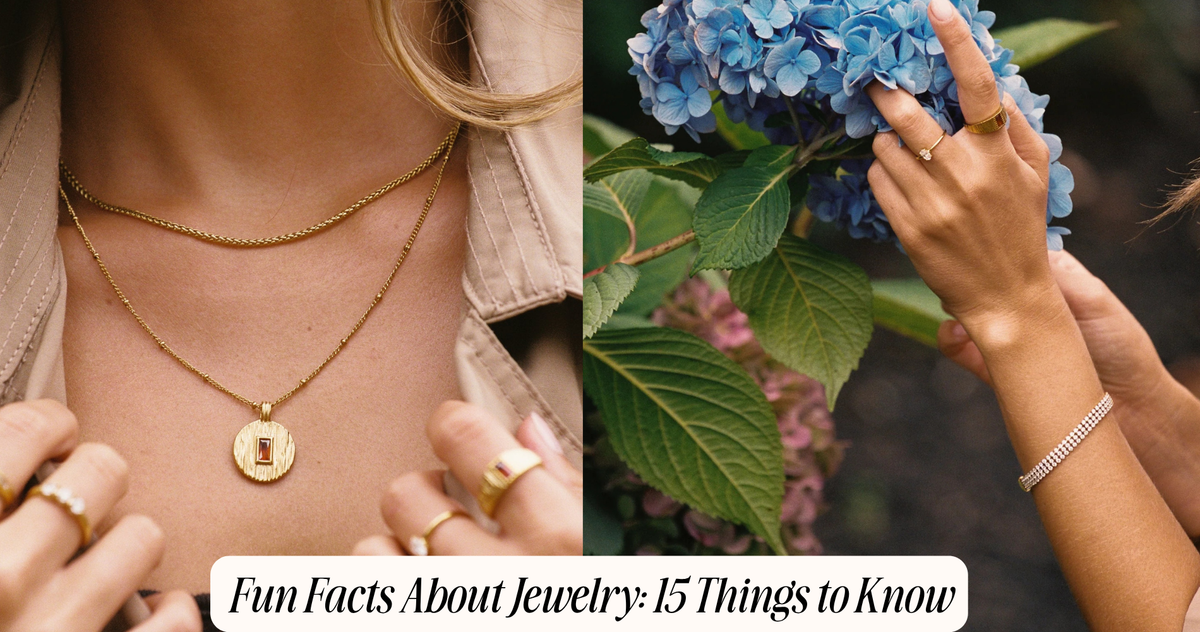
Fun Facts About Jewelry: 15 Things to Know
The best fun facts about jewelry are older and stranger than most people expect: humans wore shell beads at least 142,000 years ago, a pearl necklace reportedly once bought a Fifth Avenue mansion, and the modern birthstone list dates to 1912.
We kept the 15 facts that hold up to a source check, then added the practical ones, like why jewelry often triggers skin reactions. If that is you, our hypoallergenic jewelry is a good place to start. In this guide, we will explain the history, the pearls, the birthstones and the skin science behind the jewelry you wear.
What Are the Most Surprising Fun Facts About Jewelry?
Jewelry is far older than metalwork. The earliest known pieces are shell beads, and researchers think they worked as a visible message about who the wearer was. These three origin facts show how long people have used jewelry to say something without words.

-
1. Shell beads came first. The oldest known jewelry is a set of 33 perforated sea-snail shells from Bizmoune Cave in Morocco, dated to at least 142,000 years ago.
-
2. Beads were early messaging. Archaeologists say the wearers likely used them to share identity with people beyond their immediate circle.
-
3. "Jewelry" once meant plaything. The word traces back to the Old French jouel, usually glossed as a plaything or trinket.
Why Do Pearls Have Such Wild Jewelry Stories?
Pearls form inside living mollusks, which is part of why natural pearls carried so much value before cultivation. They sparked legends, record-setting trades and a steep price drop once cultured pearls arrived.
-
4. Pearls come from animals. A pearl grows inside a mollusk, which makes it one of the few gems created by a living creature.
-
5. Cleopatra's pearl is a legend. A Roman-era story says she dissolved a pearl in vinegar to win a bet. Treat it as folklore.
-
6. A mansion for a necklace. In 1917, Cartier reportedly acquired its Fifth Avenue building from Morton Plant in exchange for a double-strand natural pearl necklace and $100. Details vary by source.
-
7. Cultured pearls changed the math. The natural pearl market was transformed soon after, and the Plant necklaces later sold at a 1957 auction for a fraction of their reported 1917 value.
Cultured freshwater pearls are the accessible route today. Atolea's Freshwater Pearl Hoop Earrings use genuine freshwater baroque drop pearls, and we suggest skipping the pool and ocean with any pearl piece.
How Did Birthstones and Gold Purity Get Their Rules?
Both systems were set by trade groups, not nature. US jewelers standardized birthstones in 1912 and have revised the list since, while karat simply states how many of 24 parts are gold.

-
8. The list was a trade decision. The 1912 list was the first official birthstone list, set by the group now called Jewelers of America.
-
9. It keeps changing. The updates are in the table below.
-
10. A famous "ruby" is a spinel. The 170-carat Black Prince's Ruby in the British Imperial State Crown is a red spinel, the stone added to August in 2016.
-
11. Karat is a fraction. Pure gold is 24k, so 14k is 14 of 24 parts, or 58.3% gold, and 18k is 75%. Karat describes alloy purity, not plating.
|
Year |
Birthstone list change |
|
1912 |
First official US list adopted |
|
1952 |
Alexandrite, citrine, tourmaline and zircon added |
|
2002 |
Tanzanite added for December |
|
2016 |
Spinel added for August |
Why Does Jewelry Cause Skin Reactions?
Nickel is the most common cause of contact allergy worldwide, and earrings and other jewelry are its most frequent sources. These facts explain why the metal under the shine matters as much as the design.
-
12. Nickel is the top trigger. A dermatology review calls it the most common cause of contact allergy worldwide, most often tied to earrings and other jewelry.
-
13. Earrings are the usual culprit. The American Academy of Dermatology lists earrings and earring backs among the biggest sources of jewelry-related nickel reactions.
-
14. Europe regulates it. The EU limits nickel release from items meant for direct, prolonged skin contact.
-
15. Plating can wear through. The same review cautions that gold plating can wear off and expose a base metal that may contain nickel, so coating quality and base metal both count.
For the green-skin side of the story, read why some jewelry stains your skin.
What Should You Wear If You Have Sensitive Skin?
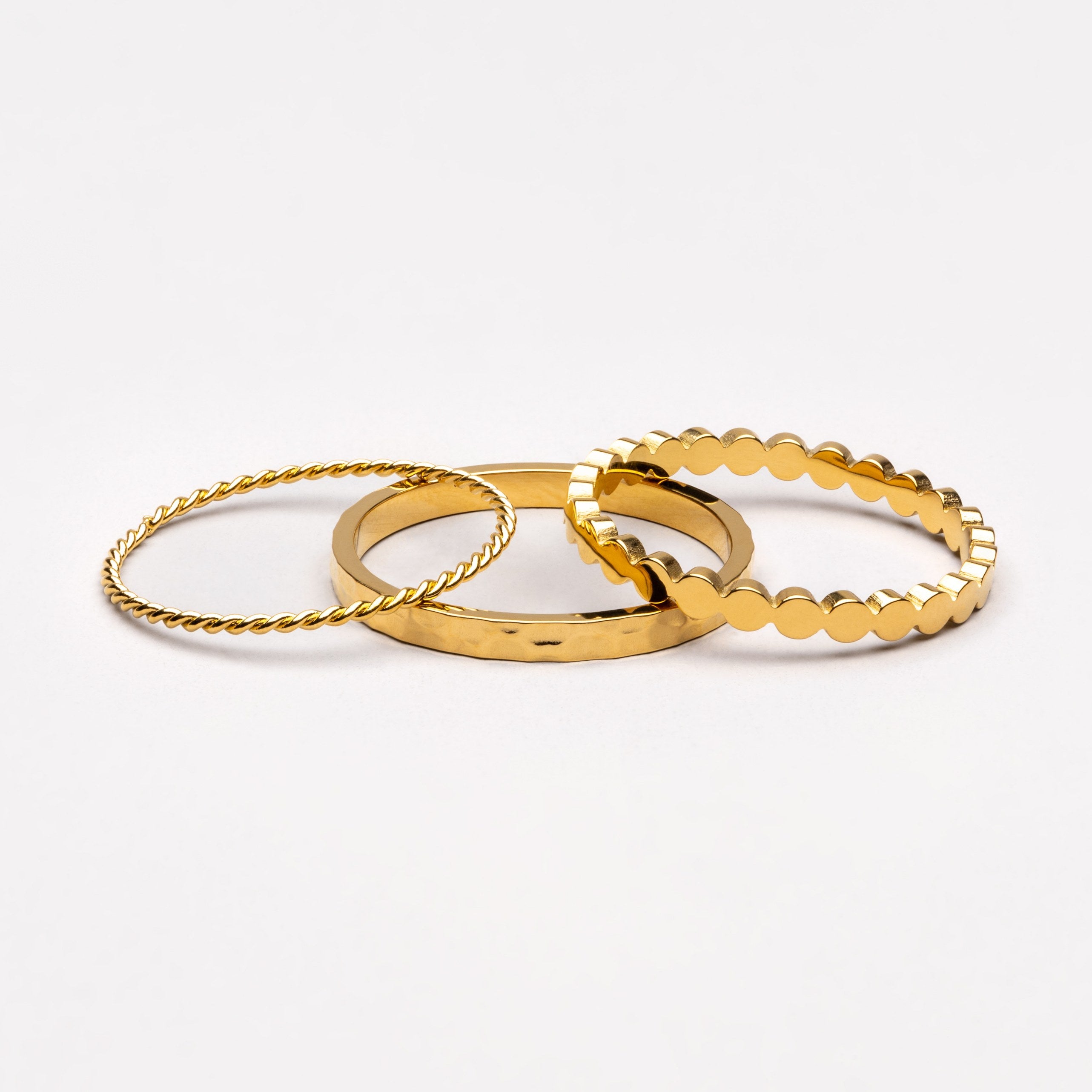
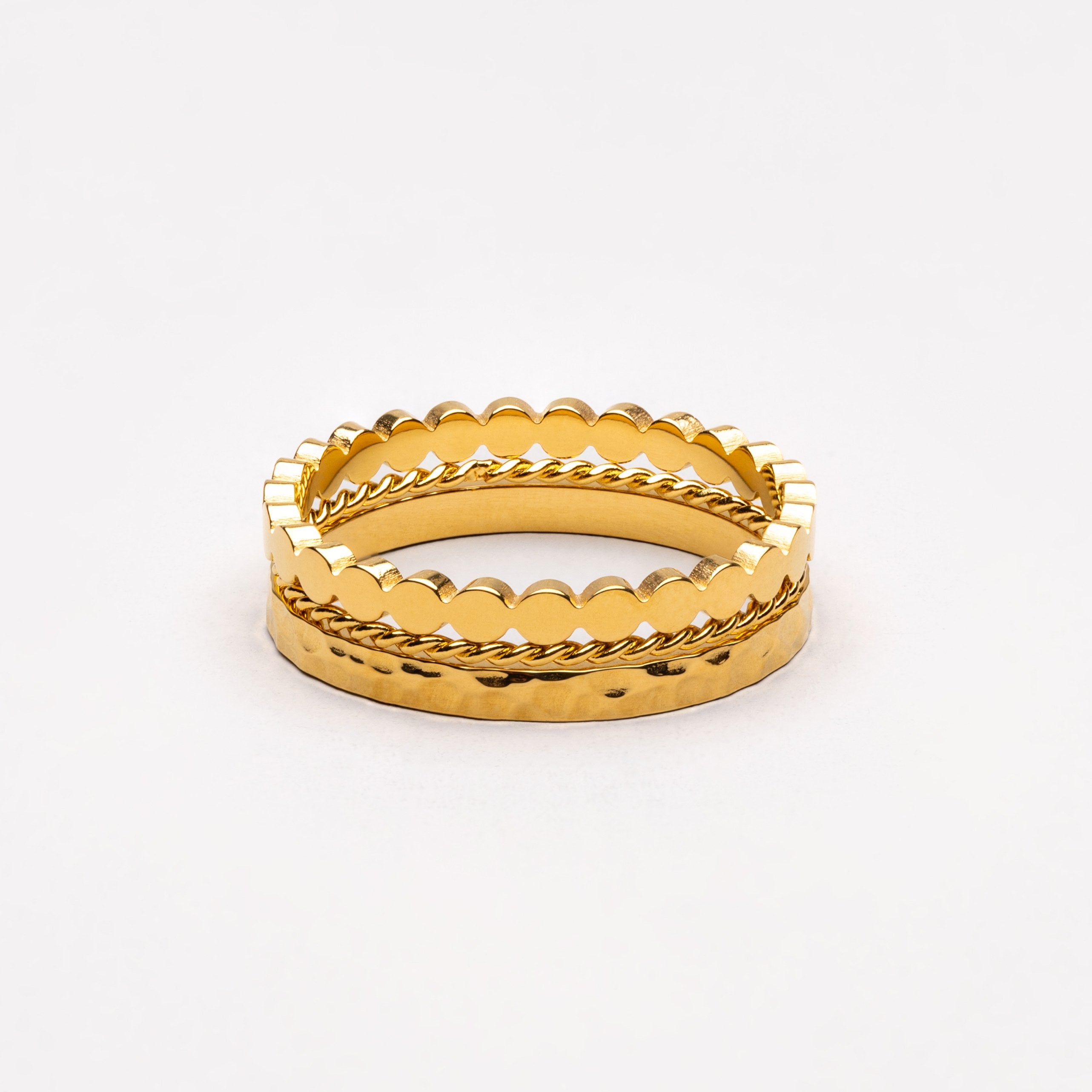
Look for a stable base metal, a durable finish and clear material details. Atolea's hypoallergenic jewelry collection is built around that brief, with necklaces, earrings, rings, bracelets and anklets made for everyday wear.
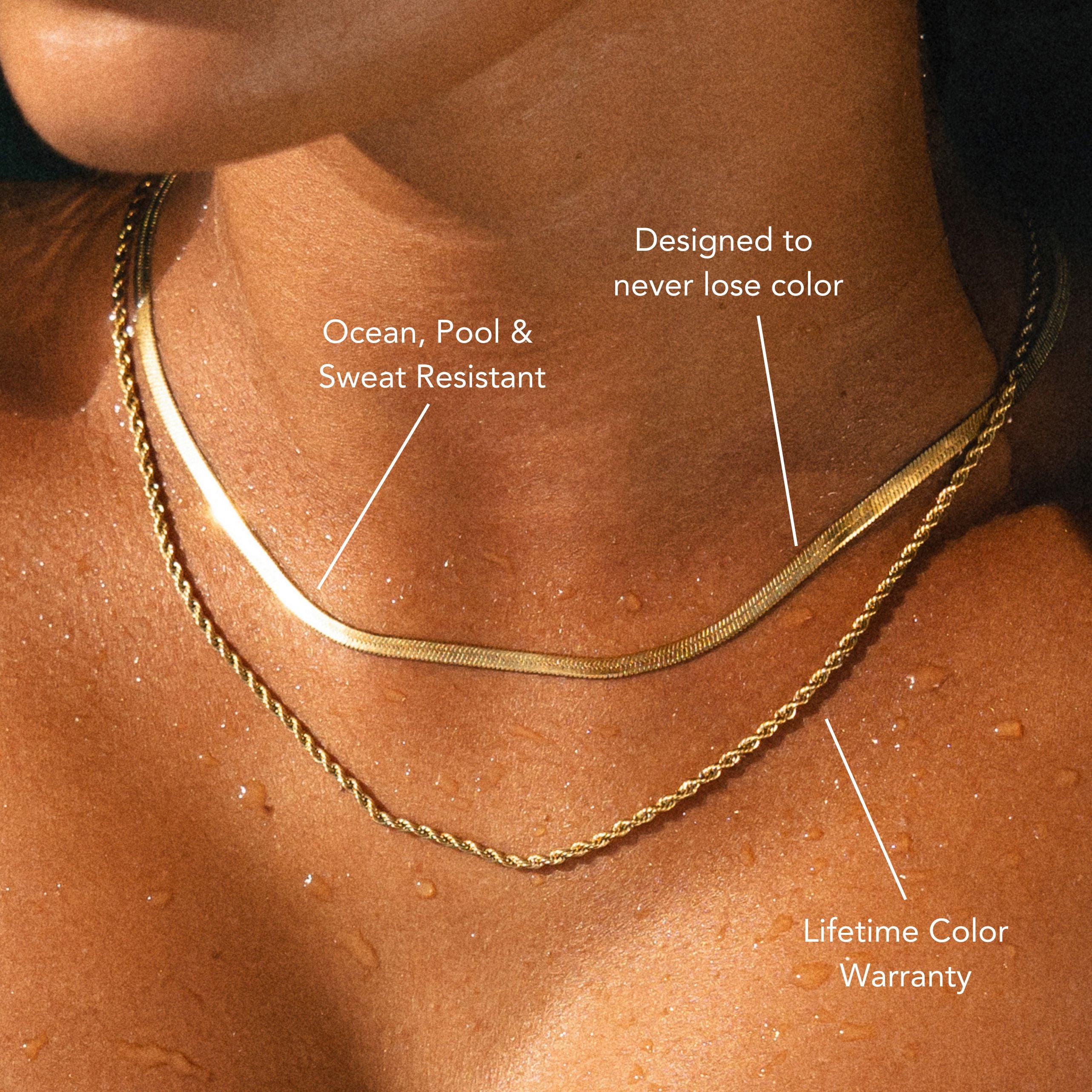
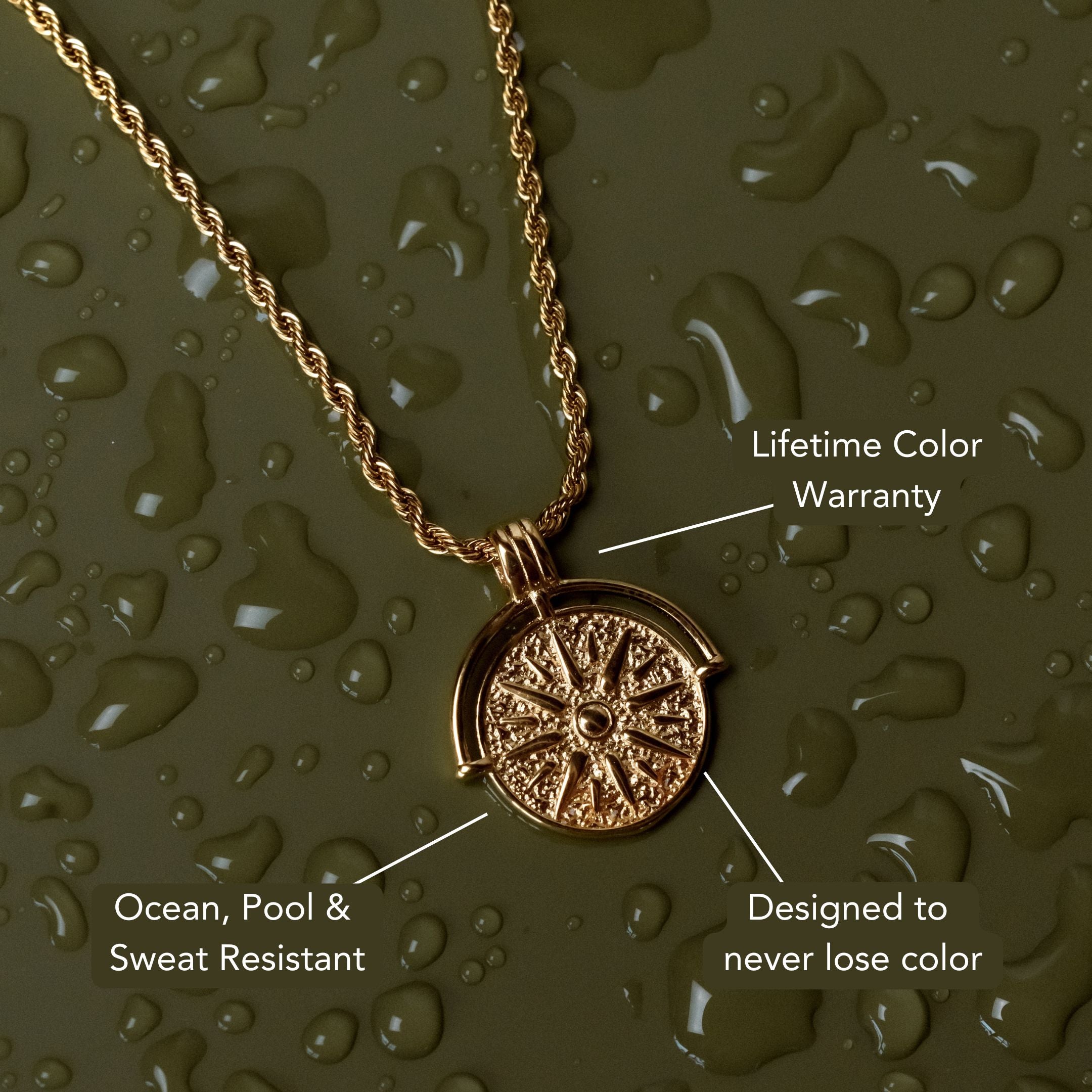
Atolea pieces are made from high-quality stainless steel with an 18k gold PVD finish, about 10x thicker than standard gold plating according to Atolea, made for the shower, pool, ocean, gym and sweat, and considered safe for most people with sensitive skin.
Worked example: a November birthday. Pair the Birthstone Necklace in its November | Citrine option with Classic Hoop Earrings in the medium size (17 mm outside diameter). Both are made for the shower and the gym, so the outfit works beyond the party.

Final Thoughts
These fun facts about jewelry show that people have used it to tell stories for 142,000 years, and the best pieces still do. If you want your next piece to be comfortable as well as meaningful, browse jewelry for sensitive skin and pick the story you want to wear.
Frequently Asked Questions
What is the oldest known jewelry?
The oldest known jewelry is a set of 33 perforated sea-snail shell beads from Bizmoune Cave in Morocco. Researchers dated them to at least 142,000 years ago, and the beads were probably worn on strings or clothing.
What is the birthstone for November?
November has two birthstones: topaz, on the original 1912 list, and citrine, added in 1952. Citrine is a yellow-to-orange quartz, so it shows up often in warm-toned jewelry and pairs naturally with yellow gold finishes.
What does 14k gold mean?
14k gold is 14 parts gold and 10 parts other metals, which makes it 58.3% gold. Pure gold is 24k, so karat always describes the share of gold out of 24 parts in the alloy.
Why does some jewelry irritate your skin?
The usual cause is nickel, the most common contact allergen worldwide. Earrings and earring backs are frequent triggers. Choosing nickel-free metals and checking that a coating will not wear through can reduce the risk.
Which jewelry is best for sensitive skin?
Look for clear material details, a stable base metal and a durable finish. Atolea's stainless steel pieces with an 18k gold PVD finish are considered safe for most people with sensitive skin, though anyone with a known allergy should check with a dermatologist.









Leave a comment
This site is protected by hCaptcha and the hCaptcha Privacy Policy and Terms of Service apply.