


Average Length of an Anklet Explained
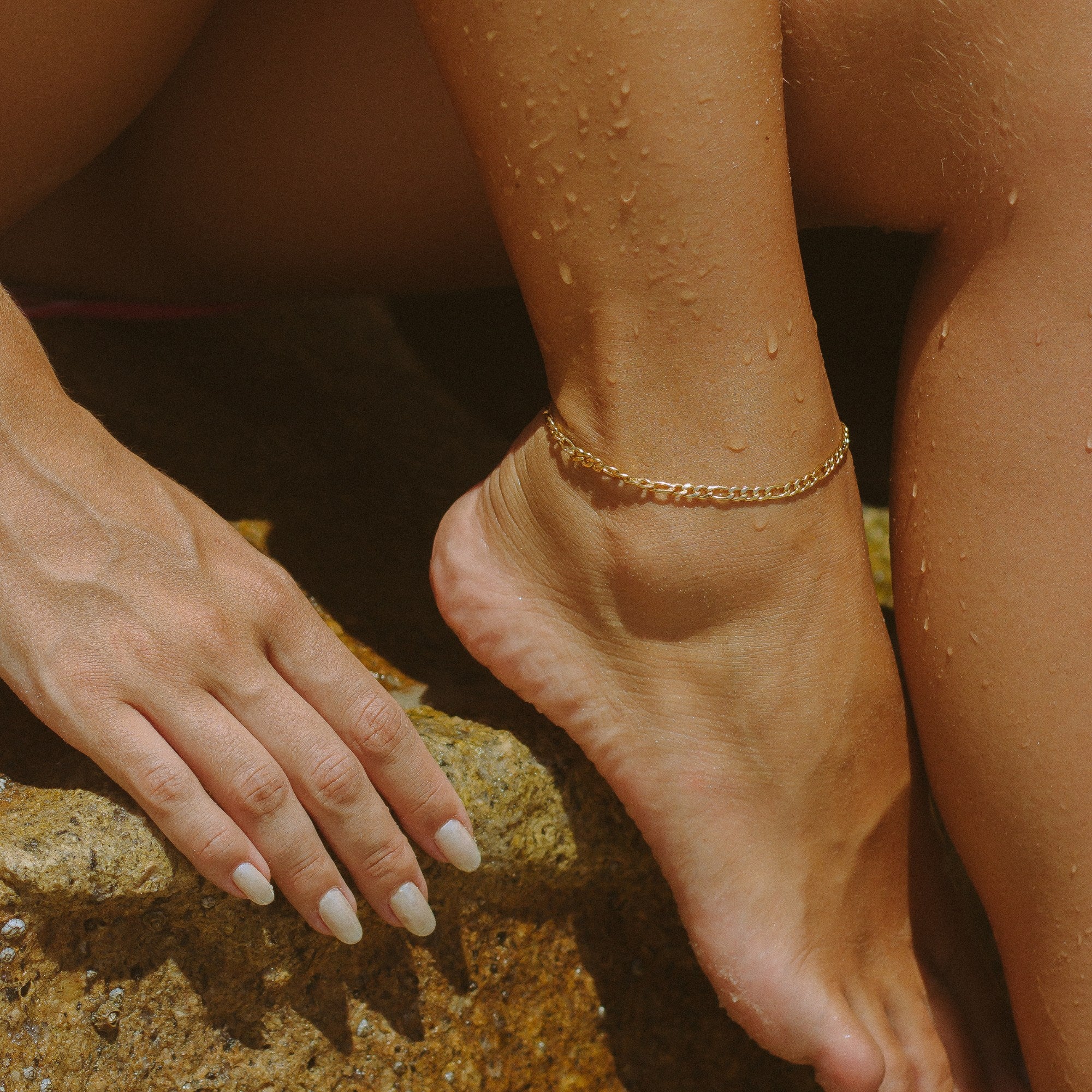
Understand the average length of an anklet by starting with standard sizing—most women’s anklets run 8.5–9.5 inches, men’s average 10–11 inches, teens 7–8 inches, and kids 6–7 inches. For the best fit, measure your ankle at the end of the day and add ease: 0.3–0.5 inches for a snug look, 0.6–1.0 inches for natural drape, and 1.0–1.5 inches for a loose style. Chunky chains, charm designs, multi-strands, or rigid segments often need an extra 0.25–0.5 inches. For elegant, adjustable options that fit beautifully across styles, explore our Gold Ankle Bracelets collection. When in doubt, default to 9 inches for women or 10.5 inches for men—extenders add flexibility.
Standard Anklet Sizes by Gender and Age
Most anklets fall within predictable ranges by gender and age, which helps you choose a size that fits without guesswork.
Use an objective anklet size starting point: 8.5–9.5 inches for most women, 10–11 inches for most men, and 7–8 inches for teens. For children, expect 6–7 inches, with clear age variations from 4–12 years. These ranges reflect measured ankle circumferences plus a comfort allowance of 0.5–1 inch.
To refine selection, consult sizing charts from manufacturers that list ankle circumference and corresponding lengths.
Account for gender differences—men’s averages run roughly 1–1.5 inches longer due to larger ankle girth. If you’re between sizes, choose the next length up.
When buying gifts, default to 9 inches for women and 10.5 inches for men unless a measurement is available.
How Style and Design Influence Fit
Although length is your starting point, an anklet’s style and construction can change how that length wears on your ankle.
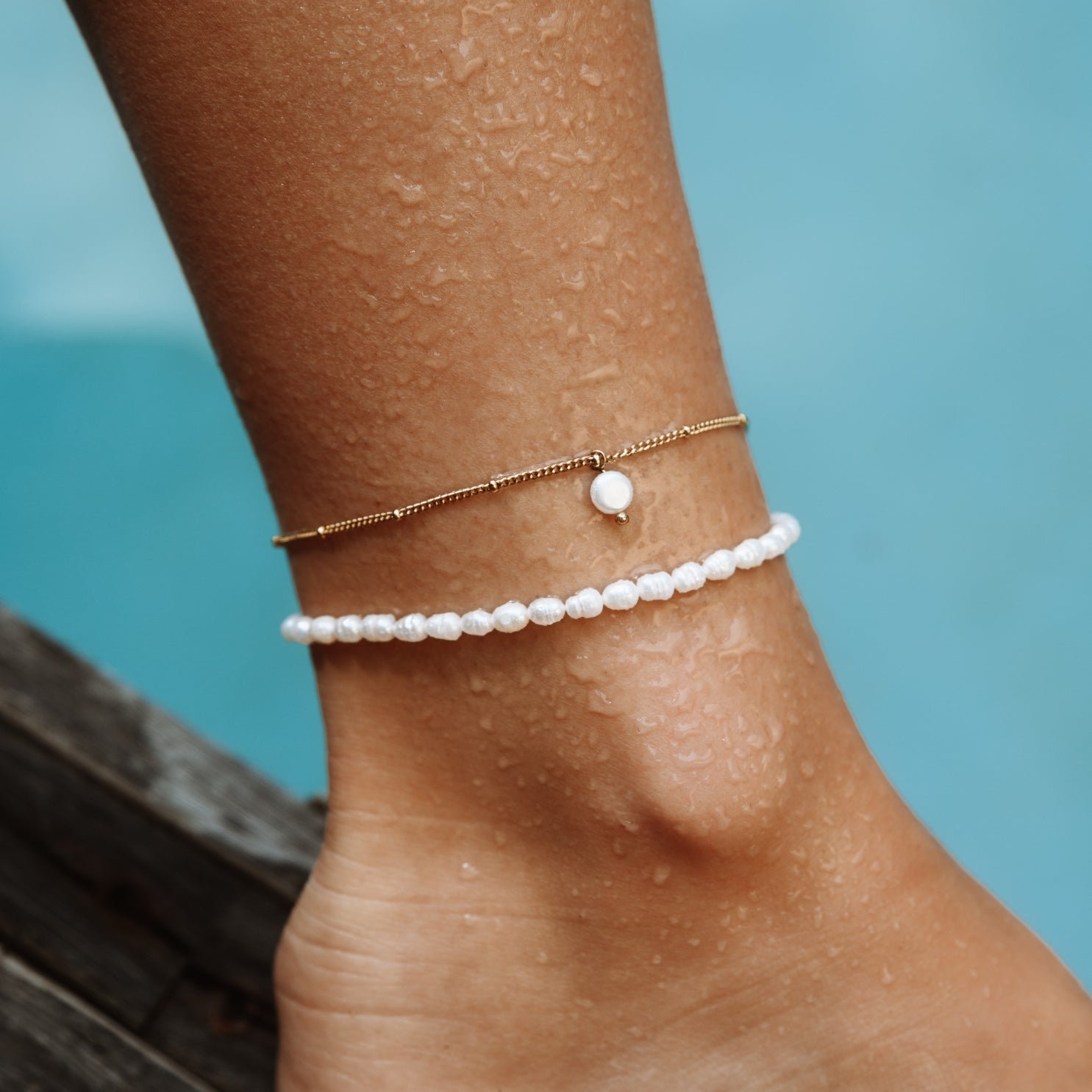
Chain thickness adds bulk and shortens the apparent drop; a 9-inch chunky curb can feel tighter than a 9-inch fine cable. Charms, coins, and nameplates concentrate weight, rotating the piece and requiring an extra 0.25–0.5 inches for balanced drape.
Multi-strand and layered designs distribute tension unevenly, so you’ll need slightly more slack to prevent pinching. Fixed bars or rigid segments limit curvature, demanding a looser fit than fully flexible links. Adjustable extenders widen the fit range but shift the anchor point.
Match design aesthetics to your personal style and ankle shape: minimal chains suit a close fit, while statement silhouettes typically wear best with a modest allowance.
Materials and Their Impact on Comfort
Because material governs weight, flexibility, and skin interaction, it directly affects how comfortably an anklet wears all day.
Metal alloys vary: sterling silver and 14k gold are smooth and hypoallergenic for most, while nickel-containing mixes often trigger irritation. Stainless steel resists tarnish and feels lighter than brass. Chain links move freely, reducing pressure points; rigid cuffs concentrate load and can chafe.
Textile options change thermal feel and breathability. If you want soft contact, choose comfort materials like silk cord or tightly woven nylon; both minimize friction and absorb slight moisture.
Leather molds to your contour but can stiffen with sweat and salt. Silicone is flexible, waterproof, and ideal for active wear, yet may trap heat.
Evaluate fabric choices, clasp edges, and surface finish to balance softness, durability, and daily comfort.
Measuring Your Ankle Step by Step
Two simple tools—a flexible measuring tape and a snug string—let you capture an accurate ankle size in minutes.
Sit with your foot flat, ankle at a right angle. Locate the narrow point just above your ankle bone; that’s the reference zone used in standard ankle measurement techniques. Wrap the tape (or string) level around this point without compressing skin. Note the value where the tape meets; if using string, mark the overlap and measure it against a ruler.
Repeat the process twice more and average the results to reduce random error. Measure at day’s end, when mild swelling peaks; studies show circumference can vary 2–5%.
Record the exact circumference in millimeters for precision. Apply accurate sizing methods by adding only your intended allowance later.
Choosing the Right Fit: Snug, Drape, or Loose
So what kind of ease do you want—snug, drape, or loose—and how will it change your final length?
Start with your ankle measurement, then add ease based on fit preferences. For a snug fit, add 0.3–0.5 inches; it stays put and suits active wear. For a drape style, add 0.6–1.0 inches; it creates a soft curve over the anklebone and reads dressier. For loose comfort, add 1.0–1.5 inches; it moves freely and works with sandals.
Consider personal style, layering anklets, and seasonal choices. In warmer months, swelling is common; favor slightly longer, adjustable lengths. In colder months, allow room over socks.
Track fashion trends: minimal chains skew snug, charms favor drape, and beads often require looser ease. Reassess after walking to verify slippage and rotation.
Extender Chains: Adjustability and Range
If you want flexibility after choosing snug, drape, or loose ease, an extender chain lets you fine-tune length by 0.5–2.0 inches without remaking the anklet. You gain adjustable lengths that accommodate swelling, socks, or seasonal footwear.
Most extenders use small, evenly spaced links; each link adds roughly 0.25 inches, giving predictable increments. For accuracy, measure your baseline anklet and add an extender with a stated range; common extender options are 1, 1.5, and 2 inches.
Select an extender metal that matches the anklet’s alloy to maintain tensile strength and color consistency. Opt for link gauges comparable to the main chain to prevent weak points.
Place the extender at the tail end to preserve balance and drape. Recheck fit standing and walking; adjust to prevent rotation or pinching.

Clasp Types and How They Affect Length
Although clasps seem minor, their type and geometry subtly change an anklet’s effective length and fit. You don’t just close a bracelet; you add millimeters that shift where the chain rests on your ankle.
Among clasp types, spring rings contribute the least—typically 3–5 mm—because the ring nests tightly against the end link. Lobster clasps add 6–10 mm and a bit of weight, which can pull the anklet lower. Magnetic clasps add 8–12 mm and bulk, useful for ease of use but increasing length variations. Toggle clasps add the most—often 10–15 mm—because the bar and ring require clearance.
Measure tip-to-tip, including the clasp body, not only the chain. If you swap clasps, re-measure; even small substitutions change fit.
Ideal Lengths for Beach Days vs. Everyday Wear
Sometimes the right anklet length depends less on fashion and more on movement and conditions. On beach days, you’ll benefit from a slightly longer fit—typically 10 to 11 inches—to account for swelling from heat, saltwater exposure, and frequent walking on uneven sand.
A bit of drape prevents chafing and allows anklets to sit comfortably above strap tan lines, aligning with beachwear trends that favor relaxed silhouettes.
For everyday wear, target a closer fit: 9 to 10 inches for most ankles, with a 0.5-inch allowance for stride and sock thickness.
A secure, minimal drop reduces snagging on sneakers or office chairs and complements streamlined casual styles.
Prioritize corrosion-resistant materials for beach use and low-profile chains for daily durability and comfort.
Sizing Tips for Online Shopping and Custom Orders
Beach-ready slack and everyday snugness set your targets; now translate them into exact measurements before you click “buy.”
Measure your ankle at the point an anklet sits, using a flexible tape; note the circumference in inches.
Add 0.5–1.0 inches for drape; choose closer to 0.5 for daily wear and closer to 1.0 for beach comfort.
When using online sizing charts, match your circumference plus allowance to the listed total length, not the chain-only length.
Confirm whether the product includes an extender; record its minimum and maximum.
For beads or chunky links, add another 0.25 inches to offset bulk.
If you’re between sizes, select the larger and request custom adjustments.
Provide exact ankle circumference, preferred drape, clasp type, and extender length.
Photograph your measurement for maker verification.
Common Fit Mistakes and How to Avoid Them
Even with a careful tape measure, small oversights can derail anklet fit. The most frequent issue is ignoring ankle circumference changes across the day; fluid shifts can add 0.25–0.5 inches. Measure at evening, over skin, and record to the nearest millimeter.
Another of the common sizing errors is skipping clearance for movement; add a functional allowance of 0.25–0.5 inches to prevent pinching over the malleolus. Don’t rely on shoe size as a proxy—it’s not correlated with ankle girth.
Account for chain type. Heavier links drape longer; beaded strands drape shorter. Verify clasp length and charm drop; both affect perceived fit.
When uncertain, choose adjustable designs with at least a 1-inch extender. Finally, test fit while walking and flexing; confirm the anklet doesn’t ride up or imprint.

Frequently Asked Questions
Can Ankle Swelling Throughout the Day Change Ideal Anklet Length?
Yes. Daily ankle swelling can shift your ideal anklet length. You should account for swelling factors, choose adjustable chains, and test fit morning and evening. Prioritize comfort, allow 0.5–1 cm slack, and make anklet adjustments as needed.
How Do Socks or Boots Interact With Anklet Sizing?
Socks and boots influence anklet sizing by adding bulk and clearance needs. You’ll account for sock thickness and boot height: add 0.25–0.5 inches for thick socks, choose adjustable chains, and avoid placements where boots compress or abrade.
What Anklet Length Works Best for Athletic Activities?
Choose 8–9 inches for athletic activities; it stays secure yet allows circulation. Opt for adjustable closures. Prioritize lightweight anklet materials—silicone, braided nylon, or soft paracord—to minimize chafing. Test comfort levels during movement, and avoid bulky charms or metal edges.
Do Cultural or Regional Norms Influence Preferred Anklet Lengths?
Yes. You’ll see cultural significance and regional styles shape anklet lengths: South Asian bridal pieces favor looser, ornate drapes; Mediterranean and Middle Eastern traditions prefer snug chains; Western casual wear trends toward adjustable 8–10 inch comfort fits.
How Do Layered Anklets Affect Individual Chain Lengths?
Layered anklets require staggered lengths to prevent tangling: add 0.5–1 inch per layer. You’ll size tighter layers shorter, longest last. Adjust for chain materials—heavier links need extra slack, delicate chains sit closer. Verify fit by walking.
Conclusion
You’ve got the tools to choose an anklet that feels good and fits right. Measure your ankle, add 0.5–1 inch for comfort, and match length to how you want it to sit: snug, drape, or loose. Consider style, materials, and clasp types, since they change fit and durability. Account for swelling on beach days and verify sizing details when shopping online or custom. Avoid common mistakes by double-checking measurements and trying extenders for flexible, precise adjustments.











Leave a comment
This site is protected by hCaptcha and the hCaptcha Privacy Policy and Terms of Service apply.