

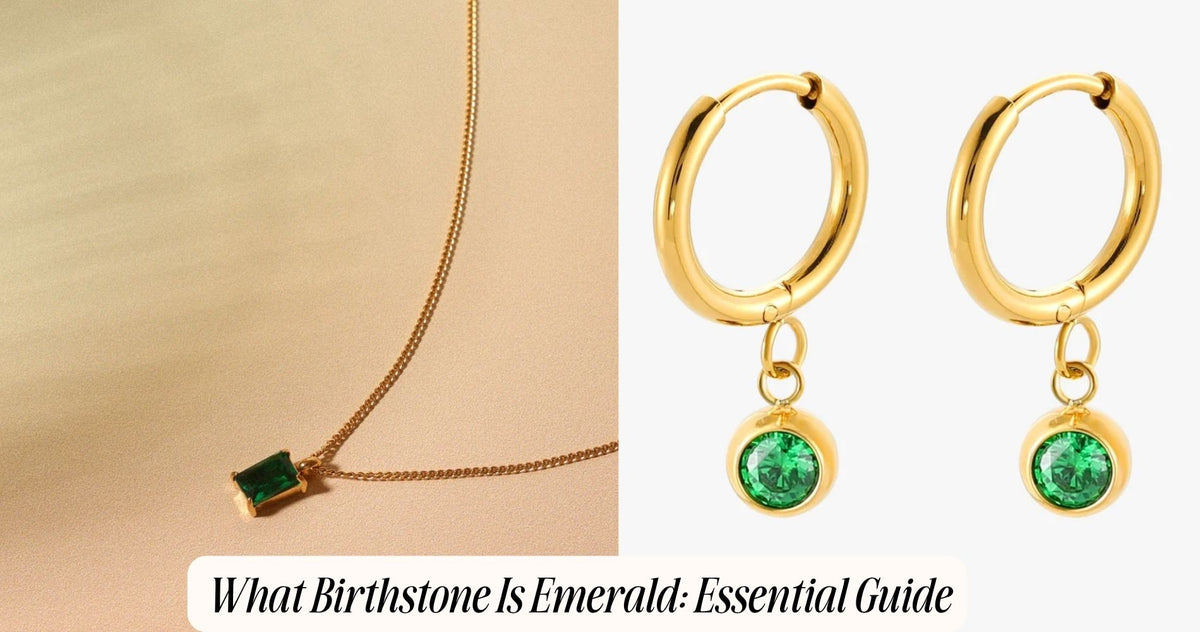
What Birthstone Is Emerald: Essential Guide
If you have ever asked what birthstone is emerald, the answer is simple and lovely: emerald is the birthstone for May. With its lush, vivid green color, it has been treasured by rulers, collectors and jewelry lovers for thousands of years. It symbolizes renewal, love and growth, which makes it a fitting gem for the month when spring is in full bloom. You can also browse our Stone Collection to see how gemstones look when they are set into wearable jewelry. In this guide, we explore the meaning, history, quality and care of emerald so you can choose a piece with confidence.
Emerald as the May Birthstone and Its Place in the Birthstone Calendar
Emerald is the modern and traditional birthstone for May. It is also the traditional gem for the 20th and 35th wedding anniversaries, so it appears in jewelry given for both birthdays and long term milestones. Some people also connect it with the zodiac signs Taurus and Gemini, which cover most of the month of May.
Some older birthstone lists include other green stones for May, such as chrysoprase or agate, but emerald is the one almost everyone recognizes. Its deep color and long history make it one of the most prestigious gems on the birthstone calendar.

What Makes Emerald Special: Color, Composition and Hardness
Emerald is a variety of the mineral beryl, the same family that includes aquamarine and morganite. Its green color comes from tiny traces of chromium, and sometimes vanadium, which are present in the crystal as it forms. The most prized emeralds show a rich, slightly bluish green that looks bright and evenly saturated.
On the Mohs scale, emerald has a hardness of about 7.5 to 8, which sounds durable. However, emeralds often contain internal fractures, so they are more brittle than their rating suggests. That is why they need a little more care than stones like sapphire or diamond.
The Meaning and Symbolism of Emerald
Green has long been the color of nature, and emerald carries that symbolism strongly. It is traditionally associated with rebirth, hope, love and fertility. Many cultures also linked it with wisdom and truth, and it was believed to give its wearer insight and good fortune.
For a May birthday, emerald is a meaningful gift. It tells the wearer that love, growth and new beginnings are close at hand. Modern wearers often choose it as a symbol of balance, calm and personal renewal.
A Brief History of Emerald From Ancient Egypt to Modern Royalty
Emerald has been prized for more than 4,000 years. Ancient Egyptians mined it near the Red Sea, and the stone is closely linked with Cleopatra, who was famous for her love of emeralds. Roman writers praised its beauty, and Mughal emperors in India engraved large emeralds with prayers and wore them as amulets.
After Spanish explorers reached South America in the sixteenth century, Colombian emeralds became famous in Europe, and the country is still known for producing some of the finest stones in the world. Emerald continues to appear in royal collections and modern fine jewelry, which proves its lasting appeal.

Where Emeralds Come From and How Origin Affects Value
Emeralds are found in several countries, and the source can influence both appearance and price.
- Colombia. Known for a classic, vivid green with warm and slightly bluish tones. Colombian stones are often the most prestigious.
- Zambia. Produces deeper, slightly bluer green stones, often with good clarity. Zambian emeralds have grown in popularity in recent years.
- Brazil. Offers a range of lighter and more yellowish green stones, usually at friendlier prices.
- Afghanistan and Pakistan. Known for rich color and strong character, and appreciated by collectors.
Origin is only one factor. A beautiful stone from any source is more valuable than a weak stone from a famous mine.
How to Judge Emerald Quality and Value
Emerald quality is judged differently from diamond quality, and understanding the differences will help you shop wisely.
- Color. This is the most important factor. Look for a vivid, evenly distributed green with medium to medium dark tone. Stones that are too pale or too dark are usually less valuable.
- Clarity. Nearly all emeralds contain inclusions, often called jardin, a French word for garden. Because of this, some inclusions are accepted, but stones that look clean to the eye are rarer and more expensive.
- Cut. The classic emerald cut, a rectangular shape with trimmed corners, protects the stone and shows its color well. Cabochons, ovals and pear shapes are also popular.
- Carat weight. Large, high quality emeralds are rare, so the price per carat rises sharply as the stone gets bigger.
- Treatment. Most emeralds are treated with oil or resin to improve the look of fractures. Minor, stable treatment is widely accepted, but untreated stones sell at a premium.
Natural, Lab Grown and Treated Emeralds Explained
When you shop, you will see several terms, and it helps to know what they mean.
- Natural emerald. Formed in the earth and mined, then cut and polished. It may be untreated or lightly treated.
- Lab grown emerald. Created in a laboratory with the same chemical makeup and look as natural stone. It usually has fewer inclusions and costs far less.
- Imitations. Green glass, green quartz or other materials that resemble emerald but lack its properties.
A trustworthy seller will state clearly whether a stone is natural, lab grown or treated. For a major purchase, ask for a report from a respected gemological laboratory.
How to Choose and Wear Emerald Jewelry
Emerald looks beautiful in many metals. Yellow gold gives it a warm, classic glow, while white gold and platinum highlight its cool tones. Surrounding the stone with small diamonds creates a luxurious halo effect.
Consider the setting too. Because emeralds can be brittle, protective settings such as bezels or sturdy prongs are a good choice, especially for rings. Pendants and earrings face less impact, so they are an easy way to wear a more delicate stone. For everyday jewelry, a smaller emerald with a protective setting often works best.

How to Care for Emerald Jewelry
Emerald is lovely, but it needs a gentle touch. Clean it with lukewarm water, mild soap and a soft brush, then dry it with a soft cloth. Avoid ultrasonic cleaners, steam and harsh chemicals, since they can damage the treatment and worsen fractures.
Remove your emerald jewelry before exercise, cleaning and heavy work. Store it separately in a soft pouch so harder stones cannot scratch it. Have a jeweler check the settings once a year, especially if you wear the piece often.
Conclusion
So, what birthstone is emerald? It is the birthstone for May, loved for its rich green color and its symbolism of renewal, love and wisdom. With a long history, a variety of origins and many styles to choose from, emerald is a stone that suits both tradition and modern taste. Choose a stone with beautiful color, a protective setting and careful treatment disclosure, and it will stay lovely for years. Visit Atolea to find a piece that feels right for you or someone you love.
FAQs
1. What birthstone is emerald?
Emerald is the birthstone for May. It is also the traditional gem for the 20th and 35th wedding anniversaries.
2. What color is emerald?
Emerald is green, ranging from slightly yellowish green to a deep bluish green. The most valued stones show a vivid, evenly saturated color.
3. Is emerald a good stone for everyday wear?
It can be, with care. Emerald is fairly hard but often contains fractures, so a protective setting and gentle handling help it last.
4. Why do emeralds have inclusions?
Emeralds form under intense geological conditions that often create tiny fractures and internal features. These inclusions are normal and are sometimes called jardin.
5. How can I tell if an emerald is real?
It is hard to tell by eye alone. Natural emeralds usually show some internal features, but a gemologist or laboratory report is the most reliable way to confirm authenticity.
6. Are lab grown emeralds real?
Yes, they are real emeralds in terms of chemistry and structure, but they are grown in a lab rather than mined. They look very similar to natural stones and usually cost much less.









コメントを書く
このサイトはhCaptchaによって保護されており、hCaptchaプライバシーポリシーおよび利用規約が適用されます。