


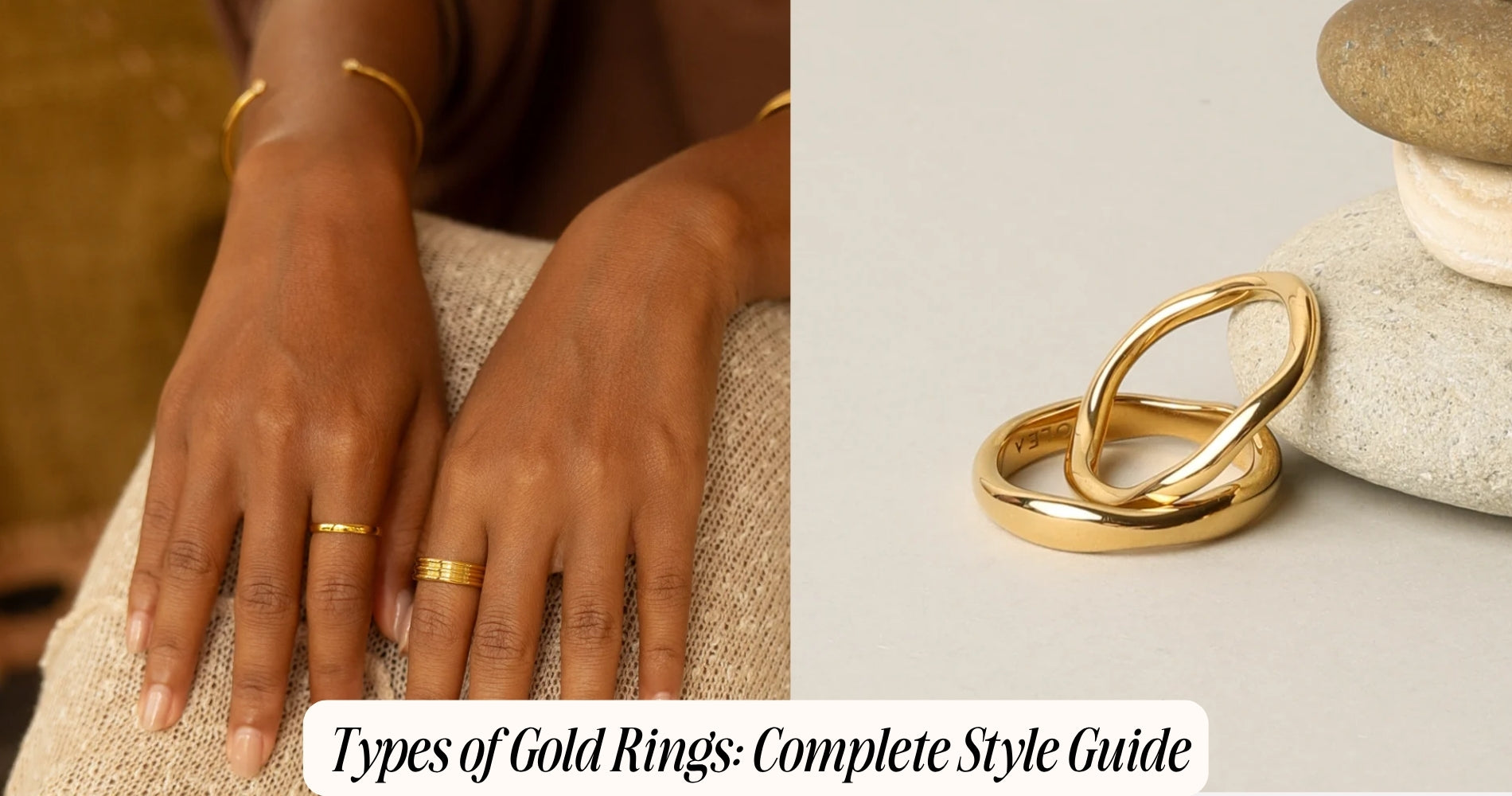
Types of Gold Rings: Complete Style Guide
Gold rings come in a remarkable variety of styles, colors, and designs, making it easy to find a piece suited to nearly any personal taste or occasion. But with so many types of gold rings available, narrowing down exactly which style fits your needs can feel overwhelming without a clear understanding of what sets each category apart.
In this guide, we will walk through the most common types of gold rings, organized by both style and gold color, to help you shop with greater clarity and confidence. If you want a versatile, everyday piece to start or expand your collection, our Everyday Gold Jewelry collection offers a range of styles worth exploring.
Gold Ring Styles by Design
Classic Band Rings
Classic band rings represent one of the simplest, most timeless types of gold rings, featuring a smooth, uniform circle of gold without additional gemstones or elaborate detailing. This understated style works beautifully as an everyday staple, a wedding band, or a foundational piece for stacking alongside other rings.

Solitaire Rings
Solitaire rings feature a single, centered gemstone, most commonly associated with engagement rings, though this style works equally well for birthstone rings or other meaningful single stone designs. The simplicity of a solitaire setting allows the featured gemstone to remain the clear focal point of the entire piece.
Eternity Rings
Eternity rings feature a continuous line of small gemstones set around the entire circumference of the band, creating a sparkling, unbroken visual effect. This style is often chosen to symbolize eternal love or commitment, making it a popular choice for anniversary gifts or wedding bands specifically.
Statement Rings
Statement rings encompass bold, eye catching designs, whether through a large gemstone, dramatic sculptural metalwork, or an oversized overall scale. This type of gold ring is specifically intended to serve as a focal point within an overall look, standing apart from more understated, everyday styles.
Signet Rings
Signet rings feature a flat, often engraved surface, historically used for stamping wax seals on important documents. Today, signet rings remain popular for their classic, slightly vintage inspired aesthetic, sometimes featuring initials, family crests, or simple decorative engraving.
Stackable Rings
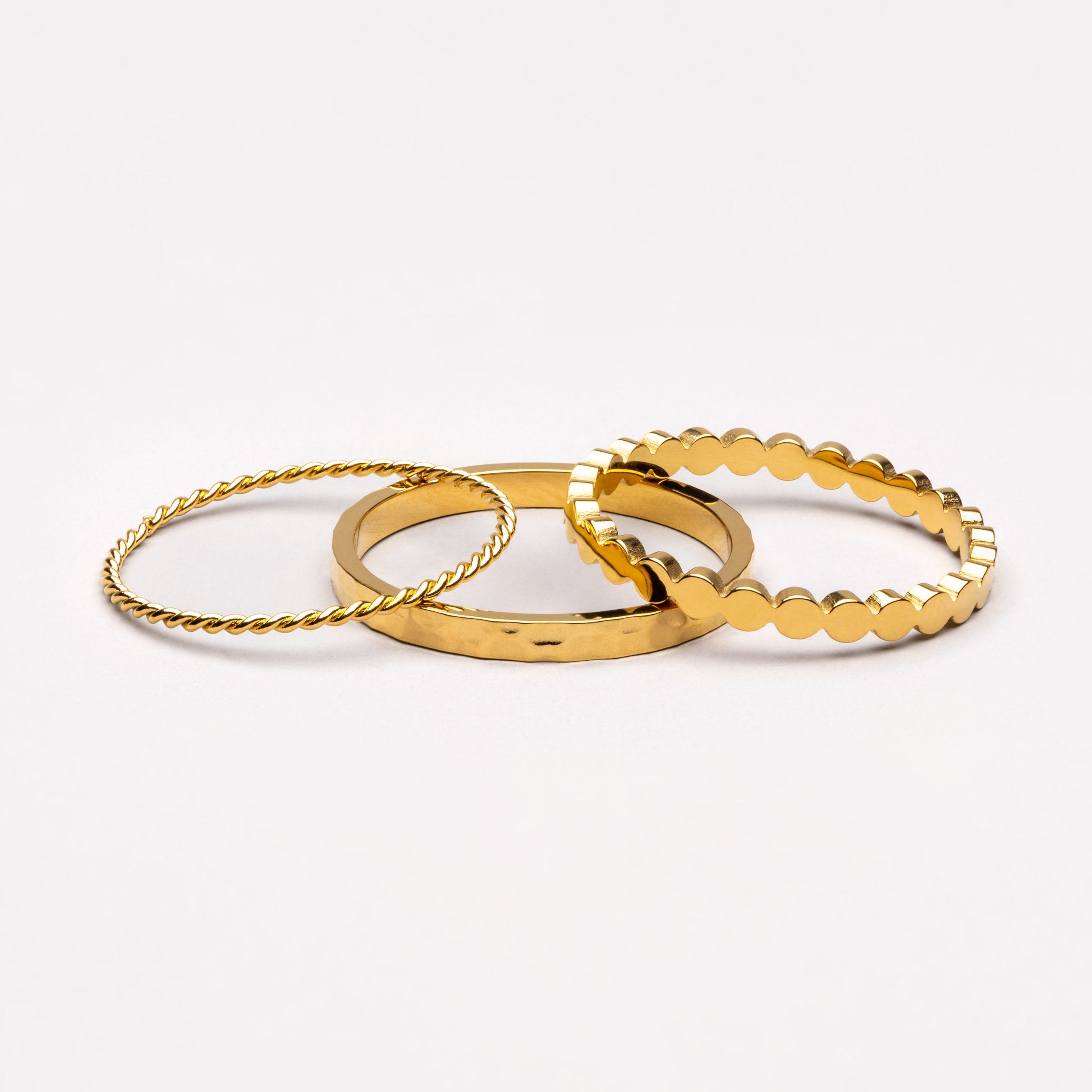
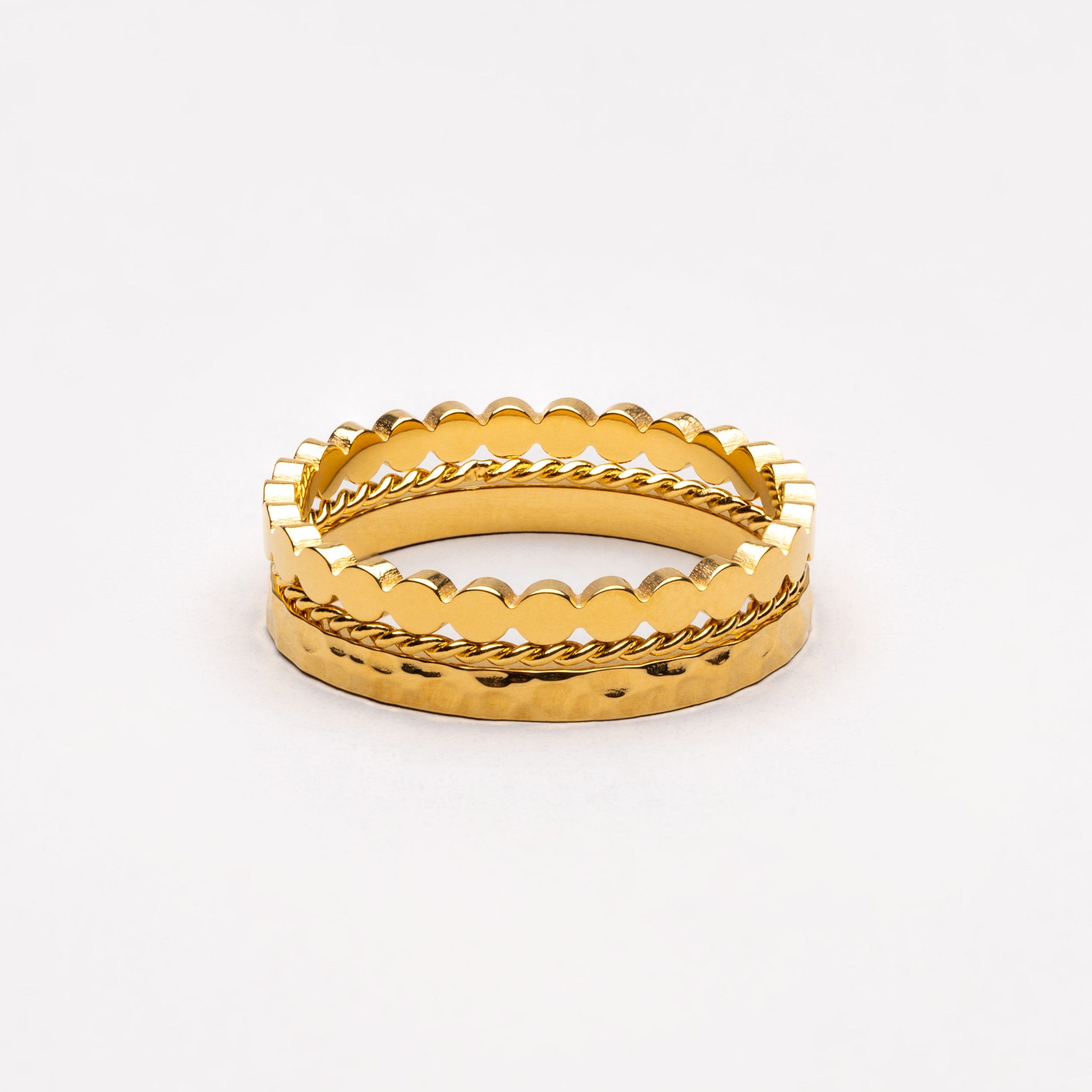
Stackable rings are specifically designed to be worn together in multiples, typically featuring thinner, simpler bands that combine beautifully to create a personalized, layered look. This type of gold ring has grown significantly in popularity alongside broader ring stacking and layering trends.

Cluster Rings
Cluster rings feature multiple gemstones grouped together within a single setting, creating a fuller, more substantial appearance compared to a single centered stone. This style offers a middle ground between the simplicity of a solitaire and the boldness of a full statement piece.
Cocktail Rings
Cocktail rings typically feature large, prominent gemstones set within elaborate, often glamorous mountings, historically associated with evening wear and special occasions, though increasingly incorporated into everyday styling as well.
Twist and Braided Rings
Twist and braided gold rings feature a spiral or interwoven design rather than a smooth, uniform band, adding textural interest and visual complexity without requiring an oversized or overly bold overall design.
Gold Ring Types by Color
Beyond specific design styles, gold rings also come in several distinct color variations, each achieved through different alloy combinations mixed with pure gold.
Yellow Gold
Yellow gold represents the most traditional and widely recognized gold color, achieved by combining pure gold with metals like copper and zinc. This classic, warm toned color has remained a consistently popular choice throughout jewelry history.
White Gold
White gold is created by combining pure gold with white metals such as palladium or nickel, then typically finished with a rhodium plating to achieve its bright, silvery white appearance. This color offers a modern alternative to traditional yellow gold, closely resembling platinum at a generally more accessible price point.
Rose Gold
Rose gold achieves its distinctive pink hue through a higher proportion of copper mixed into the gold alloy. This romantic, warm toned color has grown significantly in popularity in recent years, offering a softer, more modern alternative to both traditional yellow and white gold.
Two Tone and Mixed Metal Gold Rings
Two tone gold rings combine two different gold colors, such as yellow and white gold, within a single design, creating visual contrast and added dimension. This style offers a unique middle ground for those who cannot decide between different gold color options, or who simply appreciate the added visual interest that comes from combining multiple tones.

Gold Ring Types by Purity
In addition to style and color, gold rings also vary based on their specific karat purity, which affects both appearance and durability.
10 karat gold offers increased durability due to its higher percentage of alloyed metals, making it a practical choice for rings intended for frequent, active daily wear.
14 karat gold provides a popular balance between rich gold color and everyday durability, representing one of the most commonly chosen purities for a wide range of ring styles.
18 karat gold offers a deeper, richer gold color due to its higher pure gold content, though this comes with somewhat reduced durability compared to lower karat alternatives.
Choosing the Right Type of Gold Ring for You
With so many types of gold rings available, narrowing down the right choice often comes down to a combination of personal style, intended use, and practical considerations.
For Everyday Wear
Classic bands, simple solitaire designs, or stackable rings in 10 or 14 karat gold tend to offer the best combination of style and practical durability for regular, daily wear.
For Special Occasions
Statement rings, cocktail rings, or eternity bands featuring higher karat gold or premium gemstones often suit special occasions particularly well, allowing for a bit more glamour and boldness compared to everyday styling choices.
For Personal Meaning
Solitaire birthstone rings, signet rings featuring initials, or cluster rings incorporating meaningful gemstone combinations offer ways to add personal significance to your gold ring collection.
For Layering and Stacking
Thin, simple stackable rings, particularly in a consistent gold color or thoughtfully mixed metal combination, work particularly well for those who enjoy a personalized, layered ring aesthetic.
Matching Gold Ring Color to Your Skin Tone
While personal preference should always come first, understanding general guidelines around gold color and skin tone can help inform more flattering choices for some wearers. Warmer skin tones often complement yellow or rose gold particularly well, while cooler skin tones frequently pair beautifully with white gold. Those with neutral undertones typically find that nearly any gold color works well, offering considerable flexibility in their styling choices.
These are general guidelines rather than strict rules, and the most important factor remains choosing whichever gold color and style genuinely makes you feel most confident and comfortable.

Caring for Different Types of Gold Rings
Regardless of the specific style or color you choose, gold rings generally benefit from similar basic care practices. Clean gold rings periodically using mild soap and warm water, along with a soft brush, to remove everyday buildup of oils and residue. Store gold rings separately from harder gemstones or materials to prevent scratching. For white gold rings specifically, periodic rhodium replating may be necessary over time, since this plating can gradually wear away with regular use, revealing the naturally more yellow toned gold alloy underneath.
Final Thoughts
Exploring the many types of gold rings available reveals just how versatile this classic material truly is, spanning everything from simple, timeless bands to bold, elaborate statement pieces, and offered across a range of colors and purities to suit nearly any personal preference. Whether you are drawn to the warmth of yellow gold, the modern appeal of white gold, or the romantic softness of rose gold, there is a gold ring style suited to nearly every taste and occasion.
Whatever specific types speak to you most, gold rings remain a timeless, versatile foundation for building a jewelry collection that can move gracefully between everyday wear and life's most meaningful occasions.
Frequently Asked Questions
1. What is the most versatile type of gold ring?
Classic band rings and simple solitaire designs are generally considered the most versatile, easily suiting both everyday wear and more formal occasions.
2. What is the difference between white gold and platinum?
White gold is created by alloying pure gold with white metals and typically finished with rhodium plating, while platinum is a naturally white, denser metal that does not require this same plating process.
3. Does rose gold require different care compared to yellow or white gold?
Not significantly, though rose gold's higher copper content can make it slightly more prone to minor color changes over time compared to other gold colors.
4. Which type of gold ring is best for stacking?
Thin, simple stackable rings, particularly in a consistent gold color, tend to work best for creating a cohesive, layered ring look.









コメントを書く
このサイトはhCaptchaによって保護されており、hCaptchaプライバシーポリシーおよび利用規約が適用されます。