


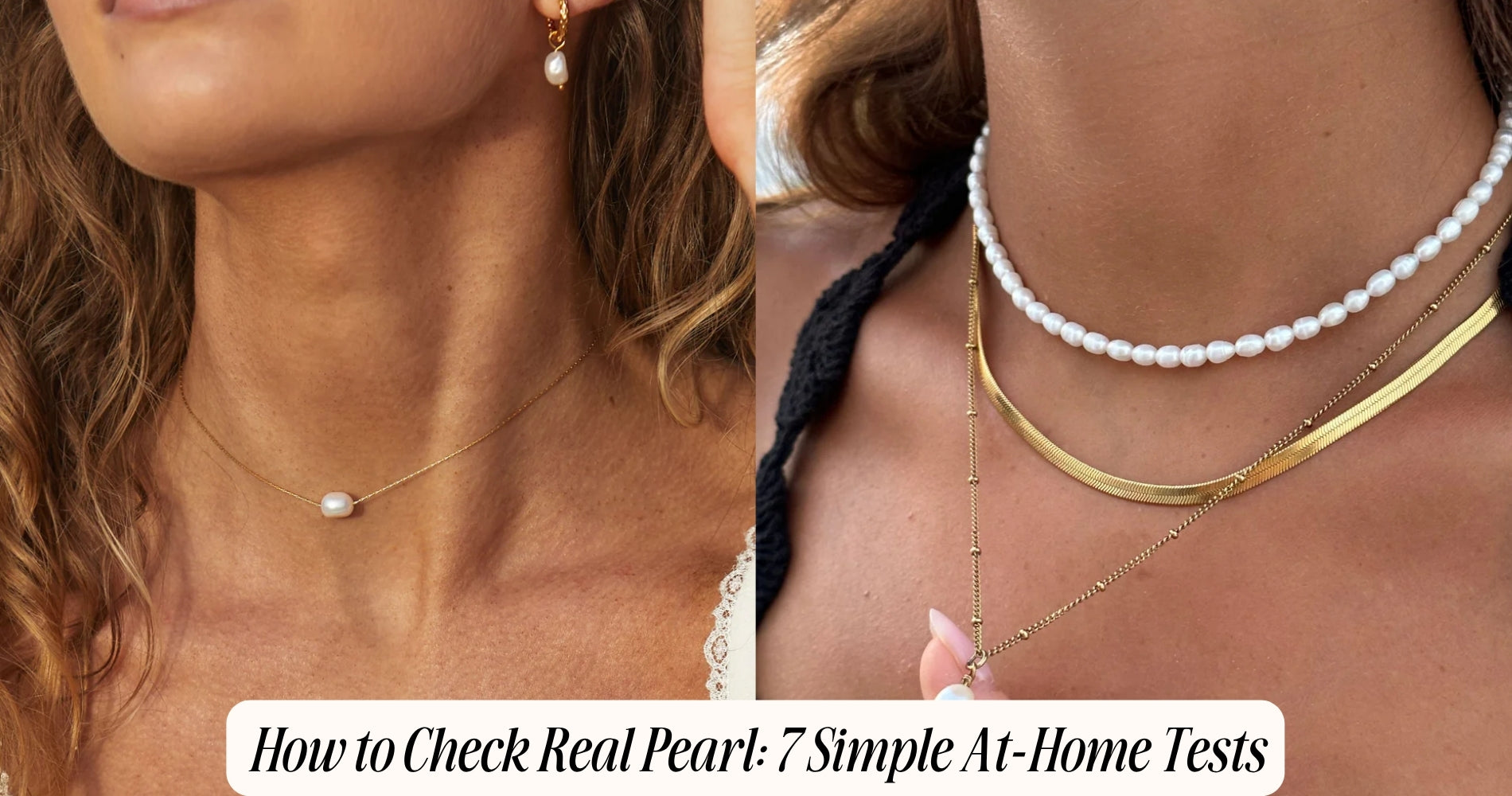
How to Check Real Pearl: 7 Simple At-Home Tests
Pearls have a timeless, elegant appeal that has made them a jewelry staple for centuries, but their popularity has also made them a frequent target for imitation. Whether you have inherited a pearl necklace, found a piece secondhand, or simply want to verify a recent purchase, knowing how to check real pearl authenticity can save you from overpaying for a stone that is not what it claims to be.
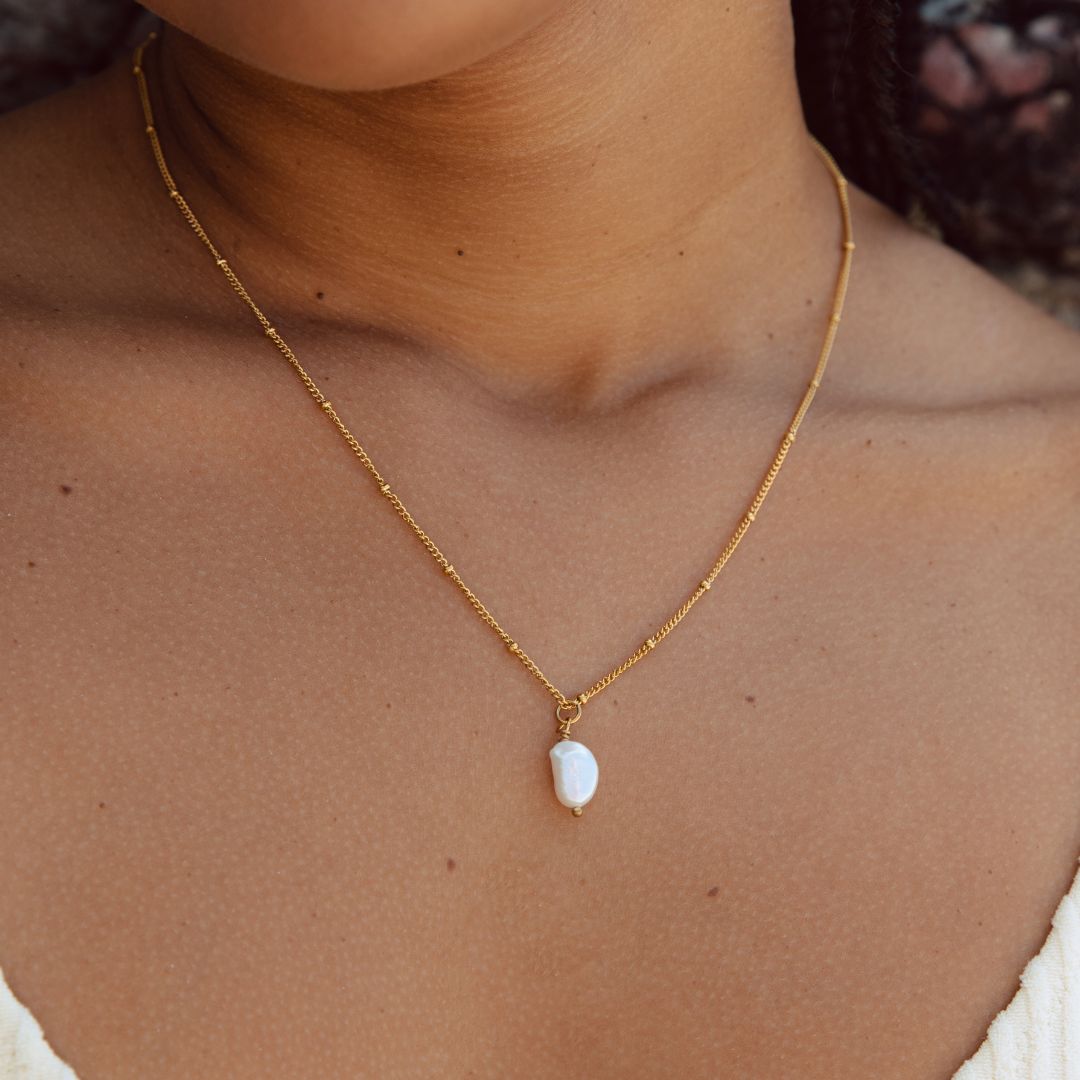
In this guide, we will walk through seven simple tests you can perform at home to help determine whether a pearl is genuine, along with what each test can and cannot definitively tell you. If you are shopping for a trustworthy, high quality piece from the start, our Single Pearl Necklaces collection offers genuine pearls set in simple, elegant designs.
Understanding Real Versus Fake Pearls
Before diving into specific tests, it helps to understand the difference between genuine and imitation pearls. Real pearls, whether natural or cultured, are formed by mollusks, typically oysters or mussels, through a natural biological process involving layers of a substance called nacre building up around an irritant inside the shell.
Imitation pearls, by contrast, are typically made from glass, plastic, or shell beads coated with a pearl like finish to mimic the appearance of genuine pearls. While these imitations can look convincing at first glance, they generally lack the same texture, weight, and internal structure as authentic pearls, which is exactly what the following tests are designed to help you identify.

Test 1: The Tooth Test
One of the most well known methods for checking pearl authenticity is the tooth test. To perform this test, gently rub the pearl along the edge of your front teeth.
Genuine pearls typically feel slightly gritty or sandy against your teeth, due to the natural layering of nacre that makes up their surface. Imitation pearls, on the other hand, usually feel smooth and glassy, since their coating lacks the same layered texture found in real pearls.
While this test is widely used and generally reliable, it is worth performing gently to avoid damaging either the pearl or your teeth, particularly with more delicate or already worn pieces.
Test 2: Examine the Surface Closely
Genuine pearls, formed through a natural biological process, typically display small surface irregularities, subtle variations in texture, and occasional minor imperfections when examined closely. This natural variation is part of what makes each pearl slightly unique, even within a matched set.
Imitation pearls, by comparison, often appear too perfectly round and uniform, with an unnaturally smooth, consistent surface that lacks the subtle texture variations found in genuine pearls. Using a magnifying glass to examine the surface closely can help reveal these differences, particularly around the drill holes where a pearl has been strung, since this area often shows the clearest evidence of the pearl's internal structure.
Test 3: Check the Weight
Genuine pearls tend to feel slightly heavier and denser compared to their imitation counterparts, due to the natural, layered composition of nacre. Glass imitation pearls may feel similarly weighted, but plastic or resin based fakes are typically noticeably lighter.
While weight alone is not a definitive test, since it can be difficult to judge without a direct comparison, holding the pearl in your hand and considering whether it feels appropriately substantial for its size can offer a helpful initial clue, particularly when compared side by side with a pearl of known authenticity.
Test 4: Feel the Temperature
Genuine pearls tend to feel cool to the touch initially, gradually warming slightly as they make contact with your skin, similar to how genuine gemstones often behave. This is due to the natural mineral composition of nacre.
Imitation pearls made from plastic often feel warmer more quickly, or may not exhibit the same initial coolness at all, since plastic does not conduct temperature in the same way as the calcium carbonate structure found in genuine nacre.
While this test can offer a helpful clue, it works best when performed immediately after handling, since prolonged contact will eventually cause any material to warm to body temperature regardless of authenticity.
Test 5: Roll the Pearl on a Flat Surface
Because genuine pearls form through a natural, organic process, they are rarely perfectly round or symmetrical. Rolling a pearl gently on a flat surface can help reveal these subtle irregularities.
If the pearl wobbles slightly or does not roll in a perfectly smooth, consistent path, this can be a sign of genuine, naturally formed asymmetry. Imitation pearls, particularly mass produced glass or plastic versions, are often manufactured to be perfectly round and will typically roll smoothly and evenly without any noticeable wobble.
Test 6: Examine the Drill Hole
If you are testing a pearl that has already been drilled for stringing, examining this small hole closely can offer helpful clues about the pearl's internal structure. Genuine pearls typically show a slightly rough, layered texture around the edges of the drill hole, reflecting the natural nacre buildup beneath the surface.
Imitation pearls often reveal a different material entirely around the drill hole, such as visible glass, plastic, or an inconsistent coating that clearly differs from the outer surface layer. A magnifying glass or jeweler's loupe can be particularly helpful for this test, since the details around the drill hole are often quite small and easy to miss with the naked eye alone.
Test 7: Compare Pearls Within the Same Strand
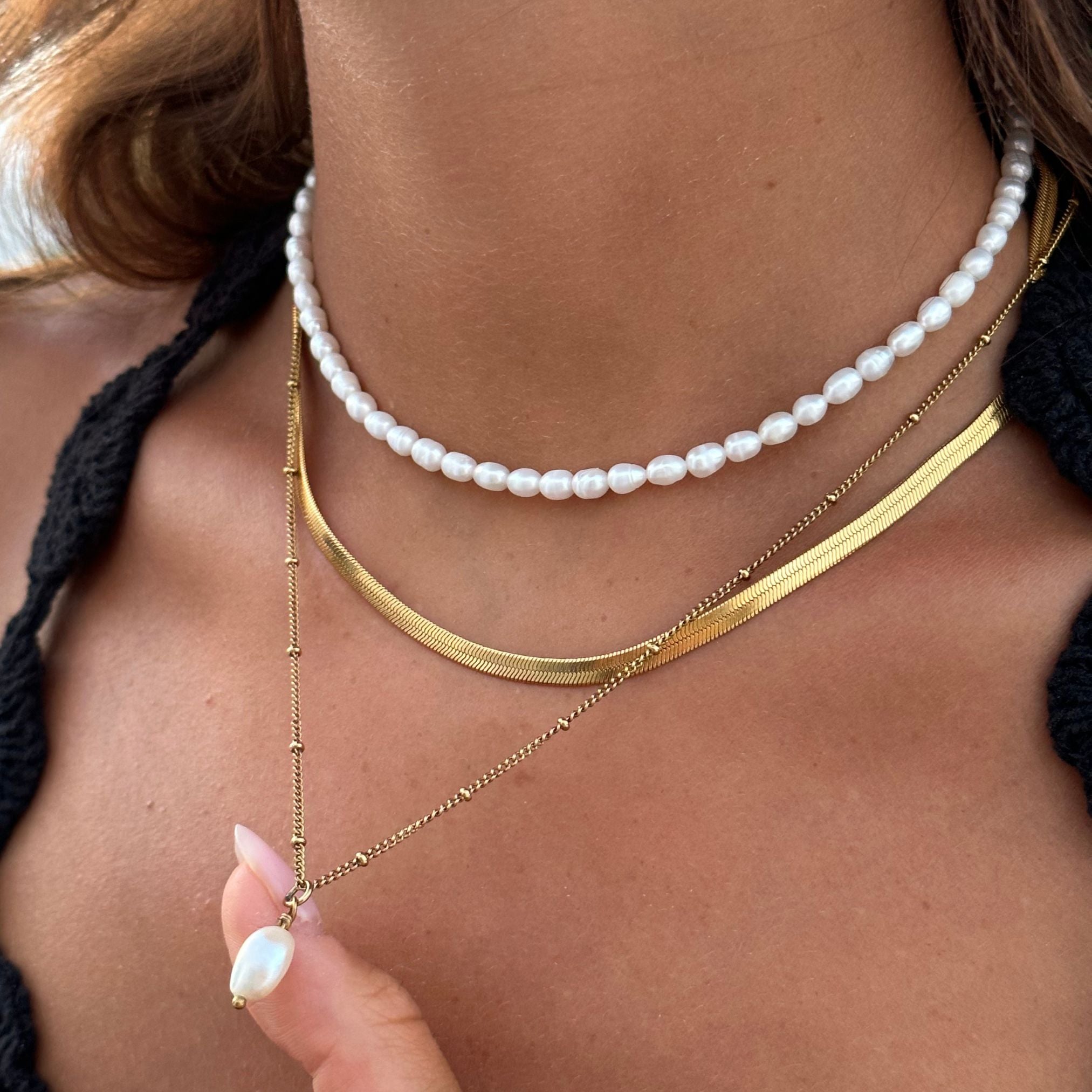
If you are examining a full strand of pearls, comparing individual pearls to one another can offer additional insight into authenticity. Genuine pearls, since they form naturally, typically show slight variations in size, shape, and surface texture from one pearl to the next, even within a well matched strand.
If every pearl in a strand appears absolutely identical in size, shape, and surface texture with no noticeable variation whatsoever, this uniformity can sometimes indicate a mass produced imitation strand rather than genuine, naturally formed pearls.

Natural Versus Cultured Pearls
It is worth noting that both natural and cultured pearls are considered genuine, real pearls, the distinction between them relates to how the pearl formation process began, not whether the pearl itself is authentic. Natural pearls form without any human intervention, while cultured pearls develop after a small irritant is intentionally introduced into a mollusk by a pearl farmer, prompting the same natural nacre layering process to occur.
Because natural pearls are exceptionally rare today, the vast majority of pearls sold in jewelry, including higher end pieces, are cultured rather than entirely natural. This does not diminish their authenticity, and the same testing methods described above apply equally to both natural and cultured genuine pearls.
When to Seek Professional Verification
While the tests outlined above can provide helpful initial guidance, some situations call for professional evaluation, particularly for higher value pieces or when you want complete certainty before making a significant purchase or sale.
A professional jeweler or gemologist has access to specialized equipment, including X-ray examination, that can definitively determine not only whether a pearl is genuine, but also whether it is natural or cultured, along with additional details about its quality and value. For inherited pieces, secondhand purchases, or any situation involving significant value, professional verification remains the most reliable path forward.
Combining Tests for the Best Results
No single at home test is entirely foolproof on its own, but combining several methods can offer a fairly reliable overall assessment. Starting with a visual inspection for surface irregularities, followed by the tooth test and a check of the weight and temperature, provides a well rounded initial evaluation. If you remain uncertain after these tests, particularly for a valuable piece, consulting a professional offers the most definitive answer.

Final Thoughts
Learning how to check real pearl authenticity does not require specialized equipment or professional training for a basic initial assessment. By combining simple methods like the tooth test, surface examination, and weight comparison, you can develop a fairly reliable sense of whether a pearl is likely genuine. For higher value pieces or situations requiring complete certainty, professional verification remains the best option.
Whether you are examining an inherited necklace, a secondhand find, or simply satisfying your own curiosity, these tests can help you shop and evaluate pearl jewelry with greater confidence.
Frequently Asked Questions
1. What is the most reliable at home test for real pearls?
The tooth test, checking for a slightly gritty texture, is one of the most widely used and generally reliable at home methods.
2. Are cultured pearls considered real pearls?
Yes, cultured pearls are genuine pearls formed through the same natural nacre process as natural pearls, differing only in how the initial irritant was introduced.
3. Can I tell if a pearl is fake just by looking at it?
In many cases, yes, since imitation pearls often appear too perfectly round and uniform compared to the subtle natural variations found in genuine pearls.
4. Should I get my pearls professionally appraised?
For valuable or inherited pieces, professional appraisal offers the most definitive verification of authenticity and can also provide insight into whether the pearls are natural or cultured.









コメントを書く
このサイトはhCaptchaによって保護されており、hCaptchaプライバシーポリシーおよび利用規約が適用されます。