

Which Finger for Ring? Simple Style Rules You Should Follow
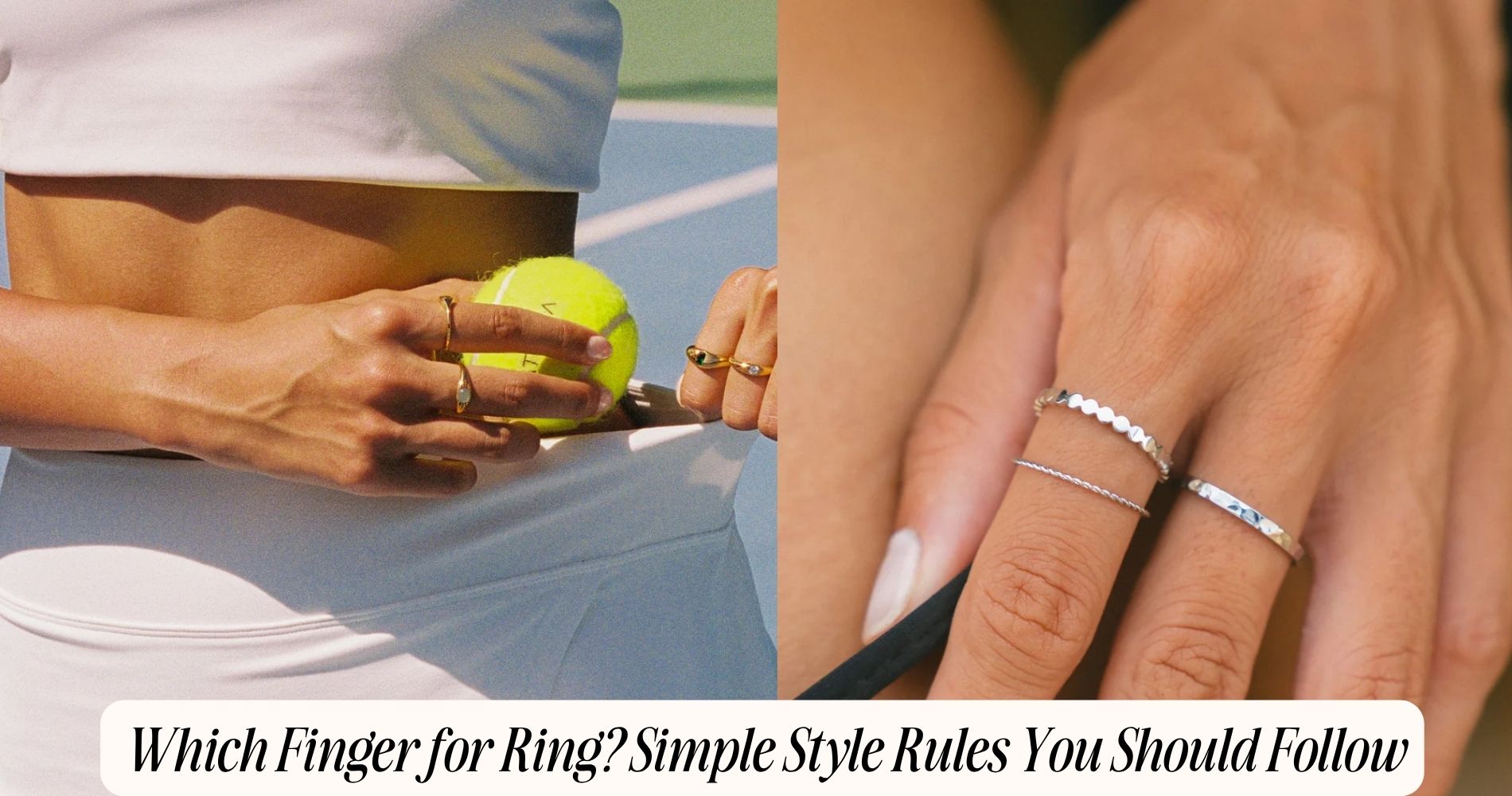
Which finger for ring? You choose the right finger for a ring by matching meaning, scale, and lifestyle. Put engagement and wedding rings on the left ring finger (or right if you’re left-handed or prefer comfort). Use your index or middle finger for bold statement pieces, and your middle, index, or ring finger for slim everyday bands or stacks—durable options like those in Atolea’s Waterproof Rings collection work especially well for daily wear. Keep one dominant ring per hand for balance. From hand shape to stacking formulas, the next sections show you exactly how to style it.
Ring Meanings by Finger and Hand (At a Glance)
Before you slip a ring onto any finger, it helps to understand the visual message you’re sending with both the hand and the placement. Each digit carries distinct finger symbolism that influences how people read your look at a glance.
Your dominant hand usually signals action, status, and personality; your non-dominant hand leans more toward introspection and sentiment.
Thumb rings project confidence and control. Index finger rings reference authority and ambition. Middle finger rings suggest balance, self-focus, and modern minimalism. Ring finger choices lean into romance and emotional connection in most Western contexts. Pinky rings communicate individuality, flair, and sometimes professional identity.
Across cultures, the same finger can encode different meanings, so always consider local cultural significance when you style your rings.

Which Finger for Engagement and Wedding Rings?
Traditionally, engagement and wedding rings sit on the fourth finger of your left hand—the classic “ring finger” linked to romance in most Western cultures. That placement reflects centuries of engagement symbolism: one continuous band, worn closest to the heart, signaling enduring commitment.
Today, you have more flexibility, but clear patterns still guide modern wedding traditions. Many people wear the engagement ring alone on the left ring finger, then stack the wedding band below it after the ceremony.
Others move the engagement ring to the right hand, letting the wedding band stand solo.
If you’re left-handed or work with your hands, you might reverse everything to the right ring finger for comfort and durability while still honoring the same symbolic hierarchy.
Which Finger for Statement Rings That Stand Out?
Engagement and wedding bands follow long‑standing customs, but statement rings give you far more room to experiment with placement and impact.
You’ll get the strongest visual punch when you treat them as focal points rather than fillers.
For maximum drama, place larger statement ring styles on your index or middle finger. These fingers offer the broadest surface area, stabilize weightier designs, and read clearly in photos and gestures.
If you favor asymmetry, anchor one substantial ring on your index finger and leave adjacent fingers bare.
Reserve your ring finger for moderately scaled statement pieces you still want to spotlight, especially intricate settings.
When you’re working with especially bold design choices, limit yourself to one dominant ring per hand to avoid visual competition.
Which Finger for Simple Everyday Rings?
When you’re choosing a finger for simple everyday rings, prioritize comfort, movement, and how you use your hands hour to hour.
For true daily wear, your middle and index fingers handle minimalist bands especially well because they distribute weight evenly and feel secure without looking heavy.
If you type or text constantly, you’ll often prefer slim bands on the ring finger of your dominant hand; they stay visible but rarely interfere with grip or keyboard angles.
For very active routines, consider your non‑dominant hand to reduce impact and scratches.
Match metal and finish to your casual styles: satin or brushed textures hide wear marks, while ultra‑thin polished bands read clean and modern.
Keep proportions balanced with your finger length and knuckle width for a streamlined look.

Which Finger for Stacking Rings?
Curiously, stacking rings look their most intentional when you anchor them to one or two “hero” fingers instead of spreading them evenly across your hand.
Prioritize your middle and ring fingers; they visually handle density best and keep proportions balanced.
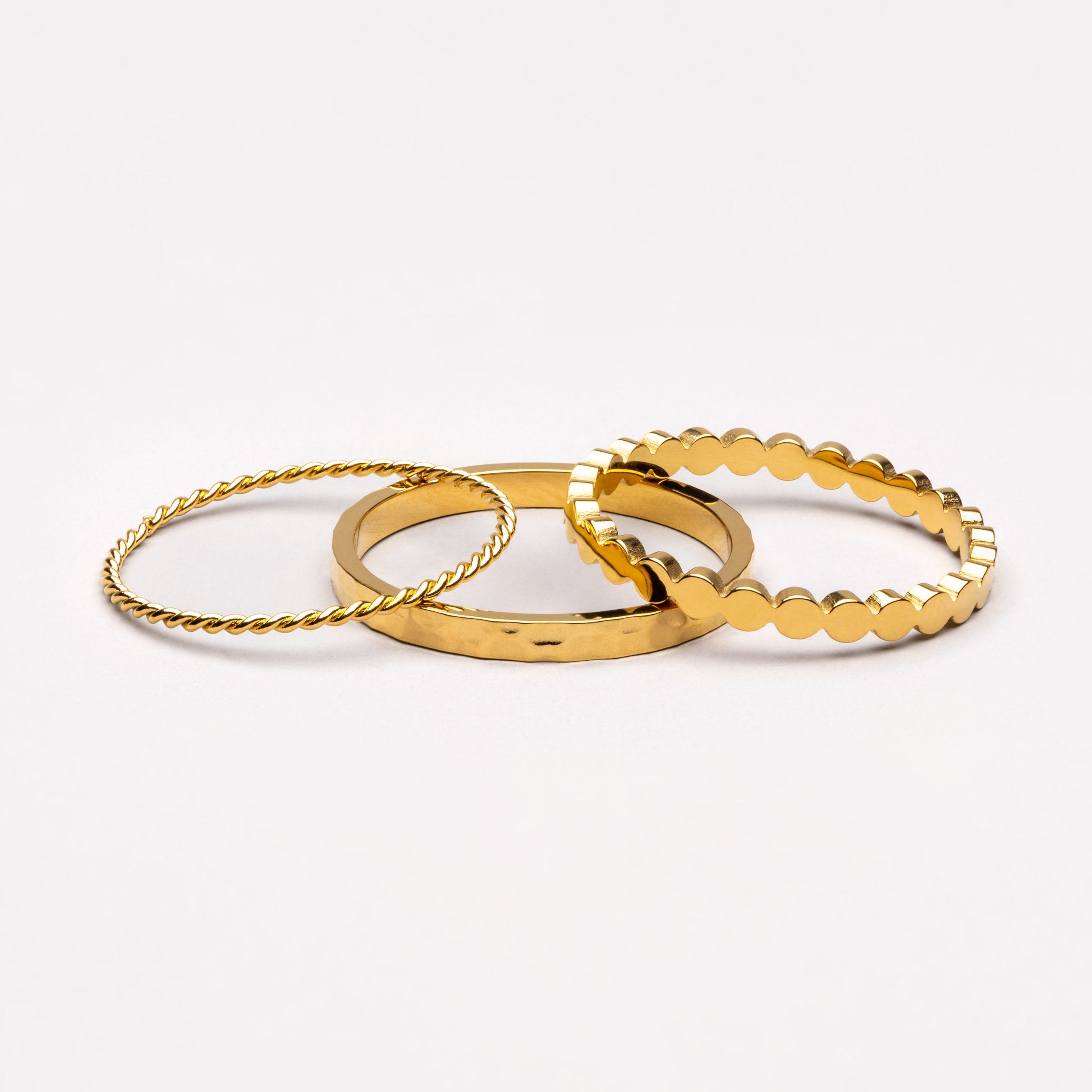
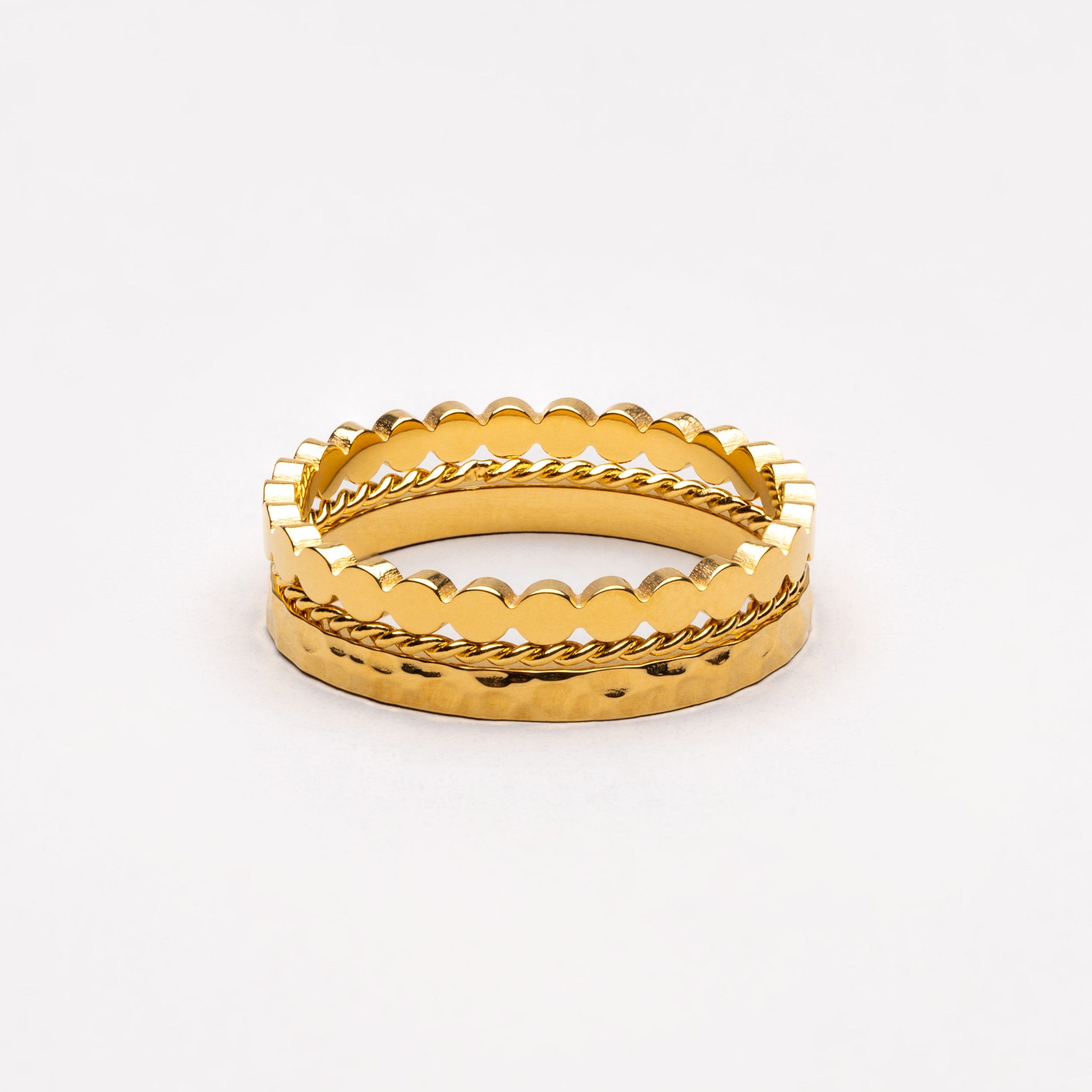
Use structured stacking techniques: start with a solid or slightly wider band at the base, add one textured or pavé ring, then finish with a slim spacer.
This prevents bulk and maintains clean lines.
For modern layering styles, try a full stack on your ring finger and a minimal echo—one or two slim bands—on your middle or index finger.
Keep metals consistent across your dominant hand for a sleek effect, then introduce contrasts (like mixed metals) on the other hand.
What Each Finger Says About Your Rings
Stacking strategy is only half the story; the finger you choose sends its own message about how you wear your rings. Each placement carries symbolic significance that subtly frames your style and even your personality.
Your thumb reads bold and directional, often signaling confidence and a fashion‑forward mindset. The index finger feels assertive and intentional, ideal for statement pieces that echo leadership.
The middle finger visually anchors your hand, so rings here look modern, structured, and minimal‑cool. The traditional ring finger still suggests romance or commitment for many, though cultural variations may flip which hand signals marriage.
Your pinky feels sleek and editorial, hinting at individuality, status, or heritage-inspired styling, depending on the design you choose.

How to Balance Rings on Both Hands
Although each hand has its own visual weight, you’ll create the most polished look by treating them as a single composition. Think regarding “hand symmetry,” not perfect mirroring. If you stack three slim bands on your right middle finger, you might balance them with a single sculptural ring on your left index finger.
Use ring stacking to cluster visual interest rather than scattering pieces across every finger. Limit one dominant focal ring per hand, then support it with slimmer bands or minimalist midi rings.
Match metals and overall vibe (sleek, vintage, or edgy), but vary thickness and texture to avoid stiffness. Step back, photograph your hands, and adjust until the overall silhouette feels intentional, not crowded.
Best Ring Fingers for Your Hand Shape and Lifestyle
Once you understand how to balance rings across both hands, the next smart move is choosing which fingers actually flatter your hand shape and suit your day-to-day routine.
If you have long, slender fingers, you can handle bolder middle- and index-finger rings without overwhelming your proportions. Shorter fingers look longer with vertical designs on the ring finger and delicate bands on the pinky.
Broader hands benefit from substantial styles on the index or middle finger, which visually streamline width.
If you work with your hands or type constantly, keep low‑profile bands on your ring and middle fingers and reserve statement pieces for off‑duty wear.
Let your lifestyle choices guide stone height and band thickness so your rings stay comfortable, practical, and visually intentional.
Ring Traditions vs. Style Rules (When to Bend Them)
How do you balance age‑old ring traditions with the way people actually wear jewelry now? You start by understanding why those traditions exist. Wedding bands, signets, and family crests carry cultural significance, legal symbolism, and sometimes religious meaning.
When you know the rules, you can decide—consciously—when to honor them and when to deviate. You might keep formal traditions for milestones (marriage, heirlooms, heritage pieces) and treat everything else as a canvas for personal expression.
Current style leans toward intentional mixing: stacking metals, shifting “serious” rings to unexpected fingers, and rotating pieces based on mood or outfit. If your choice doesn’t miscommunicate your relationship status or disrespect a culture you value, you can confidently bend the rules.
Finger-by-Finger Ring Styling Formulas to Copy
Instead of guessing where each ring “should” go, treat your hands like a grid and use simple formulas for each finger.
Start with your left ring finger: reserve it for engagement or wedding bands if you care about cultural significance; otherwise, anchor a single thin gold or silver band there.
Use your right ring finger for a statement ring that reflects current fashion trends—chunky gold, sculptural silver, or colored stone.
On both middle fingers, balance: one structured, medium-width band per hand keeps everything visually aligned.
Index fingers handle “identity” pieces: signets, initials, or heritage symbols. They read clearly in photos and gestures.
Pinky fingers suit minimalist stacks or a single signet, adding proportion without overwhelming your hand.

Frequently Asked Questions
Can I Wear Rings on My Toes and Do They Follow Similar Style Rules?
You can absolutely wear rings on your toes, and they follow similar style rules: balance, proportion, and metal coordination. Track toe ring trends but prioritize comfort factors—smooth interiors, correct sizing, and non-pinching designs for long-term, stylish wear.
How Do Cultural or Religious Beliefs Affect Which Finger I Should Wear Rings On?
Cultural or religious beliefs guide which finger you choose by assigning cultural significance and religious symbolism to each. You’ll respect traditions, signal marital status, or spiritual commitments, and still adapt placements to fit contemporary, fashion‑forward styling.
Are There Specific Metals Better for Sensitive Skin or Metal Allergies?
You should pick hypoallergenic materials like platinum, titanium, surgical‑grade stainless steel, or 14k+ yellow gold. Avoid nickel. Explore metal alternatives too: ceramic, resin, silicone, and wood cores with protective coatings all minimize irritation while staying on‑trend.
How Should I Store and Care for Rings to Avoid Tarnish and Damage?
Store rings in lined ring storage, away from humidity and sunlight. Remove before water, sweat, or workouts. Use gentle cleaning techniques: mild soap, soft brush, microfiber cloth. Avoid harsh chemicals; schedule periodic professional polishing and prong inspections.
What Ring Styles Are Best if My Fingers Swell Throughout the Day?
You’ll want adjustable rings, open bands, and low-profile designs; they flex with size changes and reduce pressure. Prioritize smooth interiors, rounded edges, hypoallergenic metals, and articulated “swelling solutions” like stretch bands or hinge shanks for precise, all-day comfort.
Conclusion
Now you know what each finger says, how to balance both hands, and when to bend the “rules.” Use engagement and wedding traditions when they matter, then treat every other finger as your styling playground. Mix statement pieces, slim stacking bands, and everyday rings with intention. Start with one formula you like, mirror or offset it on the other hand, and refine. Your rings shouldn’t just fit—they should look deliberately placed.











Leave a comment
This site is protected by hCaptcha and the hCaptcha Privacy Policy and Terms of Service apply.