

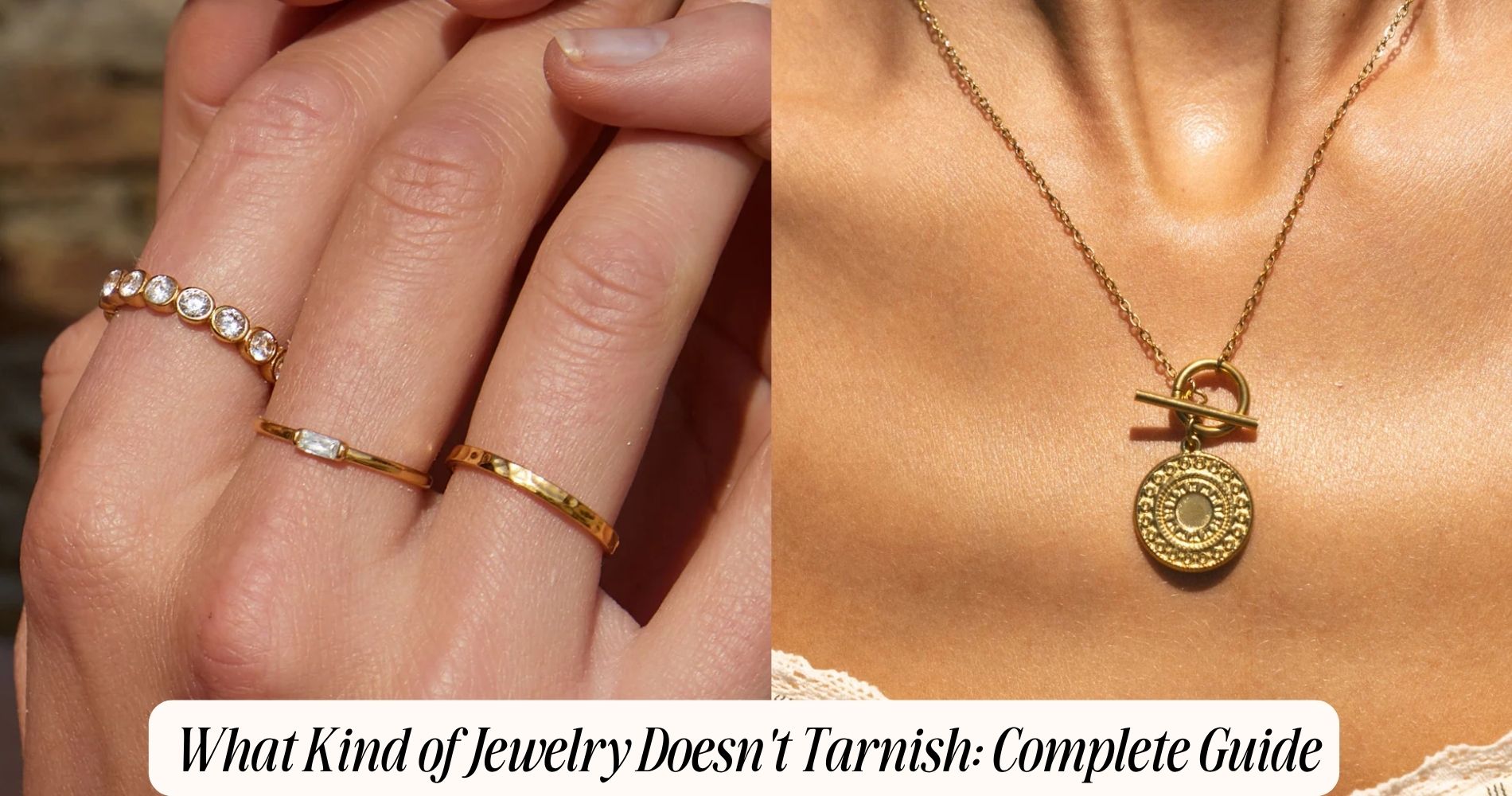
What Kind of Jewelry Doesn't Tarnish: Complete Guide
Replacing tarnished jewelry every few months is an expensive and frustrating cycle. The pieces that started bright go gray, green, or dull within weeks of regular wear, and no amount of cleaning fully restores what they looked like when new. If you have been asking what kind of jewelry doesn't tarnish, the answer is specific: certain materials resist tarnishing by nature, others require a protective layer to stay consistent, and many common jewelry metals offer neither. Tarnish-free Jewelry built on the right materials breaks that replacement cycle permanently. This guide covers which materials genuinely resist tarnishing, why they work, and what to look for before you buy.
Why Jewelry Tarnishes in the First Place
Tarnish is a surface reaction, not structural damage. It occurs when metals interact with compounds in the environment, primarily sulfur in the air, oxygen, moisture, sweat, and the acids and chemicals present in skincare products and perfume.
Silver tarnishes because it reacts with hydrogen sulfide to form silver sulfide, a dark gray or black compound that builds up on the surface. Copper, present in both sterling silver and brass alloys, adds a second reaction pathway through oxidation, producing greenish discoloration. Standard gold plating tarnishes because the base metal underneath is typically brass or copper, and once the thin plating layer wears through, that reactive metal is exposed directly to skin and air.

The rate of tarnishing depends on the metal composition, the thickness and type of any protective finish, and how much exposure the piece receives. Daily wear through showers, gym sessions, and contact with skincare products accelerates the process significantly compared to jewelry stored carefully and worn only occasionally.
Understanding this makes the answer to what kind of jewelry doesn't tarnish a material question. You are looking for metals that either do not participate in those reactions chemically, or that carry a protective layer thick and stable enough to prevent the reactions from reaching the metal beneath.
What Kind of Jewelry Doesn't Tarnish: Materials That Last
Several materials genuinely resist tarnishing through different mechanisms. Knowing what each one offers and where its limitations sit helps you make a practical buying decision.
Solid gold (14k and above)
Gold is one of the least reactive metals on the periodic table. It does not oxidize, does not react with sulfur compounds, and does not interact with the sweat, water, or skincare products it encounters in daily wear. At 14k, the alloy is 58.5% gold with the remainder made up of silver, copper, and sometimes zinc. At this karat level, the gold content is high enough that the piece retains gold's fundamental non-reactive character through daily use.
The limitation of solid gold is price. Genuine solid gold jewelry sits at a significantly higher price point than fashion jewelry and even most mid-tier accessible jewelry.
Platinum
Platinum is denser than gold, completely non-reactive, and does not tarnish or corrode under any normal wearing conditions. It maintains its appearance through decades of daily wear without requiring protective coatings. Like solid gold, the limitation is cost. Platinum is priced at fine jewelry levels and is not a practical everyday option for most buyers.
Titanium
Titanium forms a stable oxide layer on its surface that passivates it against further reactions. It does not tarnish, does not corrode in water or salt water, and does not react with skin chemistry. It is lightweight relative to its strength and is completely nickel-free, which makes it a natural choice for people with sensitive skin. Titanium's limitation is that it is difficult to work with at fine design scales, which limits the range of styles available at accessible price points.
Surgical-grade stainless steel (316L)
316L stainless steel resists tarnishing through a chromium oxide layer that forms naturally on its surface and prevents reactive compounds from reaching the iron content underneath. It does not corrode, does not react with water or sweat, and holds its finish through daily wear including pool and ocean exposure. It is the standard base metal for body jewelry and medical instruments for this reason.
Stainless steel has a silver-gray natural finish. Gold or colored tones require a coating applied over the steel surface.
PVD-coated stainless steel
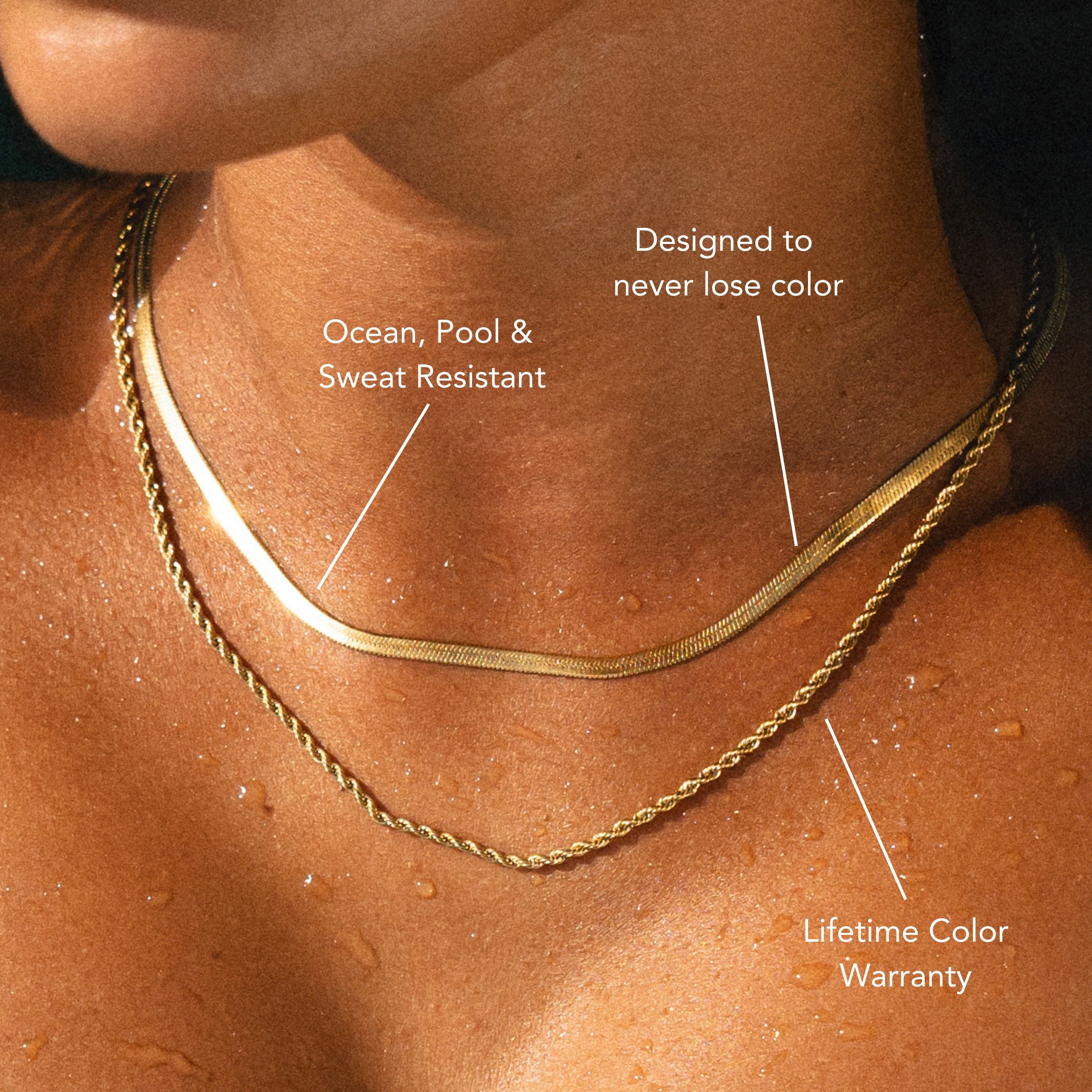
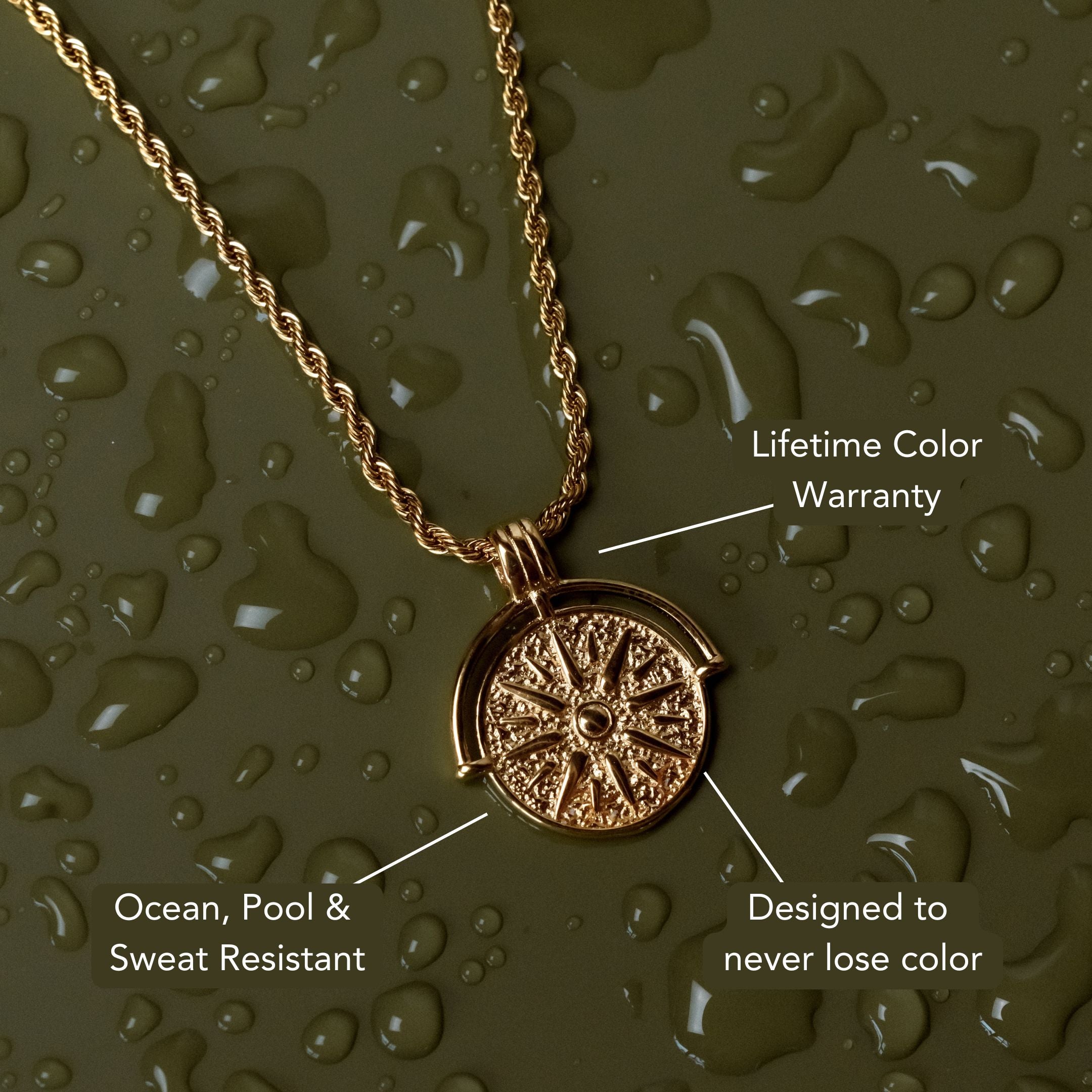
PVD (Physical Vapor Deposition) coating applied over 316L stainless steel combines the corrosion resistance of surgical steel with a finish layer that genuinely holds up through daily wear. The PVD process deposits the coating at the molecular level in a vacuum environment, producing a bond 10 times thicker than standard electroplating. That bond does not have the adhesion vulnerabilities of standard plating and does not lift, peel, or dull with water, sweat, or skincare product exposure.
For gold or silver-toned jewelry at accessible price points, PVD-coated stainless steel is the most practical tarnish-resistant option available. It provides the appearance of gold or silver with a finish durability that unprotected sterling silver and standard plated jewelry cannot match.

How to Identify Tarnish-Resistant Jewelry Before You Buy
Reading product descriptions carefully protects you from marketing language that implies durability without specifying materials.
Look for the base metal, not just the finish description. A piece described as gold tone or gold colored tells you only about the appearance. A piece described as PVD-coated 316L stainless steel tells you what the piece is actually made from and how the finish is applied. The second description gives you information you can evaluate. The first does not.
Hallmarks provide verification on solid metals. The stamp 925 confirms sterling silver. A karat stamp of 14k, 18k, or higher confirms solid gold. The absence of any hallmark on a piece marketed as precious metal warrants direct clarification before purchasing.

Warranty terms signal material confidence. A brand offering a lifetime color warranty on its jewelry is making a claim it can only back up if the material genuinely holds. ATOLEA provides a lifetime color warranty on every piece in its range, with replacement guaranteed if any piece loses its color regardless of how actively it is worn. That commitment reflects the difference between a finish applied for appearance and one built for durability.
The practical test for daily wear is straightforward: if the piece description does not specify the base metal and the coating method, assume the finish is standard electroplating and apply the one-to-six-month lifespan estimate accordingly.
Frequently Asked Questions
What kind of jewelry doesn't tarnish in water?
PVD-coated stainless steel, solid gold at 14k and above, titanium, and surgical-grade stainless steel all resist tarnishing through water exposure including showers, pools, and ocean swimming. Standard gold-plated, sterling silver, and brass pieces are not designed for water exposure and will show tarnishing and finish degradation with repeated contact.
Does sterling silver tarnish?
Yes. Sterling silver tarnishes through two chemical pathways: a reaction between silver and hydrogen sulfide in the air, and a secondary oxidation reaction from its copper content. Daily wear through sweat and skincare product contact accelerates both reactions. Uncoated sterling silver requires regular cleaning and careful storage to maintain its appearance.
Is gold-filled jewelry tarnish-resistant?
Gold-filled jewelry is more darnish-resistant than standard gold-plated pieces because the gold layer is significantly thicker. However, it is not tarnish-proof. The brass core is reactive, and the gold layer eventually wears through at high-friction points with years of daily wear. For genuinely long-term tarnish resistance, PVD-coated stainless steel or solid gold outperforms gold-filled construction.
What is the most tarnish-resistant metal for everyday jewelry?
For accessible everyday jewelry, PVD-coated 316L stainless steel provides the best combination of tarnish resistance, finish durability, and price. For fine jewelry, solid platinum and solid gold at 18k and above offer the highest tarnish resistance with no coating required. Titanium is also highly resistant and sits between those two price categories.
Why does my gold jewelry tarnish?
If gold-toned jewelry is tarnishing, it is most likely gold-plated rather than solid gold. The tarnishing comes from the base metal beneath the plating, typically brass or copper, which becomes exposed as the thin plating layer wears away. Genuine solid gold does not tarnish under normal wearing conditions. Checking for a karat hallmark confirms whether a piece is solid gold or plated.
Conclusion
What kind of jewelry doesn't tarnish has a clear material answer: solid gold, platinum, titanium, surgical-grade stainless steel, and PVD-coated stainless steel all resist the chemical reactions that cause tarnishing through daily wear. Of those, PVD-coated stainless steel provides the most practical combination of genuine tarnish resistance and accessible price for pieces worn through showers, beach days, workouts, and everything in between. The finish you choose when buying is the decision that determines whether you are cleaning and replacing jewelry every season or wearing the same pieces years from now.











Leave a comment
This site is protected by hCaptcha and the hCaptcha Privacy Policy and Terms of Service apply.