


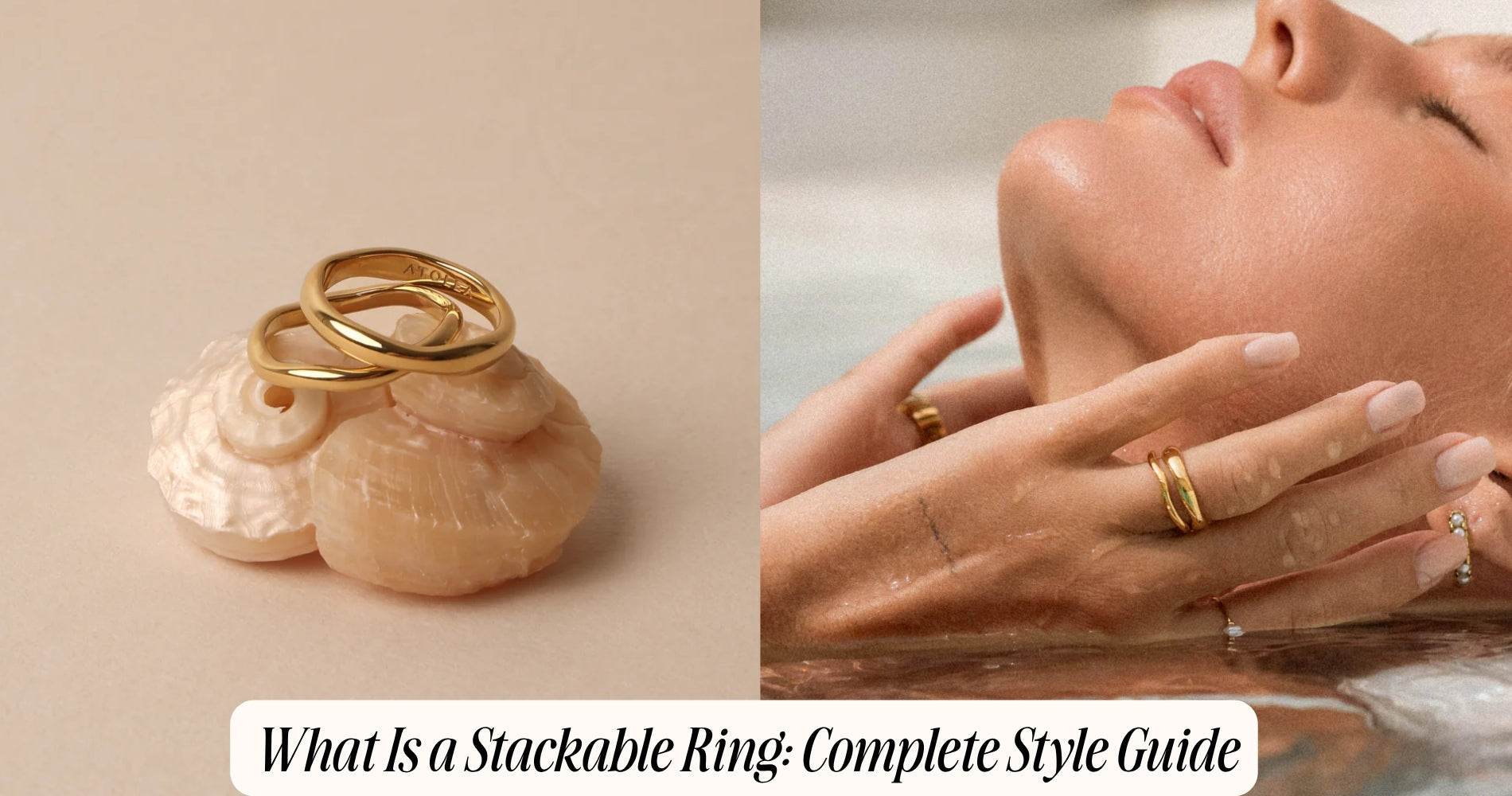
What Is a Stackable Ring: Complete Style Guide
The term gets used constantly in jewelry marketing, but the actual definition behind it is more specific than most people assume. What is a stackable ring comes down to a small set of physical characteristics, thinness, construction, and design intent, that distinguish it from an ordinary ring rather than any single defining feature alone. Minimalist Gold Rings are designed specifically around these characteristics. This guide covers the actual definition of a stackable ring, how it differs from a standard ring, where the trend originated, the main categories you will encounter while shopping, and what to look for to confirm a ring is genuinely built for stacking rather than simply marketed that way.
The Actual Definition of a Stackable Ring
A stackable ring is a ring specifically designed to be worn alongside other rings on the same finger, as part of a coordinated group rather than as a single standalone piece. This design intent shows up in a few concrete physical characteristics rather than being a purely marketing-driven label.
Thinness is the most consistent defining trait. Stackable rings are typically thin, generally in the 1mm to 3mm range for the band width, which allows multiple rings to sit together on one finger without becoming physically bulky or uncomfortable. A wide statement band at 6mm or more is not practically stackable in the same way, regardless of how it is marketed, simply because two or three of them together would not fit comfortably on most fingers.

Low profile is the second defining trait. Stackable rings generally sit close to the finger rather than rising to a significant height, since a tall setting on one ring would interfere with the placement of rings above or below it in a stack. This is why many stackable rings feature flush-set stones or simple band designs rather than elevated prong settings, which work better as standalone statement pieces.
Design intent for coordination is the third and most important trait, even though it is less immediately visible than the physical characteristics above. A genuinely stackable ring is designed with the expectation that it will be seen and worn alongside other pieces, which affects everything from its width to its finish to how its details are positioned. A ring designed purely as a standalone piece, even if thin, was not necessarily designed with this coordination in mind, which sometimes shows up in subtle ways like a design detail intended to be the sole focus of the ring rather than one element among several.
How a Stackable Ring Differs From a Regular Ring
The practical differences between a stackable ring and a standard ring come down to how each is meant to function on the hand.
A standard or statement ring is designed to be the primary or sole focus of attention on the hand, often worn alone or with minimal additional jewelry. Its width, height, and detail level are calibrated for that standalone role, which is why statement rings are frequently wider, taller, and more visually complex than stackable pieces.
A stackable ring is designed as one component of a larger composition. Its width, height, and detail level are deliberately restrained compared to a standalone piece, precisely so that it contributes to a group arrangement without overwhelming the pieces around it. This does not make a stackable ring simpler or lower quality than a statement ring, it makes it purpose-built for a different function.
Many rings work in both contexts depending on how they are worn. A single thin band can be worn alone as a minimal everyday ring or combined with others as part of a stack, which is part of why stackable rings have become such a popular category: their restrained design gives them genuine versatility that a wide statement piece does not have.

Where the Stacking Trend Originated
Wearing multiple rings on one finger is not a new idea, but the specific styled version of stacking as a deliberate fashion category has a more recent, traceable history.
Multiple ring wearing has roots in various cultural and religious traditions across centuries, including wedding and eternity band combinations that were traditionally worn together on the same finger, which represents an early version of intentional multi-ring wear, even though it was not described using the term stacking at the time.
The specific trend of stackable rings as a distinct fashion category, with rings designed and marketed explicitly for combining, developed more recently, gaining significant momentum through the 2010s as minimalist jewelry aesthetics became more prominent and as jewelry brands began designing and marketing rings specifically around the concept of building a personal combination over time rather than buying a single complete piece.
This shift changed how rings are designed at a manufacturing level, moving toward the thinner, lower-profile characteristics described above, specifically because brands recognized that customers wanted pieces that worked as part of an evolving personal collection rather than as isolated purchases.
Main Categories of Stackable Rings
Stackable rings generally fall into a few recognizable categories, each serving a slightly different role within a stack.
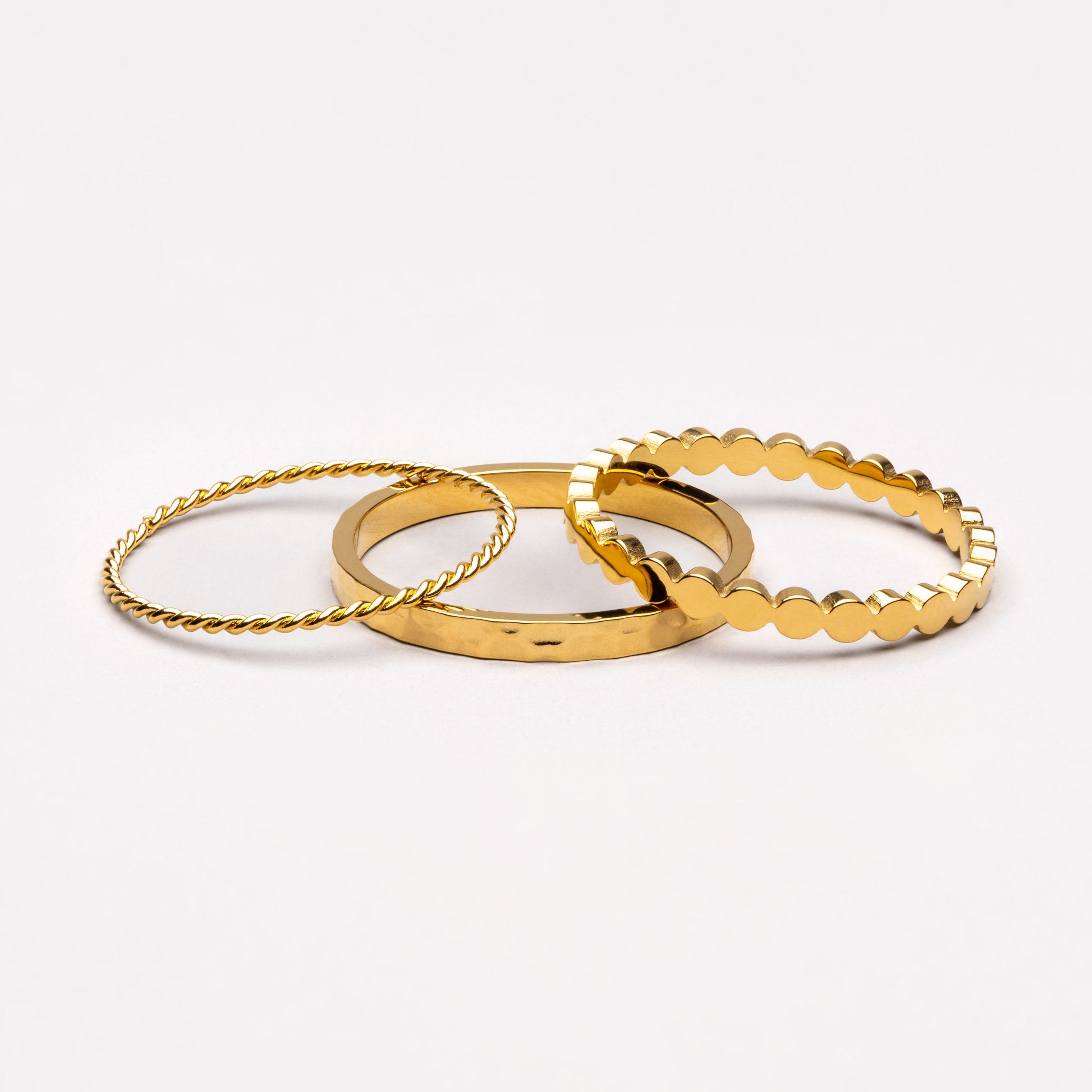
Plain bands are the simplest category, a smooth or lightly textured thin band with no stone or embellishment. These serve as the connective, foundational pieces in most stacks, providing the visual space between more detailed pieces.
Delicate stone bands are thin bands set with small stones, often flush-set or bezel-set to keep the profile low, that add a point of visual interest without taking over the composition. These typically function as a secondary focal point within a stack rather than the primary one.

Textured or patterned bands feature a hammered, twisted, braided, or otherwise textured surface, which adds visual interest through surface quality rather than through a stone. These provide contrast against smooth plain bands without adding height or bulk.
Statement stacking pieces are slightly wider or more detailed bands, typically at the upper end of the stackable width range, around 3mm to 4mm, that function as the anchor or focal point of a stack while still remaining thin enough to combine comfortably with other pieces.
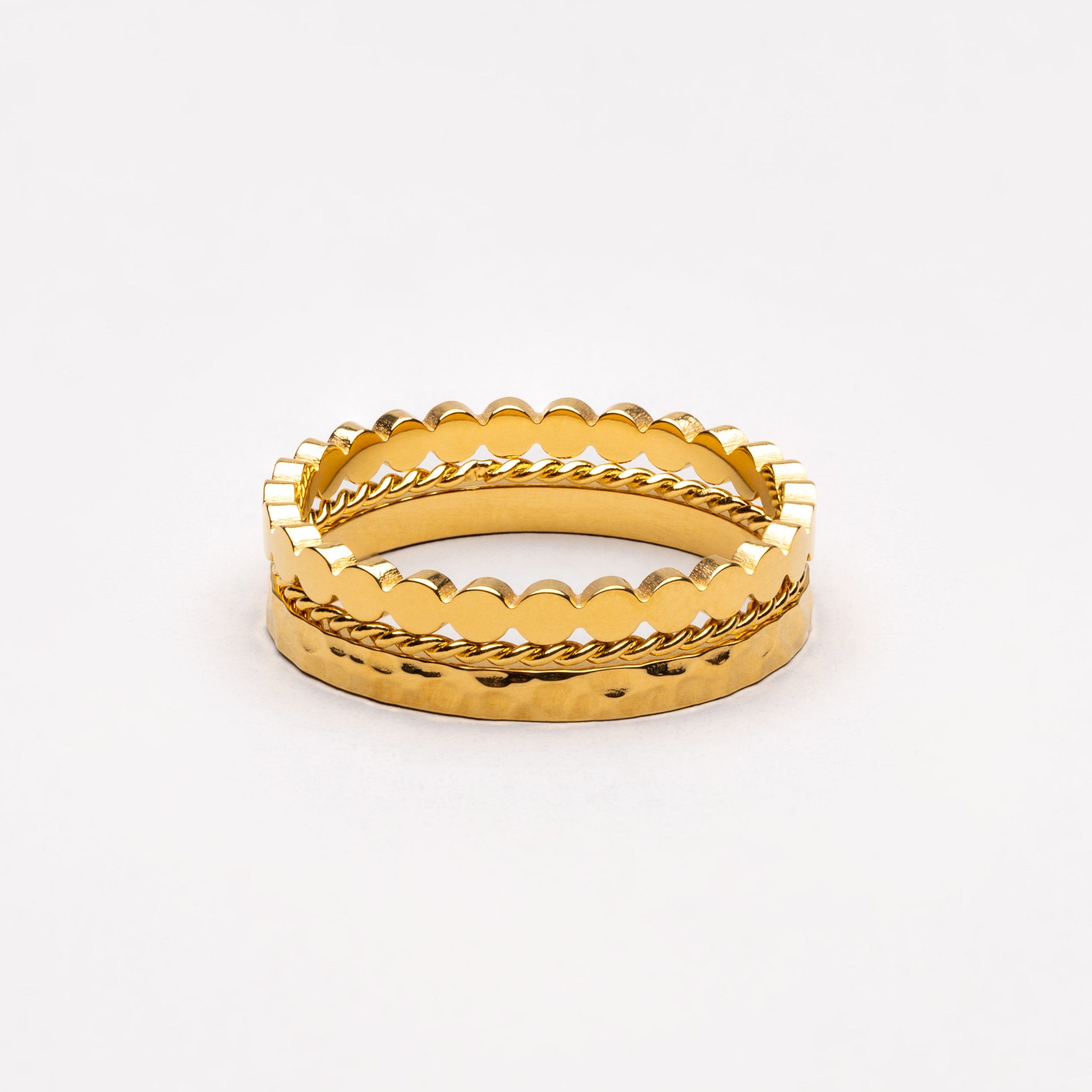
Connected or pre-set stacks consist of multiple thin bands manufactured and sold already connected as a single unit, offering a ready-made stacking effect without needing to assemble individual pieces yourself.
| Category | Typical Width | Role in a Stack |
|---|---|---|
| Plain band | 1 to 2mm | Foundational, connective spacing |
| Delicate stone band | 1 to 2mm | Secondary focal point |
| Textured band | 1.5 to 2.5mm | Contrast and visual interest |
| Statement stacking piece | 3 to 4mm | Anchor or primary focal point |
| Connected pre-set stack | Varies, sold as one unit | Complete ready-made arrangement |
What to Look For to Confirm a Ring Is Genuinely Stackable
A ring being marketed with the word stackable does not automatically mean it meets the practical definition. A few checks confirm whether a specific ring genuinely works for the purpose.
Check the stated band width in the product description, if available. Anything comfortably under 3mm is reliably stackable for most hands. Widths above 4mm can still work in a stack but function better as the single anchor piece rather than one of several similar pieces.
Check whether the ring sits low or high on the finger based on product images, looking specifically at any stone setting height. A ring with a tall prong setting, even if the band itself is thin, may interfere with adjacent rings during normal hand movement more than a flush or bezel-set equivalent would.
Consider the finish and material quality, since a stackable ring experiences more contact with adjacent metal surfaces than a standalone ring does, through the rings around it rubbing and knocking together during normal wear. A durable finish that resists surface wear from this kind of metal-on-metal contact matters more for stacking rings specifically than for a single ring worn in isolation.

Building a Collection Around the Right Definition
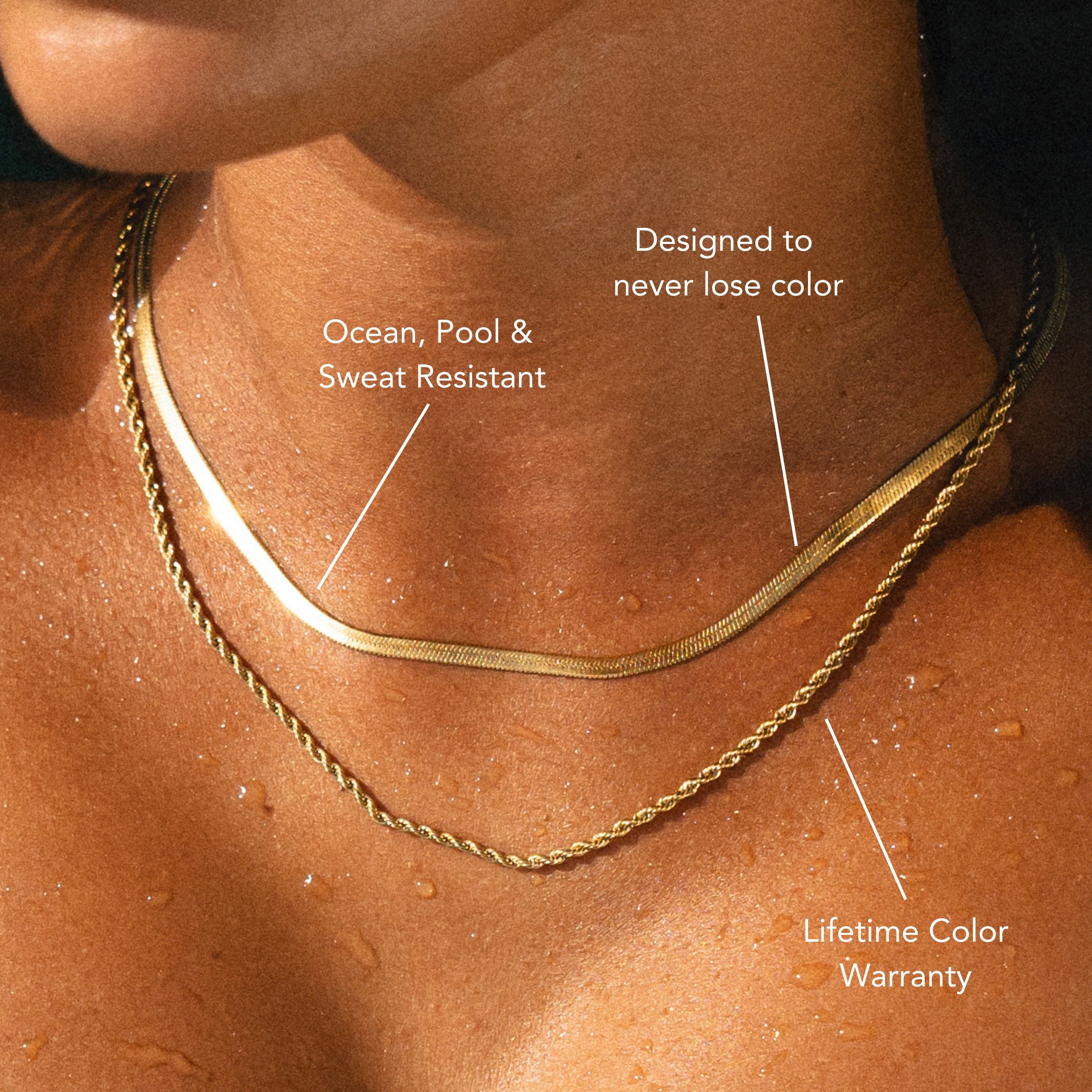
Understanding what actually makes a ring stackable, rather than treating it as a marketing label alone, changes how you shop for a first collection. Choosing pieces genuinely built within the thin, low-profile characteristics described in this guide, rather than simply thin-looking pieces in photos, produces a stack that behaves the way you expect once you are actually wearing multiple rings together on one finger. Material matters here too, since stacking rings experience more contact wear than standalone pieces through constant contact with each other. ATOLEA's minimalist gold ring range is built in PVD-coated 316L stainless steel specifically within the thin, low-profile specifications that define genuinely stackable rings, with a lifetime color warranty on every piece to handle the additional metal-on-metal contact a real stack involves.
Frequently Asked Questions
What makes a ring a stackable ring specifically?
A genuinely stackable ring is thin, typically 1mm to 3mm in band width, sits low on the finger without a tall setting, and is designed with the intention of being worn alongside other rings rather than as a standalone statement piece. These characteristics together, not any single feature alone, define the category.
Can any thin ring be used as a stackable ring?
Most thin rings can technically be worn in a stack, but genuinely stackable rings are designed specifically for that purpose, with attention to how the band width, setting height, and finish interact with adjacent rings. A ring designed purely as a standalone minimal piece may still work well in a stack, but this is not guaranteed the way it is with a ring explicitly designed for stacking.
What is the difference between a stacking ring and a wedding band?
Wedding and eternity bands are a specific historical example of intentional multi-ring wear, traditionally combined with an engagement ring on the same finger. Contemporary stackable rings extend this same concept of combining thin bands to any finger and any personal combination, not limited to the specific pairing tradition of wedding jewelry.
Do stackable rings need to be the same metal?
No. Mixed metal stacking is widely worn and works well when one metal tone leads the combination and the secondary tone repeats across at least two pieces, rather than an equal split across the stack.
How wide should a stackable ring be?
Most stackable rings fall between 1mm and 3mm for supporting pieces, with a slightly wider band around 3mm to 4mm working well as a single anchor piece within a stack. Bands wider than 4mm generally function better as standalone statement rings than as one piece among several in a stack.
Understanding the Category Before You Shop
What is a stackable ring comes down to a specific combination of thinness, low profile, and design intent for coordination, distinct from a standard ring built to stand alone. Knowing this definition, and the main categories, plain bands, stone bands, textured bands, and anchor pieces, gives you a genuine framework for evaluating whether a specific ring will work the way you expect once combined with others, rather than relying on marketing language alone.










Leave a comment
This site is protected by hCaptcha and the hCaptcha Privacy Policy and Terms of Service apply.