


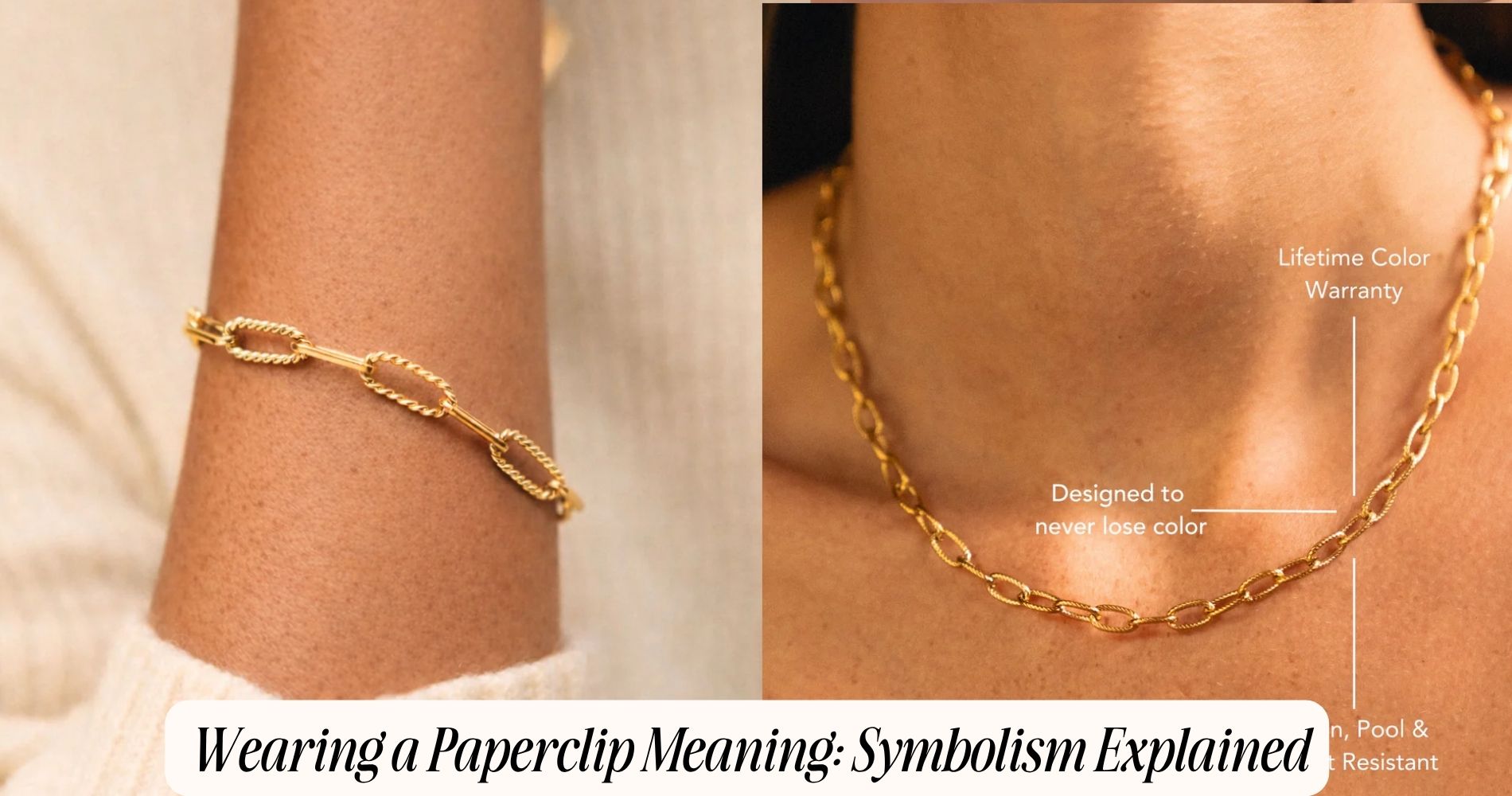
Wearing a Paperclip Meaning: Symbolism Explained
Understanding the wearing a paperclip meaning depends heavily on context, as this simple object can symbolize solidarity, resourcefulness, quiet protest, or personal expression. What began as a basic office tool has evolved into a minimalist accessory with layered cultural significance, often used alongside pins or ribbons to communicate identity or shared values. In some settings, it represents subtle resistance; in others, it reflects unity or memory. Placement, styling, and surrounding symbols all help shape the wearing a paperclip meaning—keep reading to explore examples and etiquette, and consider modern, durable pieces like those in the Waterproof Jewelry collection for everyday wear.
What Wearing a Paperclip Means Today
Though it may look trivial, wearing a paperclip today often signals more than fashion — it expresses deliberate alignment with a cause, identity, or network. You interpret that small emblem through current trends: minimalism, protest chic, and social-media signaling converge to make it legible.
Analytically, you weigh context—workplace, rally, or online avatar—to decode intent; the same clip can mean solidarity, irony, or aesthetic choice. Comparatively, it functions like other wearable tokens (pins, ribbons) but reads differently because of its ordinariness and DIY connotations.
You consider cultural significance across demographics: youth adopt it for subcultural affiliation, professionals use it subtly, activists reclaim it. Ultimately, you assess the clip's meaning by setting, body language, and accompanying symbols.

Origins: Symbolic History of the Paperclip
The paperclip’s symbolic history traces a surprising arc from mundane office tool to emblem with layered meanings, and you can best understand it by situating the object within specific historical moments and cultural practices.
You’ll trace its historical significance in industrial design, where simple wire forms embodied efficiency and mass production values.
Compare that to early 20th-century marketing that turned a practical fastener into a sign of modernity.
You’ll note cultural variations: some societies read it as pragmatic thrift, others as cleverness or minimalism.
Analytically, the paperclip accumulates meaning when used in rituals, commemorations, or as an accessory, shifting from utility to metaphor.
Contextual comparison shows how material affordances intersect with politics, identity, and memory to produce symbolic resonance.
Paperclips in Protest and Solidarity: Real Examples
After tracing how the paperclip accrued cultural meanings in design and ritual, you can see why activists and communities have repurposed it as a tool of protest and solidarity.
You’ll examine concrete instances—students pinning paperclips during campus protests, workers adopting them in labor disputes, and diaspora groups using them to signal support across borders.
Compare these to more elaborate protest symbols: the paperclip’s banal portability makes it discreet yet legible, letting you broadcast solidarity without spectacle.
Context matters; in authoritarian settings it functions as low-risk solidarity expressions, whereas in open societies it joins visible iconography to amplify messages.
Analytically, these real examples reveal how an everyday object becomes a scalable, translatable device for collective identity and tactical communication.

Paperclips and Mental-Health Awareness
Because small gestures can carry layered meanings, you’ll find paperclips used in mental-health awareness as a discreet, portable cue that links personal experience to broader conversations.
You’ll notice how the object’s ordinariness contrasts with heavy topics, making it useful for signaling solidarity without spectacle.
Analytically, compare paperclip campaigns to wristbands: paperclips emphasize low-cost, everyday visibility, while wristbands often aim for mass branding.
Contextually, they facilitate creative expression within support networks, allowing individuals to adapt form and placement to reflect personal struggles.
You’ll see them prompt public awareness by opening conversational entry points and encouraging community engagement at grassroots events.
Practically, they function as tactile reminders and symbolic connectors between individual stories and collective advocacy efforts.
Personal Uses: Memorials, Identity Signals, and Private Codes
Look for ways a simple paperclip can hold private meaning: people pin them to clothing, stash them in journals, or bend them into tiny symbols to mark memories, identities, or shared understandings.
You’ll see memorial significance when someone wears a paperclip tied to a date or person—its smallness amplifies mourning through discreet continuity.
In comparative terms, identity representation varies: a raw clip might signal minimalist queer pride to one person and a coded cultural nod to another.
Private symbolism often relies on context you don’t have; the same bent shape can mean friendship, survival, or an inside joke.
You’ll recognize personal connection by persistence and placement—how often it’s worn and where—yet interpretation stays contingent, relational, and intentionally opaque.

How to Tell What Someone’s Paperclip Means
How can you begin to decode a paperclip's private meaning without prying? Start by observing context: placement, material, and accompanying symbols often narrow likely paperclip meanings.
Compare similar instances—office, memorial, or activism settings—to spot patterns rather than assume intent. Listen to personal stories people share; anecdotes about why they chose a clip reveal subtleties that appearances miss.
Ask open, nonintrusive questions about inspiration rather than meaning outright; people often offer context when invited to tell a story. Note cultural and temporal cues—what a clip signified in one group or year may differ elsewhere.
Synthesize these data points: visual cues, setting, comparative examples, and brief personal stories will let you infer meaning responsibly while respecting privacy.
How to Wear a Paperclip Respectfully (Tips and Etiquette)
Having learned to read a paperclip’s possible meanings from context and stories, you can now focus on wearing one in ways that respect both its symbolism and the people around you.
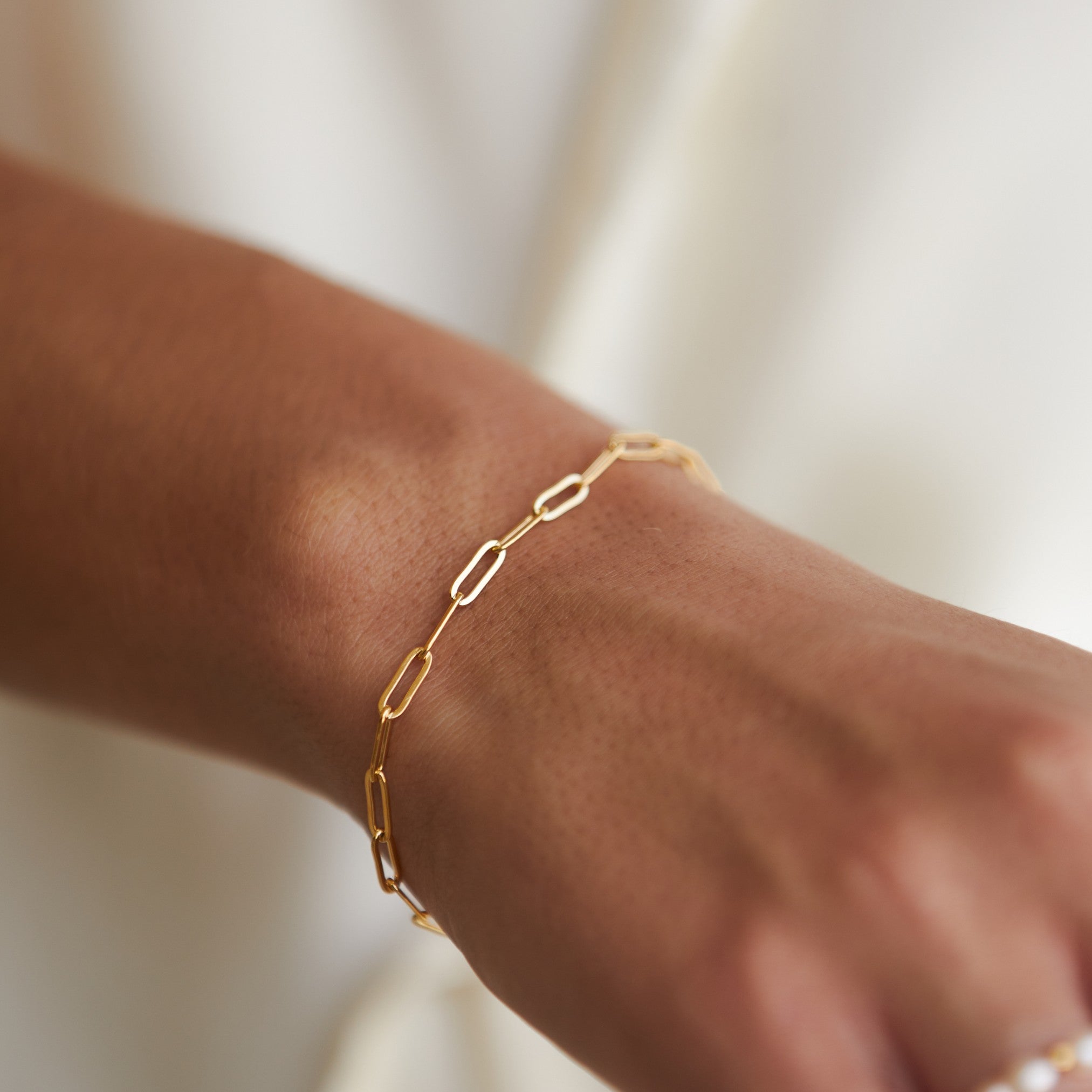
Consider paperclip fashion as both aesthetic choice and communicative act: compare subtle placements (lapel, necklace) with bold displays (clustered pins) and choose based on setting.
Assess personal significance and be ready to explain it concisely when asked; that helps avoid misreading.
Match material and style to occasion—minimal metal for formal events, playful colors for casual spaces—to align intent with perception.
Observe local norms and mirror others’ formality levels.
Finally, rotate visible pieces thoughtfully so your expression remains intentional rather than accidental, preserving respect for diverse interpretations.
When a Paperclip Can Be Misunderstood or Controversial
Because a paperclip can carry multiple meanings at once, you should be aware that people may read it very differently depending on context, history, and personal experience.
When you wear one, analyze settings where paperclip symbolism might clash: political protests, memorials, or workplace environments.
Compare local cultural interpretations—what’s a solidarity marker in one country might be trivial or offensive in another.
Consider historical associations or recent events that reframe a simple object into a charged emblem.
You should also weigh power dynamics; a colleague’s discomfort can reflect broader social tensions rather than personal prejudice.
If ambiguity could harm relationships or provoke misunderstanding, choose clearer signals or explain your intent proactively.
That reduces misinterpretation and respects diverse cultural readings.
Frequently Asked Questions
Can Wearing a Paperclip Be Illegal in Some Places?
Yes, you can face legal restrictions: paperclip symbolism might be banned or monitored in some jurisdictions if it's tied to prohibited groups. You'll need to compare local laws and context to assess potential legal consequences.
How Do You Clean or Disinfect a Worn Paperclip?
You can soak your worn paperclip in isopropyl alcohol or mild soap and hot water, scrub gently, then dry thoroughly; compare methods considering paperclip history and paperclip symbolism, noting corrosion risks and preservation versus daily reuse.
Are There Cultural Taboos About Metal Jewelry Like Paperclips?
Yes — you’ll find cultural significance varies: some cultures stigmatize metal jewelry, others embrace it. You’ll compare fashion trends, regional taboos, and historical meanings to understand contextual differences and symbolic acceptability.
Can Paperclips Trigger Metal Allergies or Skin Reactions?
Yes — you can get metal sensitivity from paperclips; they'll cause allergic reactions if they're made of nickel or other irritants. Compare coated versus bare clips, consider exposure duration, and test alternatives like stainless or plastic.
Where Can I Buy Decorative or Symbolic Paperclips?
You can buy decorative or symbolic paperclips at stationery shops, online marketplaces, and artisan platforms; compare artistic designs, prices, and materials, and choose eco friendly options like recycled metal or biodegradable clips for aesthetics and sustainability.
Conclusion
Wearing a paperclip can mean different things depending on context, history, and intent. You should weigh its origins—as a World War II solidarity symbol—against modern uses in protest, mental-health awareness, or personal memorials. Compare settings: public rallies, subtle jewelry, or coded signals. Context clarifies whether it’s an act of empathy, identity, or political statement. Before adopting it, consider audience, potential misreadings, and respectful practices to guarantee your message aligns with your purpose.














Leave a comment
This site is protected by hCaptcha and the hCaptcha Privacy Policy and Terms of Service apply.