

Types of Earring Backs and How to Remove: Complete Guide
Not all earrings close the same way, and knowing the different types of earring backs and how to remove them can save you from a stuck backing, an accidental drop, or unnecessary irritation. From simple push backs to more secure screw backs, each closure style has its own removal technique. If you deal with sensitive ears and want backings that are as gentle as they are secure, our Allergy Free Earrings collection features hypoallergenic options designed for comfortable, everyday wear.
In this guide, we will walk through the most common earring back styles, how each one works, and the safest way to remove them without hurting yourself or damaging your piercing.
Why Earring Back Style Matters
The backing of an earring does more than just hold the piece in place. It affects how securely the earring stays put, how comfortable it feels during wear, and how easily it can be removed at the end of the day. Some backings are designed for maximum security, making them harder to remove by accident, while others prioritize convenience and quick changes.
Knowing which type of backing you are working with before you try to take an earring out helps you avoid tugging, twisting, or forcing a closure that is not meant to move that way, which can cause pain or even damage the piercing.

Push Back or Friction Back
Push backs, sometimes called friction backs, are one of the most common earring backing styles. They consist of a small, disc shaped piece that slides onto the post and stays in place through simple friction.
How to remove it: Hold the front of the earring steady with one hand to avoid pulling on the piercing. With your other hand, grip the backing between your thumb and index finger, then pull it straight off the post. Avoid twisting, since these backs are designed to slide off in a straight line rather than rotate.
Push backs are popular because they are quick and easy to use, though they can occasionally feel loose over time or become difficult to grip if fingers are damp or the backing is small.

Screw Back
Screw backs offer a more secure hold, making them a popular choice for valuable earrings or for anyone who tends to lose push back styles. Instead of sliding onto the post, a screw back twists onto small threading built into the post itself.
How to remove it: Hold the front of the earring steady, then use your other hand to twist the backing counterclockwise slowly and evenly. Avoid pulling while twisting, since this can strip the threading or cause discomfort. If the backing feels stuck, a gentle warm compress on the earlobe beforehand can help loosen any buildup around the threading.
Because screw backs require intentional twisting to come loose, they are considered one of the more secure and toddler proof backing styles.
Butterfly or Clutch Back
Butterfly backs, sometimes called clutch backs, are a variation of the push back style but include small wing like flaps on either side, making them easier to grip and remove.
How to remove it: Pinch the two small wings together between your thumb and finger, then gently pull the backing straight off the post. The added grip surface makes these easier to handle than a plain, smooth push back, especially for people with larger fingers or reduced dexterity.

Hinged Snap Back
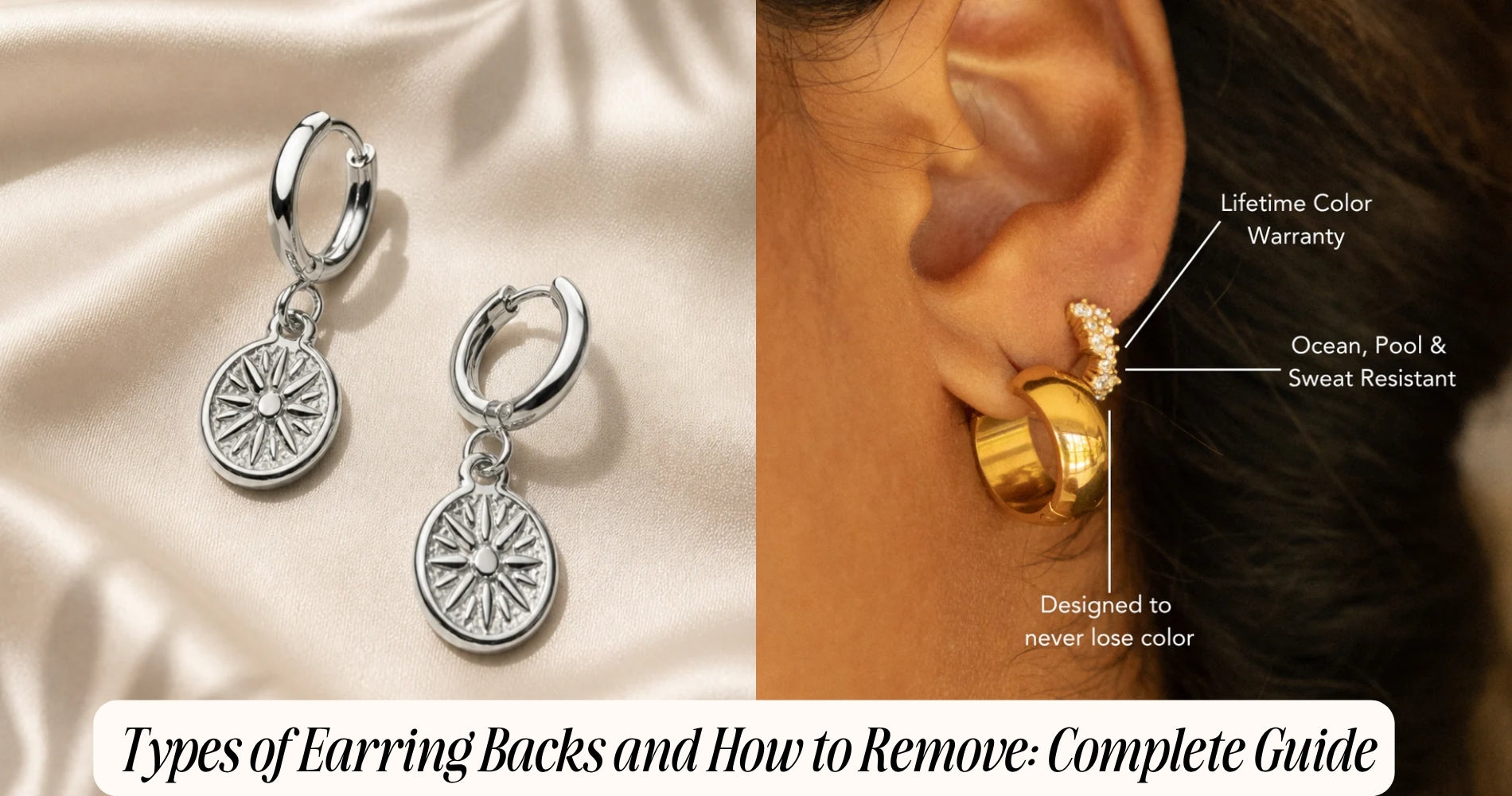
This style is most common on hoop earrings rather than studs. A small hinge and clasp mechanism allows the hoop to snap open and closed, holding it securely in the ear.
How to remove it: Locate the small clasp or lever, usually near the point where the hoop opens. Press it lightly with a fingernail or fingertip to release the hinge, then swing the hoop open and slide it out of the piercing. Avoid forcing the hinge open from the wrong angle, since this can bend or damage the mechanism over time.
Lever Back
Lever backs are often used for dangle or drop earrings and feature a curved wire with a hinged lever that locks into place behind the ear.
How to remove it: Gently pull the small lever down and away from the earring to release the latch, then slide the wire out of the piercing. This backing is designed to stay securely closed during wear, so it may require a firmer press on the lever than other styles, though it should never require excessive force.
Magnetic Back
Magnetic backs are typically used for clip on style earrings or for people who do not have pierced ears. Instead of a post, two magnetic pieces clamp together on either side of the earlobe.
How to remove it: Simply pull the two magnetic pieces apart with a gentle, steady motion. Since there is no post involved, these earrings do not require twisting or unlatching, only a firm pull to separate the magnets.
Threaded or Threader Style
Threader earrings do not use a traditional backing at all. Instead, a thin chain or wire is threaded directly through the piercing and held in place purely by its length and positioning.
How to remove it: Gently pull the thin end of the threader back through the piercing in the same direction it was originally inserted. Move slowly to avoid tugging on the ear, since rushing this step is one of the most common causes of irritation with threader style earrings.

General Tips for Removing Any Stuck Earring Back
Regardless of backing style, a few universal tips can help if an earring feels stuck or difficult to remove. Wash your hands first to reduce the risk of introducing bacteria to the piercing. Apply a warm, damp cloth to the earlobe for a few minutes to reduce swelling and loosen any buildup around the backing. Avoid using excessive force, since forcing a stuck backing can cause pain, skin damage, or a bent post. If a backing remains stuck after several gentle attempts, consider seeking help from a professional piercer rather than risking injury.
Choosing Backings That Are Easier to Manage
If you frequently struggle with a particular backing style, it may be worth choosing earrings with a different closure the next time you shop. Push backs and butterfly backs tend to be the easiest for quick daily wear, while screw backs offer more security for pieces you do not want to risk losing. For sensitive skin, choosing earrings made specifically to reduce irritation around the backing, like an Allergy Free Earrings collection, can also make both wearing and removing earrings a more comfortable experience overall.

Final Thoughts
Understanding the different types of earring backs and how to remove them makes daily wear far less frustrating. Whether you are dealing with a simple push back, a secure screw back, or a hinged hoop closure, knowing the right technique prevents unnecessary tugging, pain, or damage to your jewelry and your piercing.
Taking a moment to identify your earring's backing style before attempting removal is the easiest way to avoid a stuck or stubborn earring altogether.
Frequently Asked Questions
1. What is the easiest type of earring back to remove? Push backs and butterfly backs are generally the easiest to remove, since they slide straight off the post without needing to be twisted or unlatched.
2. How do I remove a screw back earring if it feels stuck? Apply a warm compress to loosen buildup around the threading, then twist the backing counterclockwise slowly without pulling, since forcing it can strip the threads.
3. Why do some earring backs feel harder to remove than others? Backing difficulty often comes down to swelling, product buildup, or an over tightened screw back, all of which can make an otherwise simple backing feel stuck.
4. Are magnetic earring backs safe to remove daily? Yes, magnetic backs are simple to remove since they only require pulling the two magnetic pieces apart, with no twisting or unlatching required.
5. What earring backs are best for sensitive skin? Backings made from hypoallergenic materials, like those found in an Allergy Free Earrings collection, help reduce irritation for people with sensitive ears or metal allergies.









Leave a comment
This site is protected by hCaptcha and the hCaptcha Privacy Policy and Terms of Service apply.