


Standard Size Necklace Chain Guide You Need to Know
Choosing the right standard size necklace chain helps ensure your necklace sits exactly where you want it. Common lengths range from 14–16 inches for chokers that sit high on the neck, 18 inches that usually rest at the collarbone, and 20–24 inches that fall lower and help elongate the torso—lengths often featured in versatile designs like Atolea’s Waterproof Necklaces collection. Use a flexible tape measure to see where different lengths land and decide where you want a pendant or chain to fall. Once you understand standard size necklace chain ranges—and how they relate to neckline, body scale, and layering—you can select pieces that fit comfortably and look perfectly balanced.
Standard Necklace Chain Lengths Guide
Knowing the standard necklace chain lengths—typically 14", 16", 18", 20", 22", and 24"—lets you predict exactly where a chain will sit on the body and how it’ll frame the face, neckline, and overall silhouette.
You read these measurements from end to end, including the clasp, so you can compare designs with technical accuracy.
Each length interacts differently with necklace chain types and chain material options. A 14" or 16" chain sits higher and visually thickens the neck; an 18" length usually rests at the collarbone, creating a balanced focal point.
At 20"–24", the line drops lower on the torso, elongating the upper body. When you standardize lengths, you can plan proportions, layering schemes, and pendant placement with intention.

How to Choose Your Necklace Chain Length
Once you understand standard necklace lengths, you can start choosing a chain length that actually works with your body, wardrobe, and styling goals instead of defaulting to whatever’s on the tag.
Begin with exact chain length measurements: use a flexible tape, wrap it around your neck, and mark where you want the pendant or chain edge to sit—suprasternal notch, collarbone, or just below the bust.
Next, match length to neckline architecture. Shorter chains frame crew and boat necks; mid-length suits V-necks and shirts; longer lines complement high collars and simple dresses.
Factor in necklace style preferences: delicate chains look refined shorter, statement pieces need extra drop to lie flat.
Finally, consider layering—vary lengths by at least 2″ for clean visual separation.
Necklace Chain Sizes by Age and Gender
Different ages and genders tend to share predictable necklace size “zones,” and using them as a baseline helps you get proportion, comfort, and movement right before you fine-tune for personal style.
For kids, 12–14 in chains usually satisfy children's preferences: short enough to stay secure, long enough to avoid constriction, with flat clasps that don’t irritate delicate skin.
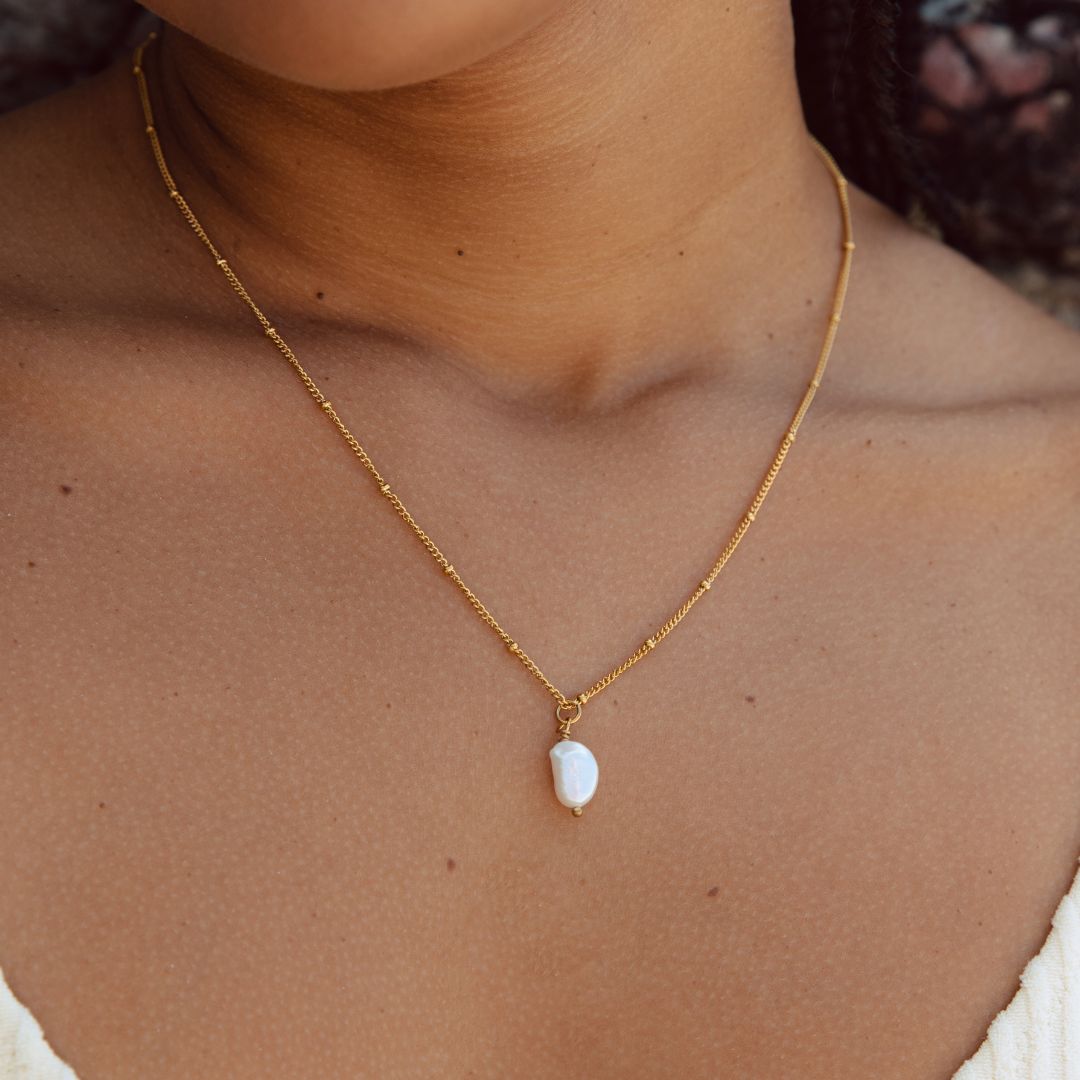
For teens and women’s trends, 16–18 in sits at the clavicle for everyday wear, while 20–24 in adds vertical line and elegance.
Prioritize age appropriateness by keeping very young wearers in shorter, lighter gauges.
For men’s styles, 18–20 in rests near the base of the neck, 22–24 in hits mid-chest for pendants, and 26–30 in reads bolder, fashion-forward, and statement-oriented.

How Chain Lengths Look on Different Necklines
Chain length doesn’t exist in a vacuum; it interacts with your neckline to frame the face, torso, and any pendant you wear. You’ll want to evaluate chain length against specific neckline types: crew, V‑neck, scoop, square, boat, and off‑shoulder.
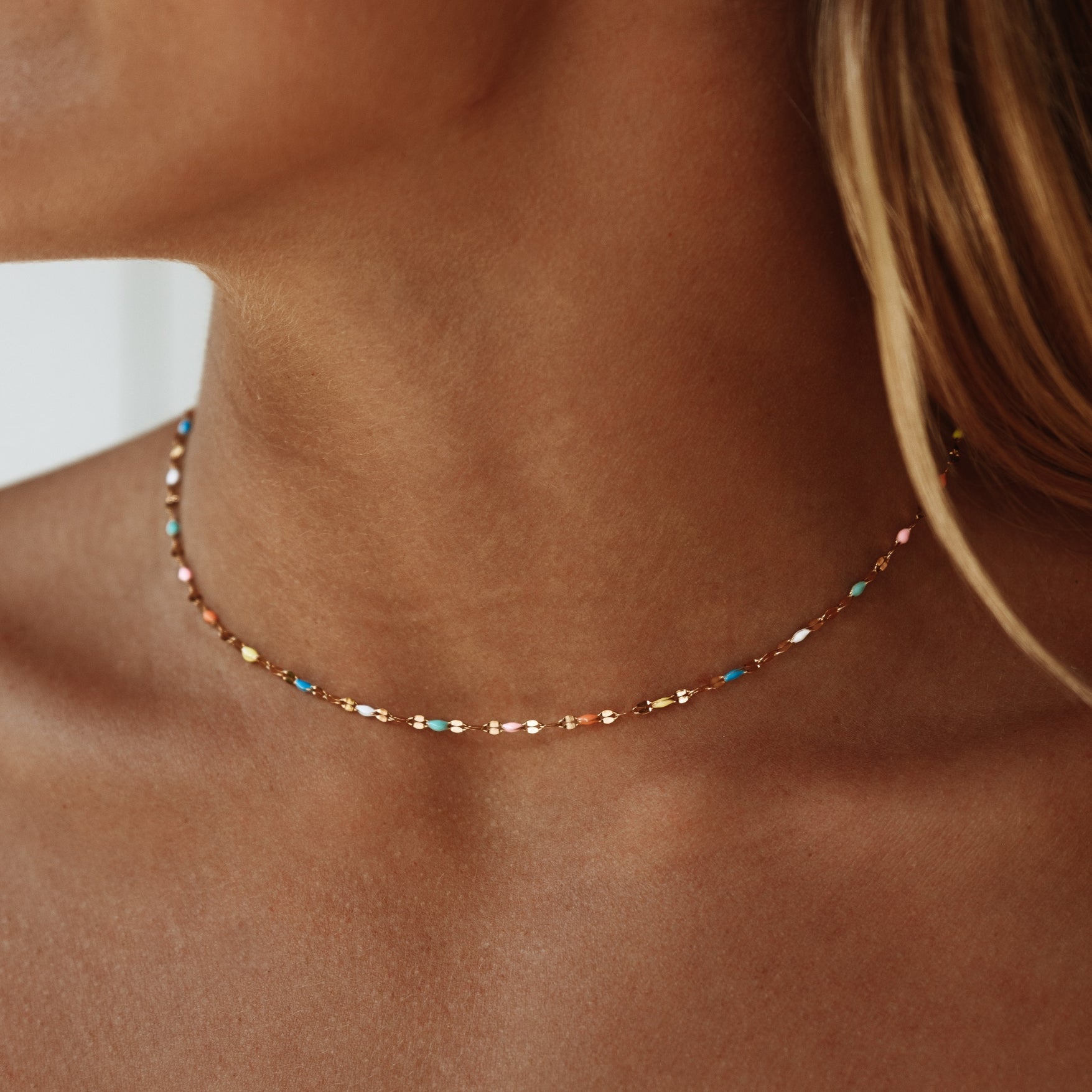
Choker styles (14–16 inches) align best with open or low necklines, where they visually shorten the neck and highlight the collarbones.
Princess lengths (17–19 inches) suit most necklines, echoing the curve of crew and scoop cuts.
Matinee lengths (20–24 inches) complement high necklines, creating a vertical line that can balance a fuller body shape.
Always factor in jewelry material and its visual weight, current fashion trends, and your personal preference so the chain integrates cleanly with each garment’s geometry.
Layering Necklace Chains by Length
Thoughtful layering by length turns individual chains into a cohesive composition, using staggered drop points to control proportion, movement, and visual weight.
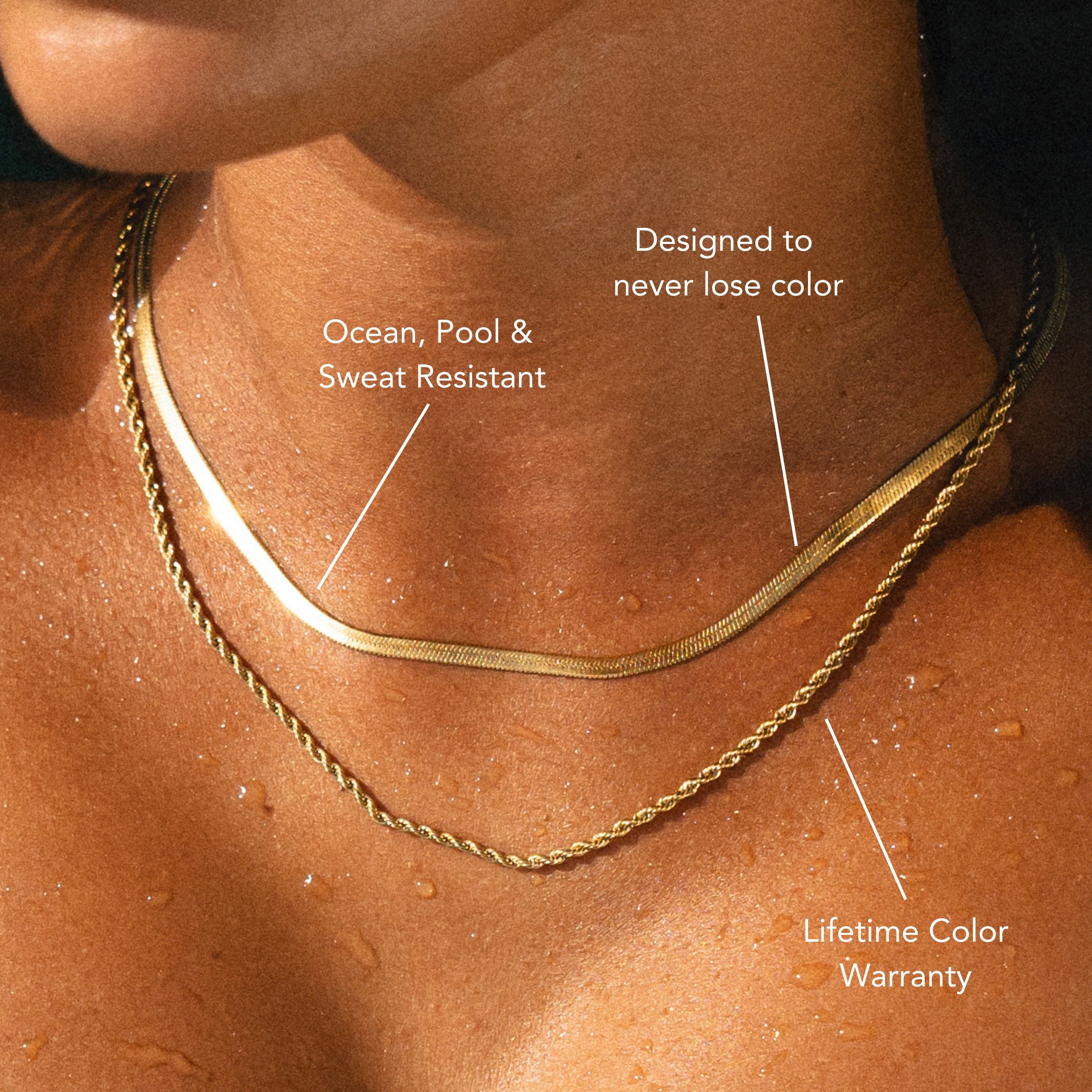
Start with a 14–16 inch base that hugs the collarbone, add a 17–18 inch mid layer, then finish with a 20–24 inch drop. Maintain at least 1–2 inches between lengths so pendants don’t tangle or overlap.
Apply layering techniques that contrast both scale and chain materials: pair a fine cable with a medium curb and a bold paperclip or rope.
Keep one focal pendant and let supporting chains stay minimal. Align clasp weights to prevent twisting, and use extenders to fine‑tune spacing over different necklines, ensuring every strand sits exactly where you intend.

Frequently Asked Questions
How Do I Measure an Existing Necklace Chain Accurately at Home?
Lay the necklace flat, close the clasp, then run precise measuring tools (rigid ruler or calipers) along the full length, including clasp components. Avoid stretching delicate chain materials; measure twice, note millimeters, and record thickness separately.
Which Chain Lengths Are Best for Displaying Different Pendant Sizes?
Choose 16–18" for small pendants, 18–20" for medium, 20–24" for bold pieces. You’ll balance pendant proportions by centering weight on your sternum and ensuring clasp placement sits smoothly at the mid‑nape.
How Do Standard Chain Lengths Vary Across International Sizing Systems?
Standard chain lengths shift with international sizing: you’ll navigate inches vs. centimeters, regional “princess” or “matinee” norms, and unisex grading. You must cross‑convert, since chain variations in thickness, clasp style, and drape alter effective length.
What Chain Lengths Work Best for People With Limited Mobility or Dexterity?
You’ll find 18–22 inch chains easiest, since they clear your head without fuss. Prioritize adjustable necklaces, front‑closing clasps, and lightweight materials like fine cable or snake chains to minimize strain, snagging, and awkward overhead movements.
How Do I Adjust or Shorten a Chain Without Permanently Cutting It?
You temporarily shorten a chain by looping it through an end link, clipping the clasp farther along, or adding a removable chain extension. Use small silicone stoppers or decorative sliders for precise, reversible temporary adjustments without cutting.
Conclusion
When you understand standard chain lengths, you don’t guess—you design your look. Use precise measurements, your neckline, and your proportions to decide where each chain should sit. Visualize how lengths layer, how pendants hang, and how clasps balance weight. Then, refine: adjust millimeters, not inches. When you choose with intention, every necklace—solo or layered—frames your face, complements your outfit, and feels made for you, not just worn by you.











Leave a comment
This site is protected by hCaptcha and the hCaptcha Privacy Policy and Terms of Service apply.