

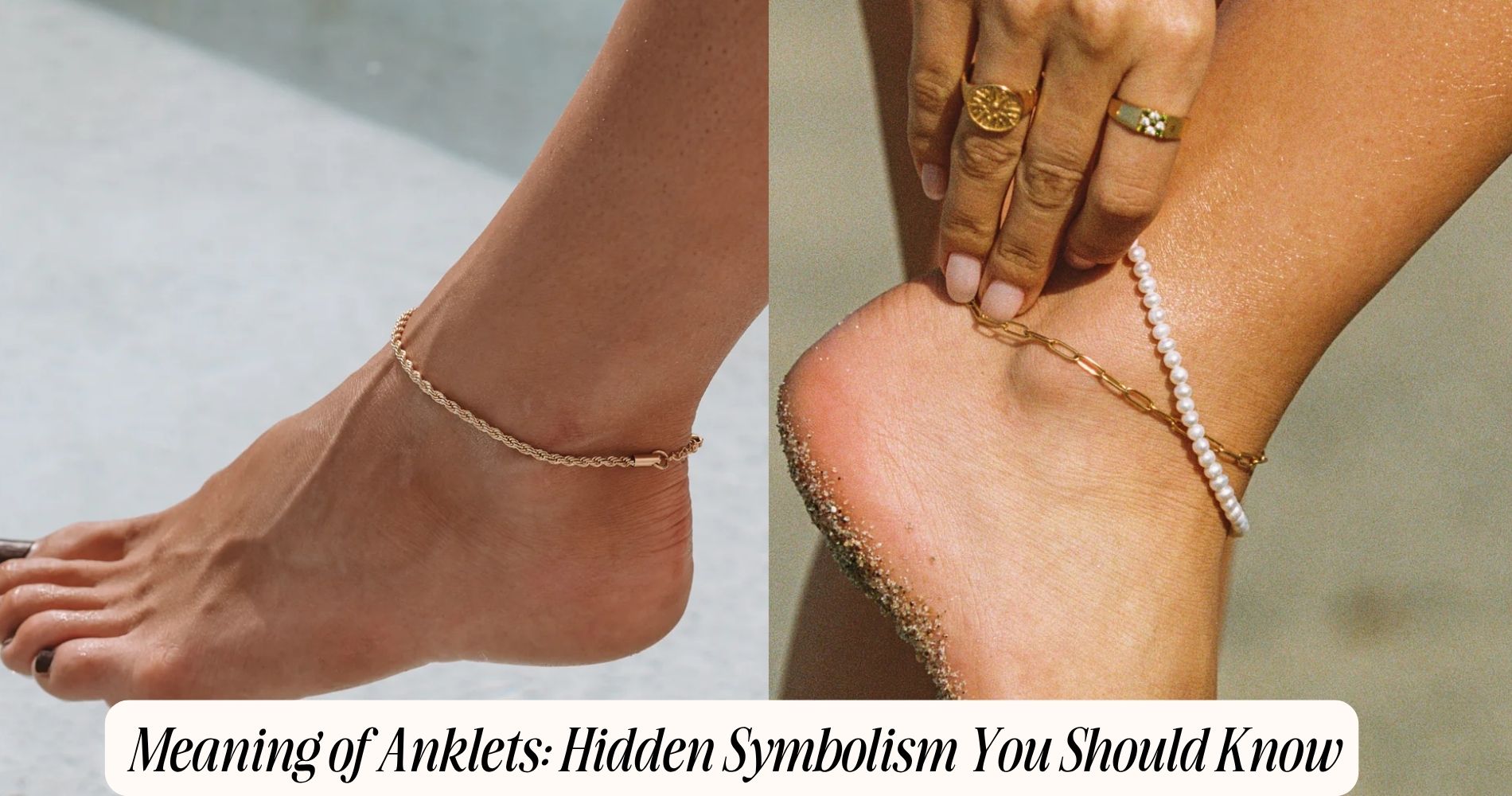
Meaning of Anklets: Hidden Symbolism You Should Know
Understanding the meaning of anklets reveals that they are more than simple accessories—they often carry cultural and social significance. Across different societies, anklets can symbolize marital status, tradition, or even wealth, depending on the materials used, such as leather, beads, silver, or gold. Details like bells, weight, and how they’re worn may also reflect ceremonial use, daily life, or social roles. Exploring the meaning of anklets helps you appreciate these subtle signals and understand how they vary across cultures and contexts—while modern designs like those in the Waterproof Anklets collection bring this symbolism into everyday wear.
Anklet Origins: How Anklets First Appeared
Although scholars debate the precise origins, anklets first appeared as functional and symbolic items in several early societies, where they signaled status, marital ties, or ritual roles.
You’ll trace anklet history by examining archaeological finds, burial contexts, and ethnographic records that show varied materials—from metal to fiber—reflecting resource access and technique.
You’ll note how form follows function: bells or plates enhanced sound in ritual dance, rigid bands denoted wealth, woven cords marked kinship.
Your analysis situates these objects within social economies and gendered practice, avoiding ahistorical generalizations.
You’ll weigh continuity and change—how trade, metallurgy, and shifting social norms altered use—so you can appreciate anklets’ cultural significance as dynamic markers embedded in everyday and ceremonial life.

Anklet Symbolism by Region (Asia, Middle East, Africa, Europe)
Having traced how anklets emerged as functional and social objects across early societies, we can examine what they meant in different regions—Asia, the Middle East, Africa, and Europe—by attending to local practices, materials, and narratives.
You’ll see in Asia anklet history entwined with ritual and marital markers: silver and bells signal regional status and feminine identity.
In the Middle East, metalwork, inscriptions, and gait ornaments reflect lineage and protection motifs.
Across Africa, you’ll note diverse materials—beads, leather, brass—used in initiation, age-set identities, and trade networks, highlighting cultural significance tied to community roles.
In Europe, anklets shifted from classical adornment to modern fashion, their symbolism reframed by class, gender norms, and colonial encounters.
How to Read an Anklet: Immediate Signs and Meaning
When you look closely at an anklet, its immediate features—material, construction, ornamentation, and wear—act like cues that place the piece within social and practical contexts.
You’ll note anklet styles at a glance: simple bands suggest daily utility, layered or embellished pieces imply ceremonial use, and asymmetry can indicate personal modification.
Check construction and wear patterns to infer age, frequency of use, or ritual handling. Ornamentation—charms, bells, engraving—signals markers of identity, status, or belief systems; absence of decoration can be equally meaningful.
Contextualize these signs by asking where and by whom the anklet’s worn; ethnographic attention to body placement, pairing with other garments, and situational use lets you read its cultural significance with nuance.

What Anklet Materials Signal (Leather, Beads, Silver, Gold)
Because material choices carry both practical and symbolic weight, reading an anklet’s leather, beadwork, silver, or gold tells you about mobility, economy, and social maps as much as aesthetic preference.
You’ll notice leather symbolism in contexts where movement and durability matter: farmers, dancers, or travelers favor leather for flexibility and modest expense, signaling pragmatic identity.
Bead meanings vary by color, pattern, and trade networks; beads can encode age sets, regional affiliation, or access to distant goods.
Silver significance often indexes local prestige without ostentation; it’s readable as craft value and communal ties.
Gold connotations imply higher wealth, ceremonial roles, or long-distance trade connections.
You interpret materials ethnographically—each choice layers functional needs with social narratives you can trace.
Anklets and Marriage: Status, Rituals, and Rank
If you read anklets as social scripts, they'll tell you who’s married, who’s eligible, and where rank is negotiated within kin networks.
You observe anklet colors marking marital stage—red or vermilion hues signal brides, muted tones denote widows or elders—so color becomes a readable status code.
In ceremonies you’ll note traditional designs tied to dowry exchange and lineage: bells and intricate filigree announce family wealth and ritual standing.
Ethnographically, personal expression coexists with prescribed markers; women adapt motifs to infer social mobility while complying with norms.
You analyze how elders enforce patterns to reproduce hierarchy, yet younger wearers subtly repurpose motifs, using cultural significance strategically to renegotiate rank without breaking ceremonial expectations.
Anklets as Amulets: Spiritual and Protective Uses
Amulets carved into metal and stringed beads turn anklets into portable safeguards that people wear to manage risk and signal spiritual belonging.
You observe how communities assign spiritual significance to materials, symbols, and sound; metal plates might invoke ancestral protection, bells repel malevolent attention, beads encode prayers.
In field settings you’d note ritual placement—who fastens them, when, and with what invocations—revealing networks of trust and vulnerability management.
As an ethnographer, you track variation: some groups treat anklets as daily protective charms against illness, others reserve them for rites of passage.
Your analysis connects individual practice to wider cosmologies, showing how these objects function as interpersonal signals, risk mitigators, and embodiments of communal moral orders.
Anklets and Class: Labor, Performance, and Status
When you look beyond spiritual meanings, anklets reveal how clothing and adornment signal and shape classed divisions of labor and performance; worn by market women, dancers, domestic workers, or elite figures, they mark who does what, when, and for whom.
You observe anklet fashion functioning as a practical marker: heavy bells on laborers denote movement and presence, while finer chains on elites signal leisure and access.
In fieldwork, you notice employers policing styles to maintain hierarchies and workers adapting pieces to assert dignity.
You read garments as communicative acts where cultural significance is negotiated daily—sound, materiality, and visibility produce social sorting.
This ethnographic lens shows anklets as tools of both constraint and creative expression within classed worlds.
Fashion & Flirtation: Romantic and Sexual Signals
Although anklets may seem purely decorative, they function as deliberate signals in courtship and sexual display, and you can read them as culturally coded messages about desire, availability, and social boundaries.
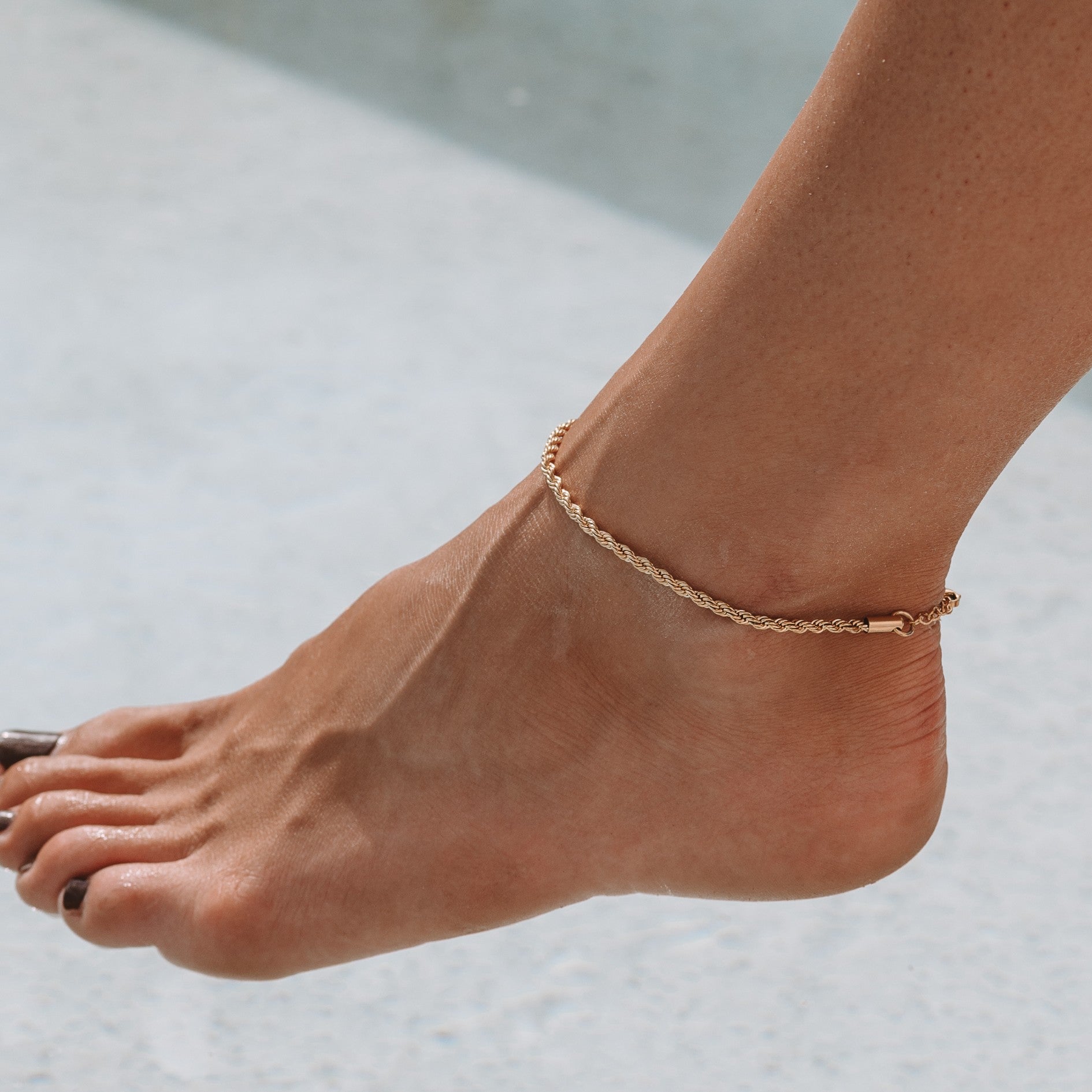
You notice how placement, material, and sound participate in flirtation techniques: a tinkling chain draws attention to gait, a bold cuff frames the calf, and layered beads imply intentional ornamentation.
Ethnographic observation shows communities assign meanings—subtle invitation, marital status, or playful provocation—so you interpret anklets within rites, rituals, and everyday interaction.
You also consider power dynamics: who can wear them, where, and with what permissiveness.
This contextual lens reveals anklets’ cultural significance as negotiated signals mediating intimacy, reputation, and social control.
Modern Anklet Revival: Trends, Identity, and Subcultures
Because fashion cycles recycle symbols as much as silhouettes, the anklet’s comeback tells you about shifting identities and niche communities as much as it does about aesthetics.
You’ll observe how modern styles mix minimalist metal chains, beaded artisanal pieces, and tech-infused charms to signal belonging. Contextualized ethnographically, the anklet functions as a wearable index: streetwear crews, festival scenes, and online microcommunities adopt specific motifs to mark membership or stance.
Cultural influences—globalized supply chains, revival of folkloric motifs, and digital proliferation of images—shape which designs gain traction. You read these cues to decode age, politics, or subcultural capital.
The revival isn’t mere trendiness; it’s an active negotiation of identity, authenticity, and visibility within overlapping social networks.
Wearing Anklets Respectfully: Etiquette, Care, and Buying Tips
The ways communities adopt anklets carry norms that affect how you should wear and buy them, so etiquette and care matter as much as aesthetics.
You should learn local protocols—who wears which anklet styles, when they're appropriate, and what symbols convey—so your choices respect cultural significance and avoid appropriation.
Inspect materials and craftsmanship: traditional silver, woven cords, or beading often encode meaning and durability; ask sellers about origin and maker.
Care routines—cleaning, storage, occasional repairs—preserve both form and context.
When gifting or purchasing, prioritize makers from the relevant community and transparent provenance.

Frequently Asked Questions
Do Anklets Have Health or Therapeutic Benefits?
You might notice anecdotal health benefits, but scientific evidence for anklets' therapeutic properties is limited; ethnographic context shows cultural beliefs and ritual uses influence perceived effects, so you should view claims skeptically and investigate specific traditions.
Can Men Wear Anklets in Cultures Where Women Traditionally Do?
Yes, you can wear anklets in those cultures, but cultural perceptions vary: you'll navigate gender norms, symbolic meaning and occasional stigma, while some men reclaim anklets as bold fashion statements reflecting shifting, context-dependent social and ethnographic dynamics.
Do Anklets Make Sound or Music Intentionally in Rituals?
Yes — you’ll hear anklet sounds intentionally in many ceremonies; they’re crafted for rhythmic emphasis, and you’ll note ritual significance in timing, ensemble, and movement, revealing social roles, spiritual cues, and local aesthetic priorities.
How Do Animal or Pet Anklets Differ in Symbolism?
Animal or pet anklets symbolize companionship and status differently: you’ll see animal symbolism tied to pet history and cultural significance, while fashion trends influence design, function, and public perception in ethnographic and contextual ways.
Can Anklets Be Used as Wearable Tech or Trackers?
Yes — you can wear smart anklet technology that offers fitness tracking capabilities, and you'll analyze how communities adopt, adapt, and ritualize such devices, contextualizing biometric data within local meanings and daily embodied practices.
Conclusion
You’ll now see anklets as more than jewelry: they’re layered statements shaped by history, geography, and social structure. Read them by context—who wears them, material and ornament, and the occasion—to decode status, marital cues, or regional identity. Ethnographically, anklets reveal labor divisions, ritual roles, and shifting gendered meanings. As contemporary revivals mix fashion with identity politics, you’ll want to respect provenance, learn local etiquette, and consider materials and makers when you buy.










Leave a comment
This site is protected by hCaptcha and the hCaptcha Privacy Policy and Terms of Service apply.