


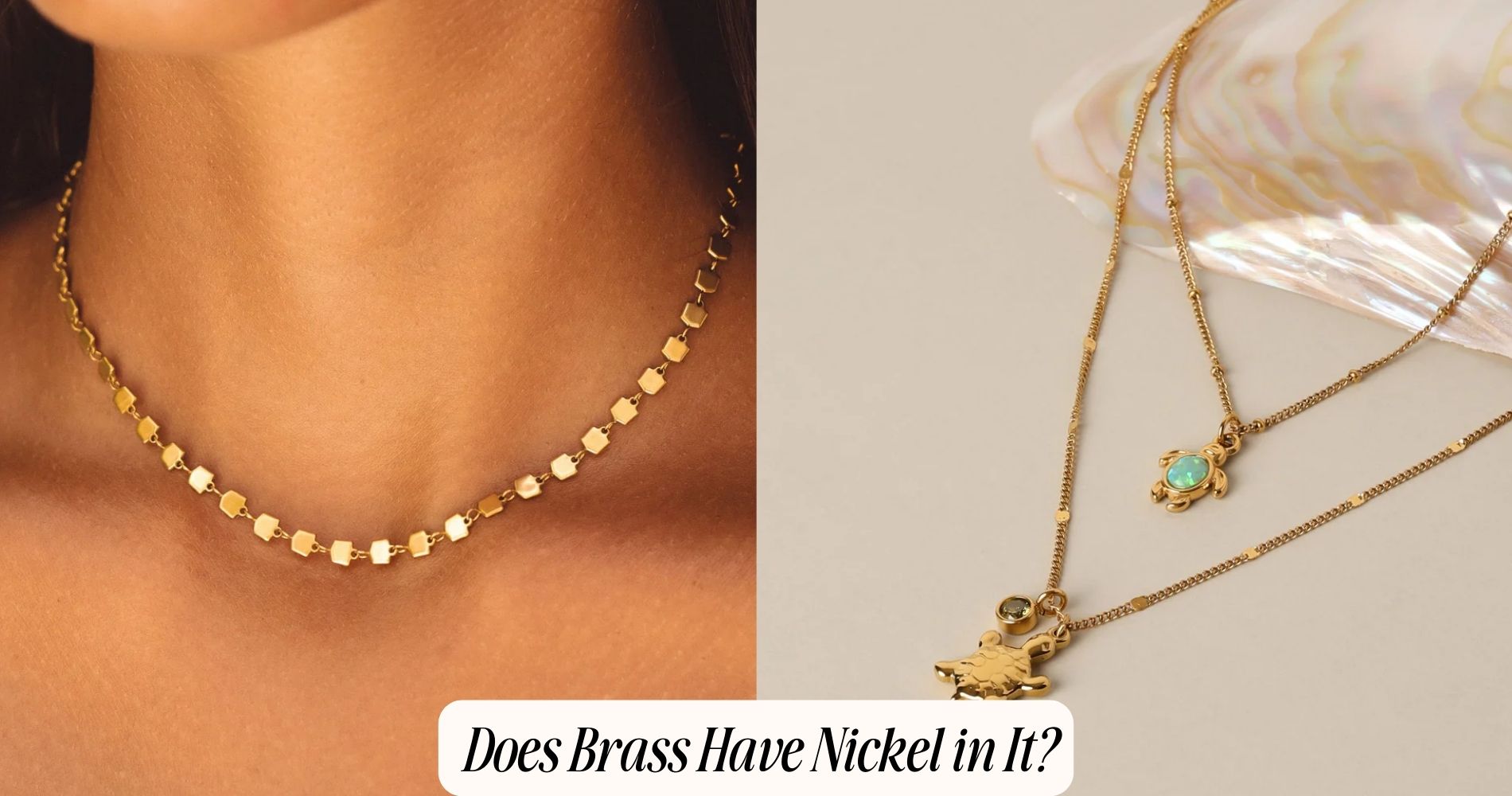
Does Brass Have Nickel in It?
Does brass have nickel in it? Most commercial brasses are copper-zinc alloys and don’t contain meaningful nickel, so you won’t usually encounter nickel in ordinary brass fittings. Some engineered “nickel-brass” grades add nickel—typically a few percent up to ~30%—to boost strength, corrosion resistance, or color control. Small nickel additions affect corrosion behavior and can matter for nickel-sensitive users, so choosing reliable, skin-friendly options like Atolea’s Waterproof Jewelry collection can offer extra peace of mind. You’ll still want alloy specs or an XRF test for confirmation if composition or allergen exposure is a concern and you want to know more.
Does Brass Contain Nickel?
Although brass is primarily an alloy of copper and zinc, it typically doesn't contain nickel as a principal constituent; most commercial brasses are formulated with varying copper-to-zinc ratios and only trace impurities.
Nickel appears in specific specialty brasses or nickel-brass (nickel silver) alloys deliberately alloyed to impart corrosion resistance, strength, or color. You should treat nickel composition as a deliberate modifier rather than an incidental component: when manufacturers add nickel, they specify percentages to achieve target brass properties such as hardness, tensile strength, and corrosion resistance.
You’ll find nickel in controlled grades for plumbing, marine, or decorative uses where color stability and chloride resistance matter. Routine yellow brasses seldom include nickel beyond trace levels detectable only by spectroscopic assay.

What’s in Brass (Copper, Zinc, and More)
When you examine brass at the alloy level, you'll find it’s a family of copper–zinc alloys whose properties are tuned by controlled additions and microstructural changes.
You’ll recognize copper as the base, typically 55–95% by mass, providing conductivity and corrosion resistance; zinc ranges from a few percent up to ~45%, adjusting strength, ductility, and color.
Besides these primary elements, small controlled additions—lead for machinability, tin for dezincification resistance, manganese or iron for strength—modify metallurgical properties without changing core brass composition.
Trace impurities like arsenic or antimony are minimized because they alter corrosion behavior.
Microstructure (grain size, phase distribution) and heat treatment further govern hardness and formability.
You should assess composition and processing to predict performance precisely.
Brass Alloys That May Contain Nickel
If you need corrosion resistance, improved strength, or specific machining characteristics beyond what copper–zinc grades provide, some brass alloys incorporate nickel as a deliberate alloying element.
You’ll encounter nickel brass families where nickel percentages range from a few percent to around 30% in specialized compositions; these adjust phase balance, hardness, and resistance to dezincification.
In specifying brass composition, you'll see standards like CDA/ASTM numbers that denote nickel-bearing formulas (for example, nickel silver and Cu-Ni-Zn variants).
When selecting material, you’ll evaluate mechanical properties, electrochemical behavior, and fabrication compatibility influenced by nickel additions.
For precision components, nickel brass can deliver tighter property control than binary copper–zinc systems, but you must weigh cost, weldability, and downstream treatment impacts.

How to Test If a Brass Part Has Nickel
Having identified that some brass alloys deliberately include nickel, you'll want practical methods to confirm its presence in a finished part.
Start with non-destructive magnetic testing: nickel-containing alloys can be less magnetic than ferrous contaminants, so use a calibrated magnet to detect deviations from expected brass behavior; record field strength and contact response for comparison against control samples.
Follow with elemental verification if needed: perform a controlled acid test using nitric or aqua regia on an inconspicuous spot, applying appropriate safety protocols and neutralization; observe dissolution rate and color changes characteristic of nickel-bearing alloys.
For definitive results, couple these with portable X-ray fluorescence (XRF) analysis. Document procedures, concentrations, exposure times, and repeatability for traceable conclusions.
Why Nickel in Brass Matters : Allergies, Corrosion, and Look
Because nickel changes brass at the microstructural and surface levels, it directly affects three practical concerns you'll want to evaluate—hypoallergenic performance, corrosion behavior, and aesthetic finish.
You should treat nickel as a variable that alters phase stability and surface chemistry: even low ppm surface enrichment can trigger allergic reactions in sensitized individuals, so plating and surface analysis matter.
For corrosion resistance, nickel can improve passivation and reduce dezincification in some alloys, yet it can also create galvanic microcells if heterogeneously distributed, accelerating localized attack.
Visually, nickel alters reflectivity, color temperature, and tarnish kinetics, so finish specification must match functional requirements.
Specify analytical controls (XPS, AES, or spot tests), define acceptable nickel limits, and document processing to manage health, durability, and appearance risks.

Frequently Asked Questions
Can Nickel in Brass Affect Electrical Conductivity?
Yes — nickel in brass reduces conductivity somewhat; you’ll see nickel properties like increased resistivity and corrosion resistance altering performance. For electrical applications, you’ll evaluate alloy composition trade-offs between conductivity, strength, and environmental durability.
Is Nickel-Containing Brass More Expensive?
Yes — nickel-containing brass is typically more expensive; you’ll see higher cost comparison figures due to alloying and processing, and market demand for corrosion resistance and specialized properties drives premiums despite variable raw-material price fluctuations.
Can Nickel Migrate From Brass Into Food or Drink?
Yes — nickel can leach from brass into acidic food or drink; you’ll quantify nickel leaching rates, assess corrosion factors and exposure, and evaluate health concerns using measured concentration limits, exposure duration, and regulatory toxicological benchmarks.
How Does Nickel in Brass Impact Soldering and Welding?
Nickel in brass affects soldering techniques by raising melting ranges and altering wetting; it causes welding challenges like increased brittleness and potential hot cracking, so you’ll adjust filler metals, preheat, control heat input, and use appropriate fluxes.
Are There Nickel-Free Alternatives to Common Brass Fittings?
Yes — you can use nickel free alloys and alternative materials like dezincification-resistant copper, phosphor bronze, silicon bronze, or stainless steel (austenitic or duplex). You’ll assess corrosion, machinability, strength, and joining behavior analytically.
Conclusion
Yes — some brass alloys include nickel, but most common brasses are copper-zinc alloys without it. Nickel-bearing brasses (nickel silver, white brass, or Cu-Ni-Zn alloys) add strength, corrosion resistance, and a silvery appearance. To know if a specific part contains nickel, perform XRF, spark testing, or lab chemical analysis. Nickel presence matters for allergenicity, galvanic behavior, mechanical properties, and finish; specify alloy composition when you need predictable performance or compliance.














Leave a comment
This site is protected by hCaptcha and the hCaptcha Privacy Policy and Terms of Service apply.