


Do Stainless Steel Chains Tarnish? Quick Answer
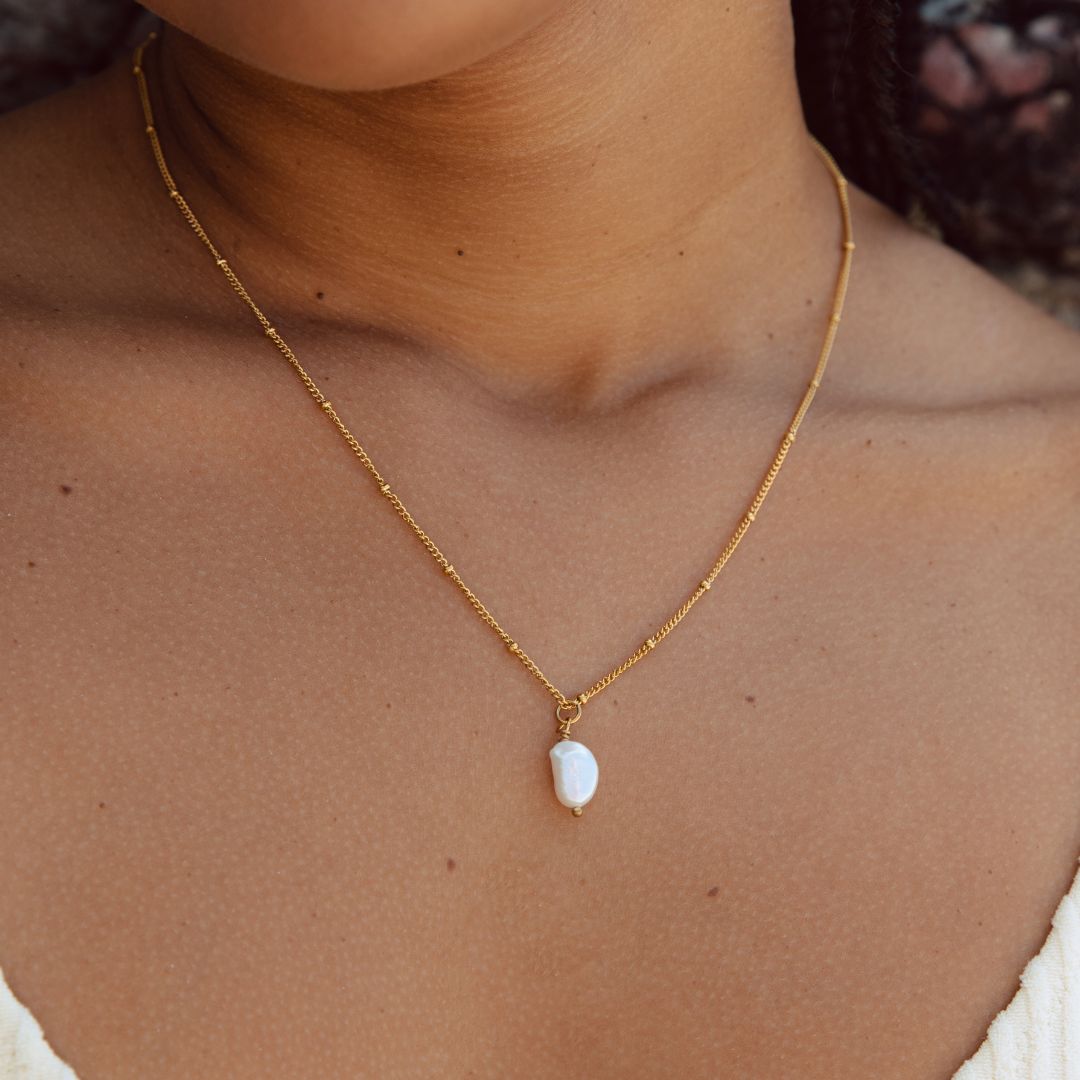
Do stainless steel chains tarnish? Stainless steel doesn’t truly tarnish because its chromium content (≥10.5%) forms a self-healing oxide layer that protects the surface. Grade 316, which includes molybdenum for added chloride resistance, offers the best shine retention, followed by 304, while 201 is more prone to dulling. Any discoloration you notice usually comes from sweat, saltwater, pool chemicals, trapped moisture, or abrasive polishing that disrupts this protective film. Rinse after exposure, clean with mild detergent and a soft brush, dry thoroughly, and store in low humidity to preserve luster. If you love the clean look of sleek chains like a Minimalist Gold Necklace, proper care will keep them looking fresh and refined.
What Makes Stainless Steel Resist Tarnish
Although all metals interact with their environment, stainless steel resists tarnish because it forms a thin, self-healing passive film of chromium oxide on its surface. When you expose the metal to oxygen, chromium in the alloy reacts to create this nanometric barrier, which limits electron transfer and blocks attack by chlorides, sulfides, and moisture.
The integrity of that film depends on alloy composition: sufficient chromium (≈10.5% minimum) plus controlled additions of nickel, molybdenum, silicon, and nitrogen enhance corrosion resistance and repassivation kinetics.
You benefit from stable luster because the passive film reforms if it’s locally abraded, provided oxygen is available. Surface finish matters, too; smoother, clean surfaces reduce crevice sites where stagnation undermines passivity.
Avoiding halide-laden residues and maintaining dryness helps the passive layer remain continuous and protective.
Grades That Stay Shiny: 304 vs. 316 vs. 201
When you’re choosing a stainless steel chain that keeps its luster, the alloy grade matters as much as the finish.
In grade comparisons, 304 properties deliver reliable corrosion resistance via ~18% chromium and 8% nickel, forming a stable passive film for everyday wear. You’ll see excellent shine retention indoors and in mild moisture.
If you need maximum durability, 316 benefits come from 2–3% molybdenum, which improves pitting resistance in chloride-rich environments like sweat, coastal air, and pools. It maintains polish longer under harsher exposure, making it the premium choice for shine stability.
Budget options exist, but 201 drawbacks stem from reduced nickel and added manganese.
That substitution weakens corrosion resistance and can lead to quicker surface dulling in saline or acidic contact, despite initial brightness.
When Stainless Steel Can Discolor or Dull
Even corrosion‑resistant alloys can lose sheen if their passive chromium oxide film is starved of oxygen or attacked by contaminants. You’ll see dulling when crevices, tight links, or undersides trap moisture and limit aeration, slowing repassivation and promoting stainless steel oxidation.
Fine abrasives, improper polishing, or residual iron from tooling can disrupt the surface and seed tea staining. Elevated temperature accelerates diffusion and changes oxide thickness, shifting luster. Low‑pH or high‑pH exposures can dissolve the passive layer, while chloride‑free environments with high humidity still encourage film instability if water lingers.
Environmental factors also include cyclic wet‑dry conditions that concentrate deposits, and poor drainage that fosters differential aeration cells.
If you maintain smooth finishes, remove embedded particles, and facilitate airflow, the surface can repassivate and retain brightness.
Everyday Culprits: Sweat, Saltwater, Pools, and Products
Despite stainless steel’s passive film, everyday exposures can undermine it through specific chemistries and crevice conditions.
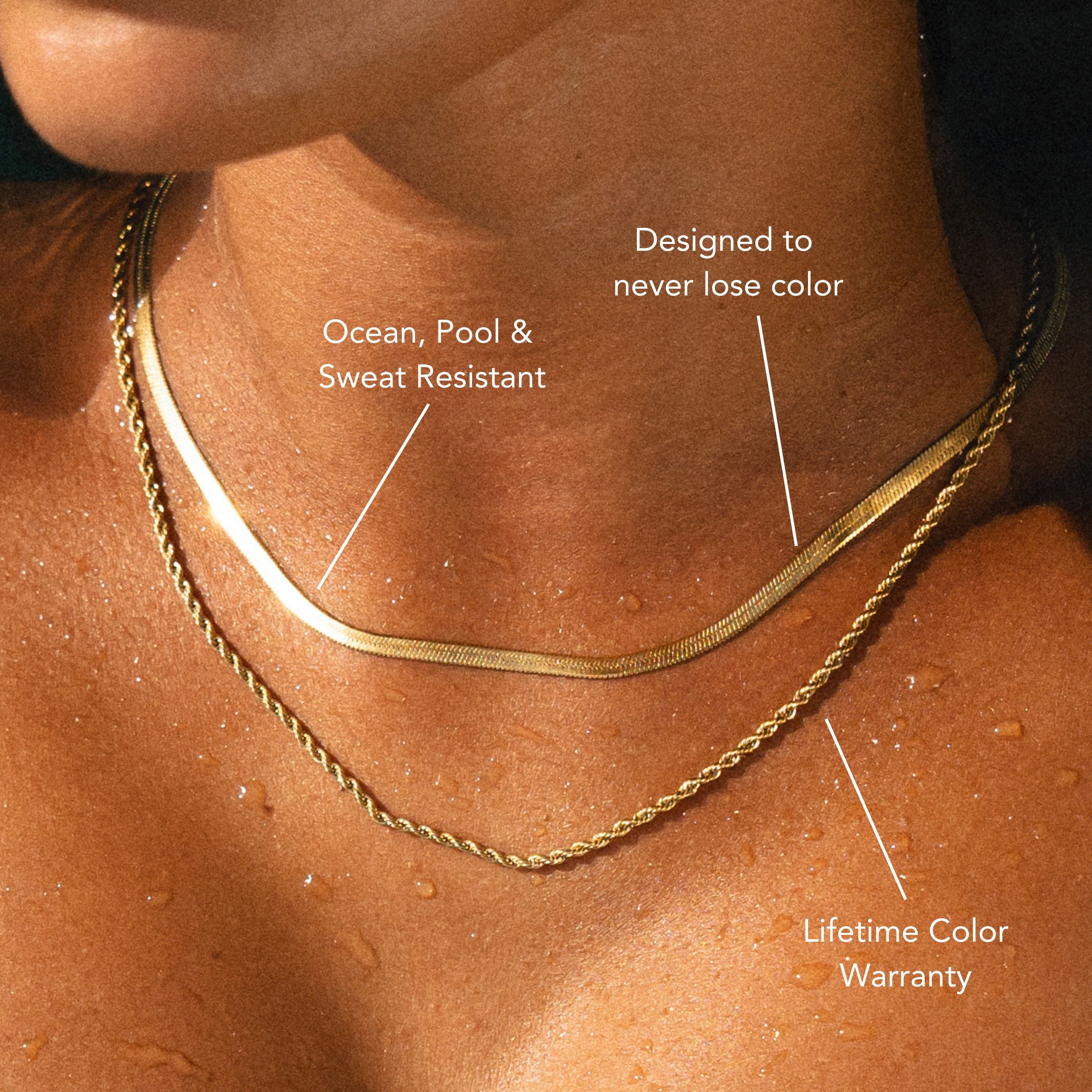
Your skin’s chloride-rich perspiration drives sweat effects: low pH, lactic acid, and salt concentrate beneath chain links, depleting chromium at micro-sites and initiating crevice corrosion or tea staining.
Saltwater exposure accelerates this by supplying abundant chlorides and oxygen differentials, especially on 304 alloys; 316 resists better but isn’t immune.
Pools add hypochlorite, a strong oxidizer that destabilizes the passive layer at warm temperatures.
Personal care products—sunscreens, lotions, deodorants, and hair spray—introduce fatty acids, alcohols, and halides that adsorb onto surfaces, trap moisture, and form corrosive films.
Detergent residues and hard-water scale create deposits that hold chlorides, extending wet time and promoting localized attack and discoloration.
Easy Care Routine to Keep the Shine
Those same chloride- and oxidizer-driven reactions have a simple countermeasure: a quick, consistent care routine that interrupts deposits and restores the passive film.
Rinse your stainless steel chain after exposure to sweat or tap water. Use mild detergent in warm water, then agitate gently with a soft nylon brush to dislodge chloride-rich residues from crevices. Rinse thoroughly and pat dry with a lint-free microfiber cloth to prevent water-spot nucleation.
Once weekly, apply alcohol or a pH‑neutral jewelry wipe to remove organic films that block repassivation.
For polishing techniques, use non-abrasive metal polish formulated for 304/316 alloys; work along the link grain, then buff lightly. Avoid steel wool or silica-laden pastes that can embed particles.
These cleaning methods preserve chromium oxide integrity and maintain reflectance.
Storage and Wear Tips to Prevent Buildup
Routine matters. Stainless steel resists corrosion, but buildup still forms from skin oils, lotions, and airborne particulates. Use proper storage to limit exposure and abrasion.
Keep the chain in a dry, low-humidity environment; silica gel packets reduce moisture that can encourage film formation. Store it in a soft-lined compartment or individual pouch to prevent micro-scratches that trap residue. Avoid contact stacking with reactive metals that can transfer tarnish byproducts.
Adopt maintenance habits during wear. Put the chain on last, after sunscreen, perfume, and hair products have dried, to minimize surfactant and polymer deposition.
Remove it before workouts, swimming, or sauna sessions; chloride ions and sweat acidity accelerate surface fouling. After wear, wipe the chain with a clean microfiber cloth to remove oils and particulates before storage.

How to Revive a Dull Chain Safely
While stainless steel doesn’t tarnish like silver, surface films from oils, salts, and oxides can dull its luster; start by identifying the alloy (304, 316) and any coatings to choose compatible methods.
If uncoated, use natural cleaning solutions: warm water with pH-neutral soap, then a 1:1 vinegar–water rinse to break mineral residues; dry immediately with a microfiber cloth to prevent water spotting.
For light oxidation, apply a non-abrasive stainless polish or a baking-soda paste (2:1 with water), wiping along the grain.
Escalate chain polishing techniques only if needed: use jeweler’s rouge on a soft wheel at low RPM, or 1–3 µm aluminum-oxide polish by hand. Avoid chloride cleaners on 304.
For 316, similar steps work; prioritize thorough rinsing to remove chlorides.
Frequently Asked Questions
Can Stainless Steel Chains Cause Skin Irritation or Allergies?
Yes, but it’s uncommon. You may react if you have skin sensitivity to nickel. Choose 316L or implant-grade stainless steel to minimize allergic reactions. Patch-test, keep chains clean, and avoid scratches that increase ion release and irritation.
Are Stainless Steel Chains Magnetic or Attracted to Magnets?
Yes—depending on chain composition. Austenitic grades (304/316) exhibit minimal magnetic properties and usually aren’t attracted to magnets. Cold work can induce slight magnetism. Ferritic or martensitic stainless steels are magnetic and will attract magnets more strongly.
Will Stainless Steel Chains Set off Metal Detectors?
Yes, they can. Whether your stainless steel chain triggers depends on metal detector sensitivity and stainless steel composition (austenitic vs ferritic). Smaller, nonmagnetic austenitic alloys often pass; larger, thicker, or ferritic/martensitic pieces typically alarm, especially in high-sensitivity screening.
Can You Resize or Shorten a Stainless Steel Chain?
Yes, you can resize or shorten a stainless steel chain. Chain resizing requires removing links with cutters, then reattaching via soldered jump rings. Chain shortening preserves integrity; avoid crimping. Professional jewelers guarantee clean cuts, proper polishing, and corrosion-resistant welds.
How Do Stainless Steel Chains Compare to Silver in Weight?
They’re heavier. For equal volume, stainless steel exceeds silver’s chain weight because stainless steel’s density (~7.9 g/cm³) typically surpasses sterling silver’s (~10.3 g/cm³) only when hollowed; most solid stainless steel chains feel denser, stiffer, and less buoyant on-neck.
Conclusion
Bottom line: stainless steel chains don’t tarnish like silver because their chromium forms a stable, self-healing oxide layer. You’ll see the best corrosion resistance in 316, then 304; 201 is more prone to discoloration. Sweat, chlorides, pool chemicals, and cosmetics can cause surface film or tea staining. Rinse after exposure, dry thoroughly, and wipe with a microfiber cloth. Store dry, separate from abrasives. For dullness, use mild dish soap, a soft brush, and non-abrasive metal polish.










%20forms%20a%20self-healing%20oxide%20layer%20that%20protects%20the%20surface.%20Grade%20316,%20which%20includes%20...)
Leave a comment
This site is protected by hCaptcha and the hCaptcha Privacy Policy and Terms of Service apply.