


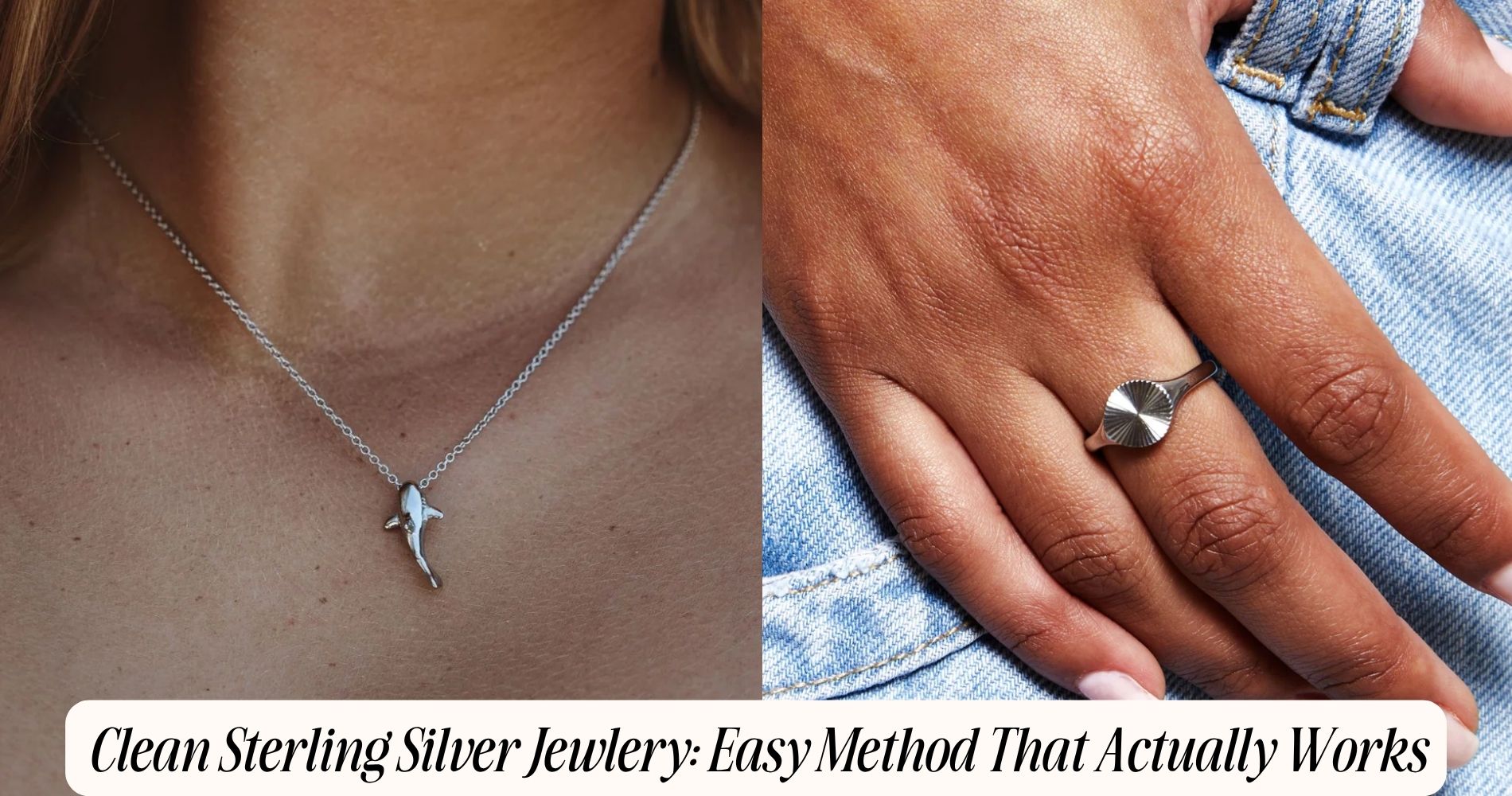
Clean Sterling Silver Jewlery: Easy Method That Actually Works
To clean sterling silver jewlery quickly, you can use a simple method with aluminum foil, baking soda, and near-boiling water. Line a heatproof bowl with foil (shiny side up), place your pieces without overlapping, sprinkle baking soda, and pour hot water until everything is covered. Let it sit for 2–5 minutes as the reaction lifts tarnish, then remove the pieces with tongs, rinse, dry, and polish with a soft cloth. Avoid soaking delicate settings or porous stones, and repeat if needed for heavier tarnish. For lower-maintenance options, pieces from the Silver Waterproof Jewelry collection are designed to better resist everyday wear while staying polished longer.
Quick Answer: Clean Sterling Silver With Baking Soda, Foil, and Hot Water
Grab a baking soda box, some aluminum foil, and a pot of hot water—this simple trio will remove most tarnish from sterling silver quickly and safely.
You’ll line a bowl with foil, place pieces on the shiny side, sprinkle baking soda over them, then pour hot water to cover. A chemical reaction transfers tarnish from silver to foil; it takes minutes.
Rinse, dry, and polish with a soft cloth. You’ll appreciate baking soda benefits: it’s nonabrasive, inexpensive, and effective at reducing oxidation without harsh chemicals.
If you don’t have foil, try foil alternatives like stainless steel or a commercial silver dip, but test first on a hidden area.
Use steady, gentle steps to protect detail and stones.

What You Need: Supplies and Safety Checklist
Now that you know the baking soda, foil, and hot water method, gather the right supplies and follow a short safety checklist before you start. You'll need these supplies needed: a heatproof bowl or pan, aluminum foil, baking soda, hot water (near boiling), tongs or a slotted spoon, soft cloths, and a mild dish soap for final rinsing. Optional: a soft toothbrush for crevices and latex or nitrile gloves.
Safety precautions: work on a stable, heat-resistant surface, keep children and pets away, and avoid inhaling dust when handling baking soda. Don't use this method on porous stones or glued settings. Wear gloves if you have sensitive skin, and let metal cool before handling. Dispose of solution responsibly.
Clean Sterling Silver Step by Step (Baking Soda + Foil Method)
Start by lining your heatproof bowl or pan with aluminum foil (shiny side up). Place your tarnished sterling pieces on the foil without overlapping. Sprinkle a generous layer of baking soda over them, then carefully pour near‑boiling water to cover; the chemical reaction will lift tarnish from the silver into the solution.
Let items sit 2–5 minutes, watching for bubbles and discoloration transfer to the water. Use tongs to remove pieces, rinse under warm water, and dry immediately with a soft microfiber cloth to avoid water spots.
For stubborn areas, repeat briefly or gently polish with a paste of baking soda and water. Finish with light silver polishing to restore shine.
Follow with routine tarnish prevention: store dry, in anti‑tarnish pouches or cloth.

Protect Delicate, Gemstone, and Plated Pieces
Those foil-and-baking-soda baths work great for solid sterling, but they can damage delicate settings, porous stones, and plated finishes—so you’ll handle those pieces differently.
For fragile settings and plated items, skip soaking. Use a soft-bristled brush or microfiber cloth with a mild dish soap solution for gentle cleaning, wiping swiftly and drying thoroughly to avoid moisture sitting in crevices.
For gemstone care, research each stone: pearls, opals, and turquoise hate chemicals and abrasion, so clean them with a damp cloth only. Always test a hidden spot first.
If a piece is heavily tarnished or the plating is thinning, consult a jeweler rather than risking DIY repair.
Store delicate items separately in soft pouches to prevent scratches and wear.
Understand Why Sterling Silver Tarnishes and How to Spot Damage
Because sterling silver contains copper, it reacts with sulfur compounds and oxygen in the air and on your skin, forming dark sulfides and oxides that we call tarnish.
You should know common tarnish causes—humidity, sweat, perfumes, and sulfur in household products—and expect uneven darkening where metals meet or where oils collect.
Inspect pieces under good light; use a soft cloth to remove surface grime before judging color.
Look for damage indicators: deep pits, greenish corrosion at joints, thinning on high-wear edges, loose settings, or scratches that catch a fingernail.
If you spot those, don’t polish aggressively; you could worsen wear or remove plating.
Instead, document condition, separate the piece, and consider professional repair for structural damage.
Store and Care for Silver Daily to Slow Tarnish
When you store and care for sterling silver daily, you slow tarnish and extend each piece's life by controlling exposure to air, moisture, and abrasive contact.
Handle pieces with clean, dry hands and remove jewelry before showering, swimming, or applying lotions and perfume.
For silver storage, use airtight containers or zip-top bags with anti-tarnish strips; wrap items individually in soft cloth to prevent scratching.
Keep pieces in a cool, low-humidity spot—avoid bathrooms.
Incorporate a brief daily maintenance habit: wipe with a soft microfiber or jewelry cloth after wearing to remove oils and residues.
Inspect clasps and settings weekly so small issues don’t worsen.
With consistent, simple routines you’ll keep silver bright longer and reduce the need for heavy cleaning.

Troubleshoot Stubborn Tarnish and When to Call a Jeweler
If standard polishing and gentle home methods don’t remove dark, pitted, or stubbornly blackened areas, you’ll need to diagnose the problem before proceeding so you don’t make it worse.
First inspect under good light: deep pits, scratches, or greenish corrosion signal chemical damage or base-metal exposure, not simple tarnish.
Try a targeted test: polish a small hidden area with a silver cloth; if discoloration persists, stop.
For hollow or plated pieces, avoid aggressive abrasives that expose the core.
You’ll call a jeweler when damage affects design, gemstones, or when you need professional restoration like replating, solder repair, or ultrasonic cleaning.
For future tarnish prevention, store properly, avoid sulfur and moisture, and clean gently after wear.
Frequently Asked Questions
Can I Use This Method on Silver-Plated Items?
You can, but caution’s needed: silver plating is thin, and aggressive cleaning techniques can wear it away. Use gentle soap, soft cloths, and mild polish designed for plated pieces to preserve the coating and avoid damage.
Will Baking Soda Scratch Antique Silver Pieces?
Baking soda can scratch delicate antique silver if you scrub too hard, so you should use gentle silver care methods for antique preservation; dilute paste lightly, test a hidden spot, and polish softly with a microfiber cloth.
Can I Clean Silver Rings While Wearing Them?
Yes—you can clean silver rings while wearing them if you use gentle cleaning techniques and avoid abrasive compounds. For silver ring maintenance, choose mild soap, warm water, and a soft cloth; skip baking soda scrubs on delicate or antique settings.
Is Toothpaste a Safe Alternative Cleaner?
Toothpaste can work for light toothpaste effectiveness and silver tarnish removal, but you shouldn’t use abrasive whitening pastes on delicate or plated pieces; test a small area, rinse thoroughly, and polish gently to avoid scratching.
How Often Should I Deep-Clean Heavily Worn Silver?
You should deep clean heavily worn silver every 2–3 months to restore finish and prevent buildup; combine monthly light polish with quarterly deep cleaning frequency, store pieces properly, and use gentle methods for long-term silver tarnish prevention.
Conclusion
You now know a fast, reliable way to restore sterling silver using baking soda, foil, and hot water, plus how to protect delicate or plated pieces. Follow the step-by-step method, take basic safety precautions, and store items properly to slow future tarnish. If stubborn dark spots resist gentle fixes or gems look compromised, stop and consult a jeweler. With these practical habits, your silver will stay bright and last for years.







,%20place%20your%20pieces%20wit...)
Leave a comment
This site is protected by hCaptcha and the hCaptcha Privacy Policy and Terms of Service apply.