

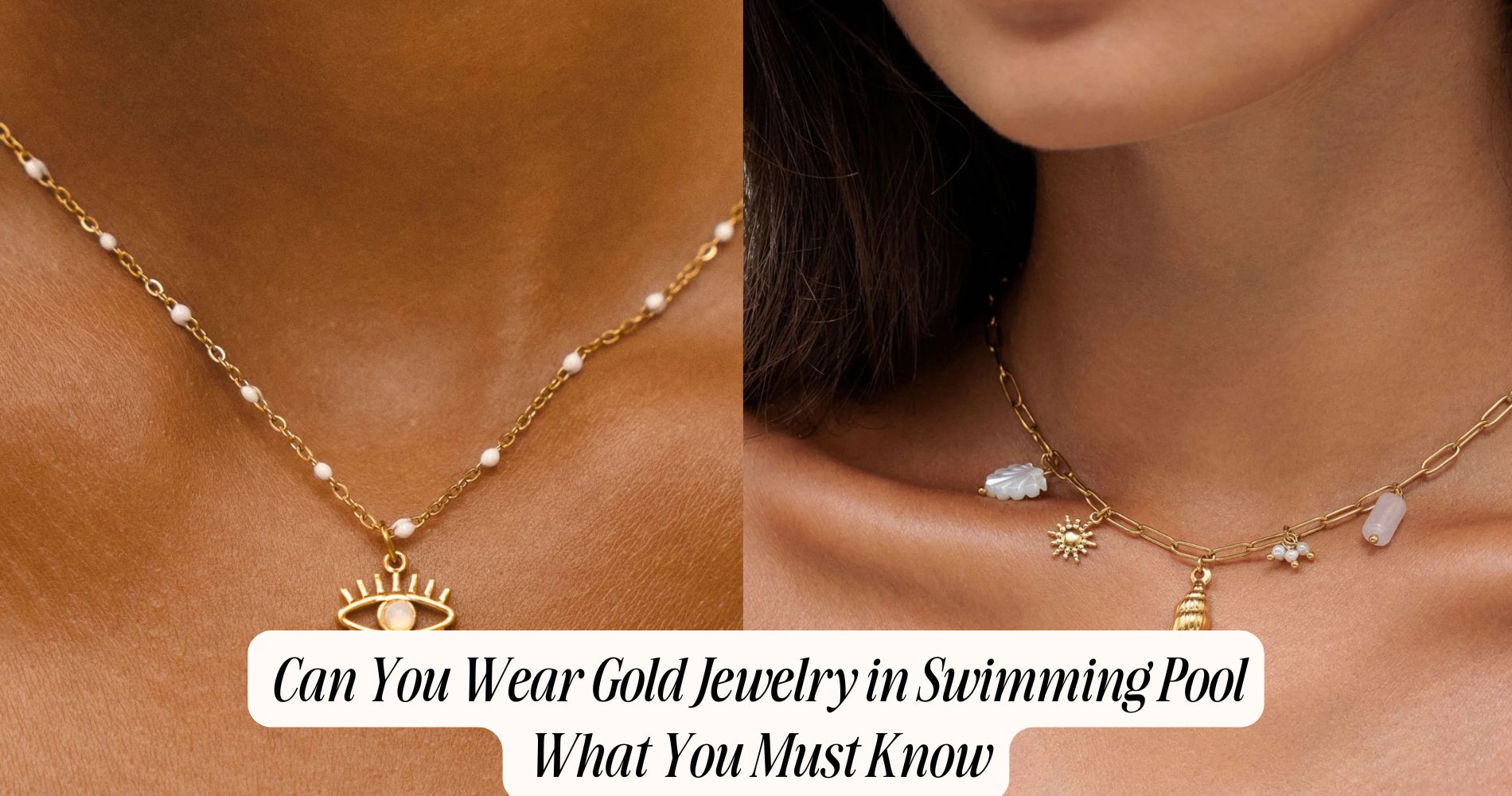
Can You Wear Gold Jewelry in Swimming Pool – What You Must Know
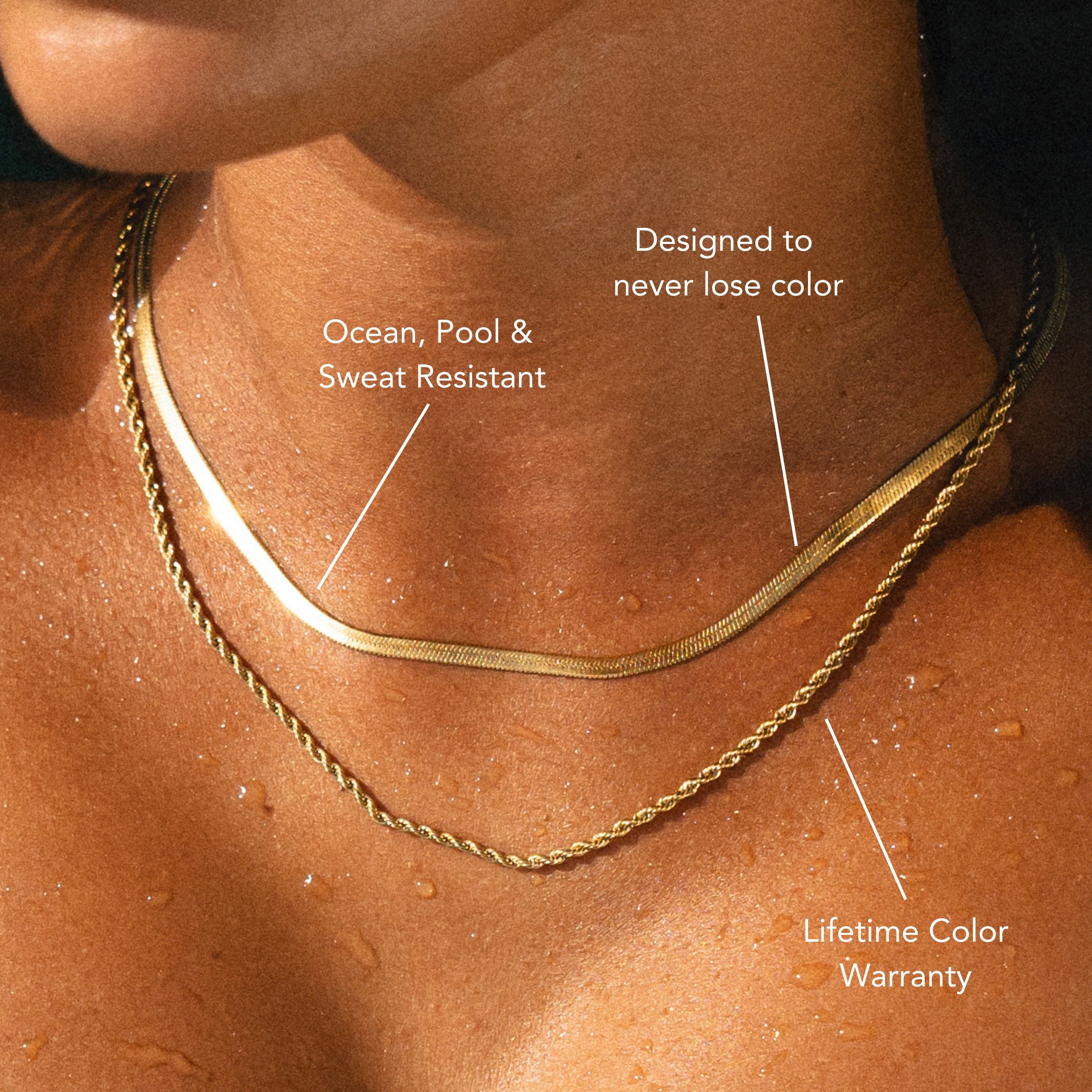
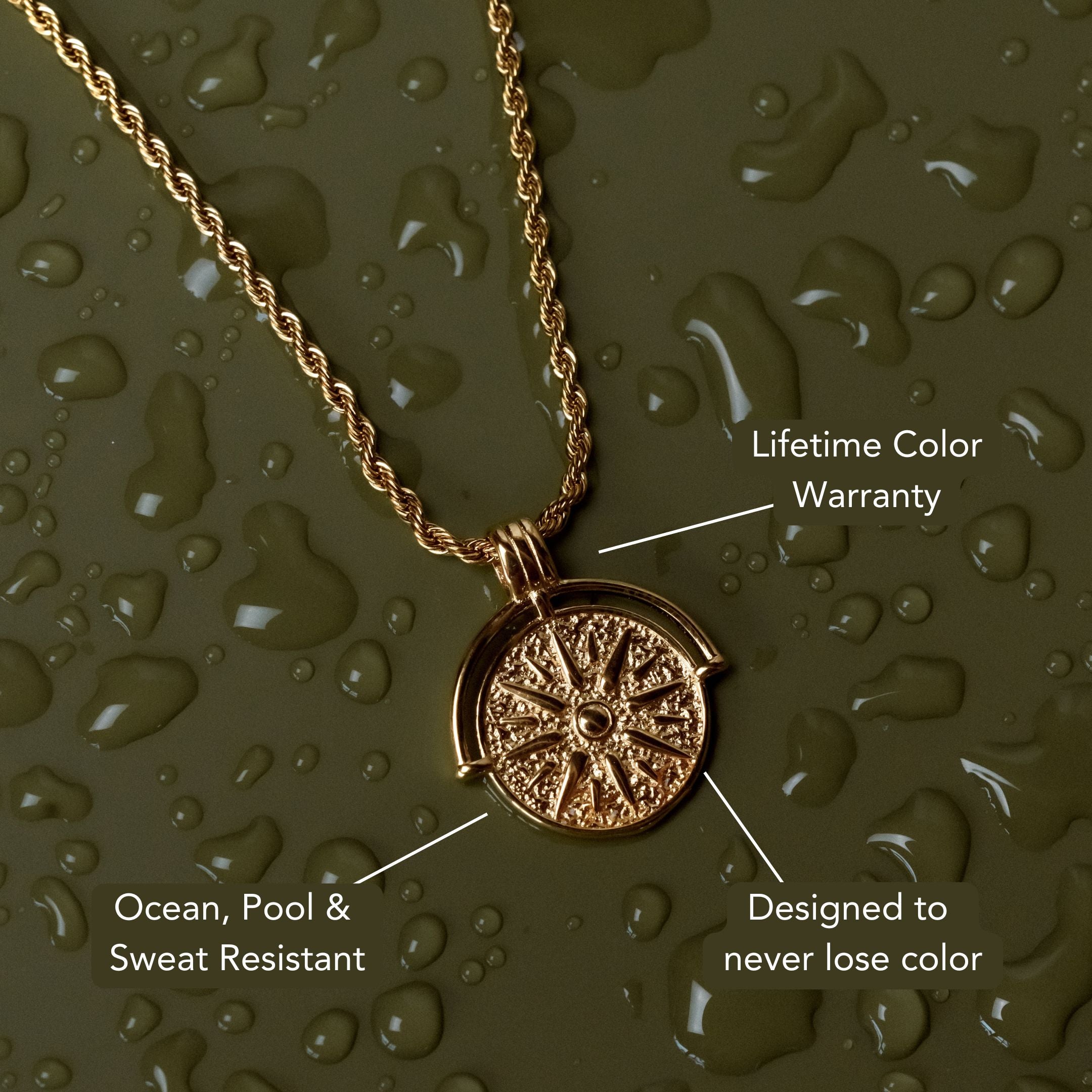
If you’ve ever wondered can you wear gold jewelry in swimming pool, the short answer is yes—but only occasionally and with caution. Chlorine doesn’t damage pure gold itself, but it does react with the alloy metals in 10K, 14K, and 18K pieces, slowly weakening prongs, solder joints, and clasps. This can lead to dullness, discoloration, rough texture, and even a higher chance of stone loss over time. And if you love coastal-inspired pieces—like those from our Gold Beachy Jewelry Collection—it’s extra important to know how karat, design, and proper care affect that risk. Let’s break down what you should keep in mind.
How Chlorine Affects Gold Jewelry
Although gold itself is chemically inert, chlorine in pool water aggressively targets the alloyed metals mixed with gold—such as copper, silver, nickel, or zinc—causing structural weakening and surface damage over time.
Under repeated chlorine exposure, these reactive metals form brittle compounds and micro-pits, especially at solder joints, prong tips, and clasp mechanisms.
You’ll see this as dullness, discoloration, and a higher risk of cracks or stone loss.
Microscopic corrosion can propagate along grain boundaries, making rings and chains more vulnerable to deformation under everyday stress.
Over months or years, this cumulative attack shortens jewelry longevity, even if the piece still looks reasonably intact to the naked eye.

To protect structural integrity, you should treat chlorinated pools as a hostile environment for gold alloys.
Differences Between 10K, 14K, and 18K Gold in Pool Water
Because pool water attacks the non-gold metals first, the karat you choose—10K, 14K, or 18K—directly changes how your jewelry behaves in chlorine.
Ten‑karat gold contains the least pure gold and the highest alloy content, so 10K durability is high regarding hardness, but it also means more reactive metals for chlorine to target, which can accelerate discoloration.
Fourteen‑karat gold balances strength and chemical stability. It has enough gold to resist rapid chemical attack, while still staying structurally robust for frequent wear in treated water.
Eighteen‑karat gold contains the most pure gold, so it offers superior chemical resistance and maintains 18K luster better, but it’s softer.
In turbulent pool use, it may scratch, bend, or wear faster mechanically.
Risks of Wearing Gold Rings, Necklaces, and Earrings While Swimming
Even when your gold jewelry tolerates brief chlorine exposure, wearing rings, necklaces, and earrings in the pool exposes them to distinct mechanical, chemical, and safety risks.
Water turbulence and repetitive impact against pool edges, ladders, and tile can deform thin shanks, bend clasps, or stress solder joints. Fine chains tangle easily, creating kink points that weaken links.
You also risk sudden loss. Cold water shrinks finger circumference, so rings slip off more readily. Spring-ring and lobster clasps can unlatch under tension, especially during vigorous strokes.
Earring backs loosen in water, and studs or hoops can snag on hair, goggles, or swimsuits, tearing piercings.
As core swimming precautions, you should remove gold jewelry beforehand and store it in a dry, secure container.
Spotting Damage: Signs Your Gold Jewelry Has Been Harmed by Chlorine
When chlorine starts attacking gold jewelry, it leaves visible and tactile clues you can’t ignore.
First, inspect color shifts. Subtle graying, patchy darkening, or a pinkish cast on yellow gold are classic discoloration signs that the alloy metals are reacting, not the pure gold itself. White gold may appear dull, with a slightly yellow or brassy undertone as rhodium plating erodes.

Next, feel the surface. Rough spots, pitting, or a sandpapery texture are serious tarnish indicators and signal structural degradation of copper, silver, or nickel in the alloy.
Check prongs and clasps closely; thinning, bending, or tiny stress cracks show chlorine-weakened metal.
Finally, if stones feel loose or settings appear warped, assume chlorine damage has compromised mechanical integrity.
Protective Steps If You Swim With Gold Jewelry On
A few deliberate precautions can considerably reduce chlorine’s impact on gold jewelry if you insist on swimming with it.
First, limit exposure time; the less contact gold alloys have with chlorinated water, the lower the risk of intergranular corrosion and surface pitting. As preventive measures, choose higher-karat, nickel‑free alloys, which are less reactive, and avoid hollow or very thin pieces that can deform as solder joints weaken.
For jewelry safety, secure clasps firmly to minimize mechanical stress and accidental loss in turbulent water.
Remove stacked rings or layered chains so individual pieces don’t abrade each other while you move. If possible, apply a temporary physical barrier, such as a snug waterproof bandage over delicate rings, to reduce direct chlorine contact.
Post-Swim Care and Long-Term Maintenance for Gold Pieces
Although preventive steps help, post‑swim care determines how well gold jewelry resists cumulative chlorine damage over time.
Rinse each piece under lukewarm running water immediately after swimming to flush out residual chlorinated water and dissolved salts. Then use mild, pH‑neutral soap and a soft, non‑abrasive brush as primary cleaning techniques, focusing on joints, prongs, and chain links where chemicals accumulate.
Dry items completely with a lint‑free cloth to prevent moisture‑driven corrosion of soldered areas and alloy components.
For storage tips, isolate gold pieces from humid environments, household chemicals, and harder gemstones that can scratch softer alloys. Use individual soft pouches or lined compartments, and keep silica gel packets nearby.

Schedule periodic professional inspections to monitor wear, porosity, and setting security.
Frequently Asked Questions
Is White Gold More Vulnerable in Pools Because of Its Rhodium Plating?
Yes, it’s slightly more vulnerable because chlorinated water can erode the rhodium plating, reducing rhodium durability. You’ll need stricter white gold maintenance—rinse after swimming, dry thoroughly, and re-plate periodically to preserve luster and structural integrity.
Does Saltwater in the Ocean Affect Gold Differently Than Chlorinated Pool Water?
Yes, saltwater damages gold differently: ocean corrosion primarily attacks alloys, solder, and clasps via chloride ions, while chlorinated pools attack plating and rhodium. You should still rinse thoroughly; pure gold durability stays high, but mixed alloys gradually weaken.
Are Gemstone Settings Around Gold More at Risk Than Plain Gold Bands While Swimming?
Yes, gemstone settings face higher risk than plain gold bands. You expose prongs and bezels to corrosion, loosening stones and compromising gemstone durability. For swimming pool safety, you should remove gem-set pieces; wear simple, solid gold bands instead.
How Does Gold-Plated Jewelry Compare to Solid Gold in Swimming Pools?
You should avoid pools with gold-plated pieces; compared to solid gold, their thin coating shows poor gold plating durability. Chlorine rapidly pits, fades, and exposes base metal, so for swimming pool safety, wear only solid, high-karat alloys.
Can Pool Chemicals Void Warranties or Insurance Coverage on Fine Gold Jewelry?
Yes, pool chemicals can trigger warranty exclusions and complicate insurance claims. You expose alloys, weaken solder joints, and accelerate stress-corrosion. Always document condition pre-swim, check policy fine print, and avoid chlorinated pools to preserve coverage and metallurgical integrity.
Conclusion
When you understand how chlorine attacks gold alloys, you can choose wisely. You’ve seen how 10K, 14K, and 18K respond differently, and why rings, chains, and earrings aren’t equally at risk. Use those inspection tips to catch porosity, discoloration, or weakened prongs early. If you must swim with gold on, minimize exposure and follow strict post-swim cleaning. With consistent maintenance, you’ll preserve both the metal’s integrity and your jewelry’s long-term value.









Leave a comment
This site is protected by hCaptcha and the hCaptcha Privacy Policy and Terms of Service apply.