

Can You Wear Gold in the Ocean: Important Facts
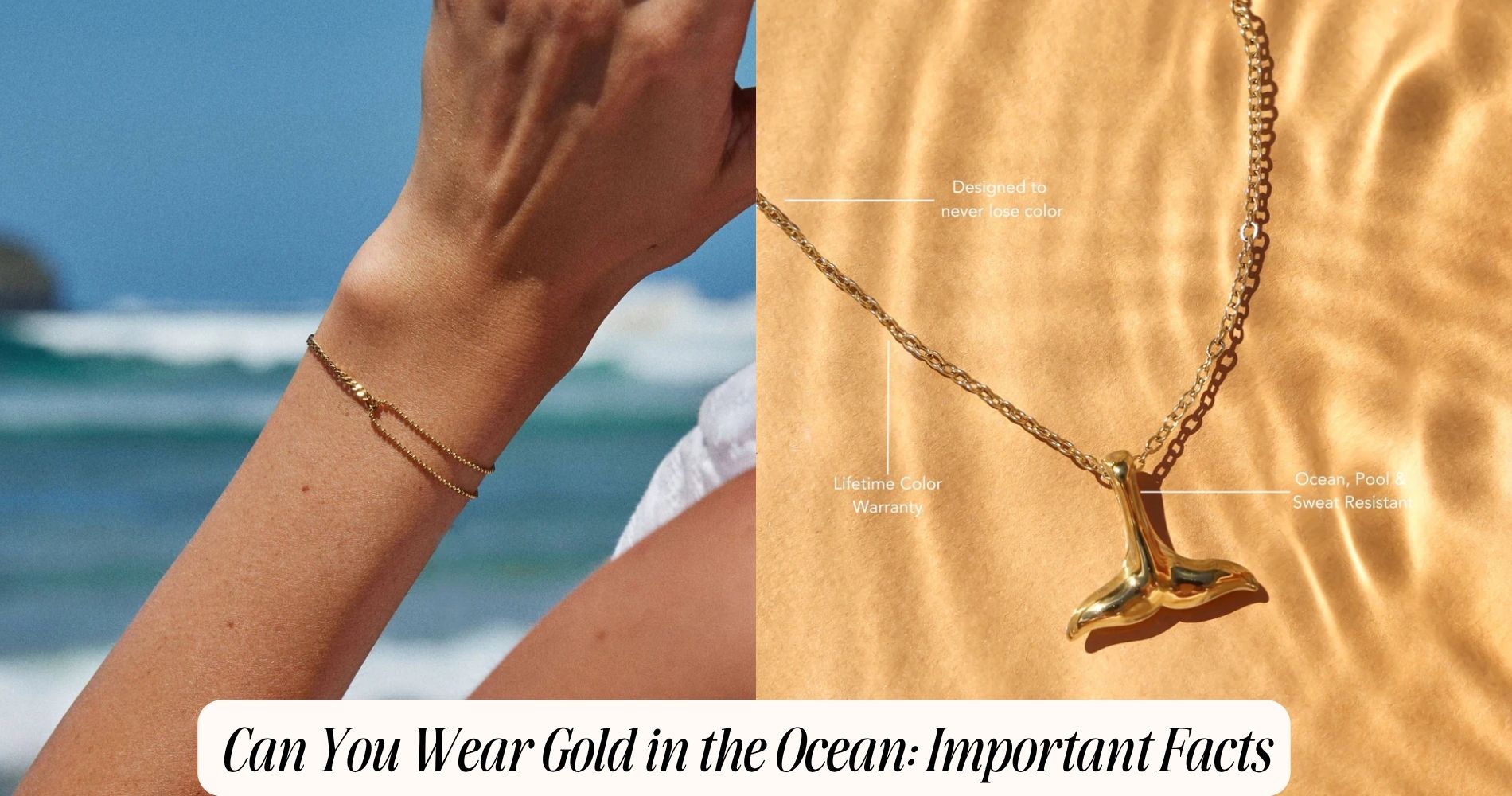
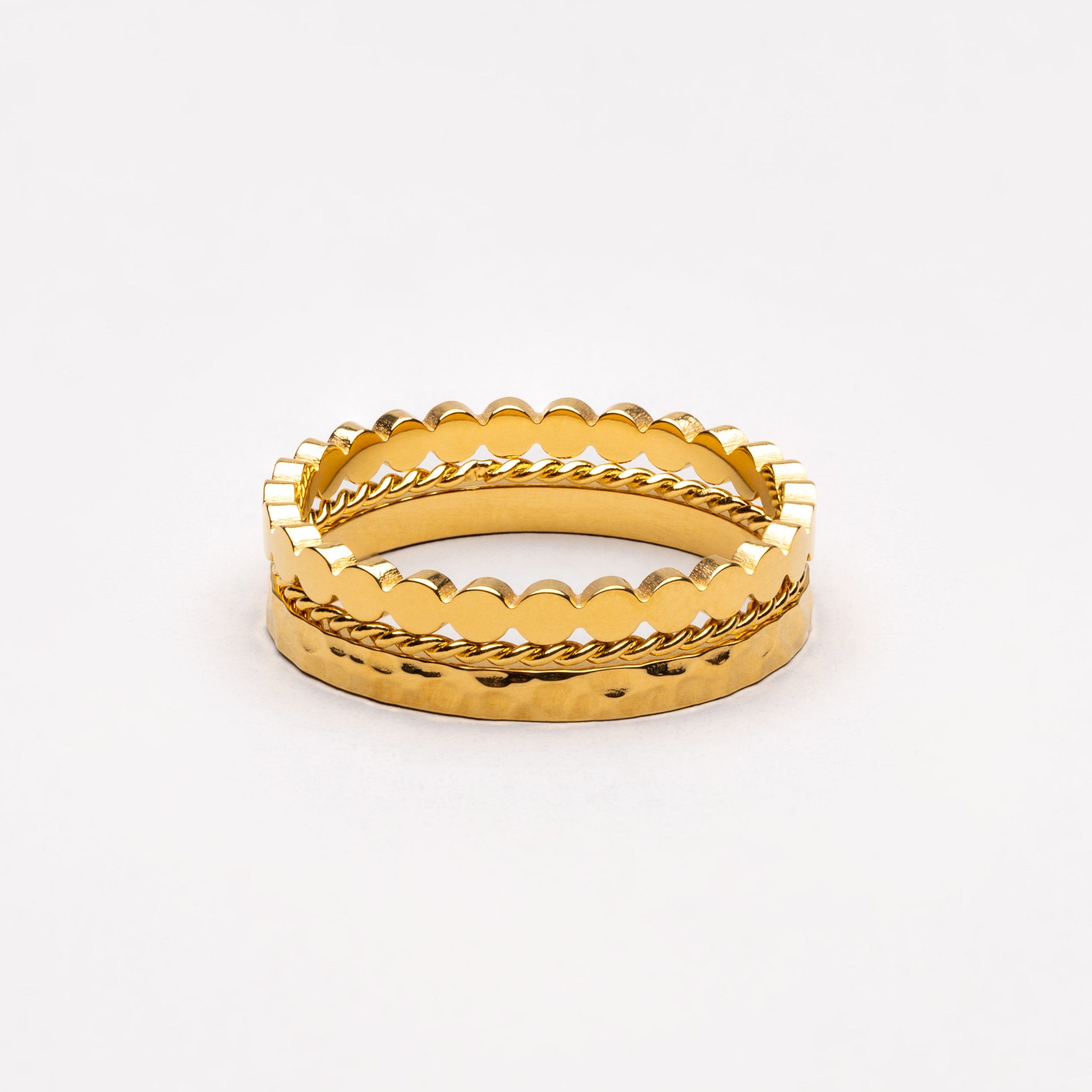
Salt water, sand, and sun are the conditions that test jewelry most honestly. Whether gold jewelry survives ocean wear depends not on the gold appearance but on what the piece is actually made from. Can you wear gold in the ocean if it is solid gold? Yes, without any meaningful concern. If it is gold-plated? The salt water is actively working against you. Getting this right before stepping into the surf protects both your jewelry and your skin. Beach Jewelry built for exactly these conditions removes the uncertainty entirely. This guide covers what ocean water does to different gold jewelry types, which ones handle it safely, what risks exist for each, and the practical habits that extend the life of any gold piece worn near the water.
What Ocean Water Does to Jewelry
Ocean water is not simply salty water. It contains sodium chloride at approximately 3.5% concentration alongside magnesium, sulfate, calcium, potassium, and trace amounts of dozens of other compounds. This complex mineral solution interacts differently with different metals, and understanding those interactions explains why two pieces that look identical at a jewelry counter behave so differently after a summer at the beach.
Chloride corrosion. Chloride ions are the most chemically aggressive component of ocean water for metal surfaces. They penetrate the passive films that protect metals like stainless steel, attack the boundaries between crystal grains in susceptible alloys, and accelerate oxidation reactions. For gold-plated pieces, chloride ions work at the interface between the gold layer and the reactive base metal beneath it, weakening the adhesion bond and accelerating the processes that cause plating to lift and peel.
Salt concentration and evaporation. As ocean water evaporates from a jewelry surface after swimming, it leaves behind a concentrated salt deposit. That residue is significantly more corrosive than the diluted salt water itself. A piece that survives the swim but air-dries with salt residue intact faces a more concentrated chemical attack during drying than it experienced in the water. This is why rinsing after ocean exposure matters even for materials that handle the salt water itself without issue.
Sand abrasion. Sand particles are harder than most jewelry metals and remove surface material through physical abrasion. On plated pieces, sand abrasion removes plating layer material directly. On PVD coatings, the hardness of the coating (8 to 9 on the Mohs scale) exceeds sand hardness sufficiently that abrasion is less significant, but fine sand in surf conditions can accelerate surface wear on softer metal finishes.
UV and heat. Direct sun exposure combined with salt water creates oxidizing conditions at the jewelry surface. For solid gold this has no meaningful effect. For reactive base metals beneath thin plating layers, the combination of UV, heat, and salt accelerates the surface reactions that discolor and degrade the finish.
Can You Wear Gold in the Ocean: By Gold Type
Solid Gold (14k and Above)
Solid gold is among the most chemically inert metals available for jewelry use. Gold does not react with the chloride ions, sulfate compounds, or mineral content of ocean water under any normal conditions. The ocean cannot corrode, tarnish, or discolor solid gold jewelry.
At 14k, the alloy is 58.5% gold with the remainder typically silver, copper, and zinc. The copper content introduces a minor theoretical reactivity, but at this concentration the gold matrix encapsulates the alloy metals sufficiently that no meaningful surface reaction occurs in ocean conditions. At 18k (75% gold) and above, the alloy is even more resistant.
The practical risks of wearing solid gold in the ocean are not chemical. They are mechanical and practical: loss risk from clasps opening under wave impact, ring sizing changes when cold water causes fingers to contract, and the general risk of a valuable piece being lost in the surf. A solid gold necklace that falls off a clasp in breaking waves is difficult to recover. Those practical considerations are worth weighing alongside the material performance, which is itself fine.
Verdict: Safe for ocean wear from a material standpoint. Physical loss is the primary risk to manage.
Gold-Plated Jewelry (Brass or Copper Base)
Gold-plated jewelry with a brass or copper base is not suited for regular ocean swimming. The ocean creates exactly the conditions that accelerate plating failure: chloride ions attack the adhesion interface between the gold layer and the copper base, salt deposits concentrate the corrosive effect after drying, and the repeated thermal cycling from warm sun to cold water stresses the plating bond.
A gold-plated piece worn through occasional ocean contact will survive the immediate exposure but show progressive plating degradation over a season of regular beach use. The first signs are typically at the clasp and at the highest-friction contact points, where the plating is thinnest and the chloride exposure is most concentrated. Once the base metal is exposed, the copper or brass corrodes visibly in subsequent salt water contact and begins causing green skin discoloration.
Verdict: Not suited for regular ocean wear. Occasional brief exposure is survivable but not recommended as a consistent habit.

Gold-Plated Stainless Steel
Gold-plated stainless steel performs better in ocean conditions than gold-plated brass because the base metal that is eventually exposed when plating wears through does not corrode in the same way copper and brass do. Stainless steel's passive chromium oxide layer holds through salt water exposure, so the failure mode when the gold plating wears through is a change in appearance rather than active corrosion and green skin staining.
However, the gold plating itself still degrades through the same chloride attack and salt deposit mechanisms that affect any electroplated gold layer. The finish will eventually wear through at friction points, and the piece will look increasingly patchy over regular ocean use.
Verdict: Better than brass-based plating for ocean wear, but still not ideal for regular surf and salt water exposure.
Gold Vermeil
Gold vermeil uses sterling silver as the base metal with a gold plating layer at a minimum 2.5 micron thickness. Sterling silver in salt water is problematic: salt water accelerates silver tarnishing through both the standard sulfur reaction and the chloride attack that salt introduces. When the vermeil plating wears through at friction points in ocean conditions, the sterling silver beneath it tarnishes quickly and the piece takes on the characteristic gray-black discoloration of oxidized silver.
Verdict: Not appropriate for regular ocean wear. The sterling silver base tarnishes faster in salt water than in any other everyday condition.
PVD-Coated Stainless Steel (Gold Tone)
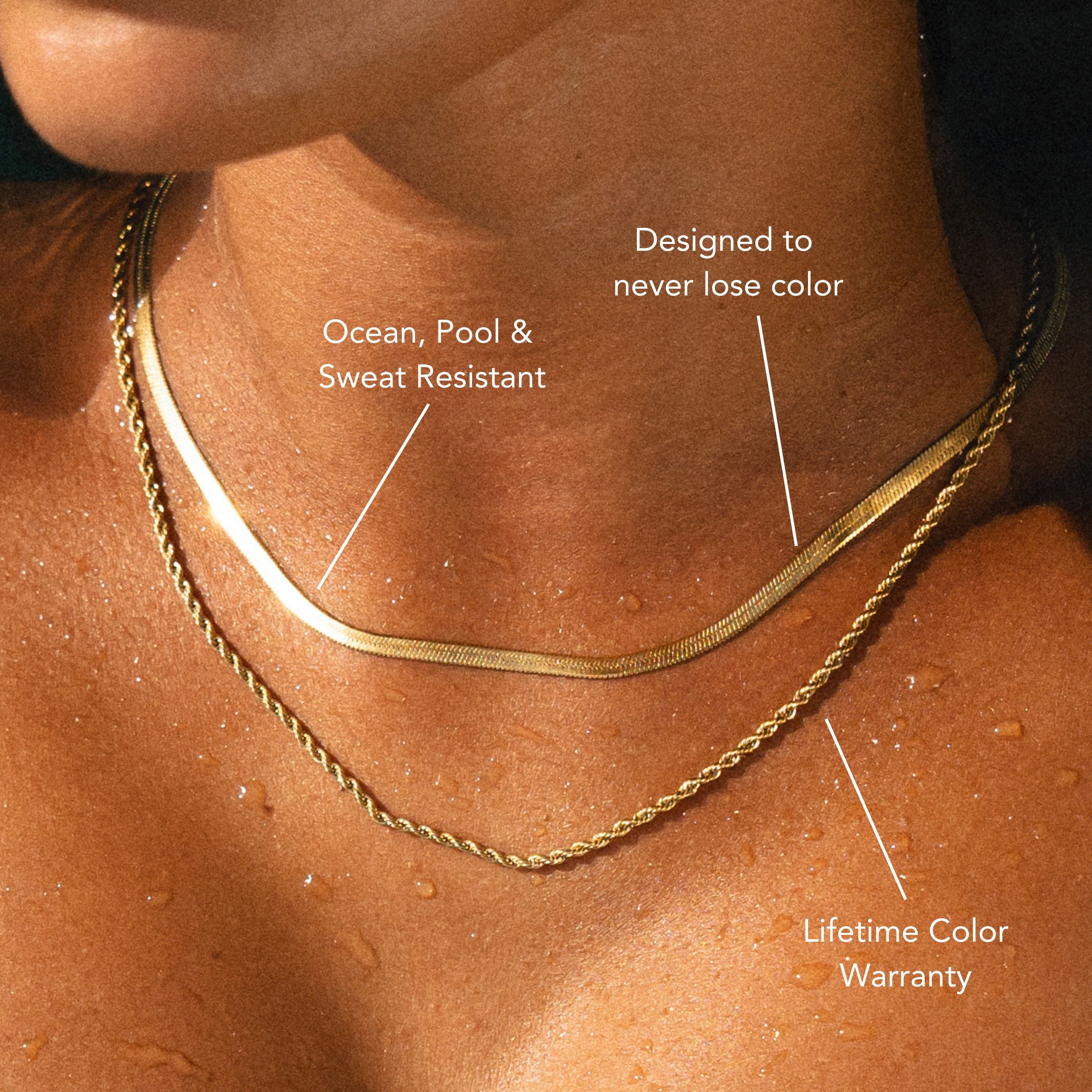
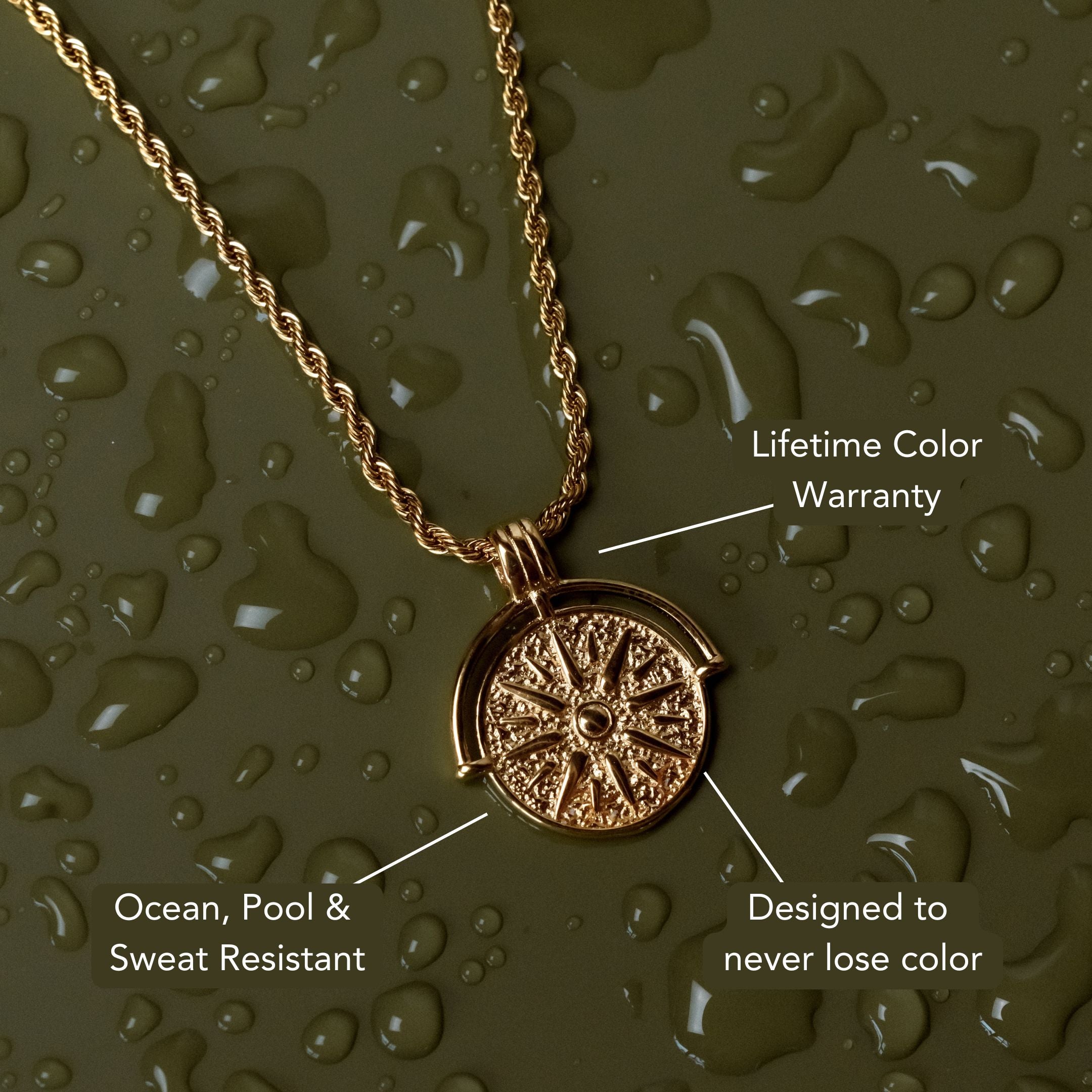
PVD-coated stainless steel with a gold tone is not solid gold by composition, but it is the most practical gold-appearance material for regular ocean wear. The 316L stainless steel base is specifically resistant to chloride-induced corrosion through its molybdenum content, which is why the same grade is used in marine hardware and underwater equipment. The PVD finish bonded at the atomic level does not have the adhesion vulnerabilities of electroplating and does not lift through the salt water, evaporation-concentration cycle, and thermal cycling that ocean swimming produces.
The gold tone a PVD-coated piece carries after a summer of regular ocean swimming is the same gold tone it carried on the first day because neither the coating nor the base metal is degraded by the ocean environment.
Verdict: The most reliable gold-tone option for regular ocean wear at accessible prices.
Gold Type Ocean Performance Summary
| Gold Type | Base Metal | Salt Water Risk | Plating Risk | Best For Ocean |
|---|---|---|---|---|
| Solid gold (14k+) | Gold alloy throughout | None | None (no plating) | Yes, loss risk only |
| Gold-plated brass | Copper alloy | High | Very high | No |
| Gold-plated stainless | Stainless steel | Low | High | Occasional only |
| Gold vermeil | Sterling silver | High (silver tarnishes) | High | No |
| PVD gold-tone steel | 316L stainless | Very low | None (PVD not plating) | Yes |

Frequently Asked Questions
Does salt water damage gold jewelry?
Solid gold at 14k and above is not damaged by salt water from a chemical standpoint. Gold does not react with the chloride, sulfate, or mineral compounds in ocean water. The practical risk of wearing solid gold in the ocean is loss rather than material damage. Gold-plated jewelry is damaged by salt water through chloride attack on the plating adhesion bond, which accelerates the plating failure that exposes a reactive base metal.
Can you swim in the ocean with a gold necklace?
Yes for solid gold necklaces, with the practical caveat that wave impact can stress clasps and create loss risk. A well-maintained lobster claw clasp on a solid gold necklace handles ocean swimming without the clasp opening unintentionally. For gold-plated necklaces, regular ocean swimming degrades the plating progressively over a season and is not recommended as a consistent habit.
Will gold jewelry turn green in the ocean?
Solid gold jewelry does not turn your skin green. The green discoloration associated with jewelry in salt water comes from copper or brass base metals beneath gold plating, not from gold itself. If a piece described as gold turns skin green after ocean exposure, it is gold-plated over a copper-based metal whose base metal has been exposed through plating failure.
How do you protect gold jewelry at the beach?
For solid gold: rinse in fresh water after ocean swimming to remove salt deposits, store in a dry pouch when not wearing, and consider removing rings before surf swimming due to cold-water finger contraction. For gold-plated pieces: remove before ocean swimming, rinse with fresh water if accidentally wet, and dry completely before storing. For PVD-coated pieces: rinse after ocean exposure as good practice, wipe dry, and wear continuously without concern.
Is it safe to wear a gold ring in the ocean?
Solid gold rings are chemically safe in ocean water. The practical risk is loss: cold ocean water causes fingers to contract slightly, which can allow a properly fitted ring to slip off more easily than usual. For valuable solid gold rings, removing before surf swimming and keeping in a secure dry location is a reasonable precaution. For PVD-coated rings, the same loss-prevention logic applies and the material handles the ocean without degradation.
Conclusion
Can you wear gold in the ocean depends entirely on what the piece is actually made from. Solid gold handles ocean conditions without any material concern, with loss risk as the only practical management required. Gold-plated brass and vermeil are actively damaged by regular ocean exposure through chloride attack and salt water acceleration of plating failure. PVD-coated stainless steel in gold tone is the most reliable option for regular beach and ocean use at accessible prices, maintaining its gold appearance through the salt water, sand abrasion, and concentrated-salt drying cycle that degrades plated finishes within a summer of consistent wear.










Leave a comment
This site is protected by hCaptcha and the hCaptcha Privacy Policy and Terms of Service apply.