

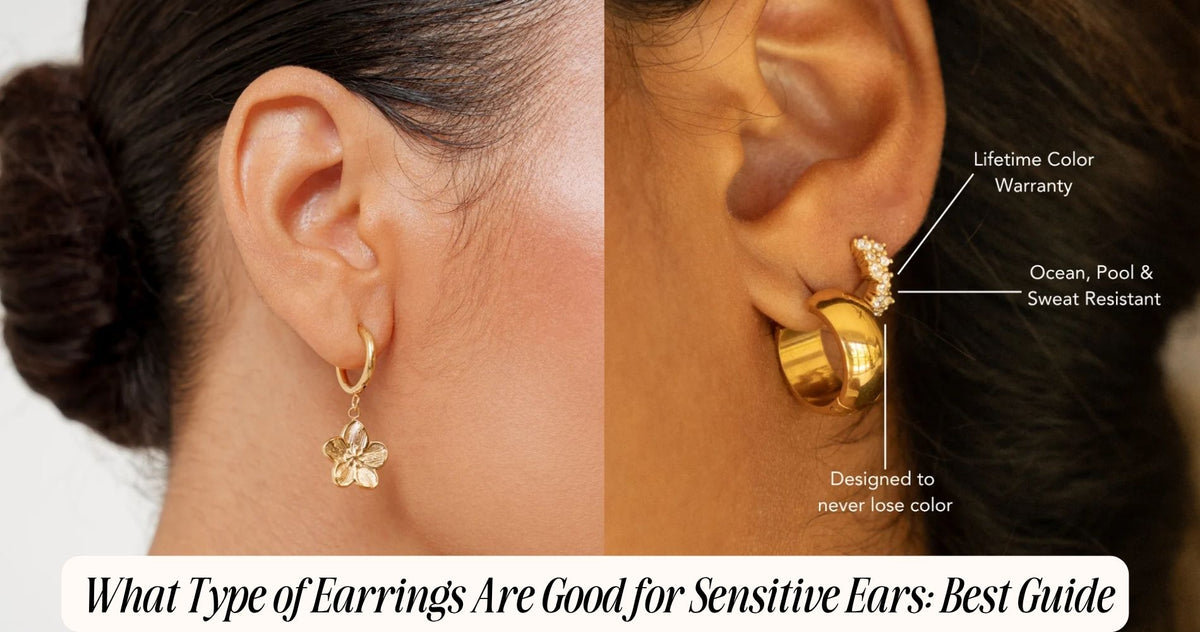
What Type of Earrings Are Good for Sensitive Ears: Best Guide
If your ears turn red, itchy, or swollen after wearing certain earrings, you are far from alone. Metal sensitivities are one of the most common reasons people struggle to find comfortable jewelry, which makes knowing what type of earrings are good for sensitive ears an especially important question. If you want a reliable, skin friendly option, our Allergy-free Earrings collection is designed specifically for people who react to common jewelry metals.
In this guide, we will cover the best materials for sensitive ears, which metals to avoid, and how to shop with confidence so you can wear earrings without discomfort.
Why Some Earrings Irritate Sensitive Ears
Most earring related irritation comes down to a reaction to specific metals, most commonly nickel. Nickel is inexpensive and widely used in jewelry manufacturing, often mixed into alloys even when it is not the primary listed material. For people with a nickel allergy, even brief contact can trigger redness, itching, swelling, or small bumps around the piercing site.
Other metals and coatings can cause similar reactions, though usually less frequently than nickel. Understanding which materials are more likely to cause problems, and which are considered safer, makes it much easier to build a comfortable earring collection.

Titanium
Titanium is widely considered one of the best options for sensitive ears. It is highly biocompatible, meaning the body generally tolerates it very well, which is part of why it is commonly used in medical implants. Titanium is naturally hypoallergenic, lightweight, and resistant to corrosion, making it an excellent choice for both new piercings and long term everyday wear.
Look specifically for implant grade titanium, sometimes labeled ASTM F136, since this indicates the material has been tested and verified for use in sensitive applications, including body jewelry.
Niobium
Niobium is another excellent option for sensitive ears, offering similar benefits to titanium. It is naturally nickel free and rarely causes allergic reactions, even in people with significant metal sensitivities. Niobium also has the added benefit of being available in a range of anodized colors, allowing for more variety without compromising on hypoallergenic properties.
Because niobium and titanium share many of the same qualities, they are often grouped together as top choices for anyone prioritizing comfort and skin safety in their jewelry.
Surgical Grade Stainless Steel
Surgical grade stainless steel is a popular and generally safe option for sensitive ears, though it is worth noting some variation exists between different stainless steel alloys. Look for steel labeled ASTM F138, which indicates it meets the implant grade standard used in medical settings and contains minimal nickel content.
While most people tolerate surgical steel well, those with more severe nickel allergies may still experience mild reactions, since trace amounts of nickel can be present even in higher quality steel alloys.

Solid Gold
Solid gold, particularly in higher karats like 14k or 18k, is generally well tolerated by sensitive skin, provided it is nickel free. Higher karat gold contains a greater percentage of pure gold and a smaller percentage of alloy metals, reducing the likelihood of a reaction. It is worth confirming with the seller that a piece is nickel free, since some gold alloys, particularly white gold, may include nickel to achieve their pale color.
Lower karat gold, such as 10k, contains more alloy content and may be more likely to cause irritation for those with heightened sensitivity.
Platinum
Platinum is one of the most hypoallergenic metals available, rarely causing allergic reactions even in people with significant sensitivities. It is a naturally pure and stable metal, requiring very little alloying to achieve the durability needed for jewelry. While platinum tends to be more expensive than other hypoallergenic options, its exceptional biocompatibility makes it a strong choice for those who experience frequent reactions to other metals.
Medical Grade Plastic and Silicone
For those with extremely sensitive ears or during periods when metal contact should be minimized entirely, medical grade plastic or silicone earrings offer a lightweight, hypoallergenic alternative. These are often used temporarily during piercing healing or for situations like medical procedures where metal jewelry needs to be removed, though some people choose them as a long term option due to their comfort and low risk of reaction.

Metals and Materials to Avoid
Just as important as knowing which materials work well is understanding which to avoid if you have sensitive ears.
Nickel: The most common cause of earring related allergic reactions, nickel is frequently found in low cost fashion jewelry, even when not clearly labeled.
Gold plated or gold filled jewelry: These often have a nickel containing base metal underneath the outer layer. As the coating wears away, the base metal can come into direct contact with the skin.
Costume or fashion jewelry: These pieces are frequently made from mixed alloys of unknown or unverified composition, increasing the likelihood of containing nickel or other irritants.
Lower quality stainless steel: Not all stainless steel is created equal, and some cheaper alloys may contain higher nickel content than implant grade versions.
Signs Your Ears Are Reacting to a Metal
It helps to recognize the signs of a metal reaction early, so you can switch materials before irritation worsens. Common symptoms include persistent itching, redness, swelling, or small bumps around the earlobe or piercing site. In more severe cases, the skin may become dry, flaky, or develop a rash that extends slightly beyond the immediate area of contact.
If symptoms appear consistently with certain earrings but not others, this is often a strong indicator of a specific metal sensitivity rather than a more general skin issue.
How to Confirm Earrings Are Truly Hypoallergenic
Not all jewelry labeled hypoallergenic meets rigorous safety standards, so it helps to know what to look for. Reputable brands typically specify the exact metal composition, along with any relevant certification standards, such as ASTM F136 for titanium or ASTM F138 for surgical steel. If a listing does not clearly specify the metal content, it is worth reaching out to the seller directly before purchasing, especially if you have a history of reactions to jewelry.

Tips for Wearing Earrings With Sensitive Ears
A few additional habits can help reduce irritation, even when wearing hypoallergenic materials. Clean earrings regularly to remove buildup from lotions, perfumes, and natural oils, which can sometimes contribute to irritation independent of the metal itself. Avoid sleeping in earrings when possible, since prolonged contact can increase the likelihood of irritation, even with well tolerated materials. Give your ears occasional breaks from earrings entirely, allowing the skin to recover, particularly if you tend to wear the same pair for extended periods.
Building a Sensitive Ear Friendly Collection
If you have struggled with earring related irritation in the past, gradually replacing frequently worn pieces with hypoallergenic materials can make a significant difference. Starting with everyday staples, like simple studs or small hoops made from titanium or niobium, provides a comfortable foundation before expanding into more varied styles made from the same trusted materials.
Over time, this approach allows you to build a full collection that fits your personal style without the ongoing discomfort of reactive metals.
Final Thoughts
So, what type of earrings are good for sensitive ears? Titanium, niobium, and platinum are widely considered the safest choices due to their strong hypoallergenic properties, with solid nickel free gold and implant grade stainless steel serving as reliable alternatives. Avoiding nickel, plated jewelry, and unverified alloys significantly reduces the risk of irritation, allowing you to enjoy earrings comfortably without constant worry.
With the right materials and a bit of attention to product details, sensitive ears do not have to mean limited style options.
Frequently Asked Questions
1. What type of earrings are good for sensitive ears?
Titanium, niobium, and platinum are among the best options, since they are highly hypoallergenic and rarely cause reactions, even for people with significant metal sensitivities.
2. Can I wear gold earrings if I have sensitive ears?
Yes, higher karat, nickel free gold is generally well tolerated, though it is worth confirming the specific composition, since some gold alloys, like white gold, may contain nickel.
3. Is surgical stainless steel safe for sensitive ears?
Most people tolerate implant grade stainless steel well, though those with severe nickel allergies may still experience mild reactions due to trace nickel content in some alloys.
4. How do I know if my earrings are causing an allergic reaction?
Common signs include redness, itching, swelling, or small bumps around the earlobe, especially if symptoms appear consistently with certain earrings but not others.
5. Are plated earrings safe for sensitive ears?
Not typically. Plated jewelry often has a nickel containing base metal underneath, which can be exposed and cause irritation as the plating wears away over time.










コメントを書く
このサイトはhCaptchaによって保護されており、hCaptchaプライバシーポリシーおよび利用規約が適用されます。