


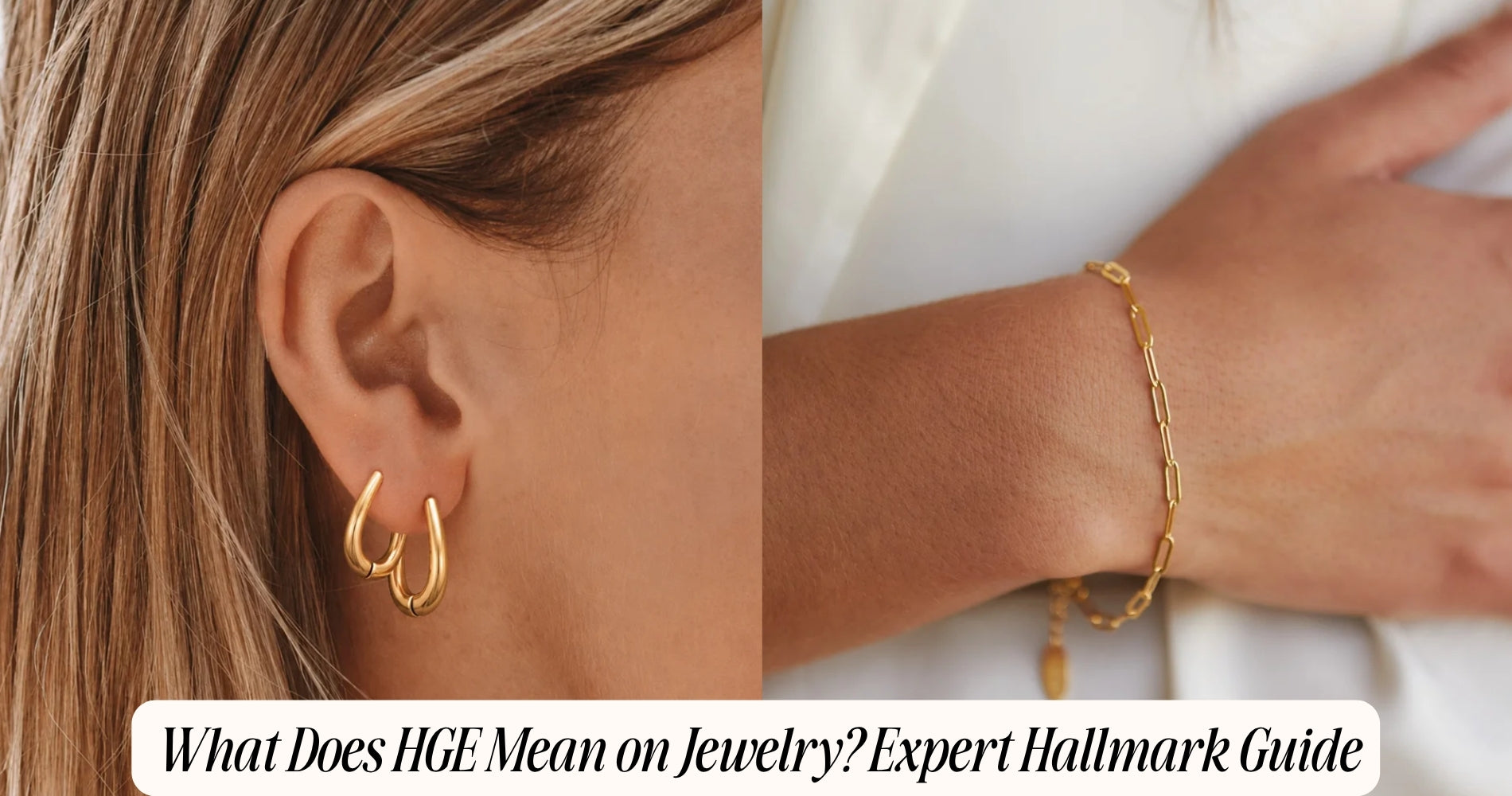
What Does HGE Mean on Jewelry? Expert Hallmark Guide
If you have ever examined a piece of jewelry closely and noticed the letters HGE stamped somewhere on the metal, you may have found yourself wondering what does HGE mean on jewelry and how it affects the piece's overall value and quality. This particular hallmark is fairly common, especially on vintage and costume jewelry, but understanding exactly what it indicates can help you make more informed decisions when buying, selling, or simply evaluating pieces already in your collection.
In this guide, we will break down exactly what the HGE hallmark means, how it compares to solid gold and other similar markings, and what to consider when you come across this stamp on a piece of jewelry. If you are looking for pieces with clear, straightforward gold content from the start, our Everyday Gold Jewelry collection is designed with transparent labeling so you always know exactly what you are getting.
What Does HGE Mean on Jewelry
HGE stands for Heavy Gold Electroplate, a hallmark indicating that the piece of jewelry has undergone an electroplating process resulting in a relatively thick layer of gold applied to the surface of a base metal underneath. This marking is a specific classification within the broader category of gold plated jewelry, distinguishing it from thinner, lower quality plating processes.
Understanding this hallmark requires first understanding the basic difference between solid gold and gold plated jewelry more generally, since HGE falls specifically within the plated category rather than indicating solid gold throughout the entire piece.
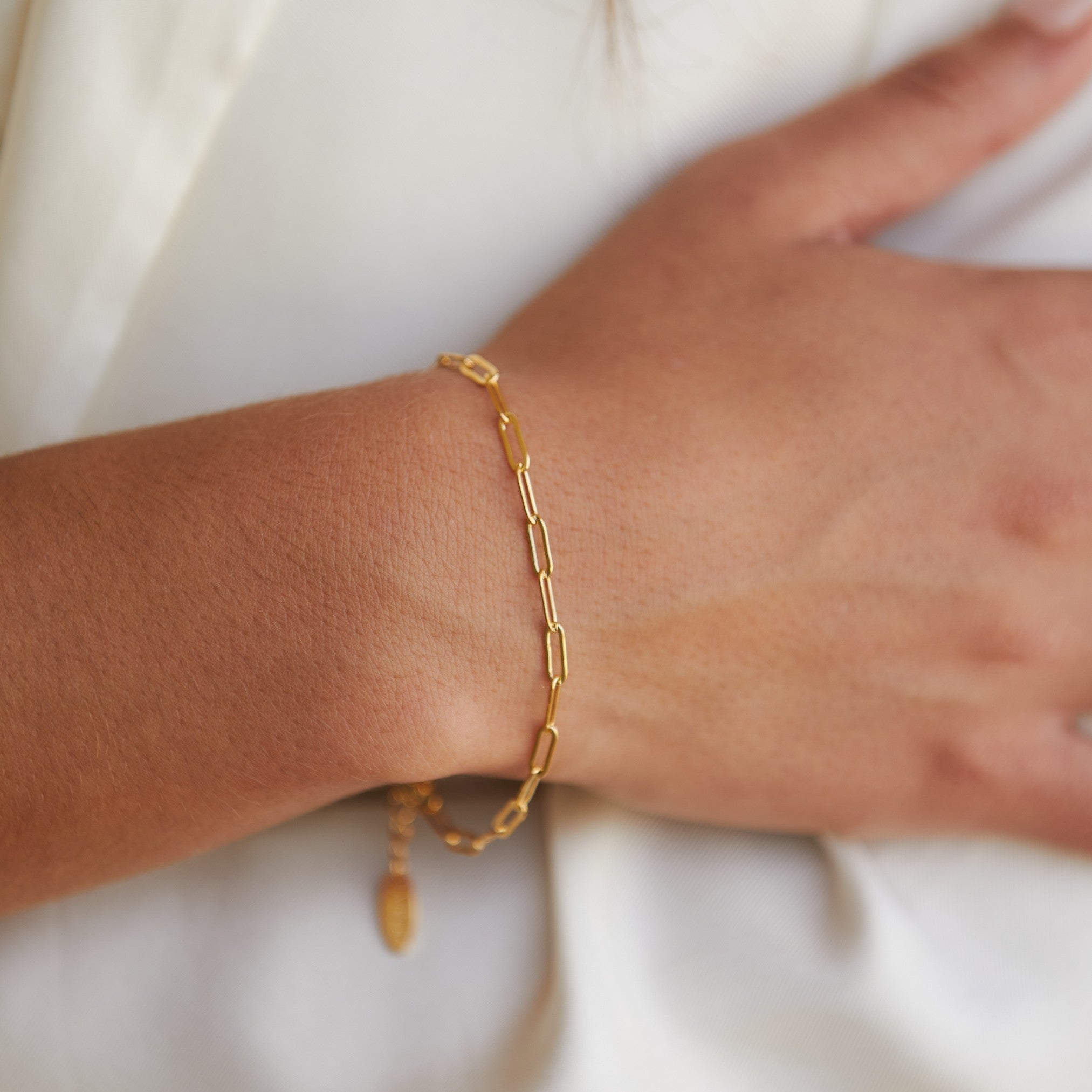
Understanding Gold Plating and Electroplating
Gold plated jewelry consists of a base metal, such as brass, copper, or nickel, coated with a thin layer of real gold through a process called electroplating. During this process, an electrical current causes gold particles to bond to the surface of the base metal, creating the appearance of solid gold while using significantly less actual gold material compared to a solid gold piece.
The thickness of this gold layer can vary considerably depending on the specific plating process and manufacturer standards, which is exactly why more specific hallmarks like HGE exist, helping to indicate a particular thickness standard rather than leaving buyers to guess about the quality and durability of the plating used.
HGE Versus Standard Gold Plating
The primary distinction between HGE and standard gold plating, sometimes simply marked GP, comes down to the thickness of the gold layer applied during the electroplating process.
Standard gold plating typically involves a relatively thin layer of gold, often measured in fractions of a micron, resulting in a coating that can wear away relatively quickly with regular use, particularly in areas experiencing frequent friction. Heavy gold electroplate, indicated by the HGE hallmark, involves a noticeably thicker application of gold during the plating process, generally offering improved durability and a longer lasting finish compared to standard, thinner plating.
While HGE still does not match the longevity of solid gold, since it remains a base metal core with a gold coating rather than gold throughout the entire piece, it generally represents a step up in quality and durability compared to more minimal, standard gold plating.

How HGE Compares to Gold Filled Jewelry
It is worth distinguishing HGE from another related but distinct category, gold filled jewelry. Gold filled pieces are created through a different manufacturing process, involving a much thicker layer of gold mechanically bonded to a base metal core, typically brass, using heat and pressure rather than the electroplating method used for HGE and standard gold plated pieces.
Because of this different construction method, gold filled jewelry generally contains significantly more actual gold by weight compared to HGE pieces, and is legally required in the United States to contain gold making up at least 5 percent of the item's total weight. HGE, by contrast, has no such standardized minimum gold content requirement, meaning the actual amount of gold present can vary more significantly between different manufacturers and pieces.
This distinction matters for those evaluating jewelry based on gold content specifically, since gold filled pieces generally offer greater durability and gold content compared to HGE, despite both falling into the broader plated jewelry category rather than solid gold.
Common Uses for HGE Jewelry
HGE hallmarks are frequently found on vintage and costume jewelry, particularly pieces manufactured from the mid 20th century onward, when this particular plating classification became more standardized within the jewelry industry. Because HGE offers a reasonable balance between affordability and improved durability compared to standard plating, it became a popular choice for manufacturers producing higher quality costume jewelry intended to offer better longevity than the most basic plated pieces available at the time.
Today, HGE markings are less commonly used in mainstream contemporary jewelry manufacturing, though the hallmark still appears on vintage pieces and certain costume jewelry lines that continue to use similar heavy electroplating processes.

Does HGE Jewelry Have Value
While HGE jewelry does not carry the same inherent material value as solid gold, due to its base metal core, this does not necessarily mean these pieces lack value entirely. Vintage HGE jewelry, particularly pieces from well known costume jewelry designers or specific historical eras, can hold collectible value based on factors like craftsmanship, design, rarity, and historical significance, separate from the actual gold content itself.
For those specifically evaluating value based on gold content and long term durability, however, HGE jewelry will generally hold less material value compared to solid gold or gold filled pieces, given its relatively thin gold layer over a base metal core.
How to Care for HGE Jewelry
Because HGE jewelry features a thinner gold layer compared to solid gold, though generally more durable than standard plating, a few care practices can help extend its lifespan and appearance over time.
Avoid exposing HGE jewelry to water, particularly during activities like showering or swimming, since prolonged moisture exposure can accelerate wear on the gold layer. Apply perfume, lotion, and other personal care products before putting on jewelry rather than after, minimizing direct chemical exposure to the plated surface. Store HGE pieces separately from other jewelry to prevent scratching, ideally in a soft pouch or lined jewelry box. Clean gently using a soft, dry cloth rather than abrasive cleaning methods, which can wear away the plating more quickly than normal, everyday wear alone.
Identifying HGE and Similar Hallmarks
If you are examining a piece of jewelry and want to determine whether it features an HGE hallmark or a related marking, check the clasp of a necklace or bracelet, the inside of a ring band, or another small, typically inconspicuous area of the piece. A magnifying glass or jeweler's loupe can be helpful for locating and clearly reading these small stamps, since they are often quite tiny.
Beyond HGE, you may also encounter related hallmarks like GP, meaning simply gold plated without the heavy electroplate distinction, or GEP, meaning gold electroplate, which similarly indicates a plated rather than solid gold construction, though without necessarily specifying the heavier plating thickness associated specifically with HGE.

Is HGE Jewelry Worth Buying
Whether HGE jewelry is a good choice depends largely on your specific priorities and intended use. For those seeking an affordable option offering somewhat better durability compared to standard, thinner gold plating, HGE can represent a reasonable middle ground, particularly for costume or fashion jewelry not intended for decades of continuous daily wear.
For those seeking jewelry as a long term investment or pieces intended to be passed down over generations, solid gold or gold filled jewelry generally represents a more durable, valuable choice compared to HGE, given the significant difference in actual gold content and overall longevity between these categories.
Final Thoughts
So, what does HGE mean on jewelry? It stands for Heavy Gold Electroplate, indicating a thicker layer of gold applied through an electroplating process compared to standard, thinner gold plating, though still falling short of the gold content and durability offered by solid gold or gold filled jewelry. Understanding this distinction can help you make more informed decisions, whether you are evaluating a vintage piece, shopping for costume jewelry, or simply curious about a hallmark you noticed on an existing piece in your collection.
Whatever your specific jewelry needs, understanding hallmarks like HGE empowers you to shop and evaluate pieces with much greater confidence and clarity.
Frequently Asked Questions
1. Is HGE the same as solid gold?
No, HGE indicates a base metal core coated with a relatively thick layer of gold through electroplating, differing significantly from solid gold construction throughout the entire piece.
2. Is HGE better than standard gold plating?
Yes, HGE generally involves a thicker gold layer compared to standard plating, offering improved durability, though it still does not match solid gold or gold filled jewelry in overall longevity.
3. Does HGE jewelry tarnish?
HGE jewelry can eventually show signs of wear or tarnish as the gold layer thins over time, particularly with frequent use or exposure to moisture and chemicals.
4. Is vintage HGE jewelry valuable?
Vintage HGE pieces can hold collectible value based on design, craftsmanship, and historical significance, separate from the actual gold content itself.









コメントを書く
このサイトはhCaptchaによって保護されており、hCaptchaプライバシーポリシーおよび利用規約が適用されます。