


What Do Rings Represent: Meaning and Symbolism Guide
Few pieces of jewelry carry as much meaning as a ring. A simple circle of metal can symbolize love, loyalty, power, memory, belief, or personal identity, depending on who wears it and why. So what do rings represent, and why have they held such a powerful place in human culture for thousands of years? The answer blends ancient symbolism, tradition, and the very personal stories people attach to what they wear. If you are looking for a piece to carry your own meaning, our Ring for Everyday Wear collection offers designs that are easy to make part of your daily routine.
In this guide, we will explore the symbolism behind rings, their history, what different types and fingers can represent, and how metals and gemstones add layers of meaning.
The Power of the Circle
At the heart of ring symbolism is the circle itself. A circle has no beginning and no end, which has long made it a symbol of eternity, continuity, and wholeness. Many cultures have used circular shapes to represent the cycle of life, the sun, the moon, and the idea of something unbroken.
This is why rings so often stand for lasting commitments. A ring wrapped around the finger is a visible, constant reminder of a promise or connection that is meant to endure.

A Brief History of Rings
Rings are among the oldest forms of jewelry. In ancient Egypt, rings made from braided reeds and later from metals were associated with eternity, and they were often worn as personal symbols. The Romans used rings in many ways, including as tokens of betrothal, and iron and gold rings carried different social meanings.
Signet rings, engraved with a unique symbol, were used for centuries to seal letters and documents with wax, making them signs of authority and identity. Over time, rings also took on religious, military, and academic meanings, adding even more layers to their symbolism.
Rings as Symbols of Love and Commitment
Today, the most familiar meaning of a ring is romantic love and commitment.
- Engagement rings: These symbolize a promise to marry. The central stone, often a diamond, is traditionally seen as a sign of strength and enduring love.
- Wedding bands: These represent the vows made in marriage and the unbroken bond between partners. Their simple, unbroken circle is an important part of their meaning.
- Promise rings: These represent a commitment to a future together, or a promise of loyalty, without being a formal engagement.
- Eternity rings: Set with a continuous line of stones, these symbolize unending love and are often given to mark anniversaries or milestones.
Rings and the Ring Finger
Many Western cultures place wedding rings on the fourth finger of the left hand. An old belief held that a vein ran directly from this finger to the heart, which made it feel fitting for a symbol of love. Modern anatomy does not support the idea, but the tradition has endured.
Customs vary around the world. In some countries, wedding rings are worn on the right hand, and some cultures wear them on other fingers or do not use rings at all. This reminds us that ring symbolism is shaped by culture and personal choice rather than strict rules.

What Different Fingers Can Symbolize
Beyond weddings, many people associate different meanings with different fingers. These ideas are modern conventions and vary widely, so they are best seen as optional inspiration.
- Thumb: Often linked to willpower, confidence, and individuality. A thumb ring can feel bold and independent.
- Index finger: Sometimes associated with leadership, ambition, and authority. Signet rings are often worn here.
- Middle finger: Considered a balanced center, it is often used for larger, statement rings.
- Ring finger: Strongly associated with love and commitment, particularly on the left hand in many Western traditions.
- Pinky finger: Sometimes linked to communication and charm, and traditionally associated with signet and family crest rings.
Whatever you choose, the most meaningful placement is the one that feels right to you.
Signet and Family Rings
Signet rings represent identity, family, and legacy. Historically, they were engraved with a family crest or personal emblem and used as a seal, which made them a sign of status and trust. Today, they are often worn as heirlooms or to show pride in heritage. Passing one down from generation to generation adds a layer of continuity and remembrance.
The Claddagh Ring
The Claddagh ring, an Irish tradition, offers one of the most recognizable symbolic designs. It features two hands holding a heart topped with a crown, representing friendship, love, and loyalty. How the ring is worn is traditionally said to communicate relationship status, which makes it a fun example of symbolism built right into the design.
Rings of Faith and Belonging
Rings also express spiritual and communal identity. Religious rings, such as those engraved with symbols of faith, can serve as reminders of belief and devotion. Class rings represent shared education and accomplishment, while team and organization rings signify belonging and pride. Memorial and remembrance rings, sometimes containing a loved one's birthstone or a lock of hair in older traditions, honor memory and connection.
Personal Milestone and Self Love Rings
Increasingly, people wear rings that represent their own journeys. A ring might mark a graduation, a career achievement, a recovery milestone, or a personal promise to oneself. These rings celebrate individuality and self respect, and they remind the wearer of how far they have come.
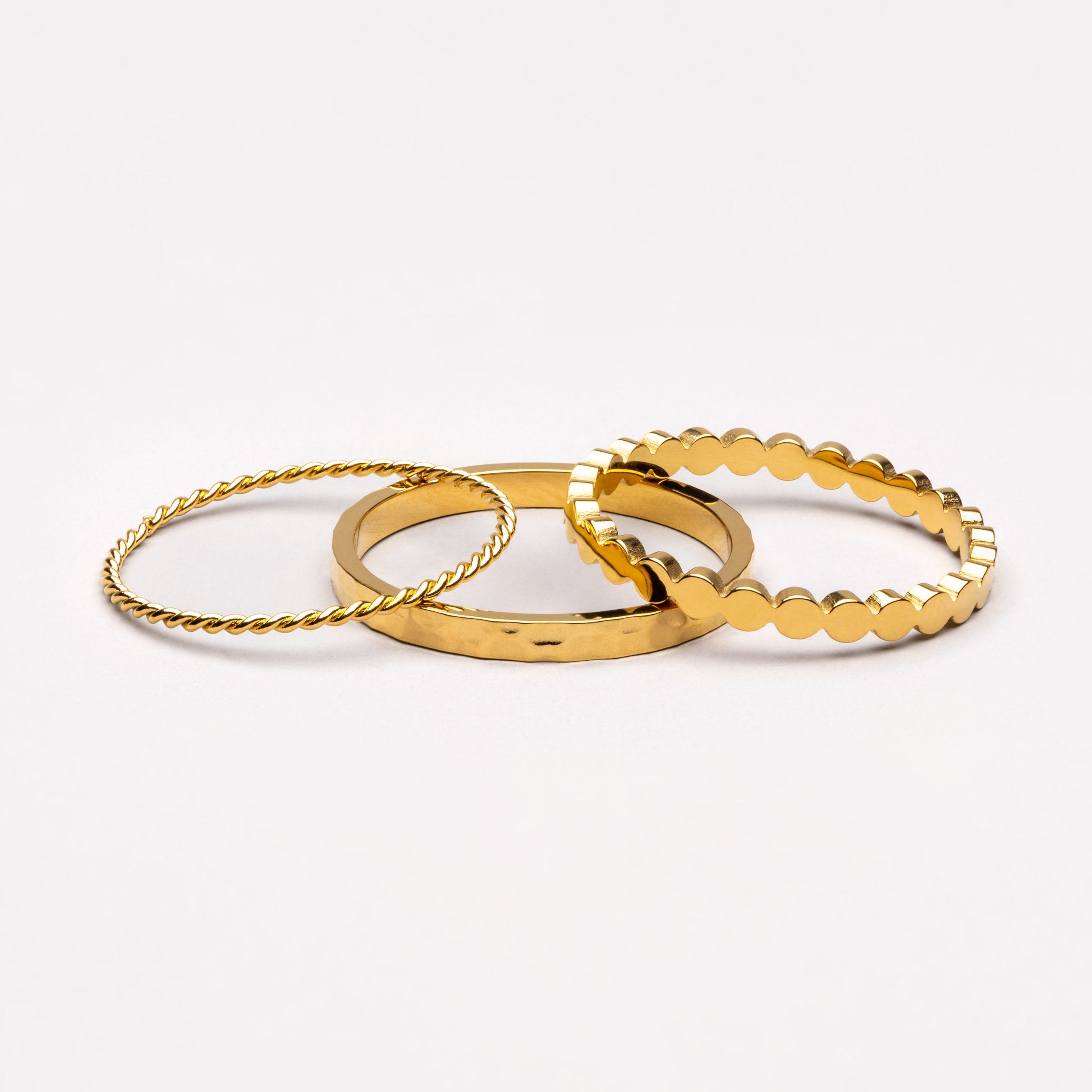
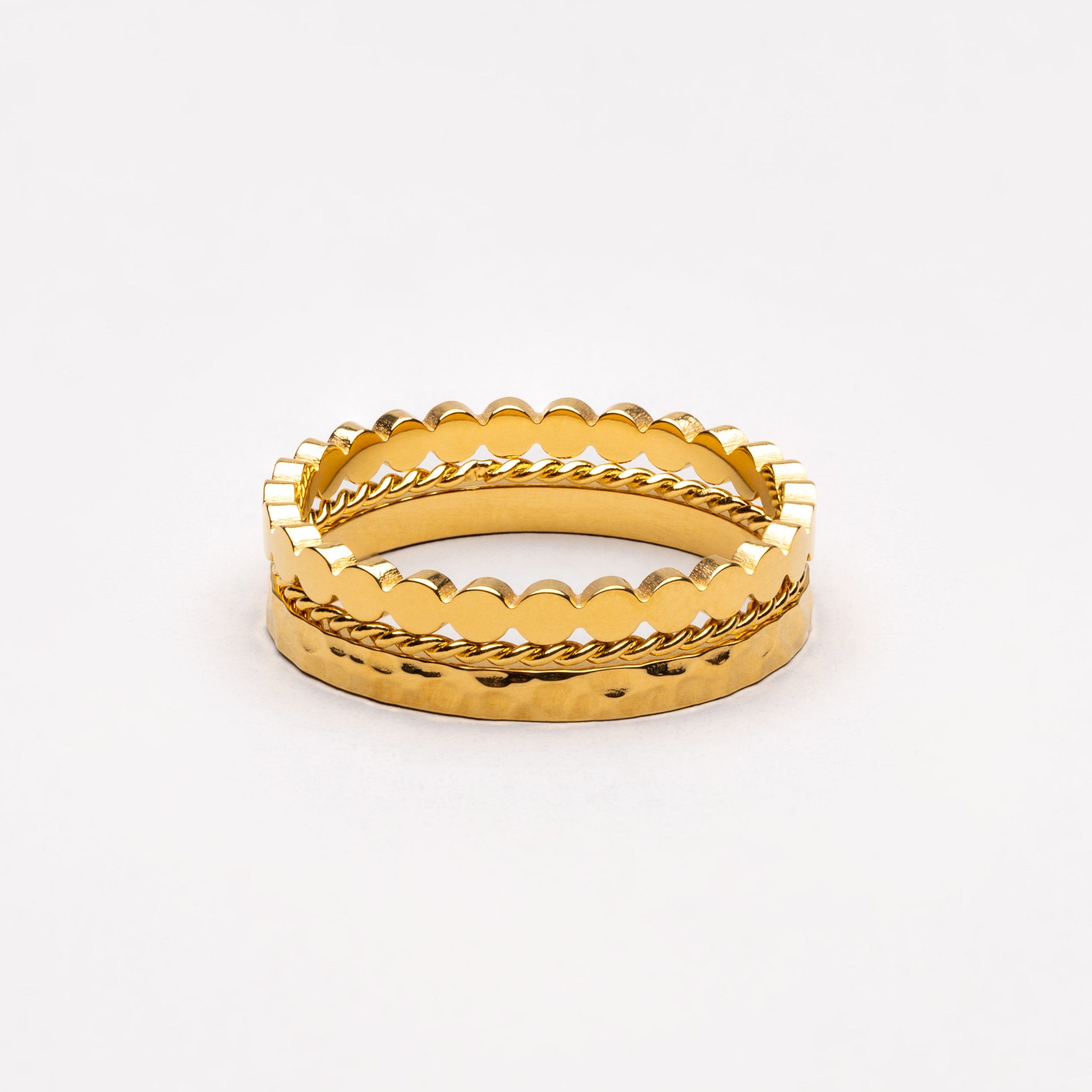
Stackable rings are especially popular for this, since each ring can represent a different moment or value.

The Meaning of Metals
The metal of a ring adds its own symbolism.
- Gold: Associated with warmth, value, and lasting beauty.
- Silver: Often linked to purity, clarity, and intuition.
- Rose gold: Seen as romantic and gentle, with a soft, modern feel.
- Platinum: Considered a symbol of strength and rarity because of its durability.
These associations are traditional and symbolic rather than scientific, but they can help you choose a metal that feels meaningful.
The Meaning of Gemstones
Gemstones add yet another layer. Diamonds are linked to strength and everlasting love. Sapphires have long stood for loyalty and wisdom. Emeralds are associated with growth and renewal, while rubies are tied to passion and vitality. Birthstones make a ring personal by connecting it to a specific month, and many people choose stones that match the birthdays of loved ones.

How to Choose a Ring With Meaning
If you want a ring that feels significant, start by thinking about what you want it to represent. Is it a relationship, a personal goal, a family connection, or simply a style you love? Consider the design, metal, and stones that express that idea, and choose a finger that feels natural. Do not worry about strict rules. A ring becomes meaningful through the story you attach to it.
Final Thoughts
So, what do rings represent? They stand for eternity, commitment, identity, belief, belonging, and personal milestones. The circle itself, the metal, the stones, and even the finger can add layers of meaning, but the most important meaning is the one you choose.
Whether you are marking a promise, honoring a memory, or celebrating yourself, a ring is a small, wearable symbol with a big story.
Frequently Asked Questions
1. What do rings represent in general?
Rings commonly represent eternity, commitment, love, identity, and belonging, partly because the circle has no beginning or end.
2. Why are wedding rings worn on the ring finger?
Many Western traditions place them on the left ring finger, based on an old belief that a vein ran from that finger to the heart, though customs vary around the world.
3. What does a ring on each finger mean?
Meanings are modern conventions that vary by person and culture. Thumb rings often suggest confidence, index finger rings leadership, and ring finger rings commitment.
4. What is the difference between a promise ring and an engagement ring?
A promise ring symbolizes commitment or loyalty without being a formal engagement, while an engagement ring represents a promise to marry.
5. Can a ring have personal meaning without being romantic?
Absolutely. Many people wear rings to mark milestones, honor family, express faith, or celebrate themselves.









コメントを書く
このサイトはhCaptchaによって保護されており、hCaptchaプライバシーポリシーおよび利用規約が適用されます。