

7 Types of Jewelry Metals: Complete Guide
The seven most common metals in jewelry are gold, sterling silver, platinum, stainless steel, titanium, brass and copper. Each differs in price, strength, tarnish and skin comfort. Understanding the main types of jewelry metals saves you money and keeps your skin happy.
If skin comfort is your first concern, you can browse our hypoallergenic jewelry while you read. In this guide, we will explain what each metal is, how it wears, who it suits and how plating and PVD change the picture.
What are the 7 main types of jewelry metals?
Jewelry metals fall into three groups: precious metals (gold, sterling silver, platinum), modern metals (stainless steel, titanium) and base metals (brass, copper). Precious metals hold value, modern metals resist daily wear, and base metals keep costs low.
|
Metal |
Group |
Strength |
Tarnish |
Cost |
|
Gold |
Precious |
Soft when pure, firmer at 14k or 18k |
Does not tarnish |
High |
|
Sterling silver |
Precious |
Soft, scratches easily |
Tarnishes |
Medium |
|
Platinum |
Precious |
Dense and durable |
Develops a soft patina |
Highest |
|
Stainless steel |
Modern |
Very durable |
Resists tarnish |
Low to medium |
|
Titanium |
Modern |
Very strong, light |
Resists tarnish |
Medium |
|
Brass |
Base |
Moderate |
Tarnishes, can mark skin |
Low |
|
Copper |
Base |
Soft |
Oxidizes, can mark skin |
Low |
Which precious metals are used in jewelry?
Gold, sterling silver and platinum are the classic precious metals in jewelry. Gold adds warmth and resists tarnish, silver adds brightness at a gentler price, and platinum adds density and long wear at the highest cost.
-
Gold: Pure 24k gold is too soft for most jewelry, so it is mixed with other metals. 18k contains 75% gold and has a richer color, while 14k contains 58.3% gold and handles daily knocks better. Yellow, white and rose shades come from the metals blended in.
-
Sterling silver: This alloy is 92.5% silver, usually with copper added for strength. It is bright, affordable and easy to style, but it tarnishes and scratches, so it needs a polishing cloth and dry storage.
-
Platinum: Platinum is naturally hypoallergenic, resists corrosion and feels substantial on the hand. For a shorter comparison, see our earlier guide to the best metals for jewelry.

How do stainless steel and titanium compare?
Stainless steel and titanium are modern metals built for daily wear. Stainless steel is affordable, corrosion resistant and easy to shape into chains and hoops, while titanium is lighter and very strong, which suits larger earrings and bands.
-
Stainless steel: An iron alloy with chromium that forms a protective surface layer, so it resists rust and tarnish. It feels a little heavier than titanium and takes finishes such as gold PVD well.
-
Titanium: Very light, strong and naturally grey. People choose it for comfort and for a modern look. It is harder to resize and comes in fewer styles than gold or silver.
Are brass and copper good jewelry metals?
Brass and copper are affordable base metals that suit fashion and handmade jewelry, but they react with skin, sweat and moisture. Without a protective finish, both can tarnish and leave green marks on skin.
-
Brass: A copper and zinc alloy with a warm golden tone. It is common under plating, and some brass alloys contain nickel, so check labels if you react to nickel.
-
Copper: Soft, warm and reddish, copper oxidizes over time. Some people like the antique look, but keep it dry and expect color changes.
Which jewelry metal is best for sensitive skin?
Platinum and titanium are the metals most often recommended for sensitive skin, and quality stainless steel and higher-karat gold suit many people too. Nickel is the most common trigger, so choose nickel-free pieces and ask what sits under any plating.
|
Metal |
Sensitive-skin outlook |
|
Platinum |
Very low reaction risk |
|
Titanium |
Very low reaction risk |
|
Stainless steel |
Suits most people, depends on alloy quality |
|
Gold (14k, 18k) |
Usually fine, lower karats contain more mixed metals |
|
Sterling silver |
Usually fine, copper content bothers some |
|
Brass and copper |
Higher risk of marks and reactions |
What is the difference between solid metal, plated and PVD jewelry?
Solid metal jewelry is the same metal all the way through. Plated jewelry adds a thin layer of gold over another metal, and PVD is a vacuum coating process that bonds a thin layer to the surface, usually lasting longer than traditional plating.

Traditional plating is applied with electricity and can wear at contact points such as clasps and the underside of rings. PVD bonds the coating in a vacuum chamber, which is why it is common on stainless steel pieces built for daily wear.
Which jewelry metals suit everyday, water-friendly wear?
For showers, pool days and workouts, choose a durable base such as stainless steel or titanium, or a solid precious metal if your budget allows. A stainless steel base with a PVD finish gives you the look of gold at a friendlier price.
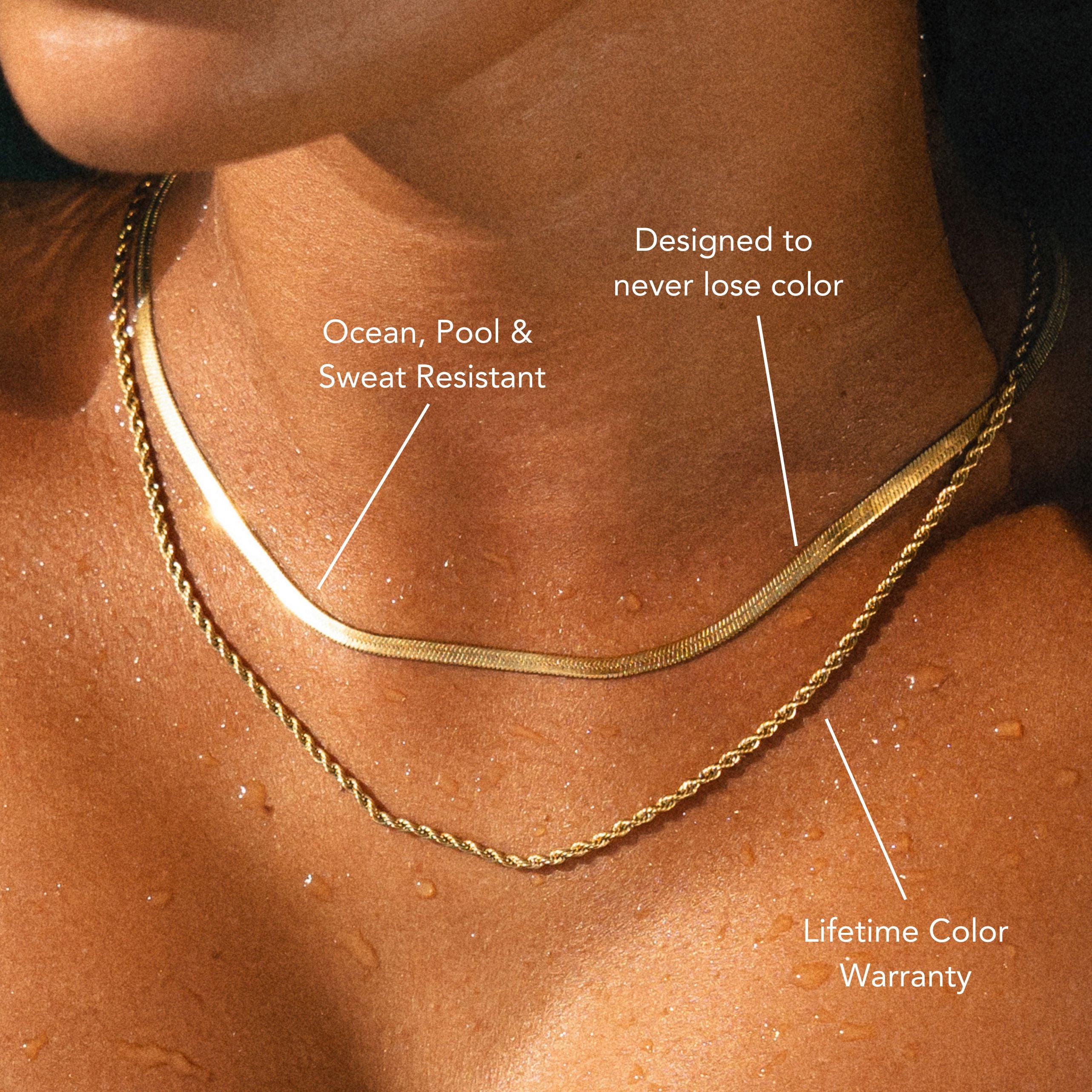
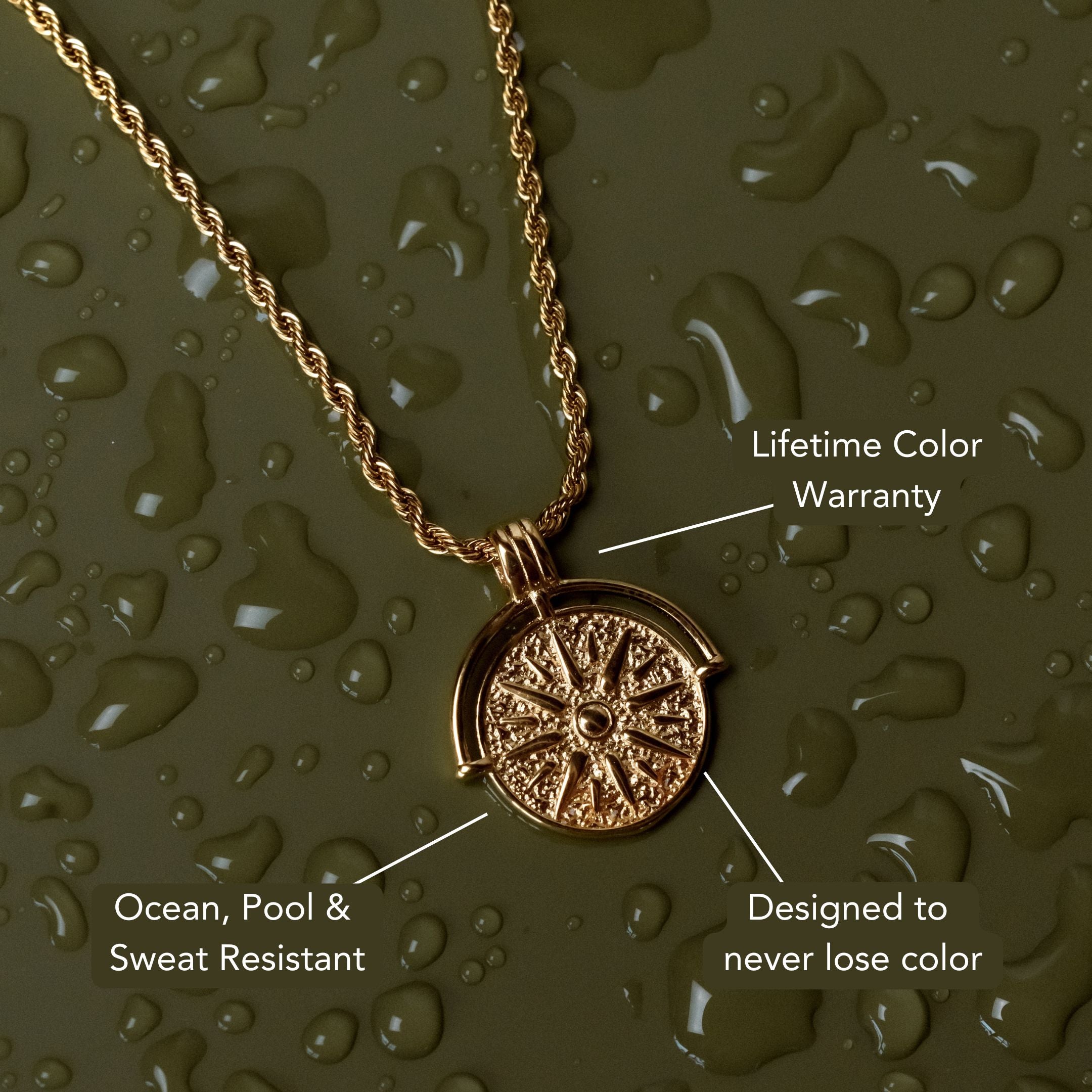
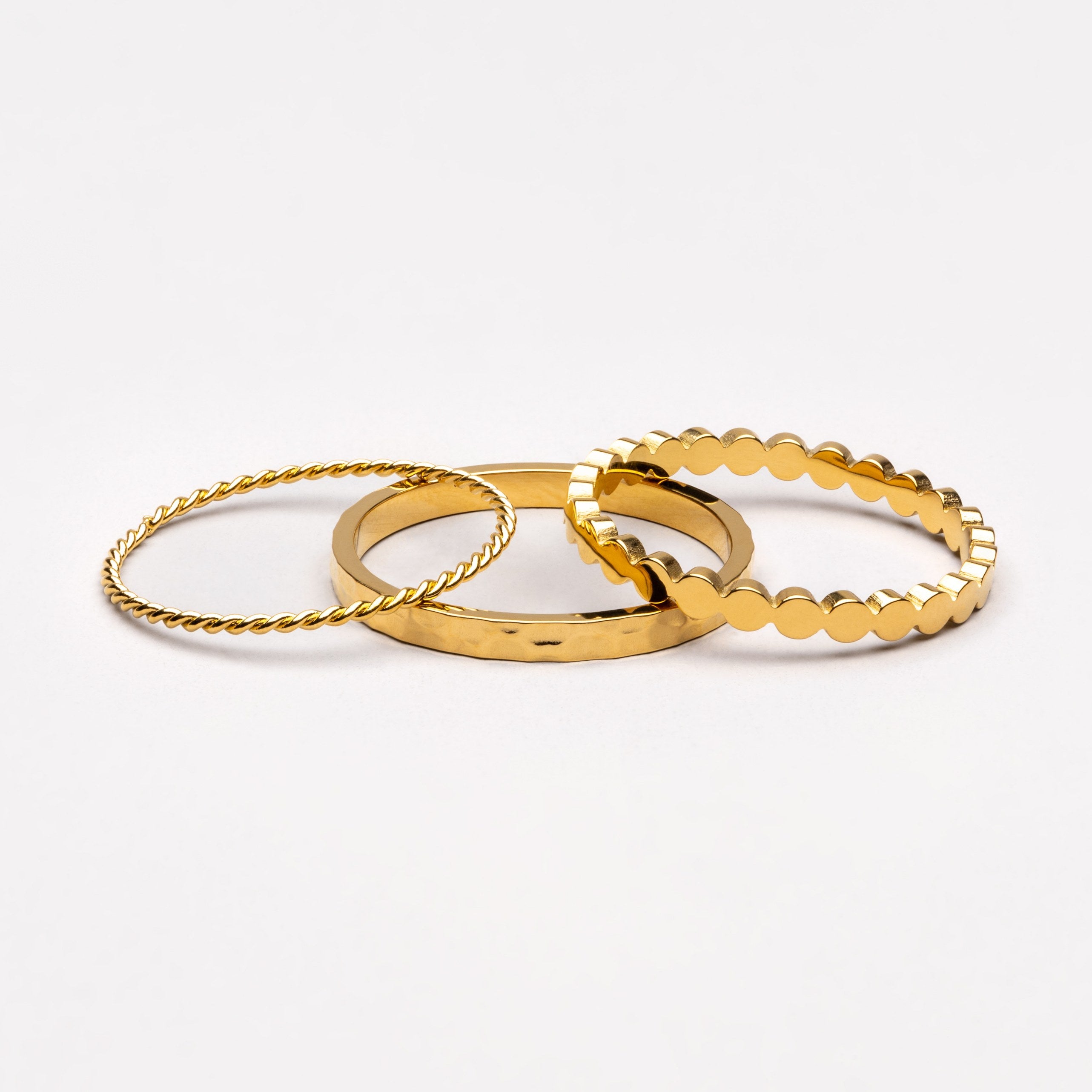
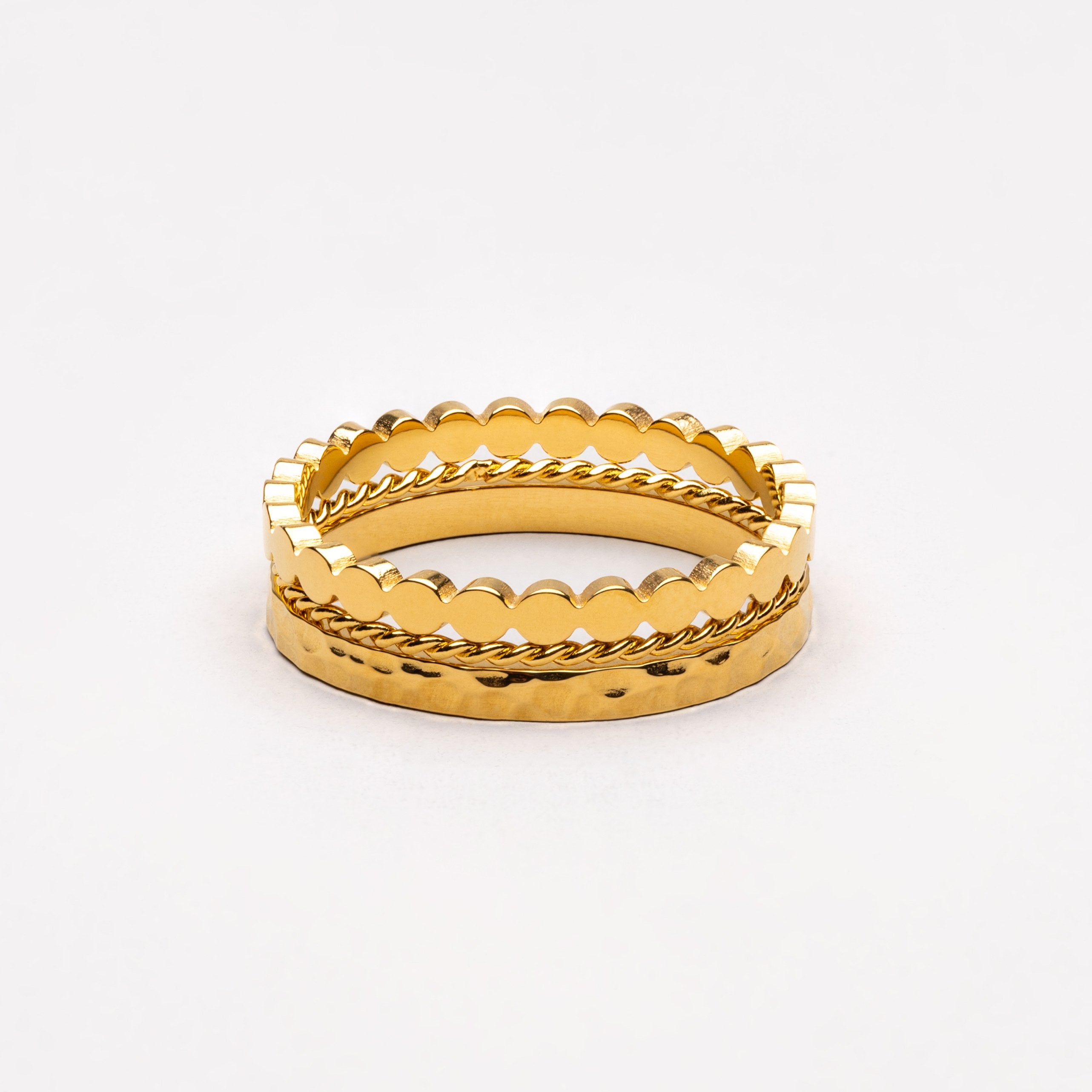
That is the idea behind Atolea's hypoallergenic jewelry collection, a good place to see how a stainless steel base and PVD finish look across earrings, bracelets, necklaces and rings. Our pieces use high-quality stainless steel with an 18k gold PVD finish (about 10x thicker than standard gold plating, according to Atolea), made for the shower, pool, ocean, gym and sweat, and considered safe for most people with sensitive skin.

Final Thoughts
The seven types of jewelry metals each have a place: gold and platinum for lasting value, sterling silver for classic brightness, stainless steel and titanium for daily durability, and brass and copper for budget-friendly style. Match the metal to your skin and your routine, and check what sits beneath any finish. When you are ready to shop, our skin-friendly everyday pieces are a simple place to start.
Frequently Asked Questions
What is the most durable type of jewelry metal?
Titanium, platinum and stainless steel are the most durable options for daily wear. Titanium is strong and light, platinum is dense and resists wear, and stainless steel is tough and affordable. Gold and silver are softer and scratch more easily, especially at higher purity.
Which jewelry metals are hypoallergenic?
Platinum and titanium are the metals most often recommended for sensitive skin, and good stainless steel and higher-karat gold suit many people too. Reactions usually come from nickel, so look for nickel-free labels and ask what lies under any plating.
Does sterling silver tarnish?
Yes. Sterling silver is 92.5% silver, and the other metal, usually copper, reacts with air, moisture and skin oils. Store it dry, wipe it after wearing and polish it with a soft cloth to slow tarnishing down.
Is plated or PVD jewelry real gold?
No, it is not solid gold. These pieces have a thin finish on top of another metal such as stainless steel or brass. Quality depends on the base metal and on how thick and well bonded the finish is. Solid gold is gold all the way through.
Can you wear metal jewelry in water?
It depends on the metal and finish. Sterling silver, brass and copper can tarnish or mark skin with repeated water exposure. Atolea designs its stainless steel pieces with a PVD finish for the shower, pool, ocean and gym, but pearl pieces should stay out of the water.









コメントを書く
このサイトはhCaptchaによって保護されており、hCaptchaプライバシーポリシーおよび利用規約が適用されます。