

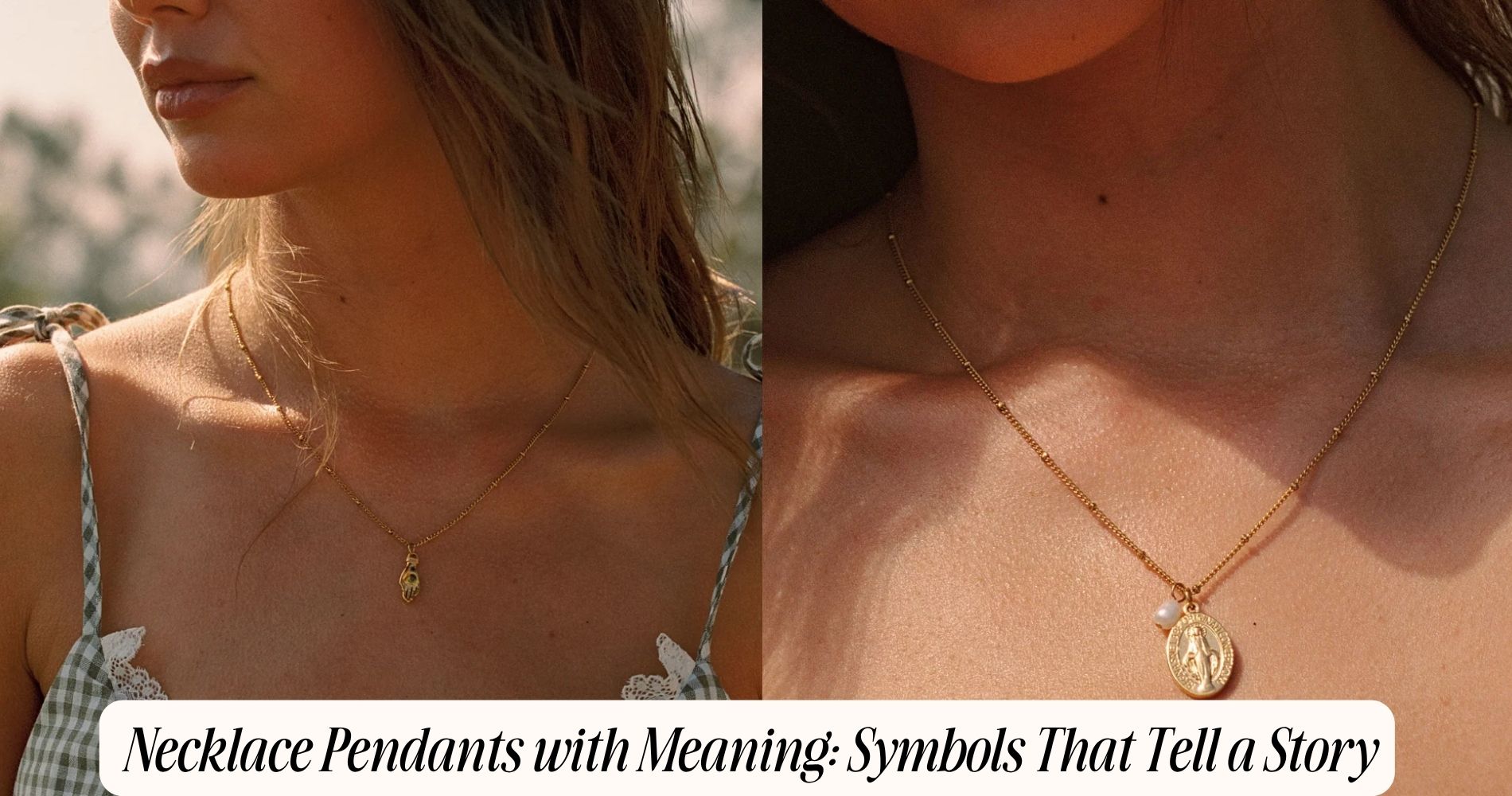
Necklace Pendants with Meaning: Symbols That Tell a Story
Choosing necklace pendants with meaning allows you to express belief, memory, and identity through a single, visible piece. Each motif can reflect a personal story—hearts for love, laurel for achievement, Celtic knots for continuity, the Hamsa for protection, or lockets and coordinate discs for deeply personal moments. Consider size, material, and craftsmanship based on your daily routine and wardrobe, while also respecting the cultural origins behind each design. Thoughtfully chosen necklace pendants with meaning can become lasting symbols of who you are—especially when styled with pieces from the Minimalist Gold Necklace collection—so keep reading for tips on selection, care, and customization.
Common Pendant Symbols and Their Meanings
Pendant symbols condense complex ideas into wearable icons, and understanding their origins helps you decode the messages they carry.
You’ll encounter motifs like the heart, laurel, cross, and knot; each carries layered symbolic associations rooted in historical practice. The heart’s association with affection evolved through art and devotional texts; laurel signals victory via Greco-Roman rites; the cross maps theological and cultural significance across regions.
Celtic knots suggest continuity and crafted cosmology, while animals—lion, dove, owl—encode strength, peace, and wisdom within social narratives.
When you read a pendant, note provenance, material, and iconography; those contextual details refine meaning. This disciplined, evidence-oriented approach helps you interpret pendants not as mere decoration but as condensed cultural statements.

How to Choose a Pendant That Fits Your Story and Style
Having mapped common symbols and their historical roots, you can now select a pendant that articulates your personal narrative and aesthetic.
Begin by cataloguing motifs that resonate with pivotal life episodes, noting materials, scale, and provenance; these factors shape how a pendant reads in context.
Assess your wardrobe and daily activities to align pendant size and metal with functionality and comfort.
Prioritize pieces that forge meaningful connections—heirlooms, bespoke designs, or symbols tied to personal milestones—so the object carries relational and mnemonic weight.
Balance symbolic density with visual clarity: a densely symbolic pendant demands contemplative wear, while minimalist emblems integrate into varied outfits.
Finally, consider craftsmanship and ethical sourcing as scholarly markers of authenticity that support your personal style and narrative coherence.
Religious & Spiritual Pendant Symbols
Symbols of faith and transcendence anchor many necklaces, and when you choose a religious or spiritual pendant you’re selecting more than decoration—you’re adopting a condensed theological and cultural statement.
You’ll notice faith symbols—crosses, prayer beads, menorahs, sutra-inscribed discs—operate as portable texts: they encode beliefs, lineage, and ritual practice.
In evaluating a pendant’s spiritual significance, consider provenance, iconography, and materials; provenance ties the object to pastoral or liturgical contexts, iconography determines doctrinal resonance, and materials suggest ritual value.
Many wearers seek divine protection through amuletic forms, but scholarly attention reminds you to read symbols within their cultural heritage to avoid appropriation.
Thoughtful selection balances personal devotion, historical context, and respect for originating communities.

Heritage Pendants: Celtic, Hamsa, Maori & Their Meanings
When you choose a heritage pendant—whether a Celtic knot, a Hamsa hand, or a Māori hei-tiki—you're wearing a compact history that ties personal identity to specific communities, practices, and cosmologies.
You engage with Heritage Jewelry as material culture: Celtic Knots encode interlacing lines that scholars read as continuity and interconnectedness; the Hamsa Hand functions across Mediterranean traditions as an apotropaic sign protecting against envy and misfortune; Māori Symbols like the koru and hei-tiki articulate whakapapa, status, and life cycles.
You should consider provenance, craft techniques, and community consent when wearing these emblems. Their Cultural Significance isn't merely aesthetic—it's a vector of memory, obligation, and Spiritual Connections that link your body to collective narratives and ethical responsibilities.
Personal & Relationship Pendant Ideas: Lockets, Initials, Coordinates
Heritage pendants anchor you to collective histories, but personal and relationship pendants relocate that meaning to intimate, lived experience: lockets, initial charms, and coordinate discs act as wearable archives of family, romance, and memory.
You examine locket designs as micro-archives — hinged forms that house photographs, hair, or tiny inscriptions — and assess materials, patina, and fastening for longevity.
You compare initial styles: monograms convey formality; sans-serif initials suggest modern minimalism; script initials intimate hand-written lineage.
You consider coordinate significance through precision: engraved latitude/longitude fixes a moment in space, anchoring narratives to places of origin or pivotal events.
As relationship symbols, these pendants function semiotically, encoding kinship, commitment, and memory in portable, interpretable form.
Nature & Element Pendant Symbols: Sun, Moon, Animals, Leaves
Although rooted in ancient cosmologies and ecological knowledge, nature-and-element pendants speak to contemporary wearers through compact visual grammar that balances symbolism, materiality, and scale.
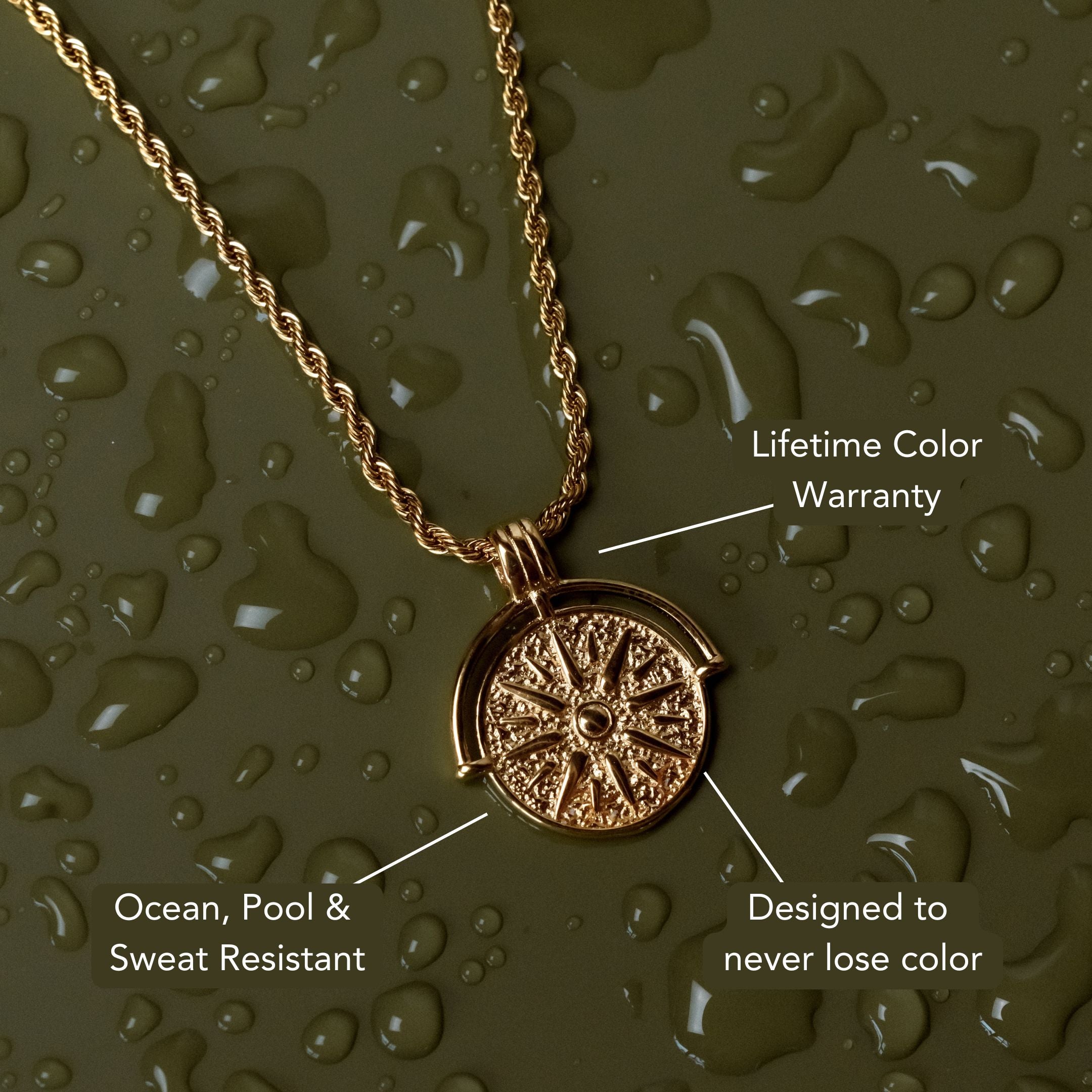
You’ll encounter sun and moon motifs that encode cycles—vitality, constancy, liminality—rendered with proportional restraint so they read at a glance.
Leaves and botanical forms map seasonal narrative and ecological attunement; their veins and silhouettes function like shorthand for renewal and resilience.
Animal symbolism offers layered registers: predator and prey, totemic guidance, behavioral traits translated into wearable identity.
In curating nature inspired designs, you assess iconography, finish, and scale to guarantee meaning survives abstraction.
You’ll favor pieces where craftsmanship clarifies intent, letting symbolic economy and tactile presence coexist without overstating sentiment.

Make a Pendant an Heirloom: Materials, Care, and Customization
Symbolism and craftsmanship set the stage, but making a pendant into an heirloom requires decisions about materials, maintenance, and personalization that guarantee meanings endure across generations.
You’ll select durable metals—18K gold, platinum, or stabilized silver—and stable gemstones, prioritizing provenance and treatment reports.
Implement customization techniques like engraving, modular components, or reversible mounts so symbolic elements can adapt without compromising integrity.
Establish a care regimen: gentle cleaning, humidity-controlled storage, periodic professional inspections, and documented conservation notes that you pass along.
For heirloom preservation, create an archival dossier detailing symbolism, acquisition context, and any restoration history; include clear instructions for safe wear.
Those specific, documented choices assure the pendant’s narrative and material quality persist for descendants.
Frequently Asked Questions
Can Pendants Be 3d-Printed With Meaningful Designs?
Yes — you can 3D-print pendants with meaningful designs; using 3D printing technology and design software, you’ll achieve customization options, refine symbolic details, guarantee material suitability, and iterate prototypes for contextual, durable, and personal results.
How Do Pendants Impact Skin Sensitivities or Allergies?
They can trigger reactions; you’ll develop rashes if you’re sensitive to metal allergies, so assess pendant materials carefully, prefer hypoallergenic metals or coatings, and monitor contact duration, corrosion, and sweat-driven ion release for precise dermatological risk management.
Can I Insure a Sentimental Pendant and How Much Does It Cost?
Yes — you can insure a sentimental pendant; you’ll need an insurance appraisal documenting replacement value. Costs vary by value and policy, typically 0.5–2% of appraised value annually, plus possible deductible and rider fees.
Are There Ethical Sourcing Certifications for Pendant Gemstones?
Yes — you can seek ethical sourcing and gemstone certifications; you’ll find responsible mining standards like Fairtrade, RJC, and Kimberley Process, guiding sustainable jewelry practices, ensuring traceability, labor protections, and environmental accountability.
What Are Etiquette Rules for Gifting Symbolic Pendants?
You should match gift occasions and recipient preferences, explain symbolism clearly, respect cultural meanings, choose quality materials, include care instructions, avoid presumptive messages, and present thoughtfully with appropriate timing and modest packaging.
Conclusion
You’ve seen how pendant symbols carry layered meanings—cultural, spiritual, personal—and how choosing one lets you tell a precise story about identity, belief, or bond. When you pick materials, motifs, and craftsmanship, you balance aesthetics with durability and legacy; care and customization guarantee the piece endures. Let your pendant articulate context—heritage, relationships, nature—so it functions as both adornment and artifact, ready to be worn, interpreted, and passed down.









コメントを書く
このサイトはhCaptchaによって保護されており、hCaptchaプライバシーポリシーおよび利用規約が適用されます。