


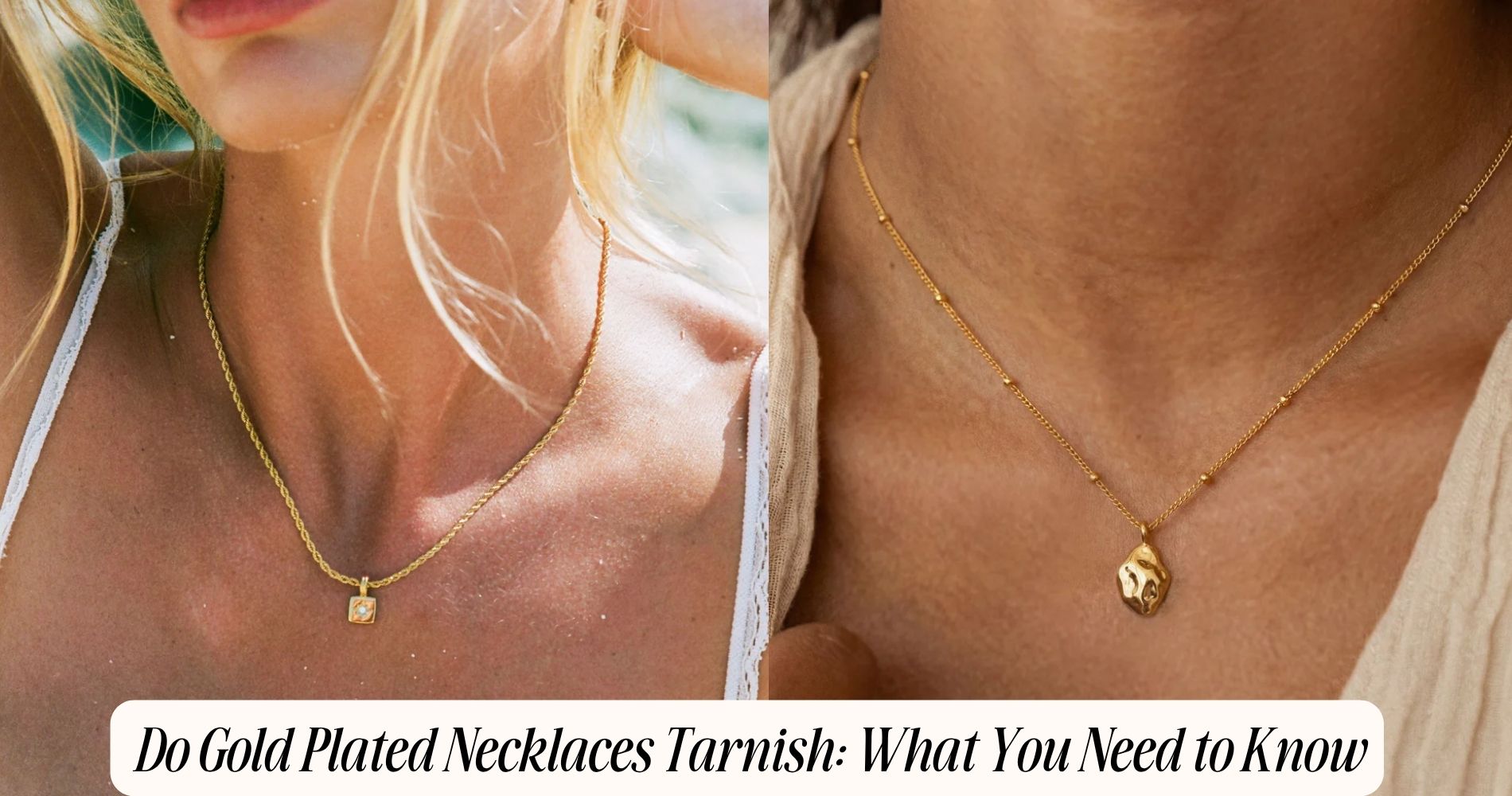
Do Gold Plated Necklaces Tarnish: What You Need to Know
Do gold plated necklaces tarnish? Yes—your gold plated necklace will tarnish over time; the rate depends on plating thickness, method, and the base metal underneath. Thin fashion plating (under 0.5 µm) may show wear within months, while thicker layers can last for years with proper care. Factors like moisture, sweat, and abrasion speed up tarnishing once the gold layer wears down. Proper storage, drying, and gentle cleaning help extend its lifespan—while more durable options, like those in the Hypoallergenic Necklace collection, can offer better everyday wear.
Do Gold Plated Necklaces Tarnish? Typical Lifespan
How long will a gold plated necklace last before it tarnishes? You’ll typically see tarnish within months to several years depending on measurable variables.
Assess tarnishing factors such as base-metal composition, plating thickness (microns), plating method (electroplating vs. PVD), and exposure to humidity, sweat, cosmetics, and pollutants.
Empirical studies and industry standards link thicker plating—commonly 0.5–2.5 microns—to longer lifespan expectations; thin fashion plating (<0.5 µm) often changes within months.
Controlled wear testing shows intermittent use and proper storage extend usable appearance; continuous wear accelerates degradation.
You should set realistic lifespan expectations by checking plating specs and performing accelerated corrosion tests when available, then plan maintenance or replacement accordingly.

What Causes Gold Plated Necklaces to Tarnish?
Because gold plating is a thin conductive layer over a less noble metal, corrosion processes that affect the substrate or the metal interface drive tarnish rather than the gold itself.
You’ll see discoloration when oxygen, moisture, sulfides, or chlorides penetrate cracks or pinholes, oxidizing the base metal (commonly copper or brass) and producing sulfide/oxide films that diffuse to the surface.
Electrochemical reactions accelerate with sweat (salt, acids) and pollutants; galvanic coupling between dissimilar metals intensifies corrosion.
Mechanical wear and abrasive cleaning remove protective layers, exposing reactive substrate.
For evidence-based tarnish prevention, control exposure to corrosives, dry the piece after use, and avoid chemicals.
Follow specific maintenance tips: gentle cleaning with a soft cloth, store in low-humidity, and limit continuous skin contact.
How Plating Thickness (Microns) Affects Necklace Lifespan
Plating thickness, measured in microns, directly governs a gold-plated necklace’s durability by controlling how long the noble layer can withstand mechanical wear and chemical attack before the substrate is exposed.
You should expect a clear correlation: thicker coatings (commonly 1–5+ µm for vermeil, 0.5–2 µm for premium plating, and <0.5 µm for fashion pieces) extend plating durability by providing more material to abrade or corrode away.
Thickness influence follows predictable kinetics—abrasive wear removes a roughly constant volume per cycle, so lifespan scales approximately with thickness under similar use.
Chemical degradation rates (sulfidation, chloride attack) also require more time to penetrate thicker films.
For decision-making, prioritize quantified micron values and independent testing (salt spray, abrasion cycles) rather than marketing terms alone.

Which Base Metals Make Gold Plating Tarnish Faster?
Thicker gold layers slow wear, but the metal beneath still controls how quickly the plated surface discolors once the gold is compromised.
If the substrate is a copper alloy, you'll see rapid oxidation that migrants through microcracks, producing greenish or brownish tarnish that accelerates visible degradation.
Brass and bronze variants behave similarly because their copper content promotes sulfidation and verdigris formation under humid or acidic conditions.
Nickel alloys present a different risk: nickel exposure beneath thin gold can cause localized blackening and allergic reactions, and electrochemical interactions between gold and nickel increase corrosion rates in saline environments.
If you want durable, low-tarnish plating, choose inert substrates such as sterling silver with proper barrier layers or nickel-free, low-copper alloys with corrosion-resistant undercoats.
Which Daily Habits Damage Gold Plated Necklaces?
When you wear gold-plated necklaces daily, routine exposures—sweat, skin oils, cosmetics, and environmental pollutants—chemically and mechanically degrade the thin gold layer, accelerating microabrasion and promoting substrate corrosion once the barrier is breached.
You should avoid sleeping, showering, or exercising with plated pieces because continuous friction and elevated moisture increase ion transport and abrasive wear, thinning the gold.
Applying perfumes, lotions, or makeup directly transfers solvents, surfactants, and acids that complex with base metals and lift the plating.
Swimming in chlorinated or salt water exposes pieces to halide ions and galvanic couples that accelerate pitting.
Even routine storage in humid bathrooms exposes necklaces to environmental factors that foster oxidation of the underlying metal, creating tarnish and blistering of the plating.
Simple Cleaning and Care to Keep Gold Plated Necklaces Shiny
Since daily habits accelerate wear and chemical attack on the thin gold layer, you can markedly extend a necklace’s shine with a few evidence-based care steps grounded in basic surface chemistry and mechanical preservation.
Rinse after sweat or cosmetic exposure to remove salts and acidic residues; pat dry with a lint-free microfiber cloth to avoid abrasive micro-scratches. Use mild, pH-neutral detergent in dilute solution for periodic cleaning; avoid ultrasonic or steam cleaners that can delaminate plating.
Store flat or hanging in inert, anti-tarnish pouches to minimize contact and abrasion. Don’t sleep, swim, or exercise while wearing plated pieces.
These preventative measures and maintenance tips reduce galvanic corrosion and mechanical erosion, preserving surface continuity and optical reflectivity without altering plating thickness.

When to Repair or Replate a Gold Plated Necklace
Although a thin gold layer can look fine for a time, you should consider repair or replating once wear patterns expose the base metal, show persistent discoloration that cleaning won’t remove, or when surface defects compromise function (e.g., weakened clasps or chain links).
You should inspect for repair signs: localized loss of plating, substrate corrosion, green or dark staining, or mechanical failure at solder joints. Quantify damage with magnification and resistive testing if available; measurable substrate exposure >10% or active corrosion warrants intervention.
Replating options include electroplating with controlled thickness (0.5–2 µm), flash plating for cosmetic refresh, or PVD for higher durability.
Balance cost, intended wear, and metal compatibility; document pre- and post-process condition for warranty and quality control.
How to Choose Long-Lasting Gold Plated Necklaces
Having assessed wear patterns and repair thresholds, you’ll want selection criteria that minimize future maintenance and replating frequency.
Prioritize plating thickness (measured in microns); ≥2.5 μm provides demonstrable durability improvements versus flash plating. Favor inert base metals like stainless steel or brass with nickel-free formulations to reduce galvanic corrosion.
Examine clasp and jump-ring construction—soldered joins resist stress fractures. For finish, choose high-polish or brushed textures that hide microabrasion; plated surfaces with an electrochemical sealant show lower tarnish rates in lab tests.
Balance style considerations with metallurgy: simpler chains distribute wear evenly. Consider warranty terms and accessible replating services as part of budget options.
Use empirical data and vendor specs rather than marketing claims when comparing pieces.

Frequently Asked Questions
Can Gold Plated Necklaces Cause Skin Allergies or Irritation?
Yes — you can get skin reactions from gold plated necklaces if metal sensitivities expose you to base metals or degraded plating; clinical evidence shows repeated contact and sweat-driven corrosion increase allergen release and dermatitis risk.
How Can I Tell Real Gold From Gold Plating at Home?
You can distinguish real gold from plating by using gold authenticity testing methods: magnet, acid (nitric) spot, density measurement, and loupe inspection for wear lines; you’ll interpret objective results and document evidence-based conclusions.
Are Vermeil and Gold Plated the Same Thing?
No — you’ll note vermeil definition differs: vermeil uses thick gold over sterling silver with strict standards, while gold plating differences include base metals and thinner deposits; you’ll prefer vermeil for durability and hypoallergenic properties.
Can I Wear Gold Plated Necklaces in Water (Shower, Pool, Ocean)?
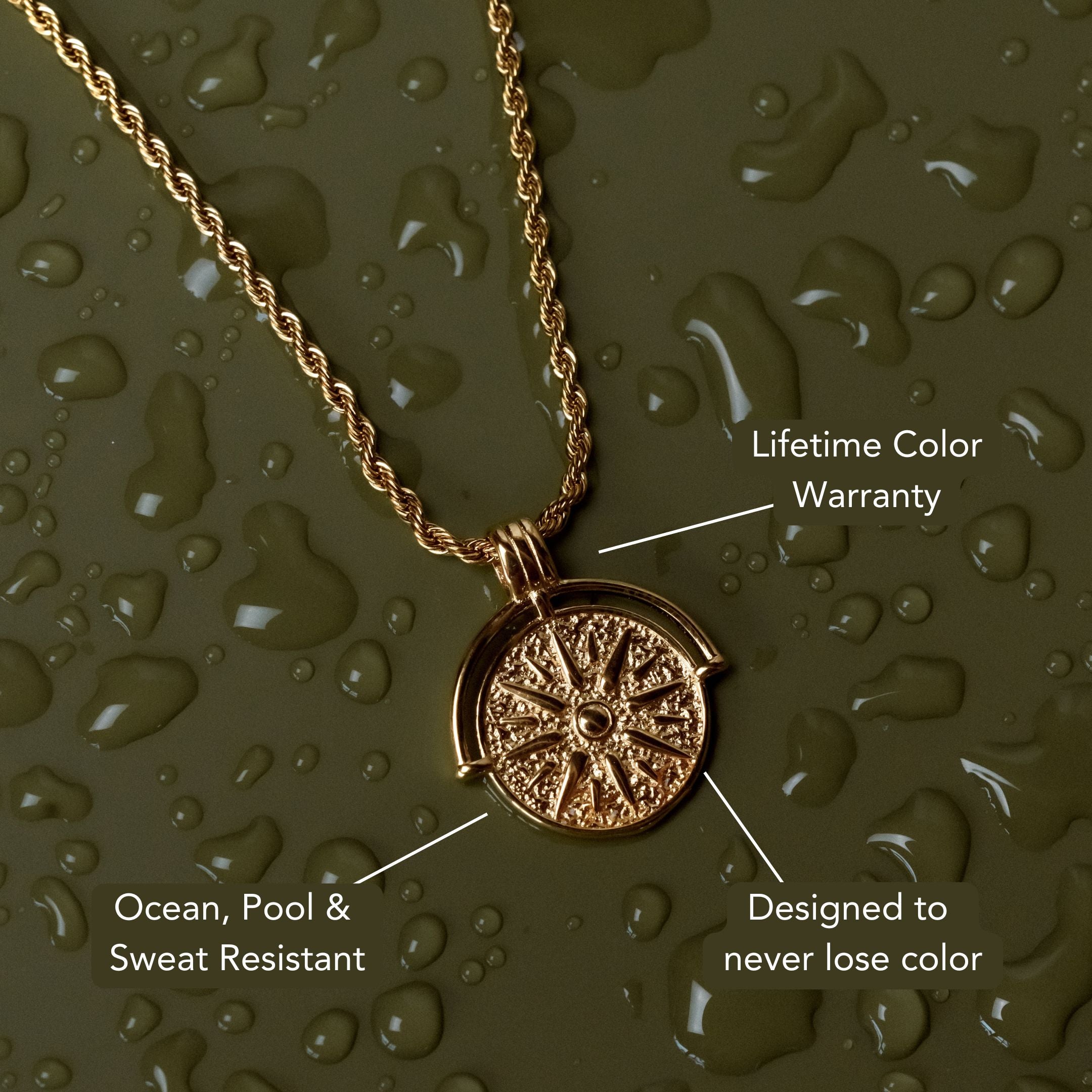
You shouldn’t wear gold plated necklaces in water; repeated water exposure accelerates base metal corrosion and plating loss. For proper necklace maintenance, remove jewelry before showering, swimming, or ocean exposure and dry/store it promptly.
How Should I Store Multiple Gold Plated Necklaces to Prevent Tangling?
Store each necklace separately using soft pouches or compartmentalized trays; label compartments for necklace organization. Use anti-tarnish strips, silica gel, and vertical hanging bars as storage solutions to reduce friction, moisture, and chain entanglement.
Conclusion
You can expect gold plated necklaces to tarnish over time; typical lifespans range from months to a few years depending on plating thickness, base metal, and exposure. Avoid chemicals, sweat, and abrasion to slow degradation. Clean gently with mild soap and a soft cloth, and replate when wear reaches ~30% exposure. Choose thicker microns, inert bases like stainless steel, and sealed finishes for the longest, most predictable performance and minimized maintenance.










コメントを書く
このサイトはhCaptchaによって保護されており、hCaptchaプライバシーポリシーおよび利用規約が適用されます。