

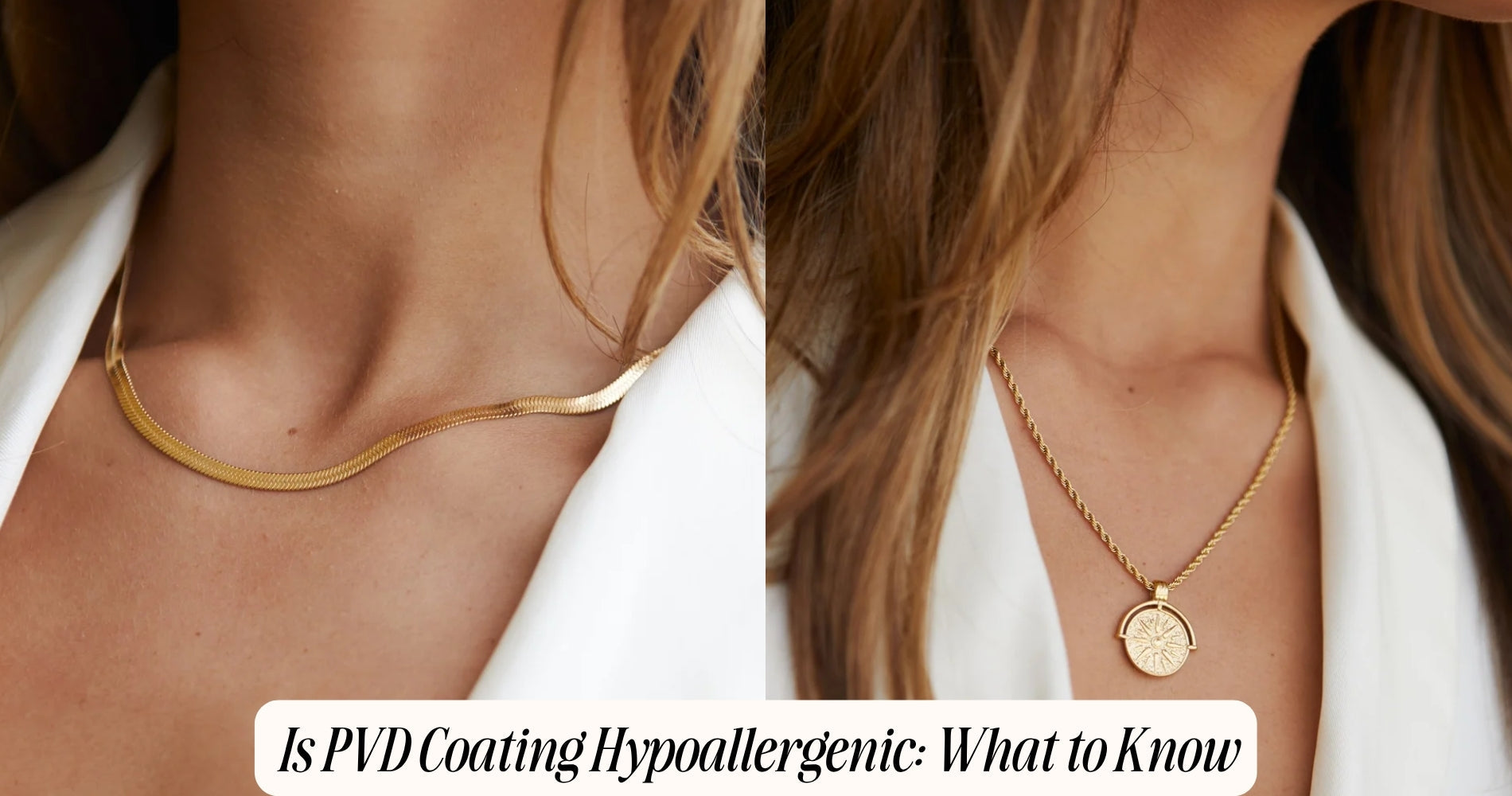
Is PVD Coating Hypoallergenic: What to Know
If you have sensitive skin and have been considering jewelry featuring PVD coating, you have likely come across mixed information about whether this popular coating technology is genuinely safe for those prone to metal related irritation. Understanding is PVD coating hypoallergenic requires looking beyond the coating itself and considering the specific base material underneath, since these two factors work together to determine whether a particular piece is truly suited for sensitive skin.
In this guide, we will explain exactly how PVD coating interacts with skin sensitivity, what actually determines hypoallergenic safety, and how to shop confidently if you deal with metal allergies. If sensitive skin has made jewelry shopping feel more complicated, our Hypoallergenic Jewelry collection is designed specifically with this concern in mind.
Is PVD Coating Hypoallergenic
Generally speaking, yes, PVD coating itself is typically considered hypoallergenic, since the coating creates a smooth, tightly bonded, biologically inert surface layer that does not readily react with skin. However, this answer comes with an important caveat: PVD coating is applied over a base material, and the specific hypoallergenic safety of a finished piece depends significantly on both the coating and what lies underneath it.
Understanding this distinction is essential for anyone with metal sensitivities specifically evaluating whether a particular PVD coated piece is truly safe for their skin.

How PVD Coating Works and Why It Matters for Sensitivity
PVD, which stands for Physical Vapor Deposition, is a specialized coating process that applies an extremely thin, durable layer of material onto a base surface through vacuum based vaporization. Unlike traditional electroplating, which relies on a chemical bonding process, PVD coating occurs at a molecular level within a controlled vacuum environment, creating an exceptionally strong, uniform bond between the coating and the surface underneath.
This tight, molecular level bonding is part of why PVD coating tends to perform well for those with sensitive skin, since the coating itself typically presents a smooth, stable surface that does not easily flake, peel, or wear away to expose the base material underneath, at least not as quickly as traditional plating methods often do.
Why the Base Material Still Matters
While PVD coating itself is generally well tolerated, the base material underneath the coating remains a genuinely important factor in determining overall hypoallergenic safety, for a few key reasons.
Coating Can Eventually Wear Down
Even though PVD coating offers significantly improved durability compared to traditional electroplating, no coating lasts indefinitely with regular wear. Over time, particularly in high friction areas such as the underside of rings or clasp areas of bracelets, the coating can gradually thin, eventually exposing the base metal underneath. If that base metal contains nickel or other reactive materials, this exposure could potentially trigger irritation once the protective coating has worn away.
Microscopic Imperfections
While PVD coating is applied with remarkable precision, extremely small imperfections or thin spots can occasionally occur during the manufacturing process, particularly around edges, engravings, or more intricate design details. In these areas, slightly increased contact with the underlying base material becomes possible, even while the majority of the piece remains fully coated.

Common Base Materials Used With PVD Coating
Understanding which base materials are commonly paired with PVD coating can help clarify how likely a specific piece is to remain genuinely hypoallergenic over time, even accounting for eventual coating wear.
Stainless Steel
Surgical grade stainless steel, particularly 316L, is a common base material for PVD coated jewelry. While this grade does contain trace nickel, it is formulated in a way that significantly reduces the likelihood of nickel release, meaning even with some coating wear over time, many people with mild sensitivity continue to tolerate this combination reasonably well.
Titanium
Titanium serves as an excellent base material for PVD coating, given its own naturally hypoallergenic properties. Because titanium itself contains no nickel, even if the PVD coating gradually wears in certain areas over time, the underlying metal remains genuinely safe for sensitive skin, offering meaningful peace of mind compared to less consistently hypoallergenic base materials.
Brass or Other Base Metals
Some lower cost PVD coated jewelry uses brass or other base metals that may contain nickel or other reactive materials as part of their alloy composition. For these pieces, hypoallergenic safety depends much more heavily on the coating remaining fully intact, since any wear exposing the base metal underneath could potentially trigger irritation for sensitive individuals.
How to Choose Genuinely Hypoallergenic PVD Coated Jewelry
If you have sensitive skin and want to shop for PVD coated jewelry with confidence, a few specific considerations can help guide safer choices.
Check the Base Material Specifically
Rather than relying solely on PVD coating status, look specifically for jewelry that combines PVD coating with a genuinely hypoallergenic base material, such as titanium or well formulated surgical steel, ensuring the piece remains safe even if the coating experiences some wear over time.
Look for Explicit Hypoallergenic Labeling
Reputable jewelry retailers specifically catering to sensitive skin typically label their PVD coated pieces clearly, indicating both the coating type and the specific base material used, offering more complete transparency compared to jewelry that only mentions the PVD coating without further material details.
Consider Your Specific Sensitivity Level
For those with mild sensitivity, PVD coated jewelry over surgical steel often works perfectly well. For those with more significant, confirmed nickel allergies, prioritizing PVD coating over a completely nickel free base material like titanium offers additional reassurance, since this combination remains safe regardless of any eventual coating wear.
Signs PVD Coated Jewelry May Be Causing Irritation
If you are wearing PVD coated jewelry and begin experiencing irritation, a few signs can help you determine whether the coating itself or the underlying base material may be responsible.
Irritation that develops gradually over time, particularly in high friction areas like the inside of a ring band, may suggest the coating has begun to wear thin in that specific location, exposing the base material underneath. If irritation appears relatively quickly after purchasing a new piece, this could suggest either an unusually thin coating application or a genuine reaction to the coating material itself, though this is considerably less common compared to reactions tied to base metal exposure.
What to Do If You Suspect a Reaction
If you experience irritation while wearing PVD coated jewelry, removing the piece promptly and allowing your skin to fully heal is the appropriate first step. Once healed, examining the piece closely, ideally with a magnifying glass, can help you check for any visible signs of coating wear or thinning that might explain the reaction.
If you continue experiencing irritation even with jewelry combining PVD coating and a genuinely hypoallergenic base material like titanium, consulting a dermatologist for formal patch testing can help identify whether a different, less common sensitivity might be involved.
Comparing PVD Coating to Other Coating Types for Sensitive Skin
Compared to traditional electroplating, PVD coating generally offers meaningfully improved protection for sensitive skin, simply because the coating itself tends to last considerably longer before wearing thin enough to expose the base material underneath. Traditional gold plating, by contrast, often wears away more quickly, meaning any hypoallergenic protection it offers tends to be shorter lived compared to PVD coating applied over an appropriate base material.

Final Thoughts
So, is PVD coating hypoallergenic? The coating itself is generally well tolerated and considered hypoallergenic, but genuine long term safety for sensitive skin depends significantly on the specific base material used underneath. Choosing PVD coated jewelry built on genuinely hypoallergenic base materials, such as titanium or well formulated surgical steel, offers the most reliable combination of attractive, durable coating and dependable skin safety, even as the coating naturally experiences some wear over years of regular use.
Understanding this distinction empowers you to shop for PVD coated jewelry with genuine confidence, rather than assuming the coating alone guarantees complete hypoallergenic safety regardless of what lies underneath.
Frequently Asked Questions
1. Is PVD coating itself likely to cause an allergic reaction?
Generally no, PVD coating creates a smooth, biologically inert surface that is typically well tolerated, even by those with sensitive skin.
2. Does PVD coating eventually wear off?
Yes, though PVD coating lasts considerably longer than traditional plating, it can still gradually thin over years of regular wear, particularly in high friction areas.
3. What is the safest base material for PVD coated jewelry?
Titanium offers the most reliable safety, since it contains no nickel and remains hypoallergenic even if the PVD coating experiences some wear over time.
4. Should I avoid PVD coated jewelry entirely if I have a severe nickel allergy?
Not necessarily, but you should specifically choose PVD coated pieces built on a genuinely nickel free base material like titanium rather than relying on the coating alone for protection.









コメントを書く
このサイトはhCaptchaによって保護されており、hCaptchaプライバシーポリシーおよび利用規約が適用されます。