


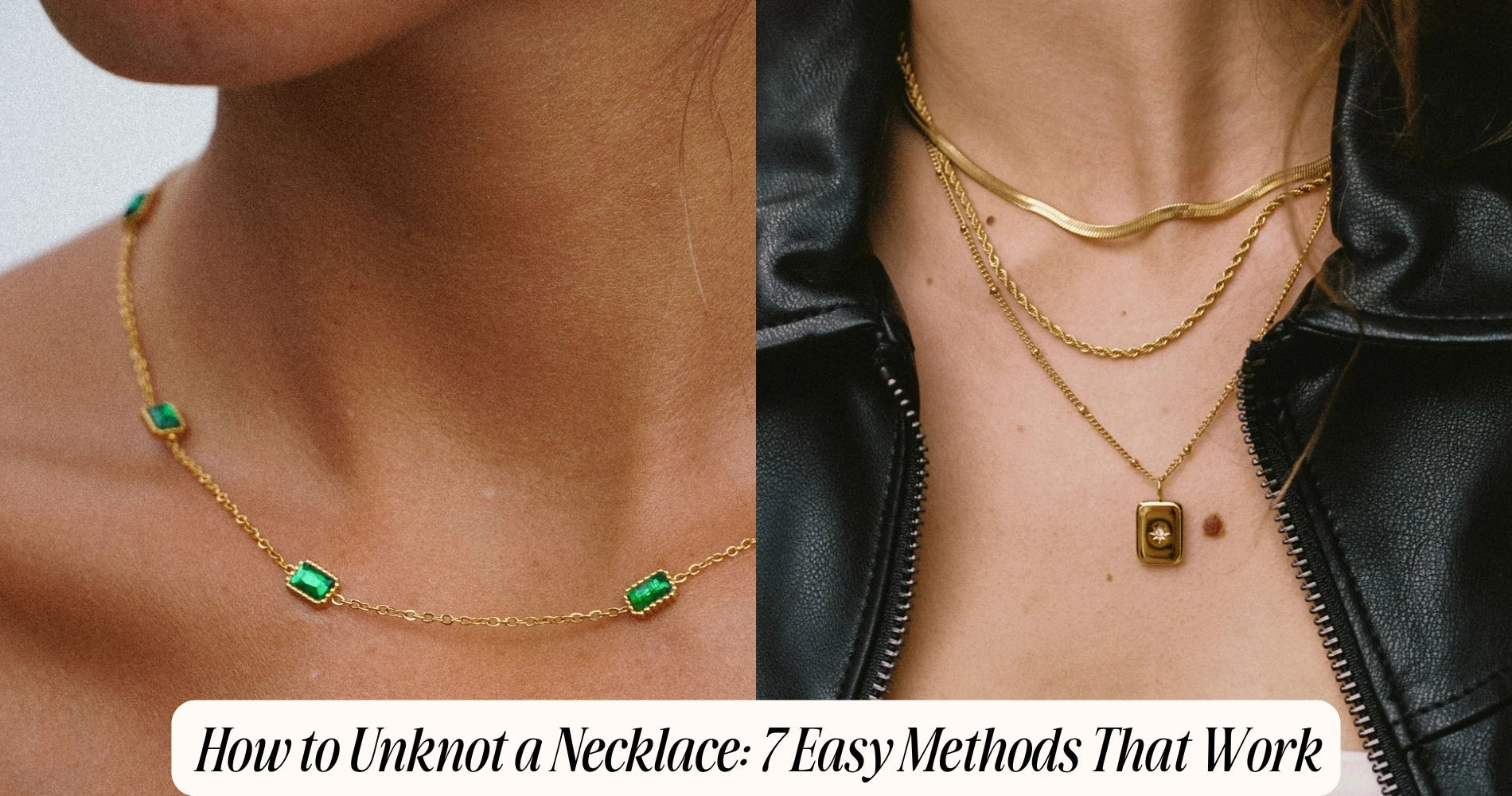
How to Unknot a Necklace: 7 Easy Methods That Work
Few jewelry frustrations are as universally relatable as pulling a favorite necklace out of a drawer only to find it hopelessly tangled into a stubborn knot. Delicate chains seem particularly prone to this frustrating issue, and pulling at a knot impatiently often makes the problem worse rather than better. If you have found yourself wondering how to unknot a necklace without causing damage, a few simple techniques using household items can make the process far less frustrating than it might initially seem.
In this guide, we will walk through seven effective methods for untangling knotted necklaces, along with tips for preventing this frustrating issue in the future. If your untangling efforts leave you ready for a fresh, low maintenance piece, our Everyday Gold Necklace collection offers simple, versatile designs perfect for daily wear.
Why Necklaces Get Tangled So Easily
Before diving into specific untangling methods, it helps to understand why certain necklaces seem particularly prone to knotting in the first place. Thinner, more delicate chains are significantly more likely to tangle compared to thicker, sturdier designs, simply because their flexibility makes it easier for the chain to loop back on itself when stored loosely or tossed into a bag or drawer without proper organization.
Understanding this tendency can help you both address current tangles more effectively and take steps to prevent future knotting through better storage habits, which we will cover toward the end of this guide.

Method 1: The Baby Oil or Olive Oil Method
One of the most effective methods for loosening a stubborn knot involves using a small amount of baby oil or olive oil to reduce friction within the tangled chain.
Place the knotted necklace on a flat surface and apply a small drop of oil directly onto the knot. Using two straight pins or sewing needles, gently begin working the knot loose, using the pins to carefully separate the individual strands of chain rather than pulling at the knot directly. The oil helps reduce friction between the metal links, making it significantly easier to tease the knot apart without excessive force.
Once the knot is fully loosened, gently wipe away any remaining oil residue using a soft cloth, ensuring the chain is completely clean before storing or wearing it again.
Method 2: The Two Pin Technique
For knots that are relatively loose or only mildly tangled, a straightforward two pin technique can often resolve the issue without needing any additional products.
Place the necklace on a flat, well lit surface, ideally over a light colored cloth or paper to make the tangled chain easier to see clearly. Using two straight pins, sewing needles, or even the tips of two safety pins, gently insert them into the knot from opposite sides, using them to slowly separate and loosen the tangled sections. Work patiently and slowly, gradually widening the knot rather than attempting to pull it apart all at once, which can risk tightening the knot further or damaging the delicate chain.

Method 3: The Baking Soda Paste Method
For knots that seem particularly stubborn, creating a thin paste using baking soda and a small amount of water can help provide additional slip, making the strands easier to separate.
Mix a small amount of baking soda with just enough water to create a thin, slightly runny paste. Apply a small amount directly to the knotted area, then use two pins or needles to gently work the knot loose, similar to the oil method described above. Once the knot is fully undone, rinse the necklace gently under lukewarm water to remove any remaining paste residue, then dry thoroughly with a soft cloth before storing or wearing.
This method works particularly well for pieces that are safe for water exposure, though it should be avoided for necklaces featuring pearls or other water sensitive materials.
Method 4: Using a Corkboard and Pins
For particularly stubborn or complex knots, anchoring the necklace to a stable surface can make the untangling process significantly easier to manage.
Place the necklace on a corkboard, then use a straight pin to secure one end of the chain firmly in place. With the necklace anchored, use a second pin to gently work through the knot, since having one end secured prevents the entire piece from shifting and sliding around as you work, making it much easier to focus specifically on loosening the tangled section.
This method is particularly helpful for longer necklaces or more elaborate chain designs, where the overall length can make handling the piece more challenging during the untangling process.

Method 5: The Talcum Powder Method
Similar to the oil and baking soda methods, talcum powder can help reduce friction within a tangled knot, making it easier to separate the individual chain links.
Sprinkle a small amount of talcum powder directly onto the knotted area, then use two pins to gently work the knot loose, following the same careful, patient technique described in the previous methods. Once the knot is undone, gently wipe the necklace clean using a soft, dry cloth to remove any remaining powder residue.
This method offers a helpful alternative for those who prefer to avoid using oil directly on their jewelry, particularly for pieces with a more delicate or sensitive finish.
Method 6: Using a Magnifying Glass for Complex Knots
For particularly intricate or tightly wound knots, using a magnifying glass alongside your chosen untangling method can make a significant difference in your ability to see exactly how the chain has become tangled. This added visibility helps you more precisely identify which direction to work the pins, rather than guessing at the knot's structure based on touch alone.
Combining a magnifying glass with any of the methods described above, particularly the oil or baking soda techniques, can make even the most stubborn, complex knots significantly more manageable to address.
Method 7: Taking It to a Professional Jeweler
If you have attempted several at home methods without success, or if you are working with a particularly delicate or valuable necklace where you are hesitant to risk further tangling or damage, taking the piece to a professional jeweler is always a reliable option. Many jewelers offer necklace untangling as a quick, often free or low cost service, particularly for customers who purchased the piece from their store.
This option is particularly worth considering for antique, sentimental, or especially delicate necklaces, where the risk of accidental damage from at home methods may outweigh the convenience of attempting to resolve the issue yourself.

Tips for Preventing Future Tangles
Once you have successfully untangled your necklace, a few simple storage habits can help prevent this frustrating issue from recurring in the future.
- Store necklaces individually rather than piling multiple chains together in a single space, since contact between different pieces significantly increases the likelihood of tangling over time.
- Use a necklace stand or hooks for hanging storage, which keeps chains separated and hanging freely rather than looped together in a drawer or box.
- Thread necklaces through a straw before securing the clasp if you need to store them flat, since this simple trick keeps the chain straight and prevents it from looping back on itself during storage.
- Fasten the clasp before storing, even if you are not hanging the necklace, since a closed loop is generally less prone to tangling compared to an open, unclasped chain.
Final Thoughts
Learning how to unknot a necklace does not require any special tools or professional expertise for most everyday tangles. With simple household items like pins, oil, or baking soda, combined with a bit of patience, you can resolve even fairly stubborn knots without damaging your favorite delicate chains. For particularly complex or valuable pieces, a professional jeweler remains a reliable backup option.
With these methods in mind, along with a few simple prevention habits, you can spend less time frustrated with tangled jewelry and more time actually enjoying your favorite necklaces.
Frequently Asked Questions
1. What household item works best for loosening a stubborn necklace knot?
Baby oil or olive oil is particularly effective, since it reduces friction between the chain links, making the knot easier to work loose with pins.
2. Can I use water to help untangle a necklace knot?
Yes, for necklaces safe for water exposure, a baking soda and water paste can help provide additional slip, though this method should be avoided for pearls or other water sensitive materials.
3. How can I prevent my necklaces from tangling in storage?
Storing necklaces individually, using hooks or a stand, and fastening clasps before storage can all significantly reduce the likelihood of future tangling.
4. When should I take a tangled necklace to a professional instead of trying to untangle it myself?
If at home methods are unsuccessful, or if the piece is particularly delicate or sentimental, a professional jeweler can safely untangle the necklace without unnecessary risk of damage.











コメントを書く
このサイトはhCaptchaによって保護されており、hCaptchaプライバシーポリシーおよび利用規約が適用されます。