

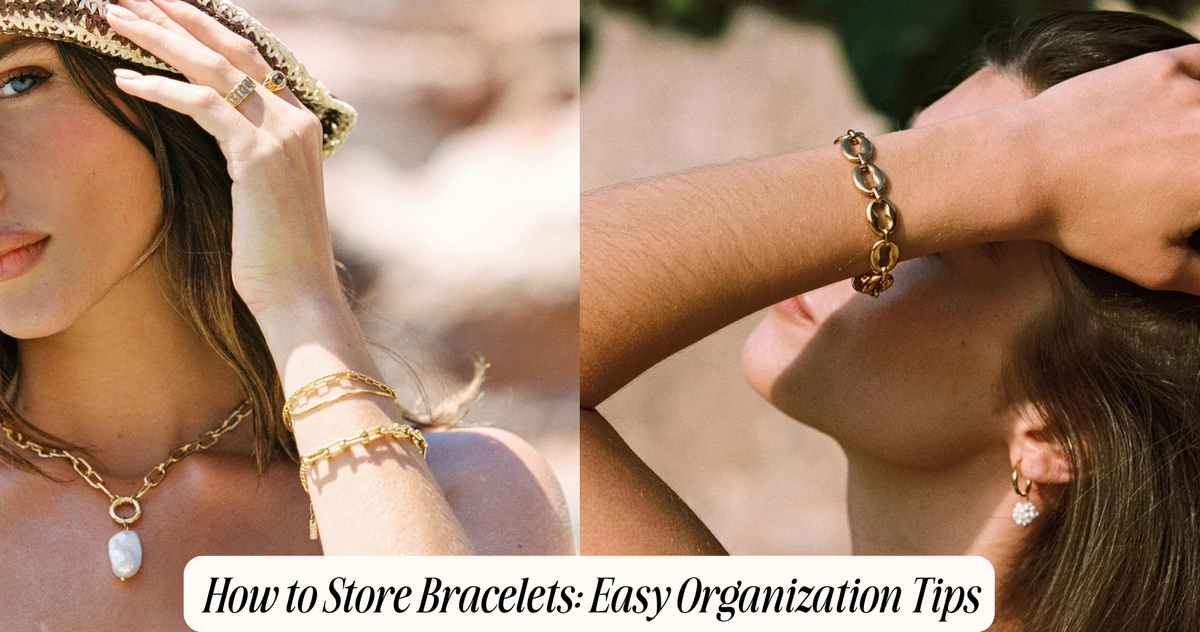
How to Store Bracelets: Easy Organization Tips
The best way to store bracelets is to keep each one separate, dry and lightly padded, so chains cannot tangle and metal cannot scrape against metal. A divided tray, a soft pouch or a hanging rail all work, as long as every bracelet has its own space. Whether you own three pieces or thirty, how to store bracelets comes down to those three habits.
Bracelets spend more time in a drawer than on your wrist, and that is where most scratches, knots and bent clasps happen. A little structure fixes it, especially if you wear everyday bracelets daily, since the pieces you reach for most are the ones that get dropped in a rush. In this guide, we will explain the best storage method for each bracelet style, how to prevent tangles, where to keep bracelets at home, and how to pack them for travel.
Quick answer: Store every bracelet separately in a dry, cool spot. Use a lined tray with dividers, small soft pouches or a hanging rail, and fasten clasps before putting chains away. Keep pearl and stone pieces apart from chains, and lay cuffs flat so they hold their shape.
What Is the Best Way to Store Bracelets?
The best way to store bracelets is a lined tray with individual compartments, because it keeps pieces from touching and lets you see everything at once. If space is tight, small soft pouches inside a drawer, or a wall rail for sturdier pieces, do the same job.
- Divided tray: Best for daily bracelets you grab often.
- Soft pouches: Best for pearl, stone and delicate chain pieces.
- Wall rail or hooks: Best for sturdy cuffs and bangles you want on display.

If necklaces share the same space, our guide on how to store long necklaces keeps their chains out of your bracelet tray.
How to Store Bracelets by Type: Chain, Cuff, Pearl and Beaded
Match the storage to the bracelet's shape. Chains need fastened clasps and separate slots, cuffs need room to keep their open curve, and pearl or stone pieces need padding so nothing rubs against hard metal. The table below shows the simplest setup for each type.
| Bracelet type | Best storage | What to avoid |
|---|---|---|
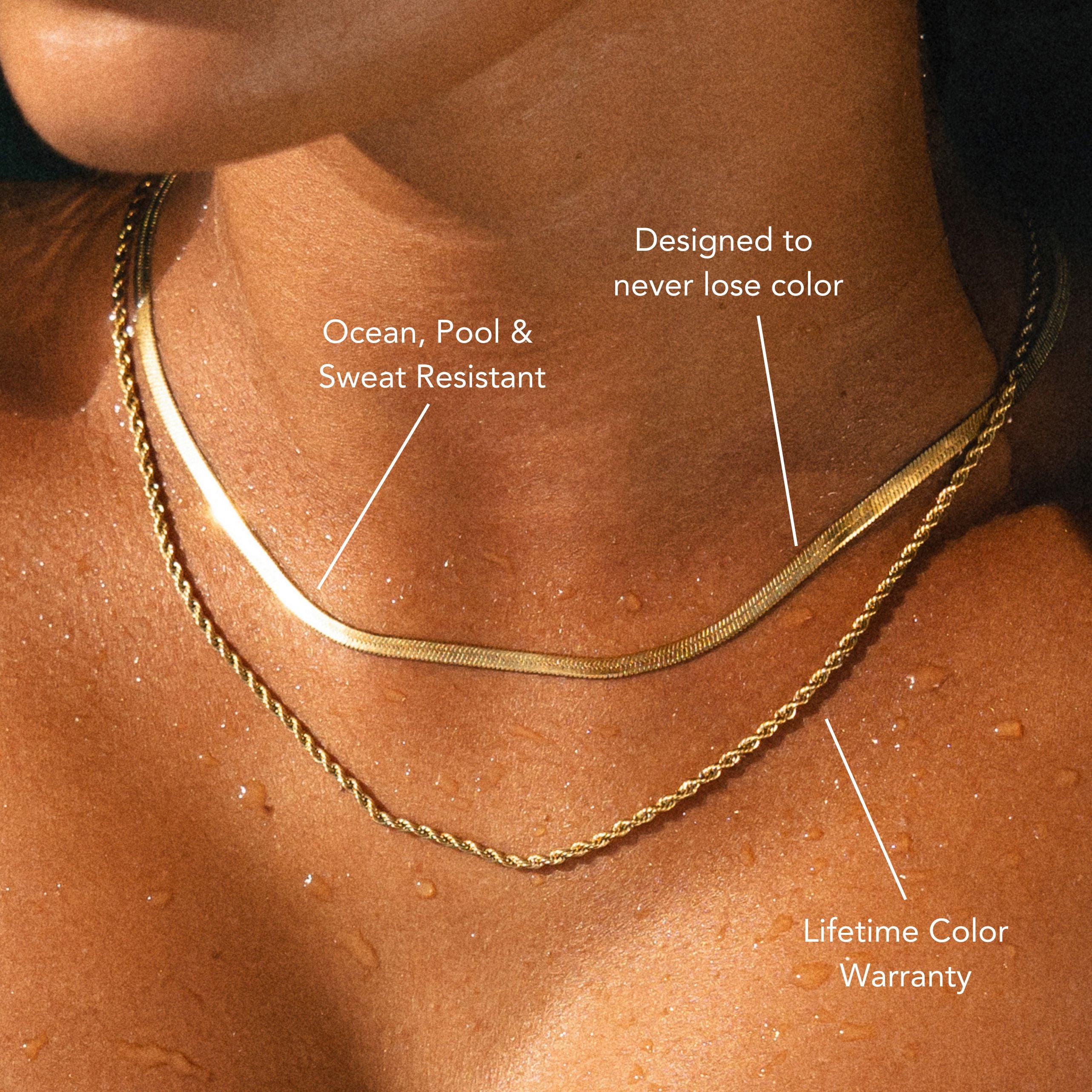
| Chain (herringbone, paperclip, rope) | Clasp fastened, laid flat in its own slot | Piling several chains together |
| Cuff or bangle | Flat in a wide compartment, or standing on a rail | Squeezing it into a narrow slot or stacking weight on top |
| Pearl or stone | Its own soft pouch or padded slot | Contact with chain links |
| Beaded | Flat in a shallow tray | Hanging from one point for long periods |
| Charm | Alone in a wide compartment | Lying next to chains where charms can snag |
Soft lining matters more than the container itself. Felt, velvet or microfiber prevents scuffs, and a quick wipe with a dry cloth before storing removes lotion and sweat.
How Do You Keep Bracelets From Tangling?
Fasten every clasp, give each chain its own slot, and never pile pieces together. Tangles start when open ends and extenders catch on neighboring links, so closing the clasp and tucking the extender in removes most of the problem.
- Fasten and tuck: Close the clasp and fold the extender back against the chain.
- Lay flat, do not coil: Flat chains, such as a herringbone bracelet, can kink if folded sharply.
- Hang by the clasp: On a hook, let the chain fall straight instead of looping it over several times.
Where Should You Store Bracelets at Home?
Choose a cool, dry, shaded spot such as a bedroom drawer or a closed box, away from the bathroom. Moisture and heat are the usual enemies of jewelry storage, so a stable indoor spot beats a sunny shelf or a steamy bathroom counter.
- Dry before storing: Even pieces designed for water do better when they go into storage dry.
- Add a silica gel packet: In a closed box, one packet helps if your room is humid.
- Keep pearls out of direct sun and heat: A closed drawer is better than a windowsill.
The same habits protect rings, as our guide on how to stop rings from tarnishing explains.
How Do You Organize Bracelets You Wear Every Day?
Keep your daily bracelets in one open tray where you get dressed, and store the rest in a closed drawer. A small rotation of favorites within reach means you put pieces back every day instead of leaving them on a counter.

Here is a simple example. Say your daily pair is the "Kauai" Herringbone Bracelet and the "Cozumel" Paperclip Bracelet. Both are chain styles with a 6-inch length plus a 2-inch extender, so they follow the same rules:
- Give each bracelet its own slot in a shallow tray.
- Fasten both clasps and tuck the extenders under the chain.
- Lay them side by side, not stacked, so the paperclip links cannot catch the finer herringbone, and wipe each with a soft cloth first.
If you stack several bracelets on one wrist, our how many bracelets to wear guide helps you choose a combination to rebuild each morning.
How Do You Pack Bracelets for Travel?
Use a small zip pouch or a travel roll with separate compartments, fasten each clasp, and keep bracelets in your carry-on rather than checked luggage. Padding and separation matter more on the move, because everything shifts.
- One pouch per bracelet: Small soft pouches stop chains from knotting inside a larger bag.
- Hard case for cuffs: A compact case keeps cuffs from being squashed under clothes.
- Wear the bulkiest piece: A cuff on your wrist is one less item to protect.
Which Bracelets Are Easiest to Store and Wear Every Day?
Bracelets you actually wear daily are easier to keep organized, because they get put away more often and in better order. Our everyday bracelets collection is built around that idea, with chain, cuff, pearl and beaded styles that suit a tray or a pouch. Atolea bracelets are made from high-quality stainless steel with an 18k gold PVD finish, which Atolea describes as about 10x thicker than standard gold plating.
Two pieces show how the storage rules apply. The Freshwater Pearl Bracelet uses genuine freshwater pearls, so give it its own soft pouch away from chains. The Thin Solar Cuff has an open, adjustable band with a single white zircon, so it belongs flat in a wide compartment.

Final Thoughts
Knowing how to store bracelets takes only a lined tray, a few soft pouches and three habits: separate, dry and fastened. Set it up once and your collection stays tangle-free, scratch-free and easy to wear. When you are ready to add to your stack, browse Atolea's everyday bracelet styles and plan a slot for each new piece.
Frequently Asked Questions
What is the best way to store bracelets so they do not tangle?
Fasten each clasp, tuck the extender in, and give every bracelet its own compartment or pouch. A divided tray works best for daily pieces, and a wall hook works for sturdier ones. Avoid piling bracelets together in a drawer, because open ends catch on neighboring links.
Should you store bracelets flat or hanging?
Both work. Flat storage in a shallow tray suits chains, beaded pieces and delicate bracelets, while hooks or a rail suit sturdy cuffs and bangles. Avoid hanging heavy or beaded bracelets from one point for long periods, since the weight can strain them over time.
Can you store bracelets in plastic bags?
Small plastic bags keep bracelets separate and are fine for short trips if the pieces are completely dry. For long-term storage, soft fabric pouches or a lined tray are better, because sealed plastic can trap moisture and does nothing to cushion against scratches.
Do you need to clean bracelets before storing them?
A quick wipe with a soft, dry cloth is enough after most wears. It removes lotion, sweat and dust before they sit against the finish. If a bracelet is wet, let it dry fully before it goes into a pouch or closed box.










コメントを書く
このサイトはhCaptchaによって保護されており、hCaptchaプライバシーポリシーおよび利用規約が適用されます。