

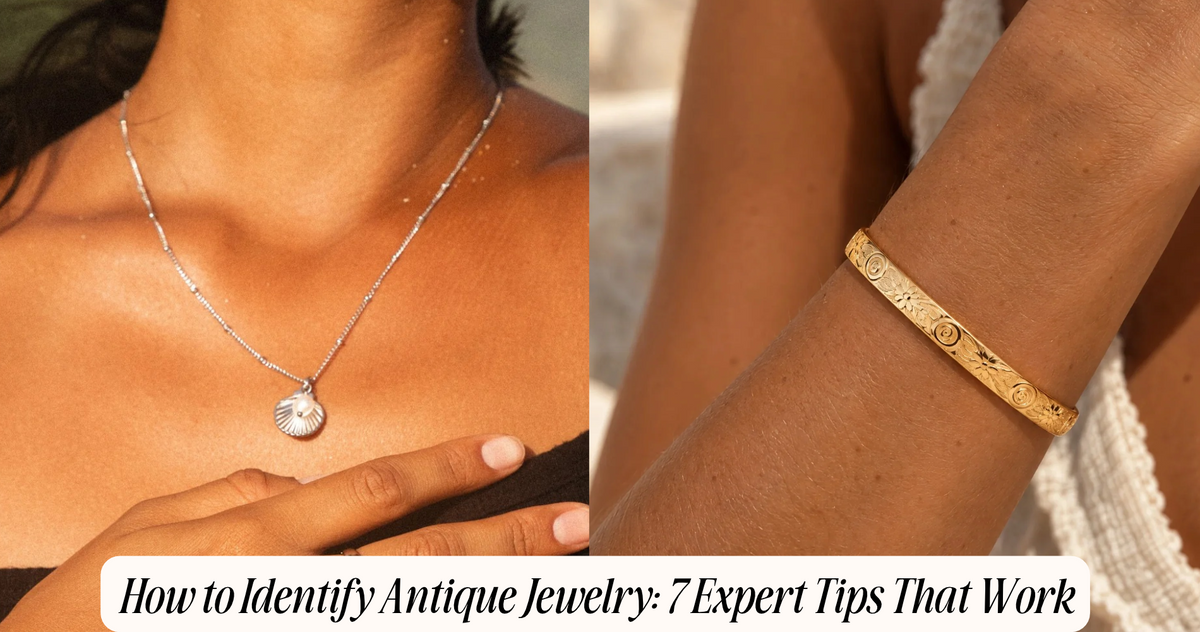
How to Identify Antique Jewelry: 7 Expert Tips That Work
Knowing how to identify antique jewelry comes down to five checks: age, marks, metal, construction and wear. A piece must be about 100 years old to count as antique, and no single clue proves it, so you read the evidence together.
If you also want pieces for daily wear, our hypoallergenic jewelry is a modern counterpart to the classic shapes you will meet here. In this guide, we will explain seven checks, the marks and eras to know, and when to ask a professional.
Quick answer: To identify antique jewelry, confirm it is about 100 years old, then inspect hallmarks with a 10x loupe, test the metal, study construction and clasps, date the stones and settings, and judge the wear. Ask an appraiser to confirm anything valuable.
How do hallmarks and maker's marks help you identify antique jewelry?

Hallmarks tell you the metal, and sometimes the maker, country or year. Use a 10x loupe to inspect clasps, inside ring bands, pendant backs and earring posts, then match what you see to a reliable mark reference.
| Mark | What it usually means | Watch out for |
|---|---|---|
| 925 | Sterling silver, 92.5% pure | Modern copies carry it too |
| 750 or 18K | 18k gold, 75% pure | Not proof of age |
| 585 or 14K | 14k gold, 58.5% pure | Not proof of age |
| Maker's mark | Initials or a symbol | Can be added or forged later |
What can the metal tell you about its age?
Metal shows how a piece was made and worn. Solid gold wears smoothly and keeps its color, silver darkens in crevices, and plated pieces show brassy or coppery patches where the surface has rubbed through.
Platinum became common in jewelry around the Edwardian era, so a platinum setting typically points to the early 1900s or later. Gold color alone proves nothing, so compare the metal with the mark and the construction.
How does construction show whether jewelry is truly old?
Older jewelry was usually made by hand, so you will see small asymmetries, file marks and hand-pierced detail. Perfectly uniform, sharp-edged pieces often come from later machine production or are modern reproductions.
- Joins: Look for hand-soldered seams and slightly uneven links.
- Backs: Antique settings are often open at the back with hand-finished edges.
- Stones: Hand-cut stones vary in shape and facets, while very even cuts suggest newer work.
What do clasps and findings reveal?
Findings are the small working parts, such as clasps and earring backs, and they are easy to replace. Mismatched or very modern findings can mean a repair, a conversion or a reproduction, so inspect them closely.

- Necklaces and bracelets: Box clasps with a figure-eight safety latch are common on older pieces, while lobster clasps usually signal newer work.
- Earrings: Screw backs and simple hooks suit older pieces, and butterfly backs are modern.
- Rings: Worn, thin bands are normal, but bright fresh solder lines suggest resizing.
How do stones and settings date a piece?
Cut and setting style place a piece in an era. Old mine, old European and rose cuts suggest earlier work than modern brilliant cuts, and closed-back settings often point to the Georgian or Victorian periods.
| Era | Approximate dates | Typical clues |
|---|---|---|
| Georgian | 1714–1830 | Closed-back settings, hand-cut stones |
| Victorian | 1837–1901 | Sentimental motifs, seed pearls |
| Edwardian | 1901–1910 | Delicate platinum, fine filigree |
| Art Nouveau | c.1890–1910 | Flowing, nature-inspired lines |
| Art Deco | c.1920–1939 | Geometric, symmetrical designs |
Synthetic stones date from the early 1900s, so a set of identical, flawless gems deserves a second look.
Does the wear look natural or faked?
Genuine age shows as softened edges, a gentle patina and wear on high-contact points such as the underside of a ring band, the clasp area and raised details. Faked wear tends to look uniform or oddly placed.
Be wary of fresh deep scratches, darkened crevices that stop abruptly, and wear on surfaces that never touch skin or clothing. Heavy wear is not proof of age either, because a modern piece can look tired after years of daily use.
When should you ask a professional?
Ask a qualified gemologist or appraiser when a piece could be valuable, when marks are unclear, or when you plan to insure or sell it. A written appraisal documents age, materials and value, which your own checks cannot do.

Photograph the full piece and close-ups of marks, clasps and settings before you visit. Avoid acid or scratch tests at home, because they can damage the surface and lower the value.
What if you love the antique look but want jewelry for every day?
Keep true antiques for careful wear and choose a modern piece in a classic shape for daily life. Antique clasps and settings are often fragile, and their metal content is usually unknown, which matters if your skin is sensitive.
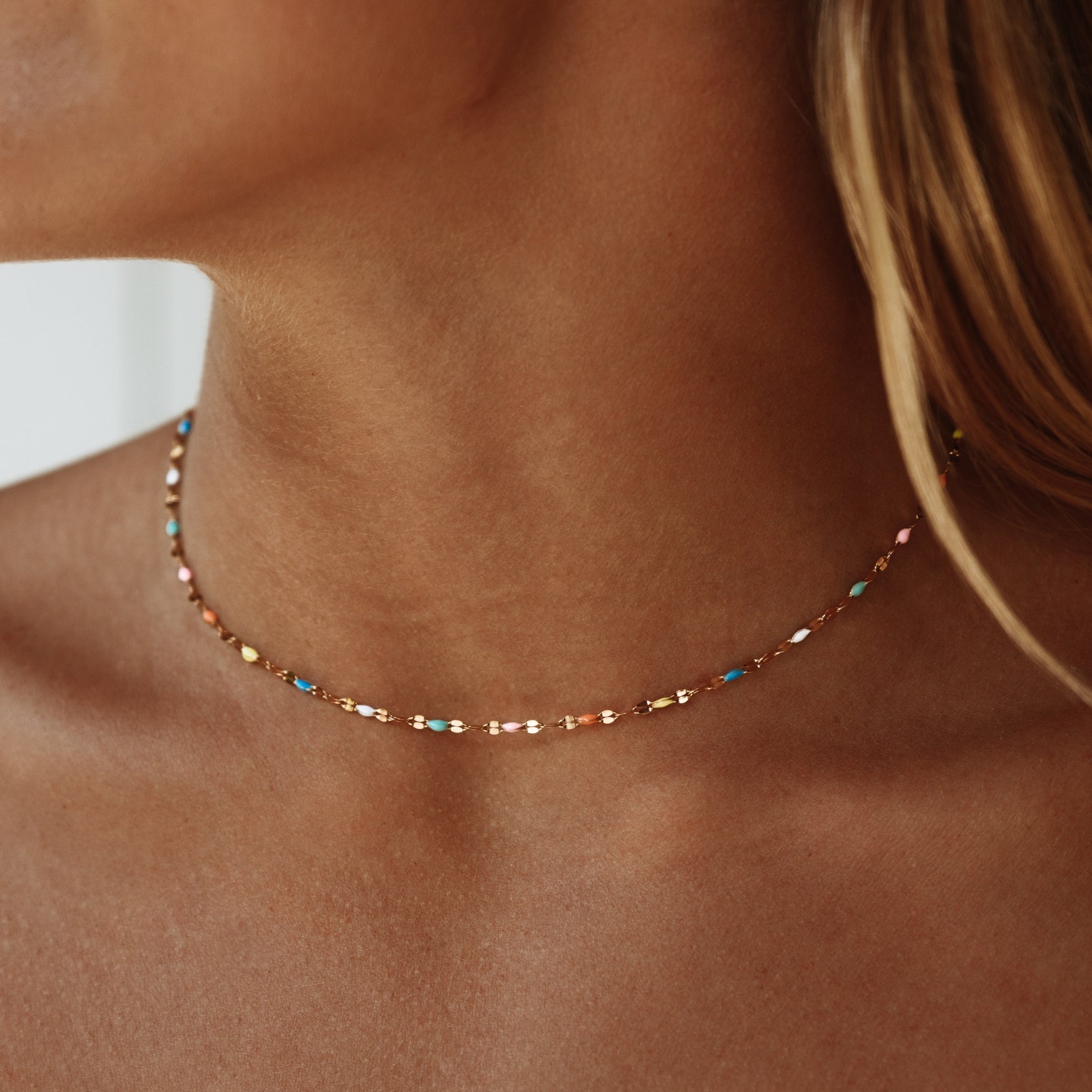
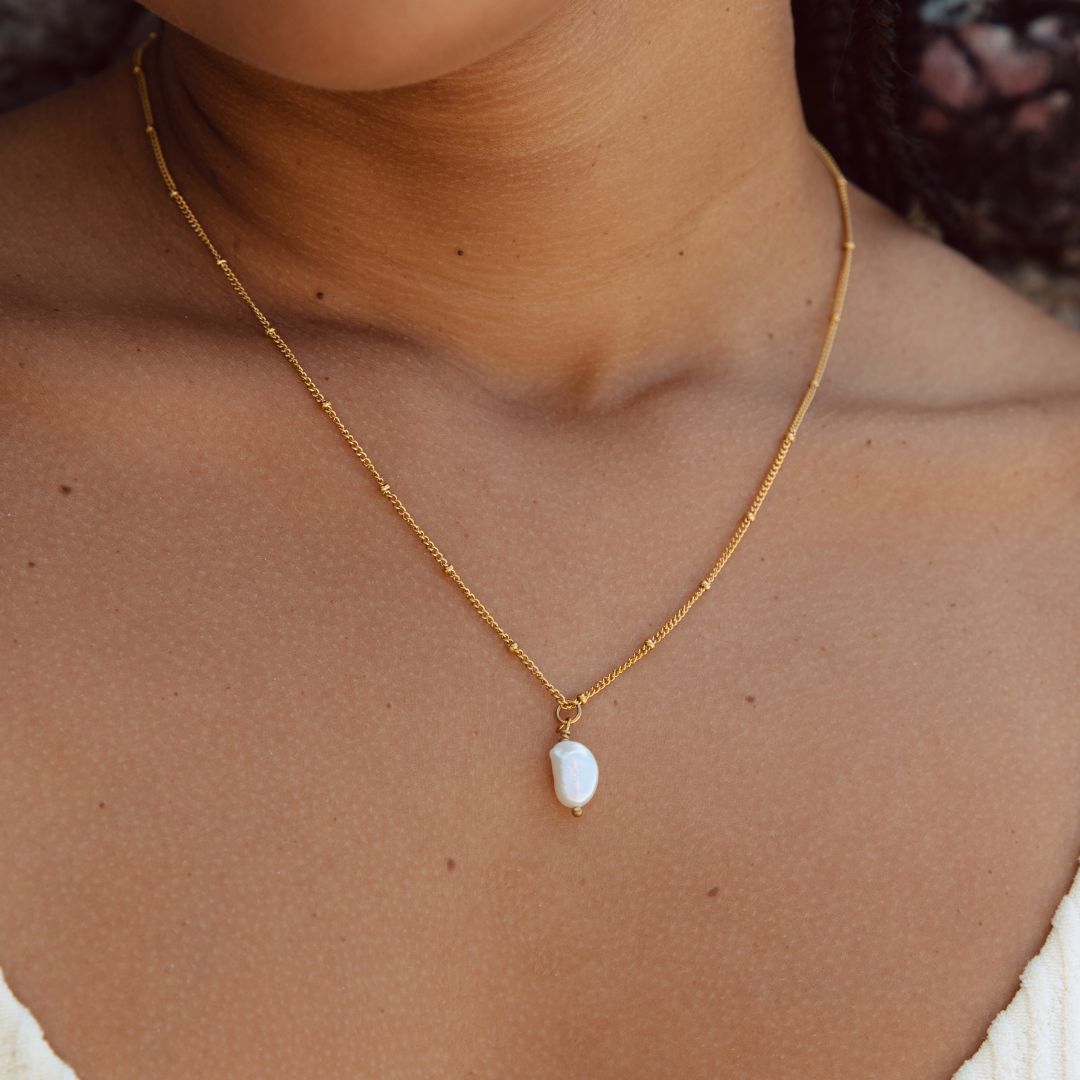
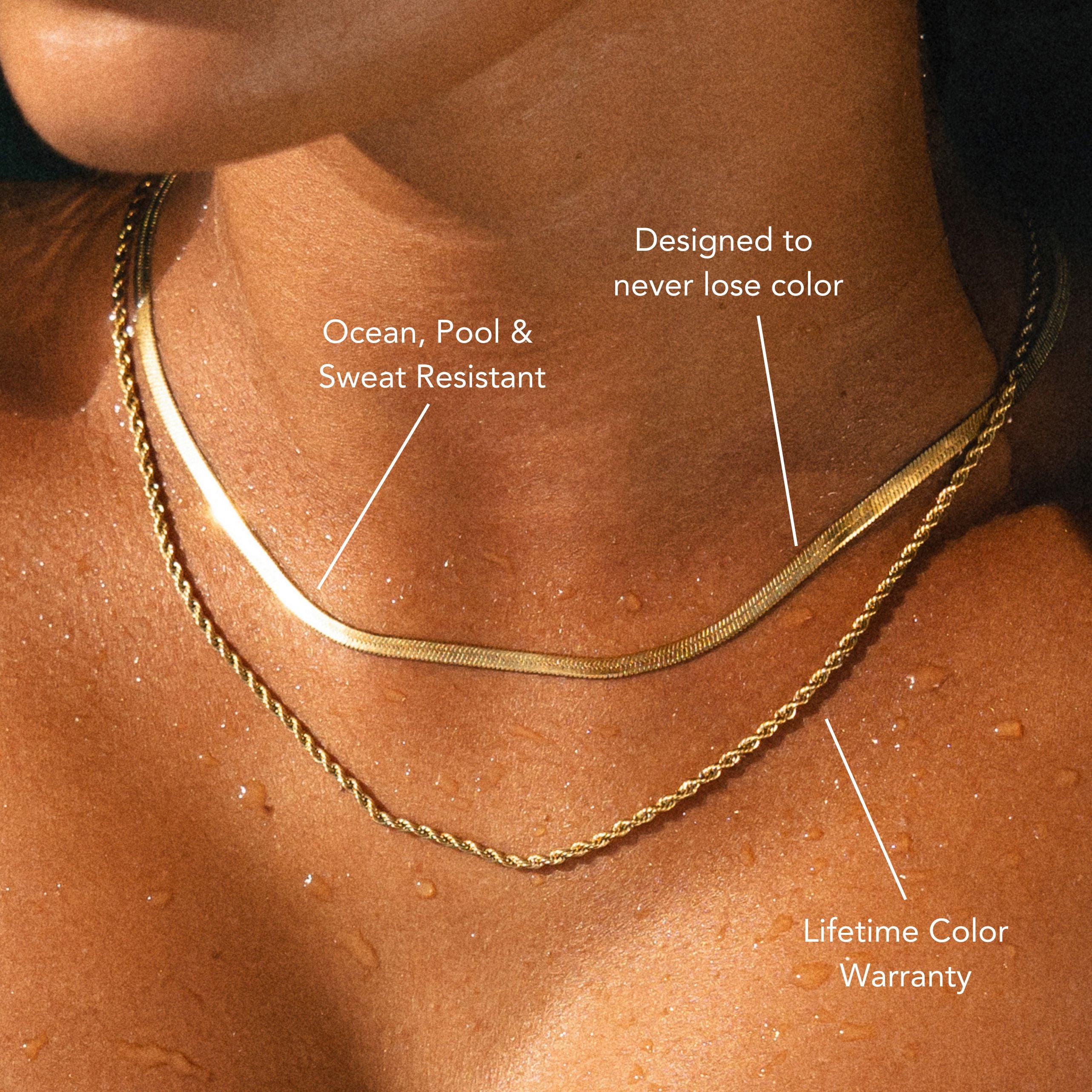
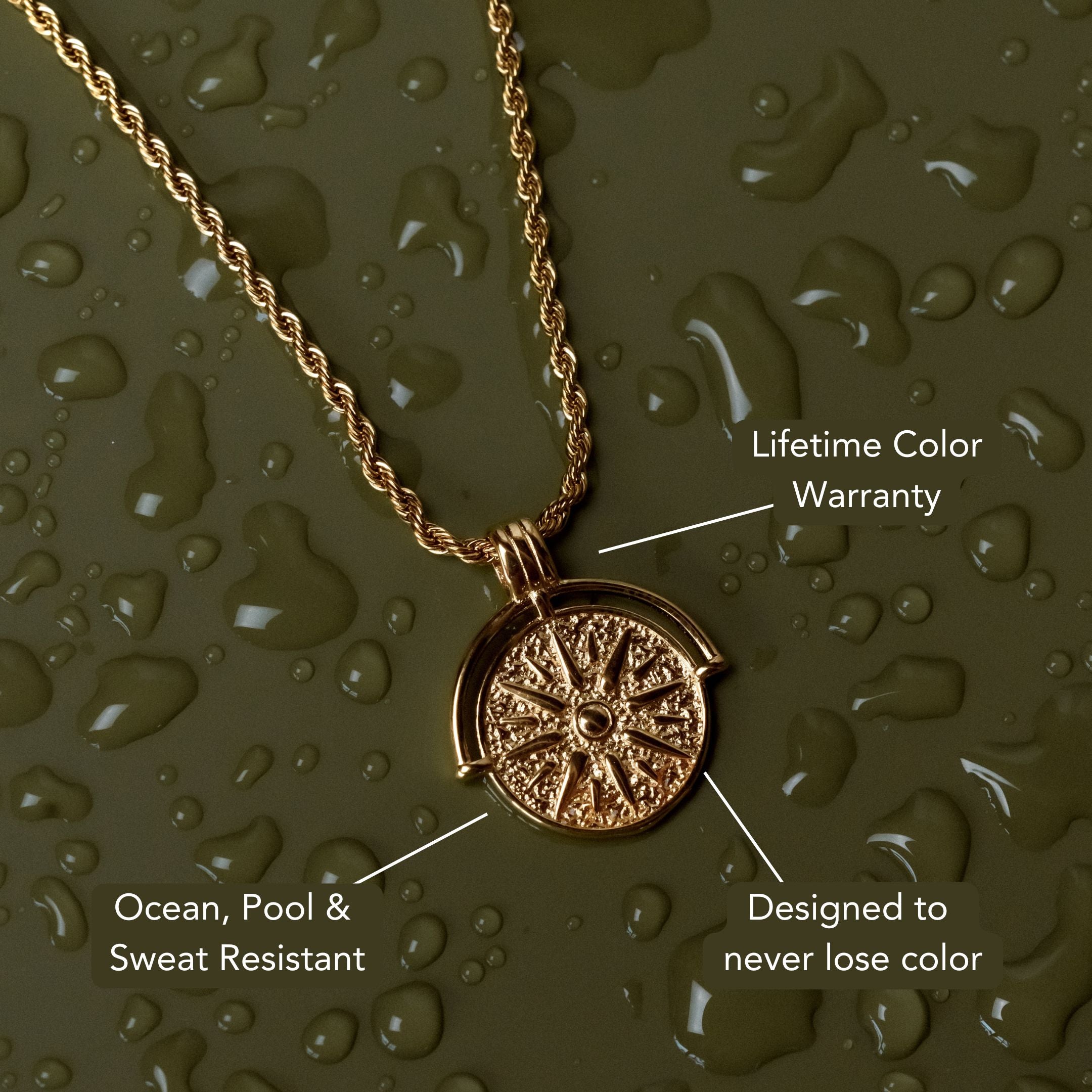
Our hypoallergenic collection includes pearl, chain and signet-style pieces that echo classic antique shapes. Our pieces are made from high-quality stainless steel with an 18k gold PVD finish that we describe as about 10x thicker than standard gold plating, and they are considered safe for most people with sensitive skin.
Final Thoughts
Learning how to identify antique jewelry means weighing marks, metal, construction, clasps, stones and wear together instead of trusting one clue. When a piece matters, a professional appraisal settles the question.
Frequently Asked Questions
How old does jewelry have to be to count as antique?
Jewelry is generally called antique when it is at least 100 years old. Pieces between roughly 30 and 99 years old are usually called vintage, and estate jewelry simply means previously owned, whatever its age.
Does a hallmark prove jewelry is antique?
No. A hallmark confirms the metal purity and sometimes the maker or origin, but modern pieces carry the same marks, and marks can be added later. Treat a hallmark as one clue and compare it with construction, clasps and wear.
Can you identify antique jewelry without special tools?
You can do a lot with good light and an inexpensive 10x loupe. Look closely at marks, clasps, settings and wear. Skip acid and scratch tests at home, and ask an appraiser to confirm anything you suspect is valuable.
What are the biggest red flags for fake antique jewelry?
Watch for perfectly uniform craftsmanship, modern clasps on supposedly old pieces, wear in odd places, and phrases like antique-style, which describes a modern design. Mismatched marks and metals are also warning signs worth checking.
Can you wear antique jewelry every day?
You can, but daily wear stresses fragile clasps, claw settings and soft metals. Many owners keep antiques for occasions and choose sturdier modern pieces for everyday use. Have a jeweler check clasps and stones before regular wear.










コメントを書く
このサイトはhCaptchaによって保護されており、hCaptchaプライバシーポリシーおよび利用規約が適用されます。