

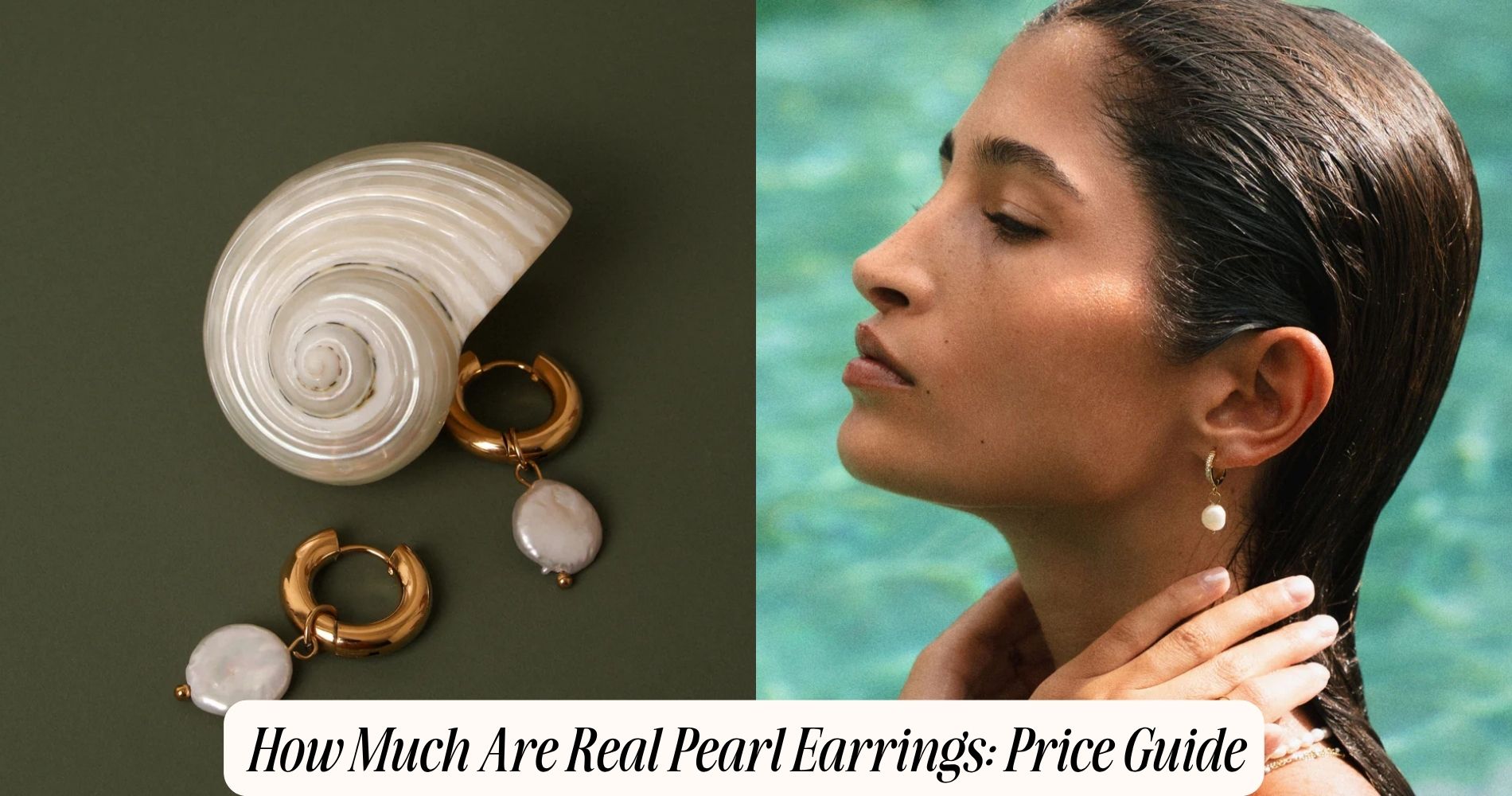
How Much Are Real Pearl Earrings: Price Guide
Pearl earring prices span a range that surprises most buyers the first time they shop for them seriously. A pair of real pearl earrings can cost twenty dollars or twenty thousand dollars, and both claims can be accurate depending on what the words "real pearl" cover in each case. Understanding how much are real pearl earrings worth at different quality and type levels gives you the framework to evaluate any pearl earring purchase confidently and recognize value when it is genuinely present. Freshwater Pearls Jewelry sits at the accessible end of that spectrum without sacrificing what matters most about pearl quality. This guide covers pearl earring prices by type and style, the quality factors that drive price differences within each type, and how to verify you are looking at genuine pearls before committing to a purchase.
Why Pearl Earring Prices Vary So Widely
The price range for real pearl earrings is wider than for most other jewelry categories because three compounding variables interact to produce the final price.
Pearl type is the largest single variable. Freshwater, Akoya, Tahitian, and South Sea pearls are produced by different mollusk species with different production costs, rarity levels, and optical characteristics. A single freshwater pearl earring stud and a single South Sea pearl earring stud can both be described as real pearl earrings at prices that differ by a factor of fifty or more.
Earring construction adds a second variable. A simple stud setting is the least labor-intensive construction. A matched pair of drop earrings with pearl and gold components involves more material and assembly cost. A graduated chandelier earring with multiple matched pearls per side requires significantly more selection and setting work. The same pearl at the same quality produces earrings at different price points depending on how it is set and what surrounds it.
Pearl quality within any type is the third variable. Luster, surface quality, shape, size, and color matching between the two earring pearls all affect price within a given type. A high-luster, near-flawless, well-matched pair of freshwater studs costs significantly more than a low-luster, blemished, mismatched pair of freshwater studs, even though both are technically real pearl earrings.
Understanding these three layers makes it possible to evaluate any pearl earring price accurately rather than comparing only the pearl type label.

How Much Are Real Pearl Earrings: By Pearl Type
Freshwater Pearl Earrings
Freshwater pearls are produced by freshwater mussels primarily in China and account for the large majority of pearl production globally. They are solid nacre throughout their structure, unlike bead-nucleated saltwater pearls which have a shell nucleus coated in nacre. This solid nacre construction gives freshwater pearls genuine pearl material throughout rather than a thin coating over a filler core.
Modern freshwater pearl quality has improved significantly over the past two decades. Top-grade freshwater pearls with strong luster, near-round shape, and clean surfaces compare favorably with mid-grade Akoya pearls at a fraction of the price.
Freshwater pearl earring price ranges:
- Simple stud earrings (single pearl per ear, basic setting): $15 to $80
- Quality stud earrings (matched pair, good luster, near-round): $50 to $200
- Drop earrings (single pearl drop in silver or gold setting): $40 to $150
- Baroque or asymmetric styles: $30 to $120
- Multi-pearl or cluster designs: $60 to $250
The wide range within freshwater reflects how dramatically quality varies across the category. A $20 freshwater stud and a $180 freshwater stud are both made from real pearls. The difference is visible in the luster quality, the surface blemish level, the shape consistency between the pair, and the setting quality.

Akoya Pearl Earrings
Akoya pearls are the classic round white pearl most associated with traditional Japanese pearl jewelry. Produced primarily by Pinctada fucata oysters, Akoya pearls are bead-nucleated with nacre deposited over one to two years. Their defining characteristic is a mirror-like reflective luster that is brighter and more visually striking than the softer glow of freshwater pearls.
Akoya pearl earrings are where the price step-up from freshwater becomes significant. The combination of bead nucleation, shorter nacre deposition time, and the specific optical quality that makes Akoya luster distinctive all contribute to a higher production cost per pair.
Akoya pearl earring price ranges:
- Simple stud earrings (6 to 7mm, standard quality): $80 to $300
- Quality stud earrings (7 to 8mm, high luster, well-matched): $250 to $800
- Drop earrings (single Akoya drop in gold setting): $200 to $600
- Fine stud earrings (8 to 9mm, top grade): $500 to $2,000 and above
The size jump from 7mm to 8mm Akoya produces a significant price increase because larger Akoya pearls are genuinely rarer and require a larger oyster that produces fewer pearls per harvest cycle.
Tahitian Pearl Earrings
Tahitian pearls are produced by Pinctada margaritifera, the black-lipped oyster, in French Polynesia. They are the only naturally dark pearl type available, producing colors from charcoal through deep black with green, peacock, and aubergine overtones. The most prized Tahitian earring pearls show strong peacock overtone against a dark body color with deep luster.
Matching a pair of Tahitian earring pearls for consistent color, overtone, size, and luster requires selecting from a much larger pool of individual pearls than matching freshwater or Akoya studs, which drives the price premium for well-matched Tahitian pairs.
Tahitian pearl earring price ranges:
- Simple stud earrings (9 to 10mm, standard quality): $150 to $500
- Quality stud earrings (10 to 11mm, good color, high luster): $400 to $1,200
- Drop earrings (single Tahitian drop in gold): $200 to $800
- Fine matched studs (strong peacock overtone, top grade): $800 to $3,000 and above
South Sea Pearl Earrings
South Sea pearls are produced by Pinctada maxima, the largest pearl oyster, in Australia, Indonesia, and the Philippines. They develop over two to four years with nacre layers significantly thicker than any other cultured pearl type, producing a deep, satiny luster with a warmth that distinguishes them from both Akoya mirror brightness and freshwater diffuse glow.
South Sea pearl earrings represent the highest accessible price tier in cultured pearl jewelry, with golden South Sea pearls from the gold-lipped oyster variety commanding the highest prices in the category.
South Sea pearl earring price ranges:
- Simple stud earrings (10 to 12mm, standard quality): $400 to $1,500
- Quality stud earrings (12 to 13mm, high luster, well-matched): $1,000 to $4,000
- Drop earrings (single South Sea drop in 18k gold): $800 to $3,000
- Fine golden South Sea studs (top grade): $2,000 to $10,000 and above
Quality Factors That Justify Price Differences
Within any pearl type, five quality factors determine where a specific pair falls in the price range.
Luster is the most important quality factor for pearl earrings specifically because earrings sit at face level where luster is immediately visible in conversation. High-luster pearls show a sharp, bright reflection with visible depth. Low-luster pearls appear chalky or flat. The difference is immediately apparent at conversational distance and accounts for the largest price variation within any type.
Matching quality is uniquely important for earrings compared to pendants or rings. Because earrings are worn as a pair and viewed simultaneously, any difference in size, shape, color, or luster between the two pearls is immediately visible. A well-matched pair requires selection from a significantly larger pool of individual pearls, which is reflected in the price. Two pearls that would be priced individually as mid-grade pieces command a premium when they form a closely matched pair.

Size has a direct impact on earring price because larger pearls are rarer and require longer growing time. Within any type, each millimeter increase in diameter above the standard range for that type produces a meaningful price increase. A pair of 9mm Akoya studs costs noticeably more than a pair of 7mm Akoya studs of equivalent quality.
Surface quality refers to the presence and visibility of natural blemishes. In earring pearls specifically, surface quality on the visible face of each pearl matters most because the back of the pearl is typically hidden in the setting. Near-flawless visible faces command premiums over pearls with visible blemishes in the forward-facing area.
Setting material contributes to price independently of pearl quality. Sterling silver settings cost less than gold-fill, which costs less than solid 14k or 18k gold. A pair of freshwater pearl studs in sterling silver at $40 and the same pearl quality in 14k gold at $150 represent the same pearl quality at different setting costs.
How to Tell If Pearl Earrings Are Real
Before purchasing pearl earrings at any price point, two quick checks verify authenticity.
The tooth test. Remove one earring and rub the pearl gently against the edge of a front tooth. Real pearls feel slightly gritty from the crystalline aragonite structure of nacre. Imitation pearls made from glass or coated plastic feel smooth or waxy. This test works because nacre's layered crystal microstructure creates a natural micro-roughness that no surface coating replicates at that scale.
Luster depth under natural light. Hold the earrings in natural light rather than artificial jewelry store lighting. Real pearls show a glow that appears to come from within the pearl, with visible depth behind the surface reflection. Imitation pearls produce a uniform, flat surface sheen without that depth quality. High-quality imitation pearls can be difficult to distinguish from real pearls under artificial lighting but are more readily identifiable under natural light.
For purchases at the Akoya, Tahitian, or South Sea level, a GIA gemological certificate provides definitive verification of pearl origin, treatment, and quality grading.

Frequently Asked Questions
What is a reasonable price for real pearl earrings?
A reasonable price depends on the pearl type. Quality freshwater pearl studs with good luster and a near-round matched pair run $50 to $200. Standard Akoya pearl studs at 6 to 7mm run $80 to $300. Tahitian studs start around $150 for standard quality. South Sea pearl studs start around $400. Prices significantly below these ranges for the claimed pearl type warrant closer evaluation of pearl authenticity and quality.
Are cheap pearl earrings real pearls?
Inexpensive pearl earrings can be real if they use freshwater pearls, which are genuine cultured pearls produced at significantly lower cost than saltwater alternatives. A $20 to $50 pair of pearl earrings using freshwater pearls is a genuine pearl product, typically at modest quality. A $20 pair claiming Akoya or South Sea pearls is almost certainly either imitation pearls or misrepresented quality.
What size pearl is best for earrings?
For everyday stud earrings, 6mm to 8mm is the most versatile size range across all pearl types. This size is visible and clearly present as jewelry at conversational distance without dominating the face. For drop earrings, pearl size matters less than the overall proportion of the drop. For freshwater pearls, 7mm to 9mm suits most wearers for everyday studs. For Akoya, 7mm to 8mm is the classic everyday size.
Do real pearl earrings need special care?
Pearl earrings require more careful handling than mineral stone jewelry because nacre is softer (2.5 to 3 on the Mohs scale) and sensitive to acids. Remove pearl earrings before showering, swimming, and applying skincare or haircare products. Wipe with a soft cloth after wearing to remove skin oil residue. Store in a soft pouch away from harder jewelry that could scratch the nacre surface. These habits preserve the luster that makes pearl earrings valuable.
How can I tell Akoya from freshwater pearl earrings without a certificate?
The most reliable visual distinction is luster quality. Akoya pearls produce a mirror-like, highly reflective luster that shows a crisp, sharp reflection. Freshwater pearls produce a softer, more diffuse glow. Side-by-side comparison makes this difference immediately apparent, though individual high-quality freshwater pearls can approach Akoya luster quality. Size is a secondary indicator: Akoya earring pearls at the same price point are typically smaller than freshwater pearls because Akoya pearls are more expensive per millimeter of diameter.
Conclusion
How much are real pearl earrings ranges from under twenty dollars for freshwater studs in modest quality to several thousand for fine Akoya, Tahitian, or South Sea pairs. Freshwater pearl earrings offer genuine nacre quality at accessible prices that have improved significantly with modern farming techniques. Akoya earrings deliver the mirror luster that defines the classic pearl stud at a meaningful price step up. Tahitian and South Sea earrings represent the premium end where color, size, and nacre thickness create a visual impact that the more accessible types do not replicate. At every level, luster and matching quality are the variables that matter most for earrings worn at face level every day.










コメントを書く
このサイトはhCaptchaによって保護されており、hCaptchaプライバシーポリシーおよび利用規約が適用されます。