

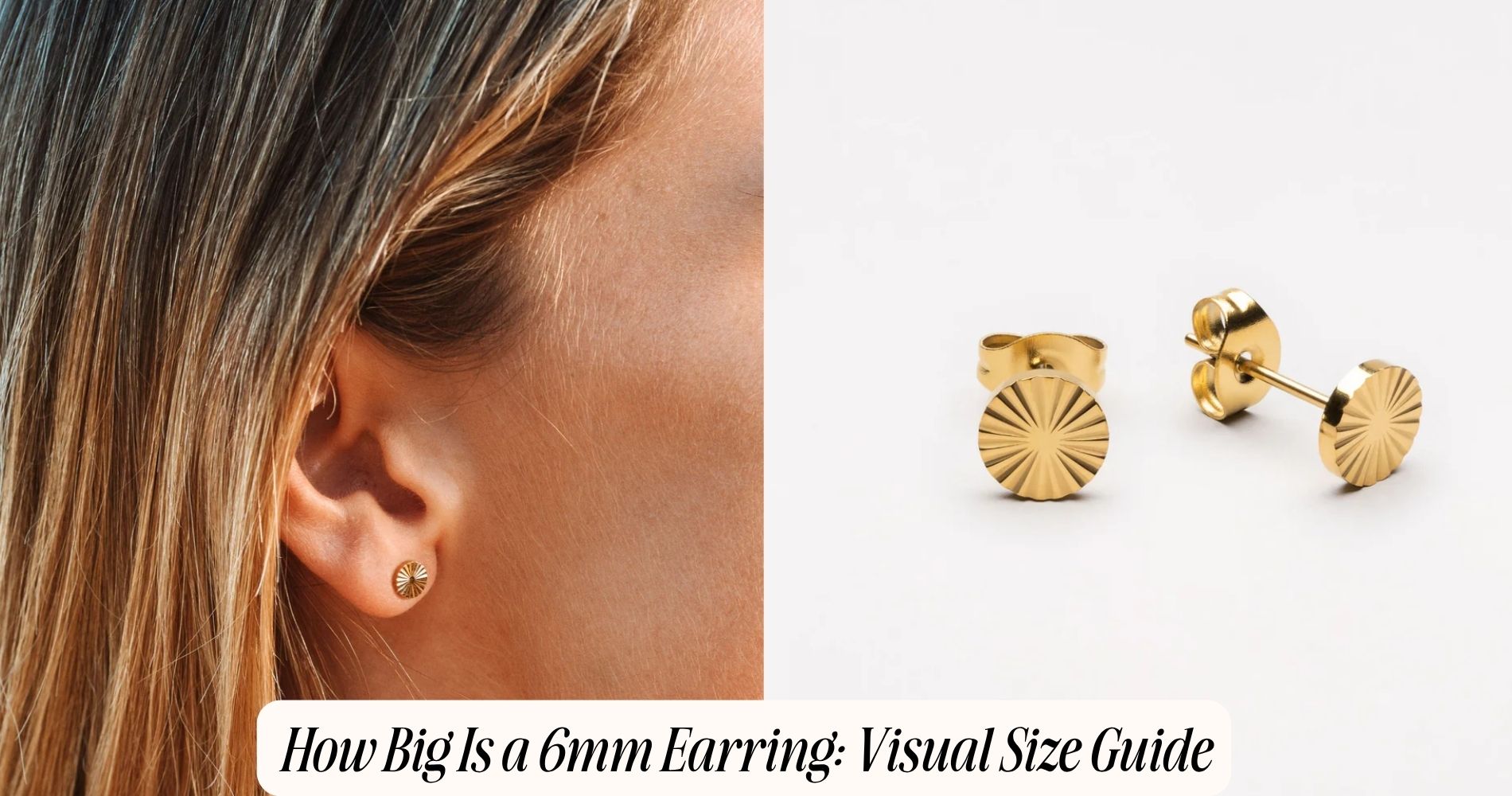
How Big Is a 6mm Earring: Visual Size Guide
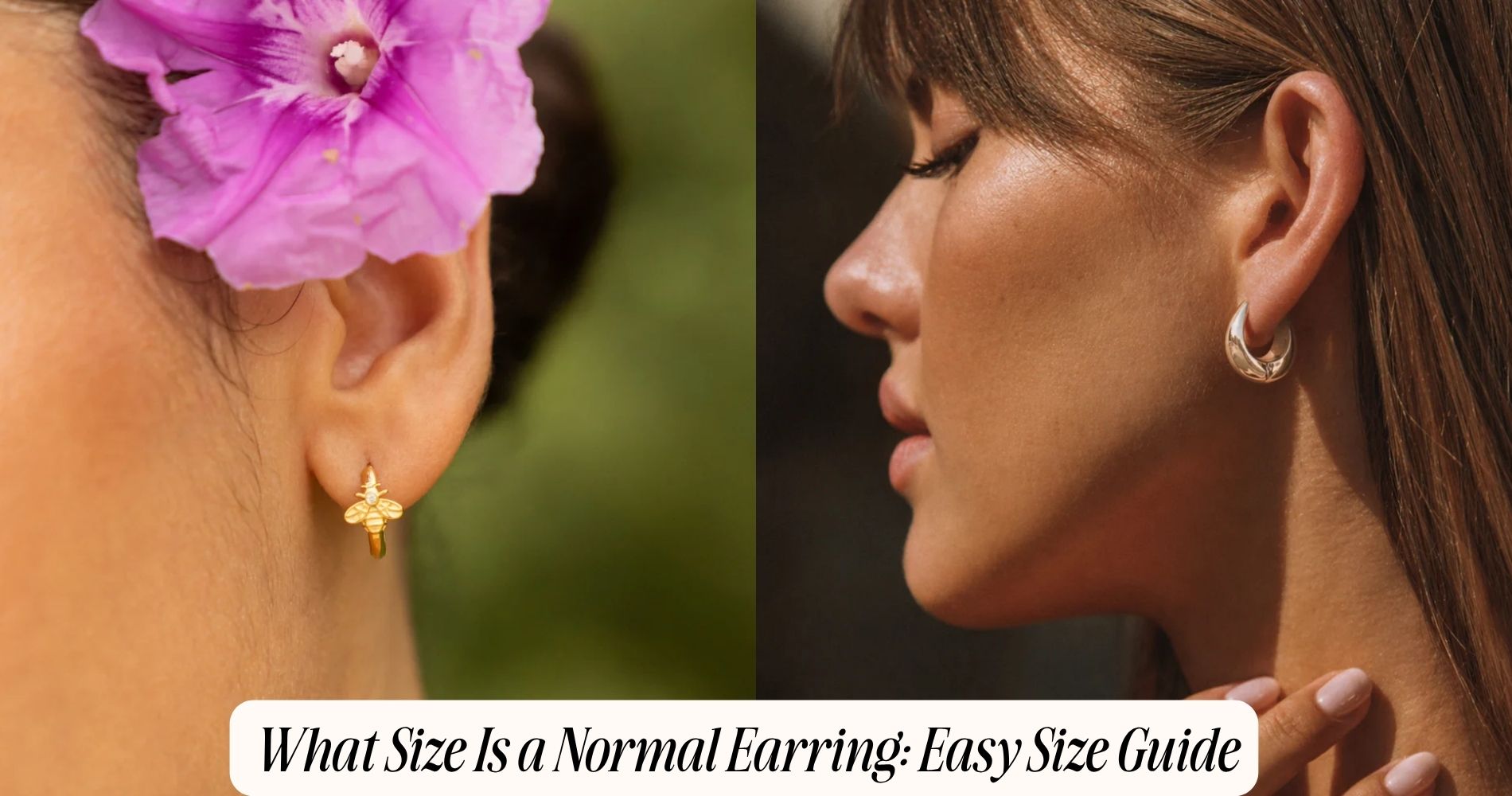
Millimeter measurements are difficult to picture from a number alone. If you are asking how big is a 6mm earring, you are not alone: it is one of the most searched earring size questions because online shopping gives you a measurement without a reliable sense of how it translates to your ear. Waterproof Earrings in everyday stud sizes are frequently listed at 6mm precisely because it is the most versatile standard size for daily wear. This guide gives you concrete visual references for 6mm, shows how it compares to other common sizes, explains how it reads on different ear and face proportions, and covers which earring styles use 6mm as a measurement.
What 6mm Actually Looks Like
Six millimeters is just under a quarter of an inch. To put that into an everyday reference: a standard pencil eraser is approximately 7mm in diameter, a pea is roughly 8mm to 10mm, and a plain M&M candy sits at about 12mm to 13mm. A 6mm earring face is noticeably smaller than any of those common reference points.
On a ruler, 6mm is just past the first centimeter mark and a little more than half of a centimeter. If you do not have a ruler available, the width of a standard wooden pencil barrel (not the eraser end) is approximately 7mm, so a 6mm stud is fractionally narrower than that.

A more practical visual reference: place your index finger flat against your earlobe. The width of a standard index fingernail from side to side is typically between 12mm and 15mm depending on the individual. A 6mm stud covers roughly half that width, which gives a sense of the actual proportion on the ear before you purchase.
At a conversational distance of around one meter, a 6mm earring is clearly visible as a piece of jewelry but does not command attention the way a larger stud does. It reads as present and considered rather than bold or statement-making. This is precisely why 6mm is the standard size used in most everyday and professional earring designs.
How Big Is a 6mm Earring Compared to Other Common Sizes
Understanding 6mm in isolation is less useful than understanding it relative to the sizes you are most likely to encounter when shopping. Stud earrings typically range from 3mm at the smallest to 12mm or 13mm at the largest statement end, with most everyday sizing clustered between 5mm and 9mm.
| Size | Everyday Reference | Visual Effect on Ear | Best Context |
|---|---|---|---|
| 3mm | Large watch crown | Very subtle, barely visible | Second or third hole piercings |
| 4mm | Standard pencil tip diameter | Subtle accent | Stacked ears, minimalist wear |
| 5mm | Standard pen nib cap | Delicate, noticeable up close | Everyday minimal |
| 6mm | Half a standard fingernail width | Balanced, visible at conversation distance | Everyday, professional, active wear |
| 7mm | Small shirt button | Clear presence without dominance | Everyday to dressed-up |
| 8mm | Large shirt button | Statement everyday size | Casual to occasion wear |
| 10mm | Standard pencil eraser | Clear statement piece | Casual, weekend, occasion |
| 12mm | Standard M&M diameter | Bold single earring | Statement and occasion wear |
The jump from 6mm to 8mm is more noticeable in practice than the two millimeter difference suggests. On the ear, that difference represents roughly 78 percent more surface area due to the circular geometry (area scales with the square of the radius). A 6mm stud covers approximately 28 square millimeters of face area. An 8mm stud covers approximately 50 square millimeters. That is why moving from 6mm to 8mm feels like a meaningful size change rather than a small one.

How a 6mm Earring Reads on Different Ear and Face Proportions
The same 6mm earring reads differently depending on lobe size, ear shape, and face proportions. This is the variable most people underestimate when shopping by measurement alone.
Small earlobes: On a small, narrow lobe, 6mm occupies a significant proportion of the available lobe space. It reads as a confident, well-proportioned stud that fills the lobe area cleanly. A 4mm on a small lobe can look tentative or like a post without a visible face. A 8mm on a small lobe starts to push past the lobe edge.
Medium earlobes: This is the proportional sweet spot for 6mm. On a medium lobe, 6mm sits centered and present without crowding the lobe or appearing to be reaching its edges. It is the size that photographs cleanly and reads as intentional in person.

Large earlobes: On a larger lobe, 6mm recedes slightly. It is still visible and clearly a piece of jewelry, but it reads as understated rather than as a statement. People with larger lobes who want a 6mm level of visual presence often find that 7mm or 8mm produces the same relative reading that 6mm creates on a medium lobe.
Face shape context: On a smaller or narrower face, 6mm reads as a standard everyday size because the proportional relationship between earring and face keeps it in a balanced middle ground. On a larger or broader face, 6mm trends toward the subtle end and may read as a secondary-hole size rather than a primary earring.
The practical takeaway: 6mm is genuinely versatile for most people but reads slightly differently across the proportional range. Knowing where your own ear and lobe size falls within these descriptions helps you calibrate whether 6mm or one size up is the better fit for how you want the earring to read.
Which Earring Styles Use 6mm as a Measurement
The 6mm measurement applies differently depending on the earring type. Understanding what it is measuring in each style prevents sizing surprises when a piece arrives.
Stud earrings: 6mm refers to the diameter of the face, meaning the flat or domed front surface that sits against the lobe. For round studs this is straightforward. For oval or geometric stud designs, 6mm typically refers to the longest measurement across the face, so an oval stud listed at 6mm will be 6mm on its longest axis and narrower on its shorter axis.
Ball studs: 6mm refers to the diameter of the ball. Because a ball stud is three-dimensional and domed rather than flat, a 6mm ball stud appears slightly larger in person than a 6mm flat disc stud of the same diameter measurement, because the dome catches light and creates more visual volume.

Huggie hoops: When a huggie is listed as 6mm, that typically refers to the height of the hoop, meaning how far it extends below the lobe rather than a diameter measurement. A 6mm huggie sits very close to the lobe, almost flush, which creates a sleek, barely-there effect. This is significantly different from a 6mm stud face and the two should not be compared on measurement alone.
Stone-set studs: For studs featuring stones like cubic zirconia or natural gems, 6mm refers to the diameter of the stone. The overall earring including the setting and prongs may read slightly larger than 6mm because the metal work around the stone adds visible perimeter. A 6mm round stone in a claw setting may have an effective visual diameter of 7mm to 7.5mm once the prong tips are included.
Frequently Asked Questions
Is 6mm a good size for everyday earrings?
Yes. 6mm is the most commonly worn stud size for daily use because it sits in the proportional middle ground for most ear and face sizes. It is visible and clearly present as jewelry at conversational distance without dominating the face or creating distraction in professional or casual settings. For most people with standard lobe sizes, 6mm is the reliable default for an everyday stud.
How does 6mm compare to a 7mm or 8mm earring?
A 7mm earring has roughly 36 percent more face area than a 6mm earring due to circular geometry, and an 8mm has approximately 78 percent more. In practice, moving from 6mm to 7mm creates a noticeable but subtle shift in presence. Moving from 6mm to 8mm makes a more significant visual difference that most people perceive as a deliberate size step up rather than a minor variation.
How big is a 6mm ball stud earring?
A 6mm ball stud has a diameter of 6mm, which is just under a quarter inch. In practical terms, it is fractionally narrower than a standard pencil barrel. The dome shape of a ball stud makes it appear slightly larger in person than a flat 6mm disc stud of the same diameter because the three-dimensional surface catches more light and creates more visual volume.
Can you wear 6mm studs in a second piercing?
Yes, but they read as a more prominent second-hole earring rather than a subtle accent. For secondary piercings where the goal is a layered or stacked ear look, 3mm to 4mm studs typically create better proportion alongside a larger primary stud. A 6mm in a second hole alongside a 6mm primary stud creates a uniform, matched look rather than the size contrast that defines a classic stacked ear.
What is the difference between 6mm and 8mm earrings in real life?
Two millimeters reads as a meaningful difference in practice because earring face area scales with the square of the radius. A 6mm stud covers approximately 28 square millimeters of visual area. An 8mm stud covers approximately 50 square millimeters, which is nearly double. On a medium lobe, that difference is clearly perceptible: the 8mm reads as a confident statement piece where the 6mm reads as a refined everyday size.
Conclusion
How big is a 6mm earring is best answered with a reference: slightly narrower than a pencil barrel, about half the width of an average fingernail, clearly visible at conversation distance but not a statement piece. It is the standard everyday stud size because it hits a proportional balance point for most ear and lobe sizes. Once you have that reference anchored, the size comparison table in this guide gives you a framework for deciding whether to go smaller for a secondary piercing, stay at 6mm for a versatile everyday stud, or step up to 8mm when you want more presence.









コメントを書く
このサイトはhCaptchaによって保護されており、hCaptchaプライバシーポリシーおよび利用規約が適用されます。