


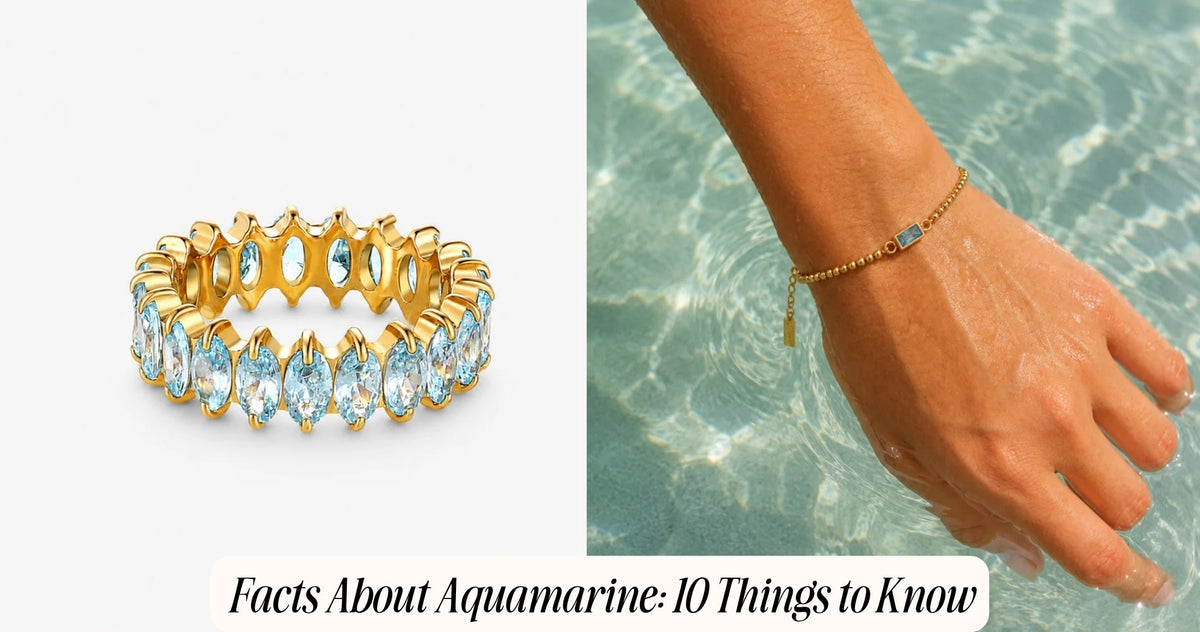
Facts About Aquamarine: 10 Things to Know
Aquamarine's calm, ocean blue color has made it one of the most beloved gemstones for centuries, but beyond its obvious beauty, this stone has a surprisingly rich collection of lesser known facts and history worth exploring. Whether you already own aquamarine jewelry or are simply curious about this popular gemstone, these facts about aquamarine offer a deeper appreciation for what makes this stone so genuinely fascinating.
In this guide, we will walk through ten interesting facts about aquamarine, covering everything from record breaking crystals to its royal connections throughout history. If you love the serene beauty of this ocean inspired stone, our Stone Collection features a variety of natural gemstone pieces worth exploring.
1. Aquamarine Belongs to the Same Family as Emerald
One of the most surprising facts about aquamarine is that it belongs to the beryl mineral family, the exact same family that produces emerald. While these two stones look completely different, aquamarine's pale blue and emerald's vivid green, their color differences come down entirely to which trace elements are present during formation. Aquamarine gets its blue color from iron, while emerald's green comes from chromium and vanadium.

2. Its Name Comes Directly From Latin Words for Water and Sea
Aquamarine's name is a direct combination of the Latin words aqua, meaning water, and marina, meaning of the sea. This naming reflects the stone's serene, oceanic blue color, and the name has remained essentially unchanged since ancient times, a testament to just how fitting this description has always been for the stone's characteristic appearance.
3. One of the Largest Aquamarine Crystals Ever Found Weighed Over 240 Pounds
Among the more remarkable facts about aquamarine is the discovery of exceptionally large crystal specimens throughout history. One of the most famous examples, discovered in Brazil in 1910, weighed an astonishing 243 pounds before being cut down into thousands of smaller gemstones. This particular discovery highlighted just how substantial aquamarine crystals can grow under the right geological conditions.
4. A Massive Aquamarine Sculpture Called the Dom Pedro Sits in the Smithsonian
The Dom Pedro aquamarine, named after Brazil's first two emperors, stands as the largest cut aquamarine in the world, carved from a single massive crystal into an intricate, obelisk shaped sculpture standing nearly 14 inches tall. This remarkable piece is now housed within the Smithsonian National Museum of Natural History, offering visitors a chance to see just how dramatic and impressive a single aquamarine specimen can become in the hands of skilled cutting artists.

5. Ancient Sailors Believed Aquamarine Offered Protection at Sea
Throughout history, sailors carried aquamarine as a protective talisman, believing the stone's connection to water and the sea offered safe passage and calm waters during ocean voyages. This belief was so widespread throughout various ancient Mediterranean cultures that aquamarine became closely associated with maritime protection and safe travel for centuries, a symbolic connection that persists in various forms even today.
6. Most Aquamarine Jewelry Has Been Heat Treated
Another interesting fact about aquamarine involves its common treatment process. Most aquamarine used in modern jewelry has undergone heat treatment specifically to enhance and stabilize its blue color. In its natural, untreated state, aquamarine often displays a more greenish blue tone, and controlled heating helps shift the color toward the purer, more saturated blue that most people associate with the stone today. This treatment is widely accepted and standard practice within the gemstone industry.
7. Brazil Remains the World's Leading Source of Aquamarine
Brazil has long been recognized as the most significant global source of high quality aquamarine, producing some of the finest specimens found anywhere in the world. Beyond Brazil, aquamarine is also mined in various other locations, including Madagascar, Nigeria, Zambia, and parts of the United States, though Brazilian aquamarine continues to hold a particularly strong reputation within the gemstone trade for its excellent color and clarity.
8. Aquamarine Has Royal Connections Throughout History
Among the more prestigious facts about aquamarine is its long association with royalty. Queen Elizabeth II owned a notable aquamarine jewelry collection, including a stunning tiara and matching necklace received as a gift from the Brazilian government, further cementing the stone's connection to elegance and prestigious occasions throughout more recent history.

9. Aquamarine Displays Pleochroism
Aquamarine exhibits a fascinating optical property called pleochroism, meaning the stone can display slightly different color tones when viewed from different angles. This subtle color variation is part of what gives well cut aquamarine its distinctive depth and visual interest, rewarding closer examination beyond a simple, uniform blue appearance.
10. Aquamarine Is Both a Birthstone and an Anniversary Gemstone
Aquamarine holds the distinction of being the official birthstone for March, while also serving as the traditional gemstone associated with 19th wedding anniversaries. This dual significance has helped aquamarine remain a consistently popular and meaningful gemstone choice, whether given to celebrate a March birthday or a significant milestone anniversary.
Additional Aquamarine Characteristics Worth Knowing
Beyond these ten core facts, a few additional characteristics help round out a fuller understanding of this beloved gemstone.
Hardness and Durability
Aquamarine ranks 7.5 to 8 on the Mohs hardness scale, making it reasonably durable and well suited for regular jewelry use, including rings, which experience more frequent contact compared to other jewelry types.
Color Range Beyond Standard Blue
While most people picture a classic pale to medium blue when thinking of aquamarine, the stone can occasionally display slightly greener or more saturated blue tones depending on its specific iron content and any treatment applied during processing.
Clarity Tends to Be Excellent
Compared to many other gemstones, aquamarine typically displays excellent natural clarity, often appearing eye clean, meaning inclusions are not visible without magnification, which contributes significantly to the stone's overall brilliance and appeal.

Why These Facts Matter When Shopping for Aquamarine
Understanding these facts about aquamarine can genuinely help when shopping for jewelry featuring this stone. Knowing that most aquamarine undergoes heat treatment, for example, helps set realistic expectations regarding color, since this is standard industry practice rather than something to be concerned about. Similarly, understanding aquamarine's connection to the beryl family and its relative durability can help inform decisions about which jewelry styles best suit this particular gemstone.
Aquamarine's Enduring Popularity
Given its combination of serene beauty, reasonable durability, historical significance, and meaningful birthstone status, it is easy to understand why aquamarine has remained such a consistently beloved gemstone across centuries of jewelry design. From ancient sailors carrying the stone for protection to modern day birthstone jewelry celebrating March birthdays, aquamarine's appeal has proven remarkably enduring throughout history.
Final Thoughts
These facts about aquamarine reveal a gemstone with far more depth and history than its calm, understated beauty might initially suggest. From record breaking crystal discoveries to royal jewelry collections and ancient maritime beliefs, aquamarine's story spans centuries of fascination and appreciation. Whether you are drawn to this stone for its serene coloring, its meaningful birthstone status, or simply its rich historical background, aquamarine continues to offer genuine beauty and significance for jewelry lovers today.
Frequently Asked Questions
1. Is aquamarine a rare gemstone?
Aquamarine is not considered particularly rare compared to stones like tanzanite or certain colored diamonds, since it is mined in multiple locations worldwide, contributing to its relative affordability.
2. Why does most aquamarine appear blue rather than green?
Most aquamarine undergoes heat treatment specifically to enhance and stabilize its blue color, since the stone can naturally display a more greenish blue tone before this common treatment process.
3. What is the largest aquamarine ever found?
One of the most famous large aquamarine crystals, discovered in Brazil in 1910, weighed approximately 243 pounds before being cut into smaller gemstones.
4. Is aquamarine associated with any anniversary besides being a birthstone?
Yes, aquamarine is the traditional gemstone associated with 19th wedding anniversaries, in addition to its status as the official March birthstone.













コメントを書く
このサイトはhCaptchaによって保護されており、hCaptchaプライバシーポリシーおよび利用規約が適用されます。