

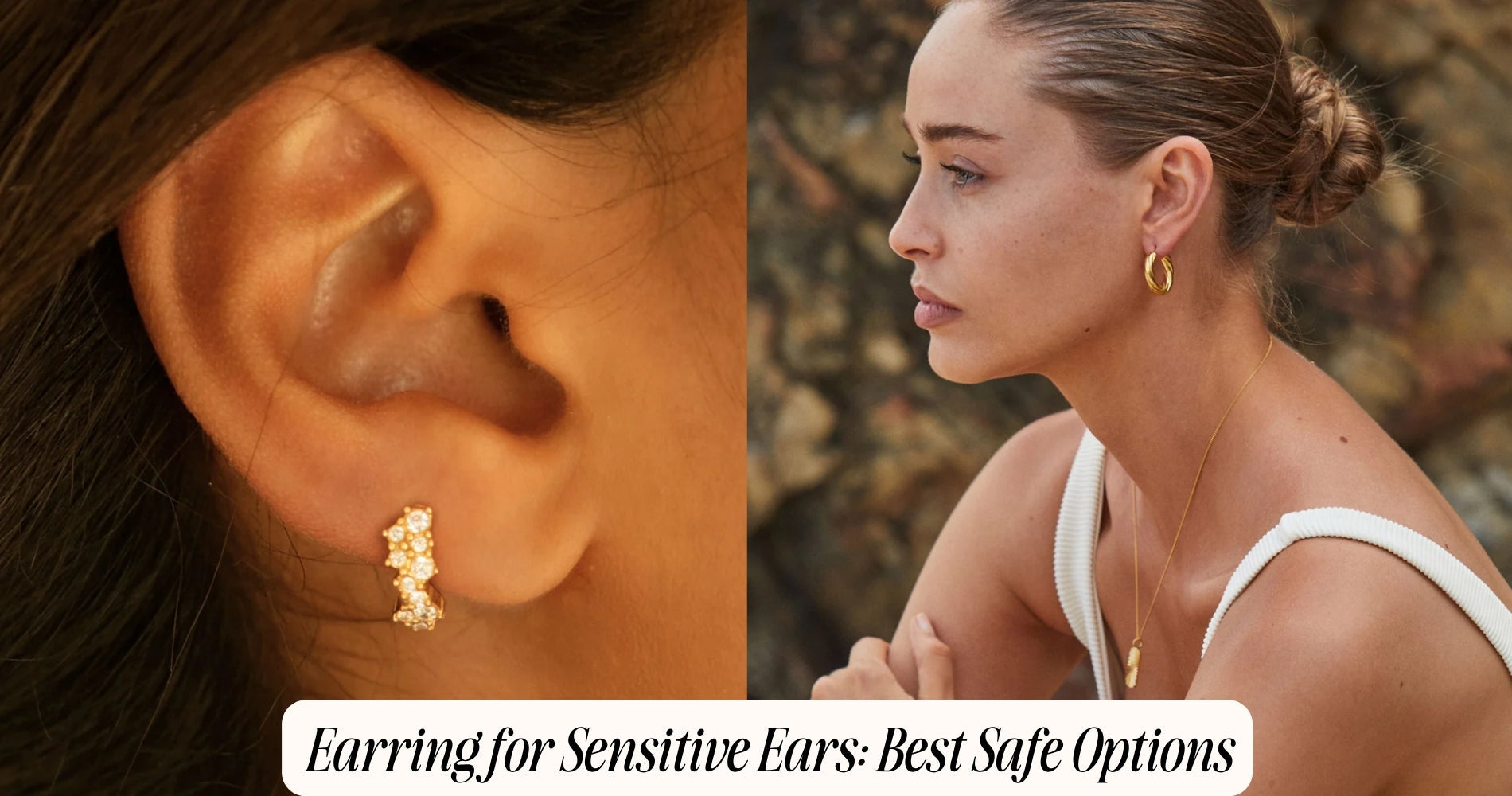
Earring for Sensitive Ears: Best Safe Options
If you have ever taken off a pair of earrings only to find red, itchy, or irritated skin underneath, you already know how frustrating sensitive ears can be. What should be a simple, enjoyable part of getting dressed can quickly turn uncomfortable when the wrong materials come into contact with your skin. Finding the right earring for sensitive ears does not mean giving up on style, it simply means understanding which materials and designs work best for your specific needs.
In this guide, we will explain what causes ear sensitivity, which materials are safest for irritation prone skin, and how to choose earrings that let you enjoy jewelry without the discomfort. If hoops are part of your everyday rotation, our Hypoallergenic Hoop Earrings collection is designed specifically with sensitive skin in mind.
What Causes Ear Sensitivity
Before choosing the right earrings, it helps to understand why sensitive ears react the way they do in the first place. In most cases, ear irritation stems from a metal allergy, most commonly triggered by nickel, a metal frequently used in lower quality or mixed alloy jewelry.
When skin comes into repeated contact with nickel or other reactive metals, the immune system can respond with a mild allergic reaction, leading to symptoms like redness, itching, swelling, or a rash around the earlobe or piercing site. This reaction, known as contact dermatitis, tends to worsen with prolonged exposure, which is why earrings worn for extended periods, like everyday studs or hoops, are especially likely to cause noticeable discomfort in sensitive individuals.
It is worth noting that ear sensitivity can develop over time, even in people who previously wore certain metals without issue. Repeated exposure to a reactive metal can gradually increase sensitivity, meaning jewelry that was once comfortable may eventually begin causing irritation.

Common Materials That Trigger Sensitivity
Understanding which materials are more likely to cause irritation can help you make more informed choices when shopping for earrings.
- Nickel is by far the most common trigger for ear sensitivity and allergic reactions. It is frequently used in costume jewelry and lower quality metal alloys due to its affordability and durability, but it remains one of the most reactive metals for sensitive skin.
- Lower karat gold can sometimes cause irritation as well, since gold below 14 karats often contains a higher percentage of mixed metals, including nickel, to increase durability. Higher karat gold, closer to pure, tends to be significantly less likely to trigger a reaction.
- Costume and fashion jewelry frequently uses base metals coated with a thin layer of plating. Over time, this plating can wear away, exposing the more reactive base metal underneath and increasing the likelihood of irritation.
Best Materials for Sensitive Ears
Fortunately, several materials are widely recognized as safe, hypoallergenic options for those prone to ear irritation.
Titanium
Titanium is one of the most hypoallergenic materials available for jewelry, making it an excellent choice for sensitive ears. It is naturally nickel free, lightweight, and highly resistant to corrosion, which is why it is frequently used in body piercing jewelry and medical implants. Titanium earrings are particularly well suited for those with more severe metal sensitivities.
Surgical Steel
Surgical steel, technically known as 316L stainless steel, is another popular hypoallergenic option. While it does contain trace amounts of nickel, the metal is bonded in a way that significantly reduces the likelihood of it leaching out and causing skin reactions. Surgical steel offers a good balance of affordability, durability, and comfort for most people with mild to moderate sensitivity.
Solid Gold
Higher karat solid gold, particularly 14K or 18K, contains a much smaller percentage of mixed alloy metals compared to lower karat or gold plated jewelry. This makes solid gold a safer option for sensitive ears, though it comes at a higher price point compared to titanium or surgical steel.
Platinum
Platinum is naturally hypoallergenic and extremely durable, making it one of the safest options available for sensitive skin. However, its higher cost typically places it in a more premium jewelry category rather than an everyday, budget friendly choice.
Niobium
Niobium is another nickel free metal option, similar to titanium in terms of hypoallergenic properties. While slightly less common than titanium or surgical steel, niobium offers a lightweight, safe alternative particularly popular in body jewelry.

What to Look for When Shopping
When shopping for an earring for sensitive ears, a few key label terms and details can help guide you toward safer options.
Look specifically for jewelry labeled as hypoallergenic, nickel free, or made from surgical steel, titanium, or solid gold, since these terms indicate materials less likely to trigger a reaction. Be cautious of vague terms like gold tone or silver tone without any specific metal content listed, since these descriptions often indicate a plated base metal that may contain nickel underneath.
If purchasing from a smaller retailer or handmade seller, do not hesitate to ask directly about the specific metal composition used in the earring posts, since reputable sellers should be able to confirm this information clearly.
Choosing the Right Earring Style for Sensitive Ears
Beyond material choice, certain earring styles may also be more comfortable for sensitive ears, particularly for those who wear earrings for extended periods throughout the day.
- Lightweight designs tend to be more comfortable for sensitive ears, since heavier earrings can place additional strain on the earlobe, potentially increasing irritation over time, even when using hypoallergenic materials.
- Flat back or threadless studs are particularly popular for sensitive skin, since their smooth, flush backing reduces friction and pressure compared to traditional butterfly or screw back closures.
- Simple, minimal designs with fewer decorative elements or embedded stones can also reduce the surface area of contact with the skin, which may help minimize irritation for those with more significant sensitivity.

Caring for Sensitive Ears Beyond Material Choice
While choosing the right materials is the most important step, a few additional habits can help further reduce irritation for those with particularly sensitive skin.
Clean your earrings regularly to remove any buildup of oils, lotion, or bacteria that could contribute to irritation, even when using hypoallergenic materials. Avoid applying perfume, hairspray, or other personal care products directly onto or near your earrings, since these products can sometimes contribute to skin sensitivity. If you notice irritation developing, remove the earrings promptly and allow the skin to fully heal before wearing jewelry in that area again, since continuing to wear irritating jewelry can worsen the reaction over time.
For those with new piercings, using hypoallergenic starter earrings specifically designed for healing piercings can also help minimize the risk of irritation during this particularly sensitive period.
When to See a Doctor
While most cases of ear sensitivity can be managed simply by switching to hypoallergenic materials, persistent or severe reactions may warrant a visit to a doctor or dermatologist. If you experience significant swelling, oozing, prolonged redness, or discomfort that does not improve even after switching materials, a healthcare professional can help determine whether a more significant allergy or skin condition may be involved.
In some cases, a dermatologist may recommend allergy testing to identify the specific metal or material causing the reaction, which can help you make even more targeted choices when selecting future jewelry.
Building a Sensitive Ear Friendly Jewelry Collection
Once you have identified which materials work best for your skin, building a collection of go to hypoallergenic pieces can make getting dressed each day significantly easier. Having a reliable rotation of titanium, surgical steel, or solid gold earrings ensures you always have safe, comfortable options available, without needing to second guess whether a particular piece might cause irritation.
Over time, many people find that once they switch to consistently hypoallergenic materials, their overall ear sensitivity decreases, since the skin is no longer being repeatedly exposed to reactive metals.

Final Thoughts
Finding the right earring for sensitive ears does not mean sacrificing style or variety. With a growing range of hypoallergenic materials like titanium, surgical steel, and solid gold widely available, it is easier than ever to enjoy beautiful, comfortable jewelry without the irritation that once came with lower quality metals. By understanding what causes sensitivity and knowing which materials and styles to look for, you can build a jewelry collection that keeps both your style and your skin happy.
Frequently Asked Questions
1. What is the best metal for sensitive ears?
Titanium and surgical steel are widely considered the best options for sensitive ears due to their hypoallergenic, nickel free properties.
2. Can I still wear gold earrings if I have sensitive ears?
Yes, higher karat gold, such as 14K or 18K, contains fewer mixed alloy metals and is generally safer for sensitive skin than lower karat or gold plated jewelry.
3. Why do my ears get irritated even with hypoallergenic earrings?
This can happen if the earrings contain trace amounts of reactive metal, if buildup from oils or products is present, or if the irritation is caused by another factor like a new piercing still healing.
4. How do I know if my earrings contain nickel?
Look for specific material labeling like nickel free, titanium, or surgical steel, and avoid vague terms like gold tone or silver tone without further metal content details.









コメントを書く
このサイトはhCaptchaによって保護されており、hCaptchaプライバシーポリシーおよび利用規約が適用されます。