

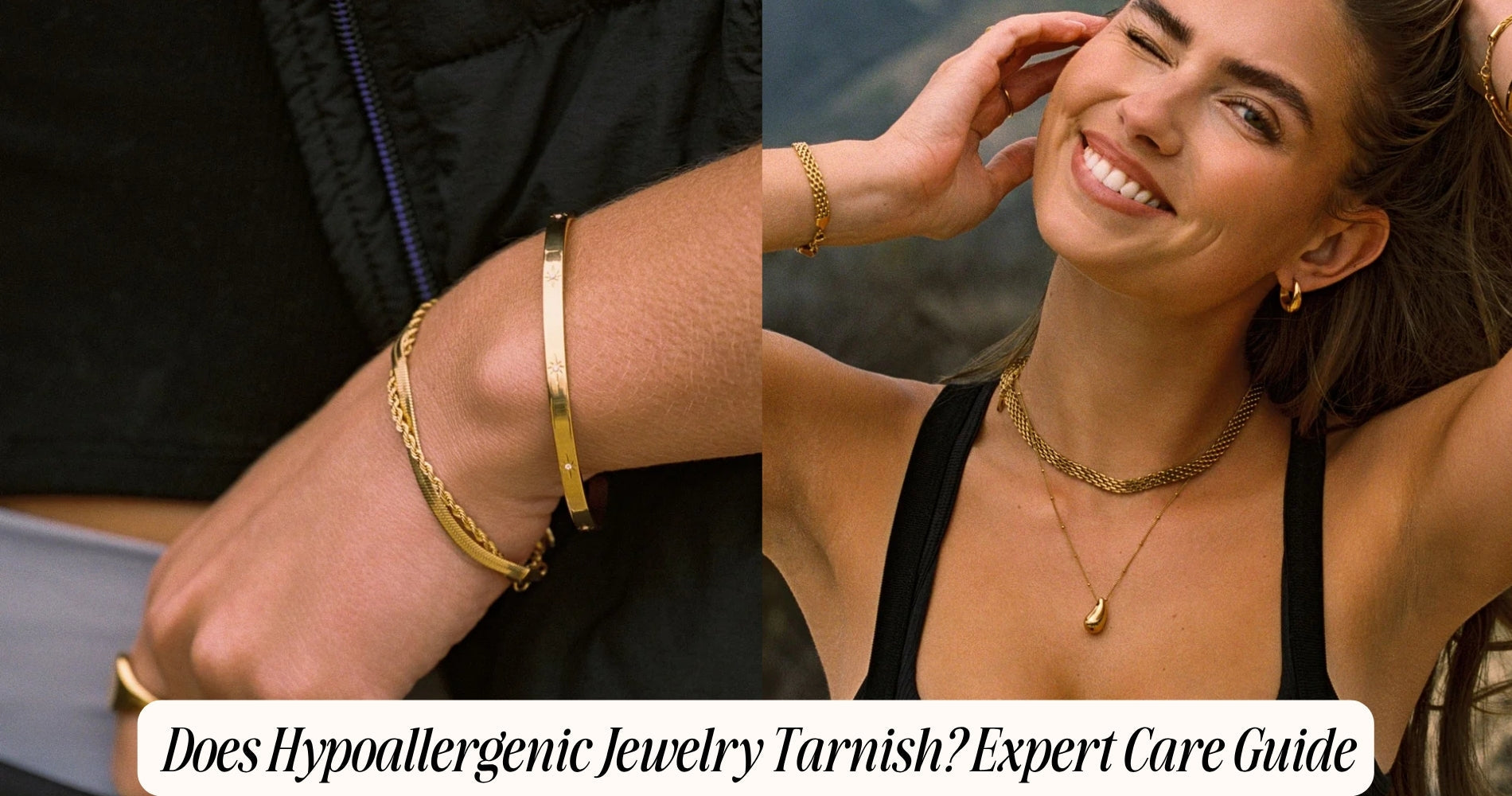
Does Hypoallergenic Jewelry Tarnish? Expert Care Guide
If you have made the switch to hypoallergenic jewelry to avoid irritation, you may also be wondering whether these skin friendly materials come with any trade offs when it comes to long term appearance. Specifically, does hypoallergenic jewelry tarnish the way sterling silver or lower quality metals often do? The answer depends significantly on which specific hypoallergenic material you are wearing, since this broad category actually includes several different metals, each with its own distinct properties.
In this guide, we will break down how the most common hypoallergenic materials hold up over time, which ones resist tarnish most effectively, and how to care for each to keep your jewelry looking its best. If you are building a collection specifically designed to minimize both irritation and maintenance, our Hypoallergenic Necklace collection offers pieces crafted with exactly this combination in mind.
Understanding What Hypoallergenic Actually Means
Before addressing tarnish specifically, it helps to clarify what the term hypoallergenic actually refers to. Hypoallergenic jewelry is designed to minimize the likelihood of triggering an allergic skin reaction, typically by avoiding nickel or other commonly reactive metals. However, being hypoallergenic does not automatically mean a material is also tarnish resistant, since these are two entirely separate material properties that do not always go hand in hand.
This distinction is important, since some hypoallergenic materials happen to also resist tarnish exceptionally well, while others may still require some degree of regular care to maintain their appearance over time, despite being genuinely safe for sensitive skin.

Does Hypoallergenic Jewelry Tarnish: It Depends on the Material
Because hypoallergenic jewelry spans several different metal types, the answer to whether it tarnishes varies considerably depending on the specific material in question. Let us walk through the most common hypoallergenic options individually.
Titanium: Highly Tarnish Resistant
Titanium is both genuinely hypoallergenic and highly resistant to tarnish and corrosion. This durability comes from titanium's natural ability to form a stable oxide layer on its surface when exposed to air, effectively protecting the underlying metal from the environmental reactions that typically cause tarnish in other materials. Titanium jewelry generally maintains its appearance remarkably well over time, even with frequent wear and exposure to water or everyday elements.
Niobium: Highly Tarnish Resistant
Similar to titanium, niobium is both hypoallergenic and naturally resistant to tarnish, thanks to a comparable protective oxide layer that forms on its surface. This makes niobium another excellent choice for those seeking jewelry that requires minimal ongoing maintenance while still remaining safe for sensitive skin.
Surgical Steel: Generally Tarnish Resistant
Surgical grade stainless steel, specifically 316L, offers strong resistance to tarnish and corrosion, thanks to its chromium content, which forms a protective layer similar in function to what occurs with titanium and niobium. While not entirely immune to all forms of discoloration under extreme conditions, surgical steel generally holds up quite well over time with normal, everyday wear.
Solid Gold: Does Not Traditionally Tarnish, But May Dull
Higher karat solid gold, a common hypoallergenic choice, does not tarnish in the traditional sense, since pure gold itself does not react with sulfur compounds the way silver does. However, gold jewelry can still gradually lose some of its shine or develop a slightly dulled appearance over time due to the accumulation of everyday oils, lotion, and product residue, even though this is technically a different phenomenon from true tarnish.

Platinum: Does Not Tarnish
Platinum, another genuinely hypoallergenic option, does not tarnish and is highly resistant to corrosion, making it one of the most low maintenance choices available, though its higher price point places it in a more premium category compared to some other hypoallergenic materials.
Sterling Silver: Can Tarnish, Even When Nickel Free
It is worth specifically addressing sterling silver here, since it is sometimes marketed or perceived as hypoallergenic when formulated without nickel. While nickel free sterling silver can indeed be a safe, hypoallergenic option for those with nickel sensitivity specifically, it remains prone to the same natural tarnishing process common to all sterling silver, since this occurs due to a reaction with sulfur compounds in the air rather than anything related to nickel content specifically.
This means that even genuinely hypoallergenic sterling silver jewelry will still typically require the same tarnish related care and maintenance associated with silver more broadly.
Why This Distinction Matters
Understanding that hypoallergenic status and tarnish resistance are separate properties helps set more accurate expectations when shopping for jewelry specifically chosen for sensitive skin. If low maintenance care is just as important to you as avoiding irritation, materials like titanium, niobium, surgical steel, or platinum offer the best combination of both hypoallergenic safety and strong tarnish resistance.
If you specifically love the look of silver but need a hypoallergenic option due to nickel sensitivity, nickel free sterling silver can work well, but you should expect to maintain the same tarnish prevention routine typically associated with silver jewelry more generally.

How to Care for Tarnish Resistant Hypoallergenic Jewelry
Even though materials like titanium, niobium, and surgical steel resist tarnish exceptionally well, a few simple care habits can help maintain their appearance over the long term.
Clean these materials periodically using mild soap and warm water, along with a soft cloth or brush to remove any accumulated dirt, oils, or product residue. While these materials handle regular water exposure quite well, avoiding prolonged contact with particularly harsh chemicals remains a reasonable precaution. Store jewelry separately from harder materials or gemstones to help prevent surface scratching, even though these metals already offer strong scratch resistance compared to softer alternatives.
How to Care for Hypoallergenic Sterling Silver
If you specifically choose nickel free sterling silver for its hypoallergenic properties, following standard silver care practices will help manage the natural tarnishing process common to this particular material.
Store silver jewelry in an airtight bag or container when not being worn, ideally with an anti tarnish strip included, to help minimize air exposure. Clean silver periodically using a gentle silver polishing cloth or a mild soap and water solution to remove light tarnish buildup. Avoid exposing silver jewelry to household chemicals, perfume, or lotion whenever possible, since these substances can accelerate the tarnishing process.
Choosing the Right Hypoallergenic Material for Your Priorities
When selecting hypoallergenic jewelry, it helps to consider your specific priorities beyond simply avoiding irritation.
For maximum low maintenance care, titanium, niobium, or surgical steel offer the best combination of hypoallergenic safety and strong tarnish resistance, requiring minimal ongoing upkeep to maintain their appearance.
For a more traditional, luxurious look, higher karat solid gold or platinum provide genuinely hypoallergenic options that also avoid traditional tarnish, though gold may still benefit from occasional cleaning to maintain its shine over time.
For those specifically drawn to silver's classic aesthetic, nickel free sterling silver remains a viable hypoallergenic choice, provided you are prepared to follow standard silver care and tarnish prevention practices consistently.

Signs of Wear to Watch For
Regardless of which hypoallergenic material you choose, it is worth periodically checking your jewelry for any early signs of wear or discoloration, even with generally tarnish resistant options. A dulling appearance, any unusual discoloration, or changes in surface texture can indicate it may be time for a more thorough cleaning, or in rare cases, could suggest a lower quality piece that may not be performing as expected for its specific material type.
Final Thoughts
So, does hypoallergenic jewelry tarnish? The answer depends entirely on the specific material involved. Titanium, niobium, surgical steel, and platinum all offer genuinely hypoallergenic properties combined with strong resistance to traditional tarnish, making them excellent low maintenance choices. Solid gold does not tarnish either, though it may benefit from occasional cleaning to maintain its shine. Sterling silver, even when formulated without nickel for hypoallergenic purposes, remains prone to natural tarnish and requires standard silver care practices.
Understanding these material specific differences allows you to choose hypoallergenic jewelry that not only protects your skin but also aligns with your personal preferences for care and long term maintenance.
Frequently Asked Questions
1. Which hypoallergenic material resists tarnish the best?
Titanium and niobium are generally considered the most tarnish resistant hypoallergenic materials, thanks to their naturally protective oxide layers.
2. Does nickel free sterling silver still tarnish?
Yes, nickel free sterling silver remains prone to natural tarnish, since this reaction is caused by sulfur exposure rather than nickel content specifically.
3. Is solid gold considered low maintenance hypoallergenic jewelry?
Yes, solid gold does not traditionally tarnish, though it may benefit from occasional cleaning to remove buildup and maintain its natural shine.
4. Can hypoallergenic jewelry be worn in water without tarnishing?
Materials like titanium, niobium, and surgical steel generally handle regular water exposure quite well without significant tarnish concerns, unlike sterling silver.









コメントを書く
このサイトはhCaptchaによって保護されており、hCaptchaプライバシーポリシーおよび利用規約が適用されます。