


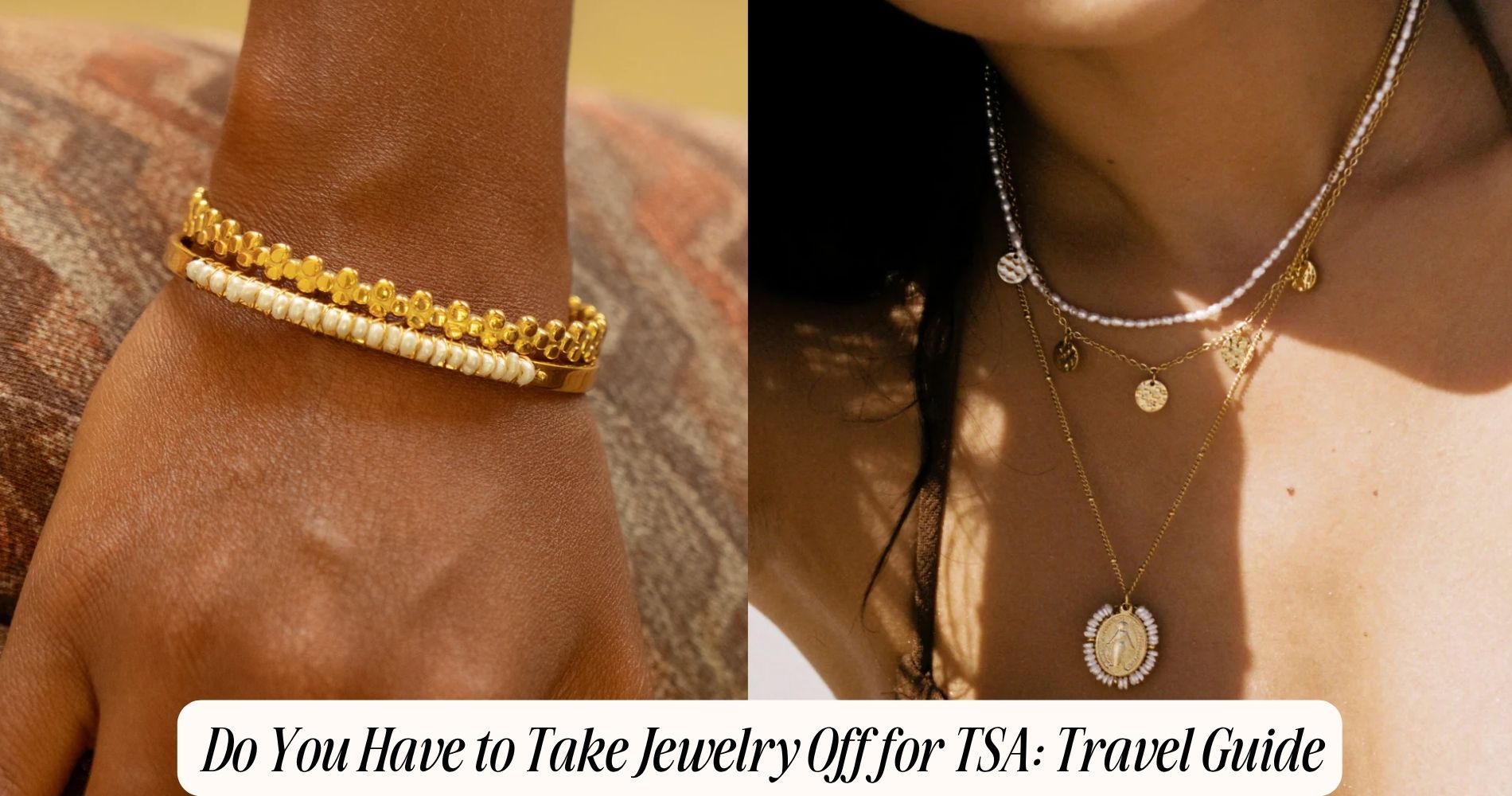
Do You Have to Take Jewelry Off for TSA: Travel Guide
Airport security creates a specific jewelry anxiety for many travelers: the fear of setting off the metal detector, the uncertainty about what to remove, and the risk of losing a piece in a bin. Understanding the actual rules clears up most of that anxiety immediately. Do you have to take jewelry off for TSA screening? The short answer is no, not as a requirement, but the longer answer involves understanding which jewelry is most likely to trigger an alarm and why, so you can make informed decisions about what to wear and what to pack. Waterproof Jewelry in lightweight materials travels well and is far less likely to create issues at security than heavy statement pieces. This guide covers what TSA actually requires, which jewelry triggers alarms and which does not, how to get through security without removing pieces, and how to pack and protect jewelry you do take off.
What TSA Actually Requires About Jewelry
The Transportation Security Administration does not have a rule requiring passengers to remove jewelry before passing through security screening. TSA's official guidance states that passengers should remove metal items that may trigger the alarm, but this is framed as practical advice for a smoother experience rather than a mandatory requirement.
In practice, TSA officers can ask you to remove jewelry if the alarm is triggered and they believe the piece may be the cause. If you decline to remove a piece, they will typically conduct a manual pat-down or additional screening rather than physically removing jewelry from your body. Jewelry is not in the category of prohibited items that must be removed.
What TSA does require be removed and placed in the screening bin before walking through a standard metal detector or body scanner:
- Shoes (in standard screening lanes)
- Belt buckles containing metal
- Items in pockets including keys, coins, and phones
- Laptops (in standard screening lanes)
- Jackets and outerwear
Jewelry is not on this mandatory removal list. However, whether to remove it voluntarily depends on the specific pieces you are wearing and whether they are likely to trigger the alarm.

Do You Have to Take Jewelry Off for TSA: Which Jewelry Triggers Alarms
The metal detectors used in standard airport security lanes detect metal through electromagnetic induction. The detector emits a magnetic field that induces an electrical current in any conductive metal that passes through it. The size of the induced current depends on the mass and conductivity of the metal: larger and more conductive pieces produce stronger signals. If the signal exceeds the detector's threshold, the alarm sounds.
Fine jewelry in lightweight metals rarely triggers standard metal detectors. Thin chain necklaces, small stud earrings, dainty rings, and fine anklets in gold, silver, or stainless steel typically fall well below the detection threshold for standard airport metal detectors. Many frequent travelers wear this category of jewelry through security hundreds of times without triggering an alarm.
Jewelry that more commonly triggers alarms includes:
- Heavy statement necklaces with substantial metal mass
- Wide metal cuff bracelets and bangles
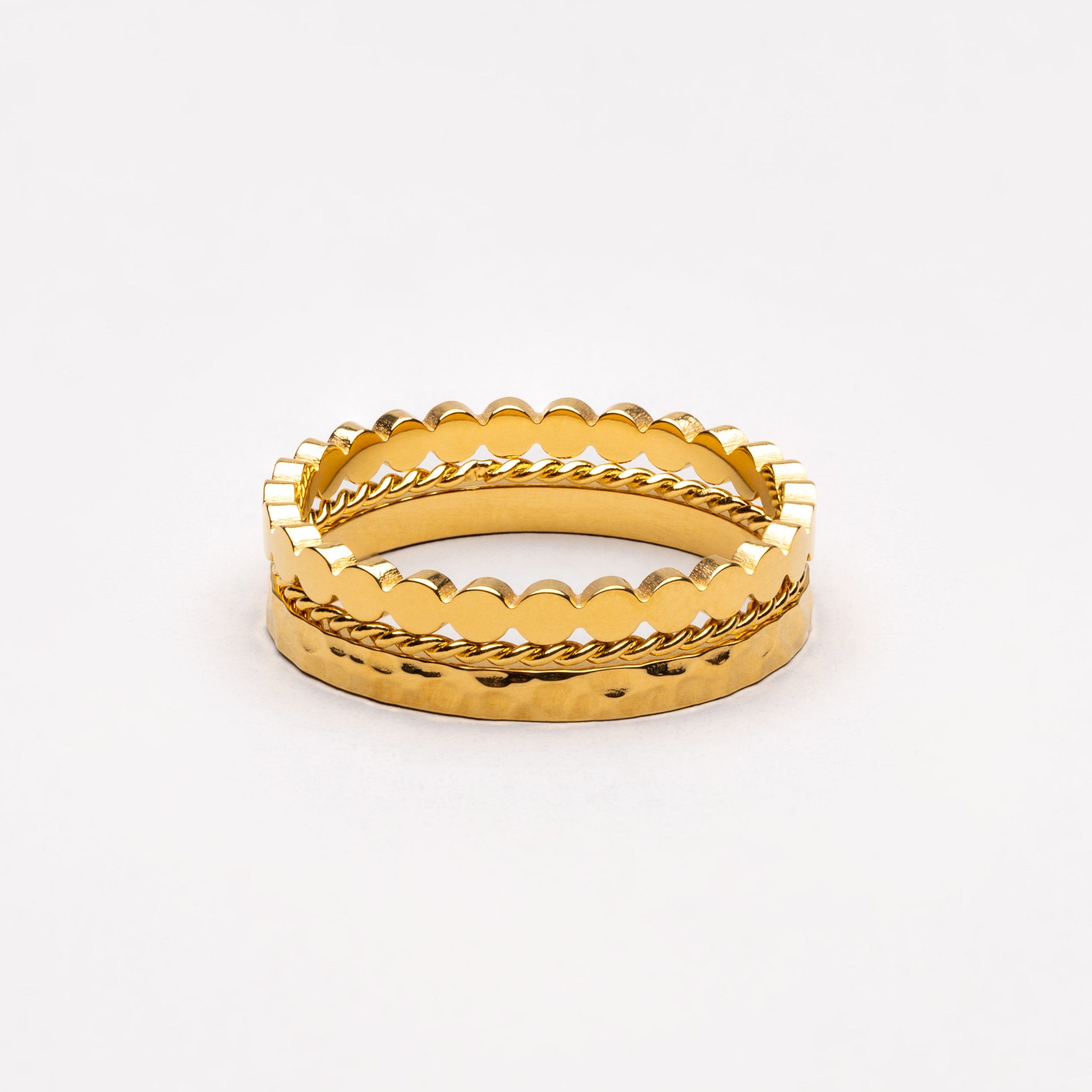
- Stacked ring collections covering multiple fingers
- Large metal belt buckles incorporated into jewelry
- Jewelry with dense metal components such as large charms, chains with thick links, or heavily constructed pendants
- Body jewelry including large gauge piercings or multiple facial piercings with metallic components
The body scanner (millimeter wave scanner) used in many airport lanes does not detect metal specifically. It produces a generic image that identifies any dense material on the body, which means it sometimes flags jewelry regardless of metal content. A TSA officer will review the image and determine whether additional screening is needed.

Jewelry by Material and Alarm Risk
Material type affects alarm likelihood but size and mass are the primary variables. The same material in a fine chain reads very differently than in a wide cuff.
| Jewelry Type | Typical Alarm Risk | Notes |
|---|---|---|
| Fine chain necklace (under 3mm wide) | Very low | Rarely triggers standard detectors |
| Stud earrings (under 8mm) | Very low | Below detection threshold for most detectors |
| Thin stacking rings (1 to 2mm) | Very low | Individual rings rarely trigger; heavy stacks may |
| Wide cuff bracelet (15mm and above) | Moderate to high | Metal mass sufficient to trigger in many lanes |
| Statement necklace with heavy links | Moderate to high | Chain mass and pendant together may trigger |
| Layered chain necklace stack | Low to moderate | Depends on total metal mass of combined pieces |
| Anklets (fine chain) | Very low | Typically below detection threshold |
| Large hoop earrings (40mm and above) | Low | Wire gauge usually too thin despite diameter |
PVD-coated stainless steel and solid gold behave identically at the detector: both are conductive metals and both produce a signal proportional to their mass. The material does not affect alarm likelihood. The size, weight, and construction of the piece does.
Getting Through Security Without Removing Jewelry
Several strategies reduce the likelihood of triggering an alarm or minimize disruption if you do.
Wear fine jewelry, pack statement pieces. The most reliable strategy is choosing what to wear on travel days based on size and mass rather than appearance. Fine chain necklaces, stud earrings, thin bands, and anklets travel reliably without triggering alarms. Wide cuffs, heavy statement necklaces, and large hoops are better packed securely in carry-on luggage than worn through security.
Use TSA PreCheck. TSA PreCheck lanes use different screening procedures that do not require removing shoes or electronics and use less sensitive detection thresholds in some configurations. Frequent travelers who wear jewelry regularly find PreCheck significantly reduces the friction around jewelry at security. PreCheck is available through a simple application process and is valid for five years.

Carry a small jewelry pouch for removal. If you choose to remove jewelry voluntarily before the lane to avoid any alarm risk, never place pieces loose in the security bin. Small items placed directly in plastic bins are easily lost, forgotten, or picked up by other travelers. A small zippered pouch placed in the bin keeps all pieces together, visible, and retrievable immediately after screening. Retrieve the pouch before moving away from the belt, not after putting your shoes on and collecting your bags.
Wear minimal jewelry on connection-heavy travel days. On days with multiple connections, tight layovers, or busy international hubs where security lanes are long and crowded, minimizing jewelry reduces stress from both alarm triggering and loss risk at the bin. The recovery cost of lost jewelry in a busy airport is almost always zero.
Know your metals. Some travelers worry that stainless steel or specific metals are more likely to trigger alarms than others. In practice, all conductive metals trigger metal detectors at sufficient mass. The concern about specific metals is not relevant: the concern should be about mass and size, which determines the signal strength.
Packing Jewelry for Travel: Preventing Loss and Damage
For jewelry you remove at security or pack rather than wear during travel, protection and organization prevent the most common travel jewelry problems: tangling, scratching, and loss.
The straw method for chains: Thread chain necklaces through a plastic drinking straw before packing. Close the clasp over the straw to keep the chain extended. Multiple straws with one chain each prevent tangling even when packed loosely together. This is the most effective anti-tangle method for fine chain jewelry and requires nothing more than a few straws from any café or kitchen.
Button cards for small pieces: Thread earring posts through the holes in a button or a piece of foam and secure the backs. Multiple pairs on one button card stay organized and do not mix together during transit. Small coin envelopes with the piece labeled on the front work for rings and pendants.
A dedicated travel jewelry case: For frequent travelers or those bringing multiple pieces, a small zippered jewelry case with individual compartments keeps pieces separated, prevents scratching between pieces, and provides a single consistent place to check during unpacking. The consistent location eliminates the search-through-the-bag experience that leads to missed pieces.
Carry valuables in carry-on only: Jewelry, particularly valuable or sentimental pieces, should never travel in checked luggage. Checked bags are lost, delayed, and occasionally searched in ways that expose contents. A piece packed in carry-on stays with you throughout the journey.

Frequently Asked Questions
Do you have to take jewelry off for TSA screening?
No. TSA does not require jewelry removal as a mandatory step in the screening process. Jewelry is not on the list of items that must be placed in the security bin. You may be asked to remove a piece if it triggers the alarm and the officer believes it is the cause, but you can decline and accept additional screening instead. Most fine jewelry travels through security without triggering any alarm.
What jewelry sets off airport metal detectors?
Jewelry with sufficient metal mass to produce a signal above the detector's threshold is most likely to trigger an alarm. Heavy statement necklaces, wide cuff bracelets, thick chain links, and stacked ring collections are the most common triggers. Fine chains, small studs, thin bands, and anklets rarely trigger standard airport metal detectors because their metal mass is below the detection threshold.
Can you wear a gold necklace through airport security?
Yes. A fine gold necklace, particularly a chain under 3mm wide, rarely triggers airport metal detectors because its metal mass is below the typical detection threshold. A heavy gold statement necklace with a large pendant is more likely to trigger an alarm due to its greater metal mass. The material (gold) is not the relevant variable. The size and mass of the piece is.
Is it safe to put jewelry in airport security bins?
Placing jewelry loose in security bins is a significant loss risk. Small pieces can slide under the bin liner, be pushed to the end of the belt by subsequent bins, or be collected by other travelers. Always place jewelry in a small zippered pouch before placing it in the bin. Retrieve the pouch immediately before collecting any other belongings.
Does stainless steel jewelry trigger airport metal detectors?
Stainless steel is a conductive metal and triggers metal detectors at sufficient mass, as does any other conductive metal. Fine stainless steel jewelry (thin chains, small studs, thin bands) rarely triggers standard airport detectors because the mass is below the detection threshold. Heavy or wide stainless steel pieces behave the same as comparable gold or silver pieces: the mass determines the alarm likelihood, not the specific metal.
Conclusion
Do you have to take jewelry off for TSA is answered clearly: no, it is not required. The practical question is which pieces are likely to trigger an alarm based on their mass, and whether wearing fine pieces through the lane or packing heavier pieces is the better choice for your travel day. Fine chain necklaces, small studs, thin bands, and anklets travel through security reliably without triggering alarms. Wide cuffs, statement necklaces, and heavy layered stacks are better packed. Keeping a small zippered pouch in your carry-on for any pieces you do remove protects against the bin loss that creates the most common and most preventable travel jewelry problem.













コメントを書く
このサイトはhCaptchaによって保護されており、hCaptchaプライバシーポリシーおよび利用規約が適用されます。