

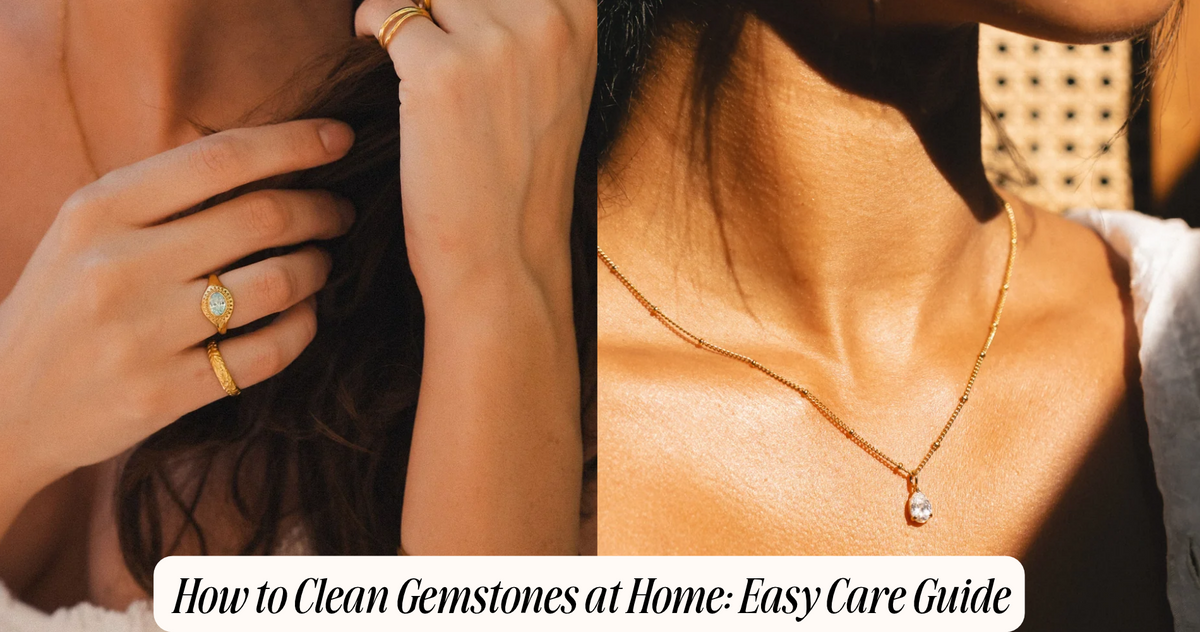
How to Clean Gemstones at Home: Easy Care Guide
Gemstones collect oils, lotion, soap film, and everyday dust faster than most people realize. A stone that looked brilliant when you bought it can slowly turn cloudy and dull, even though nothing is wrong with it. The right cleaning routine brings back the sparkle, but the wrong one can scratch, crack, or discolor delicate stones. Knowing how to clean gemstones at home means matching your method to the stone. If you are looking for stones worth caring for, our Stone Collection offers a wide variety of gemstone pieces.
In this guide, we will explain how to sort gemstones by durability, walk through a safe basic cleaning method, cover special care for delicate stones, and share what never to use.
Know Your Stone First Because Hardness and Porosity Change Everything
Gemstones are not all equally tough. Two things determine how you should clean them: hardness, which is how well a stone resists scratching, and porosity, which is how easily it absorbs liquids and chemicals.
Some stones, like sapphire and ruby, are very hard and stable. Others, like opal, turquoise, and pearl, are soft or porous and can be damaged by water, heat, or chemicals. Some stones, such as emerald, are often treated with oils or fillers that can be disturbed by strong cleaning.
If you are not sure what a stone is, treat it gently and use the mildest method, which is a damp cloth. When in doubt, ask a jeweler.

Gather Simple Supplies Before You Start
You do not need special products to clean most gemstones. A small bowl, lukewarm water, mild fragrance free dish soap, a very soft brush such as a baby toothbrush or makeup brush, and a lint free cloth are enough. A wooden toothpick can help clear compacted dirt from under settings, though it should be used very gently.
Use lukewarm water rather than hot, since sudden temperature changes can stress some stones. Work over a towel or a bowl, and never over an open drain.
Follow the Basic Soap and Water Method for Most Durable Stones
This method works well for hard and fairly durable stones such as diamond, sapphire, ruby, topaz, garnet, amethyst, aquamarine, and quartz, provided the stone is not cracked, glued, or treated in a way that makes it fragile.
- Step 1: Mix a few drops of mild soap into a bowl of lukewarm water.
- Step 2: Soak the jewelry for about fifteen to twenty minutes to loosen oils and grime.
- Step 3: Gently scrub with a soft brush, paying attention to the underside of the stone, where dirt gathers and blocks light.
- Step 4: Rinse under lukewarm running water, with the drain closed or a bowl in the sink.
- Step 5: Pat dry with a lint free cloth and let it air dry completely.
The underside of a stone is often the dirtiest part. Cleaning it makes a visible difference in brilliance.

Use a Gentler Damp Cloth Method for Soft and Porous Stones
Delicate stones should not be soaked. This includes opal, turquoise, pearl, lapis lazuli, malachite, coral, amber, and moonstone. Water, soap, and chemicals can seep into the stone, dull its surface, or loosen adhesives.
Dampen a soft cloth with lukewarm water, wring it out well, and wipe the stone gently. If needed, add a tiny amount of mild soap to the cloth, then wipe again with a clean damp cloth to remove residue. Dry right away with a soft, dry cloth.
Skip the brush on very soft stones, since bristles can scratch them.
Take Special Care With Emeralds and Other Treated Stones
Emeralds often contain natural fractures, and many are treated with oil or resin to improve their appearance. Soaking, heat, steam, and ultrasonic cleaning can remove or disturb these fillers and sometimes worsen cracks.
Clean emeralds with a soft, slightly damp cloth, and avoid long soaks. The same caution applies to other stones that may have been fracture filled, dyed, or coated. If a stone has been treated, it is safest to use the gentlest cleaning method available.
Handle Heat Sensitive Stones Such as Tanzanite and Opal With Extra Caution
Some gemstones can crack or change when exposed to sudden temperature shifts. Tanzanite, opal, and a few others fall into this group. Avoid hot water, steam cleaners, and leaving these stones near heat sources.
Opal also needs special care because it contains water and can dry out or craze if it is exposed to harsh conditions. Keep it away from very dry, hot places, and wipe it only with a damp cloth.

Clean the Metal Setting as Part of the Process
Dirt and tarnish often build up in the metal around the stone. For durable stones, the soap and water method cleans the setting at the same time. For delicate stones, use a damp cloth around the metal and keep moisture away from the stone itself.
If you use a silver polishing cloth, polish only the metal and keep the cloth away from the gemstone, since polishing compounds can scratch or dull soft stones.
Know What to Avoid Because Some Home Remedies Cause Damage
Several popular cleaning tricks can harm gemstones.
- Harsh chemicals: Bleach, ammonia, acetone, and household cleaners can damage stones and metals.
- Vinegar and lemon juice: Acids can etch soft stones such as pearl, opal, and coral.
- Toothpaste and baking soda pastes: These are abrasive and can scratch softer stones and metals.
- Ultrasonic and steam cleaners: These work on some hard, untreated stones, but they can damage fractured, treated, glued, or soft stones. Avoid them unless you are certain.
- Hot water and sudden temperature changes: These can crack heat sensitive stones.
- Abrasive cloths and paper towels: These can scratch both stones and metal.
Check Your Jewelry for Loose Stones and Damage While You Clean
Cleaning is a good time to inspect your jewelry. Look closely at prongs, bezels, and settings to make sure stones sit securely. Gently tilt the piece next to your ear. If you hear a faint rattle, a stone may be loose.
If you notice bent prongs, cracks, or loose stones, stop cleaning and take the piece to a jeweler. Washing a loose stone can make it fall out.
Set a Cleaning Schedule That Fits How Often You Wear Each Piece
How often you clean depends on how you wear the jewelry. Pieces worn daily, especially rings, benefit from a gentle cleaning every one to two weeks and a quick wipe after wearing. Earrings and pendants can be cleaned every few weeks. Occasional pieces need cleaning only when they look dull or before you wear them.
Frequent, light cleaning is better than occasional heavy scrubbing, which can wear down finishes.

Store Gemstone Jewelry Safely to Keep It Clean Longer
Good storage slows buildup and protects stones. Keep each piece in a soft pouch or a compartment of a lined jewelry box, separated from harder stones that could scratch softer ones. Avoid humid places like bathrooms. Put jewelry on after lotion, perfume, and hairspray so they do not coat the stones.
Final Thoughts
Learning how to clean gemstones at home is mostly about choosing the right method for each stone. Hard, durable stones can handle soap, water, and a soft brush, while soft, porous, or treated stones need a gentle damp cloth. Avoid harsh chemicals, heat, and abrasive products, and inspect your jewelry as you clean.
With a little care and the right routine, your gemstones will stay bright and beautiful for years.
Frequently Asked Questions
1. What is the safest way to clean gemstones at home?
For most durable stones, lukewarm water, mild soap, and a soft brush are safest. For delicate stones, use only a slightly damp soft cloth.
2. Can I soak all gemstones in soapy water?
No. Soft and porous stones such as opal, turquoise, and pearl should not be soaked, and treated stones like emerald need gentle handling.
3. Is it safe to use an ultrasonic cleaner on gemstones?
Only on certain hard, untreated stones. It can damage fractured, treated, glued, or soft stones, so avoid it unless you are sure.
4. Can I use toothpaste or vinegar to clean gemstones?
It is best not to. Toothpaste is abrasive and vinegar is acidic, and both can damage softer stones and metals.
5. How often should I clean gemstone jewelry?
Daily wear pieces benefit from cleaning every one to two weeks, while occasional pieces can be cleaned when they look dull or before wearing.










Leave a comment
This site is protected by hCaptcha and the hCaptcha Privacy Policy and Terms of Service apply.